Nila Kartika Wati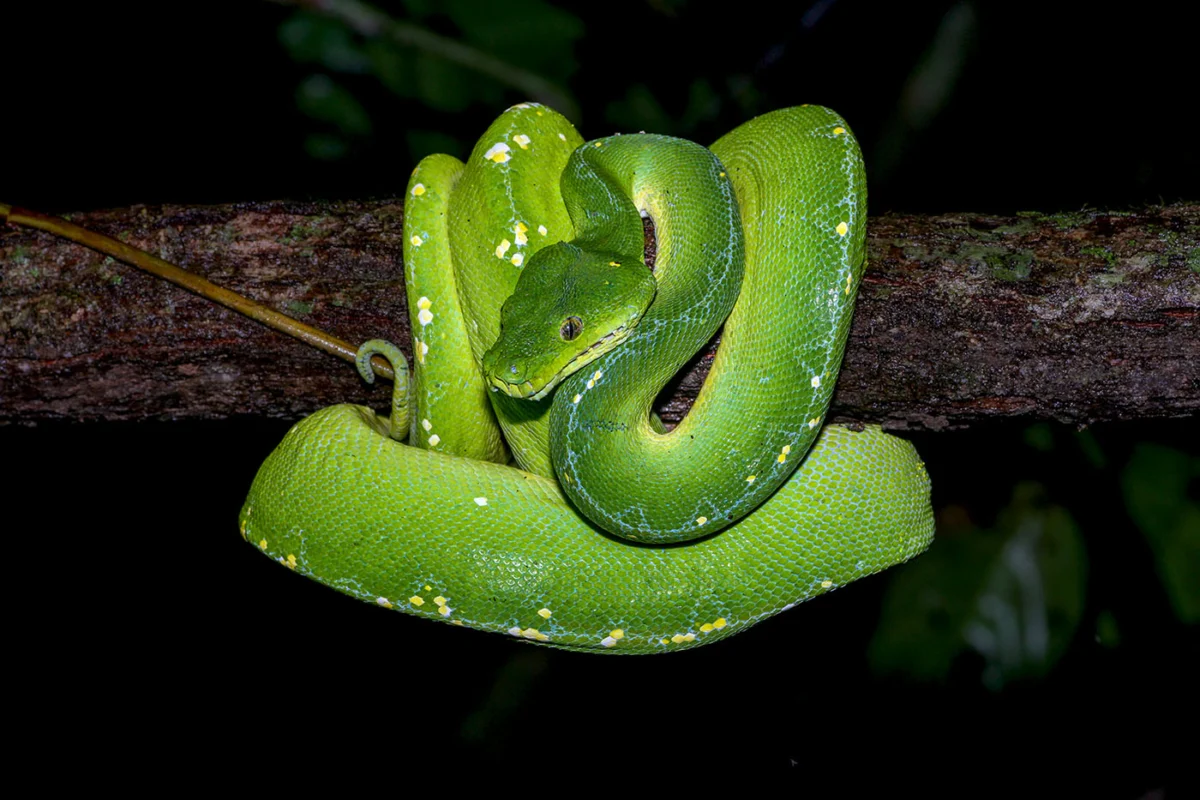
The heavy rain cascading through the secondary forests of Tambrauw Regency, West Papua, forced a group of wildlife observers to cut their expedition short. For the sake of safety, the team decided to retreat to their base camp as the tropical downpour intensified, saturating the dense canopy and making the terrain treacherous. However, amidst the hurried footsteps and the rhythmic thrum of rain against the leaves, a sudden, silent encounter stopped them in their tracks—a brief but profound moment that would remain etched in their memories. Imam Ramdhani, a dedicated member of the Bogor Nature Wildlife Photography community, was the first to spot the anomaly. Through the gloom of the forest and the lingering mist, his flashlight illuminated a figure coiled with serene precision around a tree branch.
The creature was a Northern Green Tree Python, scientifically known as Morelia azurea. This species is an iconic, arboreal endemic of the New Guinea region, renowned for its striking appearance but rarely seen by human eyes in its natural habitat. Ramdhani, recounting the experience in late April 2026, noted that the encounter was entirely serendipitous. While it was not his first time seeing the species, the thrill of witnessing a master predator in the wild never faded. For a wildlife photographer, the sight of a constrictor in its native environment provides a visceral sense of awe that no captive environment or documentary footage can replicate. On that particular night, the snake was positioned unusually low—well below the typical 10 to 20-meter height of the upper canopy—clinging to a branch near the forest floor. Ramdhani speculated that this behavior was likely driven by the hunt, as the python may have descended to intercept ground-dwelling prey or small mammals active in the lower strata of the forest during the rain.
The Biological Marvel of Ontogenetic Transformation
The Northern Green Tree Python is a nocturnal specialist, a master of the "sit-and-wait" ambush strategy. By day, it remains coiled in a characteristic "saddle" position over branches, virtually indistinguishable from the surrounding foliage. By night, it becomes a silent sentinel of the trees, relying on its heat-sensing pits located along its labial scales to detect the infrared signatures of warm-blooded prey. One of the most fascinating aspects of Morelia azurea, as highlighted by Ramdhani, is the dramatic physiological transformation it undergoes during its lifecycle, a process known as ontogenetic color change.
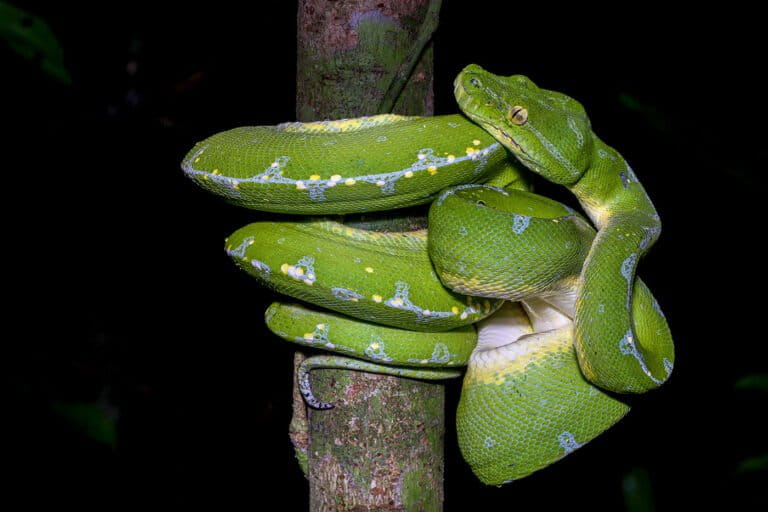
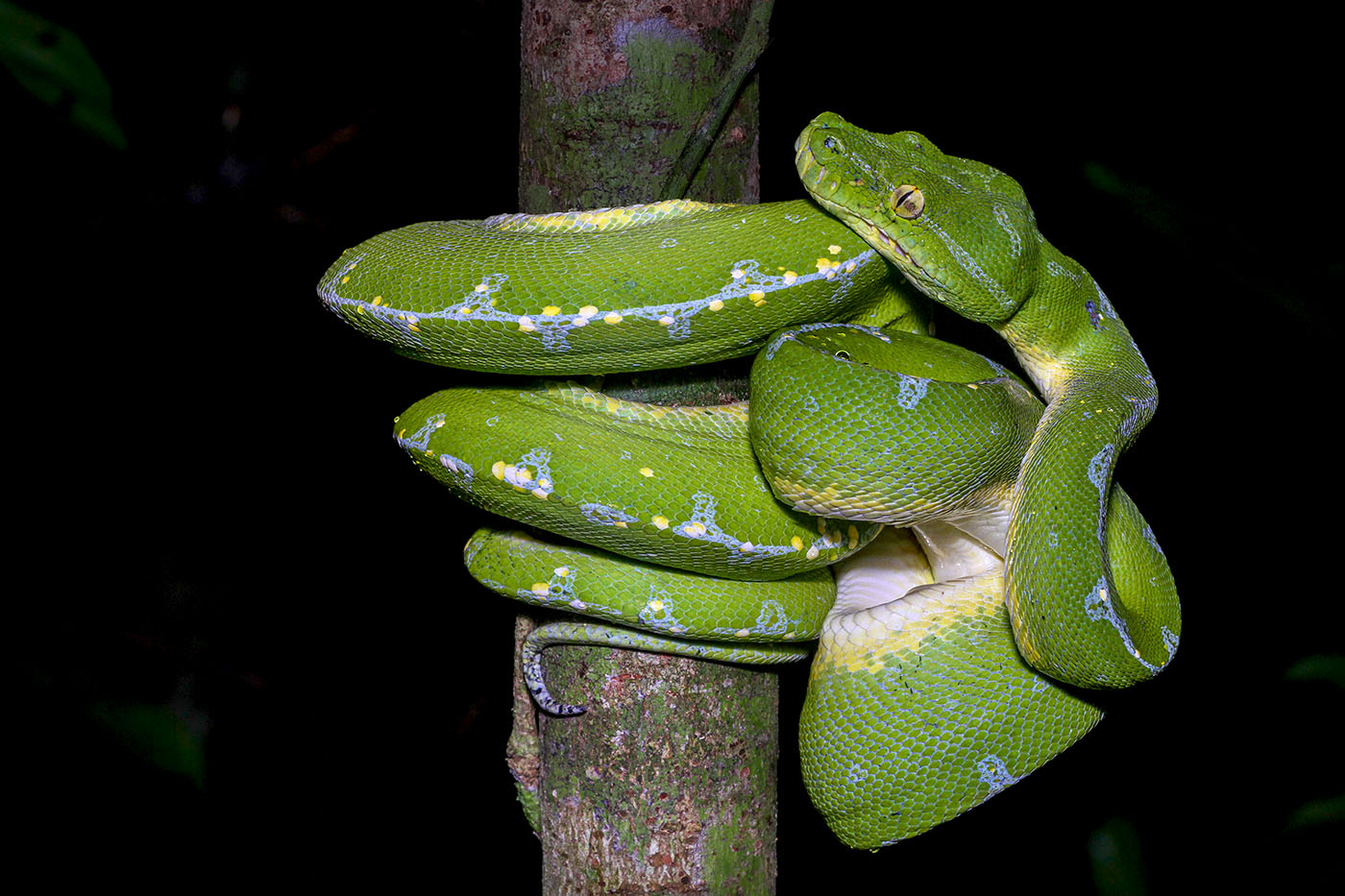
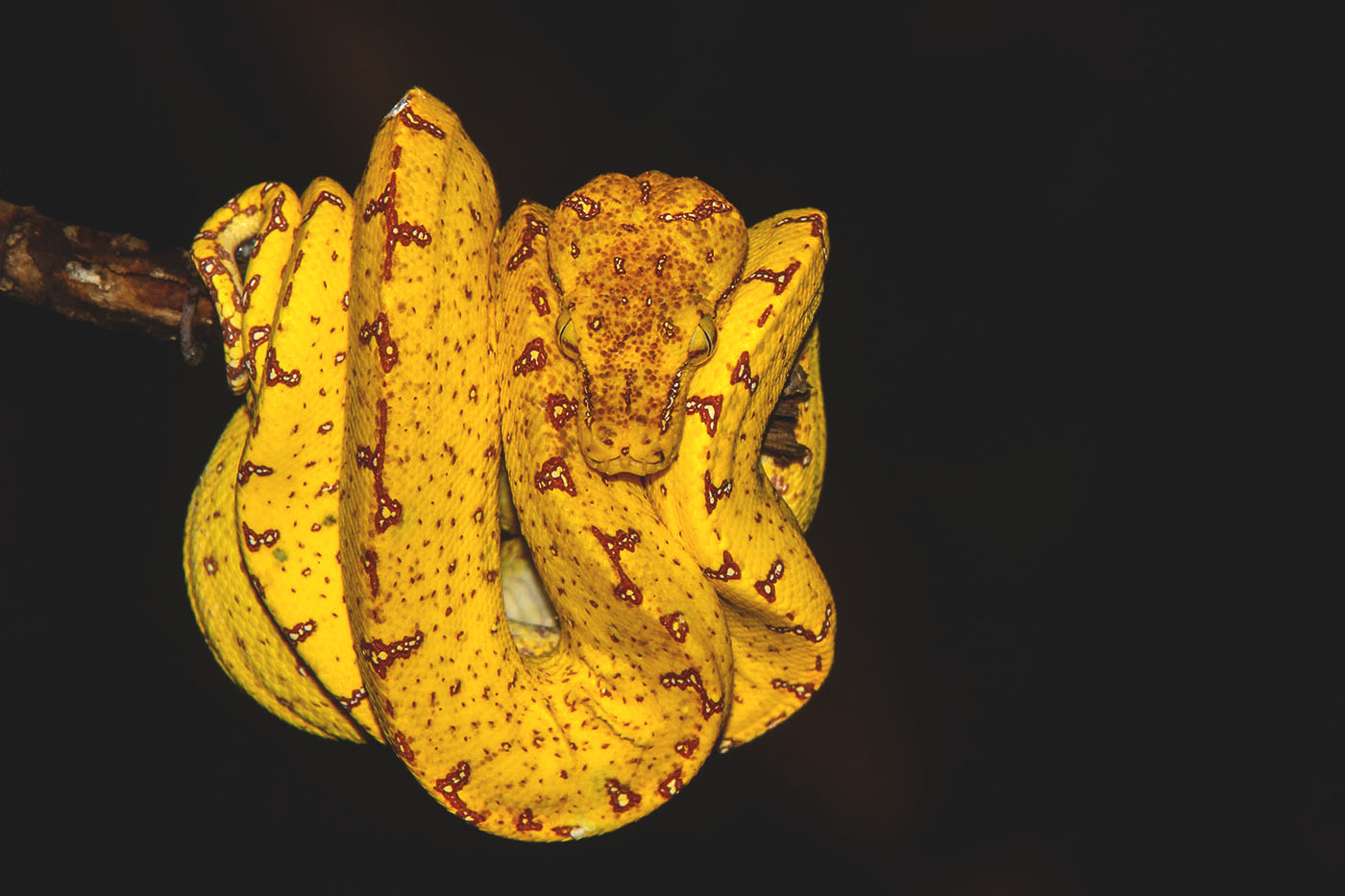
When these pythons are born, they are not the vibrant emerald green that gives them their name. Instead, neonates and juveniles are typically a bright, vivid yellow or, in some populations, a deep brick red. This striking coloration is believed to serve as a form of camouflage against the mottled light and colorful fruits of the lower forest levels where young snakes reside. As the individual matures and moves higher into the green canopy, its skin undergoes a radical shift, transitioning into various shades of green, often accented with white or blue vertebral stripes. This transformation is so complete that many local residents and casual observers often mistake the juveniles and adults for entirely different species. Ramdhani expressed a sense of professional fulfillment in having documented both phases of this lifecycle, noting that such visual evidence is crucial for public education.
Taxonomic Shifts and the 2019 Scientific Reclassification
The scientific understanding of the Green Tree Python has evolved significantly in recent years. Historically, all populations across New Guinea, its surrounding islands, and Northern Australia were classified under a single species, Morelia viridis. However, a landmark molecular and morphological study published around 2019 by an international team of herpetologists led to a taxonomic split. The research revealed that populations north of the central mountain ranges of New Guinea and those on the northern islands were genetically distinct enough to be recognized as a separate species: Morelia azurea.
This reclassification was not merely an academic exercise; it carries profound implications for conservation and international trade. The Morelia azurea complex includes several subspecies, such as M. a. azurea from Biak, M. a. pulcher from the Vogelkop Peninsula (where Tambrauw is located), and M. a. utaraensis. Each of these lineages represents a unique evolutionary history tied to the complex geological formation of the Papuan archipelago. By recognizing these as distinct entities, scientists can better tailor conservation efforts to specific island populations that may be more vulnerable to habitat loss or over-harvesting than the more widespread southern Morelia viridis.
Regulatory Gaps and Legal Vulnerabilities
The rapid pace of taxonomic revision often outstrips the ability of national bureaucracies to update their legal frameworks. In Indonesia, the primary regulation governing protected species is the Ministry of Environment and Forestry Regulation No. P.106 of 2018. Because this list was finalized before the 2019 split of the Green Tree Python complex, it specifically protects Morelia viridis. This creates a potential "administrative vacuum" for the newly recognized Morelia azurea.
Ramdhani pointed out that while the spirit of the law intends to protect all Green Tree Pythons, the specific nomenclature used in legal documents is what determines the success of a prosecution or the legality of a seizure. If a species name does not appear on the official protected list, traffickers may exploit this loophole to claim that their specimens are not subject to the same level of protection. Conservationists argue that the law should be interpreted biologically, covering all descendants of the formerly recognized single species, but the need for a formal legislative update remains urgent to prevent legal challenges in wildlife crime cases.
The Shadow of the Illegal Wildlife Trade
Beyond the intricacies of taxonomy, the Northern Green Tree Python faces a persistent threat from the global exotic pet trade. Its stunning appearance and manageable size make it a high-priority target for collectors in Europe, North America, and East Asia. While international trade is regulated under CITES Appendix II, which requires permits and quotas, the reality on the ground in Papua is often more chaotic.
Amir Hamidy, a Research Professor of Biosystematics and Evolution at the National Research and Innovation Agency (BRIN), has raised alarms regarding the sustainability of current practices. While much of the international market is now supplied by captive-bred individuals, there remains a significant "laundering" problem. Specimens captured illegally from the wild are often passed off as captive-bred to bypass export quotas. This practice not only depletes wild populations but also results in high mortality rates. Hamidy noted that wild-caught pythons are notoriously difficult to acclimate to captivity; they are often infested with parasites, highly stressed, and prone to refusing food. In contrast, true captive-bred (CB) individuals are more resilient and command higher prices, yet the temptation to take "free" stock from the forest remains high for local collectors.
Data Deficits and the Challenge of Population Monitoring
One of the greatest hurdles in protecting Morelia azurea is the sheer lack of baseline data. Papua’s vast and rugged terrain, combined with the snake’s nocturnal and arboreal nature, makes traditional population surveys incredibly difficult and expensive. "We need baseline population data, but it is not easily obtained," Hamidy admitted. Without knowing how many pythons exist in the wild or how their numbers are fluctuating, it is nearly impossible to set sustainable harvest quotas or to measure the impact of habitat loss.
The difficulty is compounded by the geography of West Papua. Tambrauw, for instance, is a region of immense biodiversity but remains one of the most remote parts of Indonesia. Access requires significant funding and logistical planning, and researchers must navigate both physical dangers and complex local social dynamics. In this context, the work of wildlife photographers like Ramdhani becomes a vital secondary source of data. Geotagged photographs (provided the location data is kept secure from poachers) can help researchers map the distribution of the species and identify critical habitats that require formal protection.
Changing Perceptions Through Education and Research
A significant barrier to conservation in Papua is the prevailing local perception of snakes. Ramdhani observed that among many local communities, there is a deep-seated fear of all serpents, regardless of whether they are venomous. "Every type of snake is considered dangerous," he said. This often leads to the killing of pythons on sight, even though the Green Tree Python is non-venomous and generally avoids human contact.
The mission of wildlife photography, therefore, extends beyond aesthetics. By showcasing the beauty and the ecological role of the Northern Green Tree Python as a controller of rodent and small mammal populations, photographers hope to foster a sense of pride and stewardship among the Papuan people. BRIN is also pushing for a more decentralized approach to herpetological research. Hamidy emphasized the importance of building local research capacity within Papua itself. By training Papuan scientists and engaging local communities in "citizen science," the gap between scientific knowledge and local action can be bridged.
The ultimate goal, as echoed by both researchers and photographers, is to move toward a future where these "jewels of the canopy" are valued more in their natural habitat than in a glass terrarium thousands of miles away. As the forests of Tambrauw continue to face pressures from infrastructure development and land-use changes, the survival of Morelia azurea will depend on a combination of robust legal protections, rigorous scientific data, and a fundamental shift in how humans perceive the wild inhabitants of the Indonesian archipelago. The silent encounter in the rain-soaked forest of Tambrauw serves as a reminder that while these creatures are masters of disappearing, the responsibility to ensure they do not vanish forever rests entirely with us.