Nasution Nanang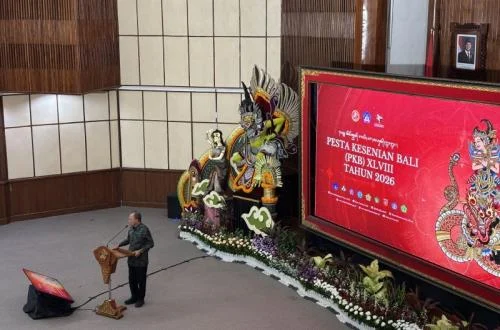
Denpasar, Bali – Governor Wayan Koster of Bali is actively pursuing an official invitation for President Prabowo Subianto to inaugurate the 48th Pesta Kesenian Bali (PKB), or Bali Arts Festival, scheduled to commence on June 13, 2026, in Denpasar. This strategic invitation is intertwined with a broader national initiative to establish Bali as an International Financial Center (IFC), a development that could see the President visit the island to discuss its implementation. The confluence of these two significant events – a celebration of Balinese heritage and a pivotal economic transformation – underscores Bali’s dual ambition to solidify its cultural identity while simultaneously ascending as a global economic hub.
Speaking in Denpasar on Tuesday, Governor Koster confirmed the ongoing process, stating, "I have discussed this with the Deputy Governor, and we are in the process of submitting a formal letter, respectfully requesting Bapak President’s gracious presence to open the PKB. We hope he will have the time." The Governor highlighted the auspicious timing, noting a planned presidential visit to Bali specifically to deliberate on the province’s designation as an International Financial Center. This convergence presents a unique opportunity for President Subianto to engage with both Bali’s rich cultural tapestry and its burgeoning economic prospects. Koster revealed that he had received a call from Jakarta, specifically mentioning Coordinating Minister Luhut Binsar Pandjaitan, concerning the preparatory agenda for Bali’s role as a global financial hub.
Bali’s Vision as an International Financial Center (IFC)
The proposal to transform Bali into an International Financial Center is a cornerstone of the provincial government’s long-term economic strategy, aligning seamlessly with the island’s unique "ecosystem economy." This ambitious initiative aims to diversify Bali’s economic base, traditionally heavily reliant on tourism, by attracting significant international investment and financial services. The concept envisions Bali becoming a strategic location for global financial institutions, offering a conducive regulatory environment, robust infrastructure, and the unparalleled lifestyle appeal that has already drawn affluent individuals and businesses worldwide.
The provincial administration has warmly embraced this central government plan, recognizing its immense potential to create new economic opportunities, generate high-value employment, and foster sustainable growth. Governor Koster noted a distinct interest from major business players in financial centers like Dubai and Abu Dhabi, who are reportedly keen on relocating their operations to Bali, enticed by the island’s unparalleled comfort, natural beauty, and strategic geographical position. "However, this will be thoroughly discussed with our team to ensure it truly benefits the region and the people of Bali," Koster cautioned, emphasizing a meticulous approach to implementation. He added, "Hopefully, if he does visit Bali, we can synchronize these agendas." The establishment of an IFC typically involves creating special economic zones with favorable tax regimes, streamlined legal frameworks, and advanced digital infrastructure, all designed to attract foreign direct investment and financial innovation. Such a move would significantly elevate Bali’s standing on the global economic stage, positioning it alongside established financial hubs while retaining its unique cultural essence.
The Pesta Kesenian Bali (PKB): A Legacy of Cultural Preservation
The Pesta Kesenian Bali (Bali Arts Festival) is not merely an event; it is a profound cultural institution, a month-long extravaganza that stands as the island’s most significant annual celebration of Balinese arts and culture. Inaugurated in 1979 by Governor Ida Bagus Mantra, PKB was conceived with the explicit mission to preserve, develop, and promote the rich, diverse, and ancient artistic traditions of Bali. Over nearly five decades, it has evolved into a vibrant platform showcasing the breadth and depth of Balinese creative expression, from classical dance and gamelan music to intricate traditional crafts, contemporary art forms, and culinary delights.
Held annually from mid-June to mid-July, the festival transforms Denpasar into a dynamic hub of cultural activity, attracting hundreds of thousands of local and international visitors. Its core objectives include fostering intergenerational artistic exchange, stimulating new creative works rooted in tradition, and providing a global stage for Balinese artists. The festival’s meticulous planning begins months, even years, in advance, involving collaboration between the provincial government, local cultural offices, academic institutions, and thousands of community-based art groups (sanggar) and foundations. Each year, the PKB adopts a specific theme, or ‘Taksu,’ which guides the performances, exhibitions, and creative interpretations, ensuring relevance and contemporary engagement while upholding traditional values.
The opening ceremonies of PKB are spectacles of grand scale and profound significance. They typically commence with the majestic peed aya, a vibrant and colorful parade featuring thousands of artists from all nine regencies and cities across Bali. This procession, which traditionally winds its way in front of the Monumen Perjuangan Rakyat Bali (MPRB) Renon, showcases diverse costumes, elaborate floats, and captivating performances of music and dance. Following the parade, the official opening ceremony takes place in the evening at the Taman Budaya Art Center, where dignitaries, including typically the President or a high-ranking representative, formally inaugurate the festival. The 2026 festival, the 48th iteration, is anticipated to uphold this cherished tradition.
Scale and Participation of PKB 2026
The sheer scale of the Pesta Kesenian Bali is impressive, underscoring its pivotal role in the island’s cultural ecosystem. For the upcoming 48th PKB in 2026, the provincial government has already recorded an astonishing 3,430 artists slated to participate in the opening peed aya parade alone, representing various regions across Bali. This initial segment offers a kaleidoscopic glimpse into the island’s artistic diversity. The festival’s comprehensive program will feature an even broader participation, with an estimated 20,929 artists from a remarkable 673 different art studios or foundations (sanggar/yayasan seni) expected to perform, exhibit, and engage throughout the month-long event. These numbers reflect the profound community engagement and the deep-seated artistic spirit that permeates Balinese society, where art is not merely a performance but an integral part of daily life and spiritual practice. The involvement of such a vast number of artists and groups ensures that the festival remains a true representation of the island’s living cultural heritage, from classical forms to innovative contemporary expressions.
Presidential Presence: A Symbol of National Affirmation
The request for President Prabowo Subianto to open the PKB carries significant symbolic weight. A presidential presence at such a landmark cultural event elevates its national profile, signaling the central government’s direct support and recognition of Bali’s invaluable contribution to Indonesia’s cultural identity. Historically, presidential inaugurations have lent immense prestige to the festival, reinforcing its status as a national treasure and attracting greater attention from both domestic and international audiences. Such an appearance would underscore the President’s commitment to cultural preservation and development, aligning with broader national objectives of fostering a strong and proud Indonesian identity.
Governor Koster, however, demonstrated pragmatic foresight regarding the President’s demanding schedule. He affirmed that the provincial government is fully prepared for any eventuality. "If he is unable to attend Bali, perhaps he will assign a minister. We are ready for whoever Bapak President tasks to be present and open the Pesta Kesenian Bali," Koster stated, emphasizing that the primary focus remains on ensuring the smooth and successful execution of PKB 2026 for its entire month-long duration. This flexibility ensures that the festival’s integrity and cultural objectives remain paramount, regardless of the specific dignitary presiding over the opening.
Intertwining Culture and Economy: A Dual Strategy for Bali
The synergy between inviting the President to a major cultural festival and concurrently discussing Bali’s future as an International Financial Center presents a compelling dual strategy for the island’s development. This approach suggests a sophisticated understanding of Bali’s unique global appeal, where its rich cultural heritage is not seen as separate from its economic potential but rather as an intrinsic asset. By leveraging its established reputation as a spiritual and cultural sanctuary, Bali aims to offer a distinct proposition to the financial world – an IFC that embodies tranquility, sustainability, and artistic inspiration, a stark contrast to the often-frenetic pace of traditional financial hubs.
Analysts suggest that linking these two initiatives could amplify Bali’s attractiveness on multiple fronts. For potential investors and financial professionals, the promise of a vibrant cultural scene and a high quality of life, exemplified by events like PKB, adds significant value beyond mere economic incentives. Conversely, the economic benefits derived from an IFC could provide substantial resources for the sustained preservation and promotion of Balinese arts, creating a virtuous cycle where economic prosperity fuels cultural vitality. This integrated strategy positions Bali as a pioneer in combining advanced economic development with deep cultural reverence, setting a potential model for other regions seeking holistic growth.
The proposed IFC in Bali also carries broader implications for Indonesia. It would mark a significant step in the nation’s efforts to diversify its economy, attract foreign capital, and enhance its competitiveness in the global financial landscape. By strategically positioning Bali, a globally recognized brand, as a gateway for international finance, Indonesia aims to capture a larger share of global investment flows and foster innovation within its financial sector. The success of this endeavor would not only benefit Bali but also contribute substantially to national economic resilience and international standing.
Logistics and Future Preparations
The planning for an event of PKB’s magnitude, let alone the complex establishment of an International Financial Center, requires meticulous coordination and significant lead time. With the 48th PKB still two years away, the current efforts by Governor Koster and his administration underscore the proactive approach being taken. This includes not only securing high-profile attendance but also ensuring that all logistical, artistic, and infrastructural elements are perfectly aligned for both the cultural festival and the proposed financial hub. The extensive involvement of thousands of artists and hundreds of art groups in PKB necessitates careful scheduling, resource allocation, and promotional activities. Simultaneously, the IFC project demands comprehensive feasibility studies, regulatory reforms, infrastructure development, and engagement with international financial stakeholders. The successful integration of these diverse initiatives will be a testament to Bali’s administrative capacity and its strategic vision for a prosperous and culturally rich future.
In conclusion, Bali stands at the precipice of a transformative era, navigating the delicate balance between preserving its profound cultural heritage and embracing ambitious economic development. Governor Wayan Koster’s invitation to President Prabowo Subianto for the 2026 Pesta Kesenian Bali, set against the backdrop of discussions for an International Financial Center, symbolizes this dual aspiration. It highlights a future where Bali not only continues to captivate the world with its unparalleled artistry and spirituality but also emerges as a significant player in the global economy, demonstrating that culture and commerce can, indeed, thrive hand in hand.