Nila Kartika Wati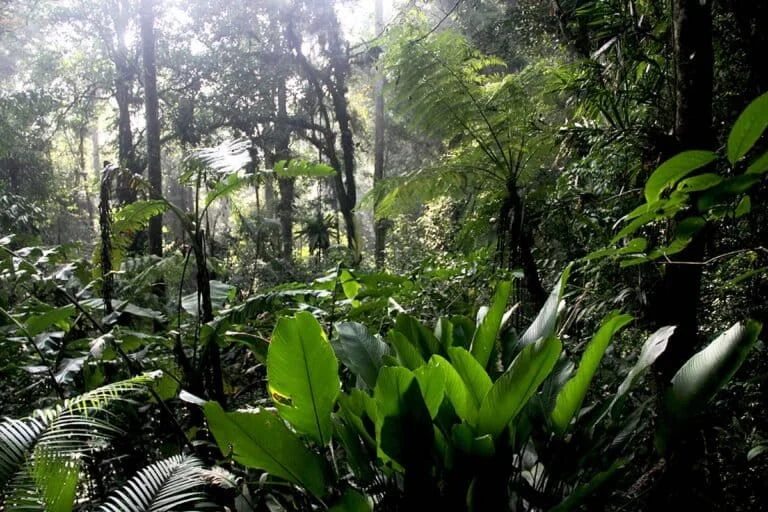
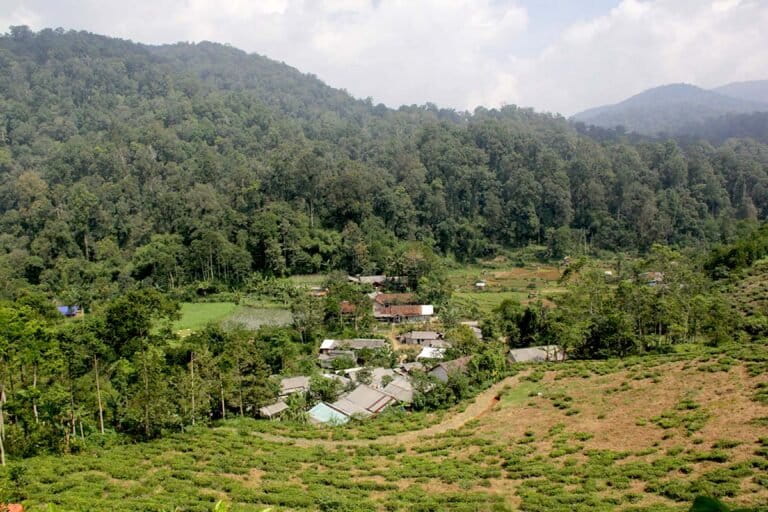
Deep within the misty slopes of Mount Halimun Salak in West Java, a quiet revolution is unfolding in the small village of Kampung Citalahab. In a modest wooden house that serves as a base of operations, rows of meticulously crafted fabrics are suspended from rafters, displaying a vibrant array of earthy tones and intricate leaf patterns. Among these organic designs, the unmistakable silhouette of the Javan gibbon—locally known as the owa jawa—is occasionally visible, printed onto the fibers of the cloth. This imagery is not merely decorative; it serves as a profound symbol of a community’s commitment to protecting one of the world’s most endangered primates and the ancient forest it calls home.
This initiative is the work of Ambu Halimun, a women’s empowerment collective dedicated to the art of eco-printing. Founded in 2020, the group has successfully merged traditional craftsmanship with modern conservation science, providing a sustainable livelihood for local housewives while fostering a deep-seated culture of environmental stewardship. By utilizing the biodiversity of the Mount Halimun Salak National Park (TNGHS) in a non-destructive manner, these women are proving that economic development and ecological preservation are not mutually exclusive goals.
The Genesis of Ambu Halimun and the Shift in Perspective
The story of Ambu Halimun began four years ago as a response to the need for alternative livelihoods in the villages bordering the national park. Historically, communities living near protected forests often faced limited economic options, sometimes leading to activities that strained natural resources. The formation of the group aimed to provide a productive space for women, transforming their relationship with the surrounding flora.

Mirna Maharani, a 30-year-old mother of two and a core member of the collective, reflects on how the project has fundamentally altered her worldview. Before the introduction of eco-printing, many of the plants now used for dyes and patterns were dismissed as mere weeds or agricultural nuisances. Today, these species are viewed as vital assets. "If we take leaves now, we do so sparingly. Only what is necessary," Maharani explained during a recent session at the basecamp. This shift from exploitation to "selective harvesting" represents a significant milestone in community-based conservation.
The group’s growth has been marked by a rigorous exploration of the local ecosystem. Since its inception, Ambu Halimun has identified over 100 species of indigenous plants capable of producing the natural pigments and tannins required for the eco-print process. To ensure the wild populations of these plants remain undisturbed, the collective has established a community garden where they cultivate the most frequently used species, creating a closed-loop system of production.
The Technical Artistry of Eco-Printing
Eco-printing is a complex, labor-intensive technique that requires both patience and a deep understanding of botany. Unlike synthetic dyeing, which often involves toxic chemicals and significant water pollution, eco-printing relies on the natural chemistry of plants. The process begins with "mordanting," a crucial step where the fabric—usually silk, cotton, or linen—is treated with natural minerals to ensure the plant dyes adhere permanently to the fibers.
Once the fabric is prepared, the women of Ambu Halimun carefully arrange leaves, flowers, and bark onto the cloth. The choice of foliage is strategic; different species yield different colors and levels of detail based on their tannin content. The fabric is then tightly rolled and steamed for several hours. This heat-induced reaction transfers the organic pigments and the physical shape of the leaf directly onto the textile, resulting in a unique, unrepeatable print.
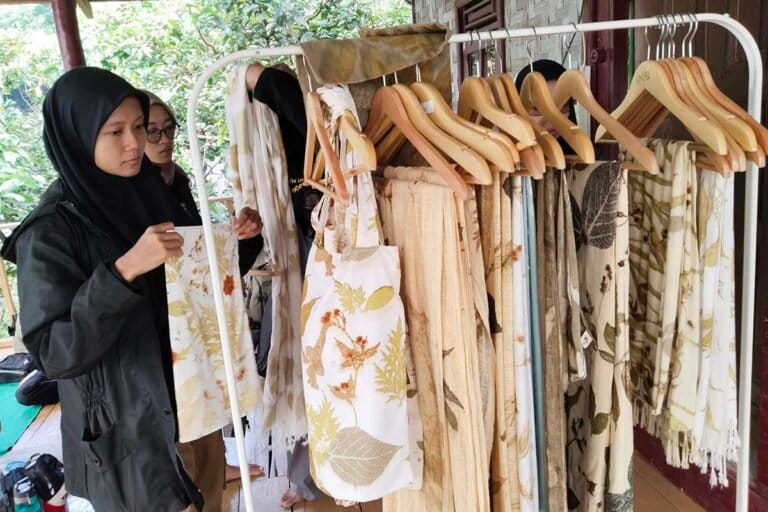
This methodical approach serves a dual purpose. Economically, it creates a high-value "slow fashion" product that appeals to environmentally conscious consumers and tourists. Ecologically, it reinforces a "slow" philosophy of life that aligns with the rhythms of the forest. The production schedule is often dictated by the seasons and the health of the plants, ensuring that the environment is never pushed beyond its regenerative capacity.
The Javan Gibbon: The Forest’s Silent Engineer
Central to the mission of Ambu Halimun is the protection of the Javan gibbon (Hylobates moloch). This silvery-furred primate is endemic to the island of Java and is currently classified as Endangered on the IUCN Red List. Experts estimate that fewer than 4,000 individuals remain in the wild, with the Mount Halimun Salak National Park serving as one of their last remaining strongholds.
The connection between the women’s textile work and the gibbons is rooted in the concept of the "forest farmer." Javan gibbons are primarily frugivorous, meaning their diet consists mostly of fruit. As they swing through the high canopy, they consume a variety of forest fruits and subsequently disperse the seeds across vast distances through their droppings. This natural seed dispersal is critical for the regeneration of the forest’s hardwood trees and the maintenance of its complex biodiversity.
"We have come to understand that the owa jawa is a farmer of the forest," Maharani noted. This realization has transformed the gibbon from a distant, protected species into a partner in the village’s survival. If the gibbons thrive, the forest remains healthy; if the forest remains healthy, the plants required for the Ambu Halimun’s eco-prints continue to flourish. This interdependence is the cornerstone of the group’s conservation narrative.

Collaborative Conservation and Anthropological Approaches
The success of Ambu Halimun is not an isolated event but the result of a collaborative framework involving non-governmental organizations and academic institutions. The Kiara Foundation (Yayasan Konservasi Ekosistem Alam Nusantara) has played a pivotal role in bridging the gap between scientific conservation goals and community needs.
Rahayu Oktaviani, Co-founder and Director of Kiara, emphasizes that effective conservation must be built on a foundation of "sense of ownership." According to Oktaviani, Kiara engaged with anthropological researchers to study the cultural nuances and historical relationship between the Citalahab residents and the Halimun forest before launching any programs. "We did not want to arrive with interventions that did not align with the community’s actual needs," she stated.
By integrating the eco-print project into the daily lives of the women, Kiara helped create a model where conservation is a byproduct of economic activity rather than a restriction on it. This approach acknowledges that for rural communities, the environment is not a separate entity to be looked at, but a lived space that must provide for their families. When the community sees tangible benefits from a standing forest—such as the income generated from eco-print sales—they become the forest’s most fierce defenders against illegal logging or poaching.
The Role of Women in Environmental Leadership
The involvement of women in the Citalahab conservation model has yielded unique benefits that traditional, male-dominated conservation efforts sometimes overlook. Eva Rachmawati, a lecturer at the Faculty of Forestry and Environment at IPB University, points out that women often possess a "meticulous and patient" approach that is essential for long-term community empowerment.

"Women have a significant capacity for education and community mobilization," Rachmawati explained. In Citalahab, the women of Ambu Halimun have moved beyond being simple artisans; they have become educators. They frequently host university students and researchers, teaching them about the properties of local plants and the importance of the gibbon habitat. This role as "knowledge keepers" has boosted the self-confidence of the village women, allowing them to take a more active role in local decision-making processes regarding land use and environmental policy.
Rachmawati further argues that in an era where conservation is often threatened by large-scale economic and political interests, grassroots movements led by women offer a resilient alternative. Their focus on the "micro-level"—the health of a single plant, the safety of a specific gibbon family, or the quality of a single piece of cloth—creates a granular level of protection that is difficult for external forces to dismantle.
Broader Implications and the Path Forward
The impact of Ambu Halimun extends beyond the borders of Sukabumi. As Indonesia seeks to meet its international commitments under the Kunming-Montreal Global Biodiversity Framework and the UN Sustainable Development Goals (SDGs), models like the one in Citalahab provide a blueprint for "community-led nature-based solutions."
The project addresses several SDGs simultaneously: Goal 5 (Gender Equality), Goal 8 (Decent Work and Economic Growth), Goal 12 (Responsible Consumption and Production), and Goal 15 (Life on Land). By proving that a small group of women can influence the trajectory of an endangered species through art and sustainable commerce, Ambu Halimun challenges the notion that conservation is the sole responsibility of the state.
However, challenges remain. The market for high-end, sustainable textiles is niche, and scaling such a project without compromising its ecological principles requires careful management. Furthermore, the Javan gibbon remains under threat from climate change and habitat fragmentation, which can isolate populations and reduce genetic diversity.
Nevertheless, the spirit in Kampung Citalahab is one of cautious optimism. The leaves of the Halimun forest, once ignored, now carry the weight of a community’s future. Each piece of cloth produced by Ambu Halimun is more than a garment; it is a map of the forest, a record of botanical diversity, and a testament to the idea that humans can live in harmony with the wild. In the quiet rustle of the canopy and the rhythmic steaming of the eco-print pots, a new story for Java’s forests is being written—one leaf at a time.