Tyo Susilo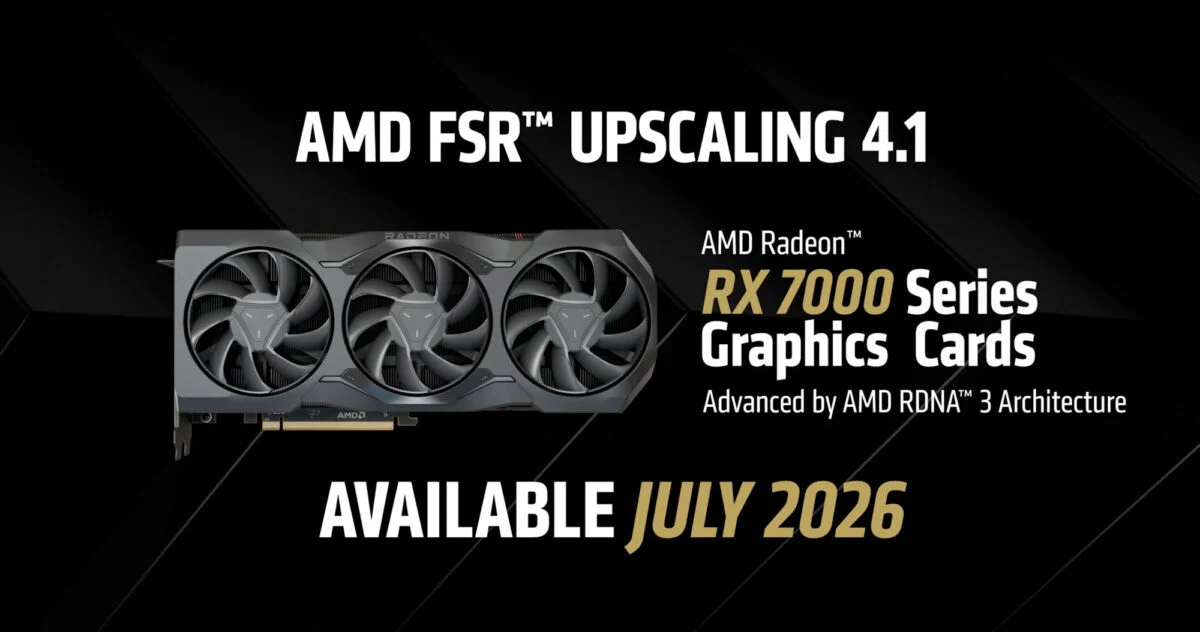
Advanced visual enhancement technology, AMD FidelityFX Super Resolution (FSR) Upscaling 4.1, is set to broaden its compatibility beyond its initial exclusive launch for the AMD Radeon RX 9000 Series. AMD has officially confirmed that this cutting-edge upscaling solution will also be made available to gamers utilizing older, yet still potent, Radeon RX 7000 Series and RX 6000 Series graphics cards. This strategic expansion signifies AMD’s commitment to democratizing access to advanced graphical fidelity, promising significant performance and visual quality improvements for a wider segment of its user base.
Broadening Horizons: FSR Upscaling 4.1’s Journey to Previous Generations
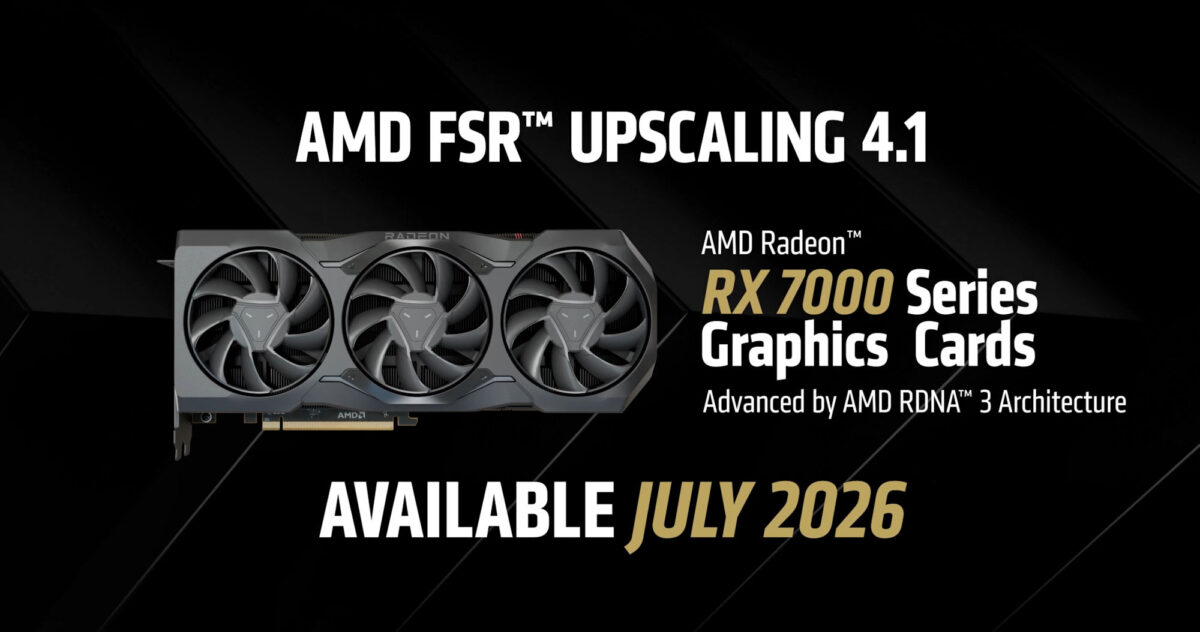
Initially, upon its unveiling, AMD FSR Upscaling 4.1 was slated exclusively for the nascent RX 9000 Series, a move that might have suggested a deliberate strategy to leverage the unique architecture of these newer GPUs. However, the recent confirmation from AMD indicates a significant shift in this approach. The company has now articulated a clear roadmap for bringing FSR Upscaling 4.1 to GPUs based on the RDNA 3 architecture, specifically the Radeon RX 7000 Series, with an anticipated rollout in July 2026. This development is poised to empower a substantial number of gamers who have invested in the RX 7000 Series, allowing them to benefit from AMD’s latest advancements in machine learning-based upscaling technology.
The technical underpinnings of FSR Upscaling 4.1’s implementation reveal nuanced differences across GPU generations. For the RX 9000 Series, which features the RDNA 4 architecture, FSR Upscaling 4.1 operates using FP8 (8-bit floating-point) instructions. This specific instruction set is uniquely compatible with the second-generation AI Accelerators integrated into these newer graphics cards. In contrast, the implementation for the Radeon RX 7000 Series, based on the RDNA 3 architecture, will utilize INT8 (8-bit integer) instructions. While the underlying computational approach differs, AMD has assured that this adaptation will not compromise the effectiveness of the technology.
Jack Huynh, AMD’s Senior Vice President and General Manager of Computing and Graphics, elaborated on this expansion, stating, "We are excited to bring the power of FSR Upscaling 4.1 to a broader range of our Radeon customers. The adaptability of our FSR technology ensures that gamers with RDNA 3 GPUs will experience significant improvements in both performance and visual fidelity." He further highlighted the robust ecosystem support anticipated for the RX 7000 Series launch, noting, "We anticipate FSR Upscaling 4.1 will be compatible with over 300 games upon its release for the RX 7000 Series, underscoring our dedication to broad game developer adoption."
A Glimpse into the Future: RDNA 2 Architecture and Beyond
The commitment to backward compatibility extends even further, with AMD confirming plans to introduce FSR Upscaling 4.1 support for the Radeon RX 6000 Series. This move targets GPUs built on the RDNA 2 architecture, a generation that has been a cornerstone of PC gaming for several years. The rollout for the RX 6000 Series is projected for early 2027. This phased approach ensures that AMD’s most impactful visual enhancement technology reaches a vast majority of its current and recent customer base.
The upcoming FSR Upscaling 4.1 for the RX 6000 Series is not merely a port of existing functionality. It represents an evolution from the foundational FSR 4 technology. AMD has indicated that this iteration will feature enhanced upscaling quality, delivering even sharper and more detailed images. Furthermore, improvements are slated for the Ultra Performance and Dynamic Resolution Scaling (DRS) modes, offering gamers greater control over the balance between visual fidelity and frame rates, catering to diverse gaming preferences and hardware capabilities.
This expansion strategy is a testament to AMD’s ongoing efforts to refine and democratize its proprietary technologies. FSR, in its various iterations, has consistently aimed to provide a competitive edge in graphical performance without the strict hardware exclusivity often associated with rival upscaling solutions. By extending FSR Upscaling 4.1 to older architectures, AMD not only enhances the value proposition of its existing hardware but also strengthens its position in the competitive GPU market, fostering brand loyalty and encouraging wider adoption of its gaming ecosystem.

The Technological Underpinnings and Strategic Implications
AMD’s FidelityFX Super Resolution (FSR) is an open-source spatial upscaling technology designed to boost frame rates in games. FSR 4.1 represents a significant leap forward, incorporating advanced machine learning techniques and temporal data processing to reconstruct higher-resolution images from lower-resolution inputs. This process aims to minimize visual artifacts, preserve fine details, and maintain image stability, even at aggressive upscaling factors.
The distinction between FP8 and INT8 instruction sets highlights AMD’s architectural evolution. FP8 processing, particularly with dedicated AI accelerators, offers a pathway to higher computational efficiency and power savings for AI-driven tasks. The RDNA 4 architecture’s integration of advanced AI hardware is designed to exploit these efficiencies. However, the ability to adapt FSR Upscaling 4.1 to the INT8 capabilities of RDNA 3 GPUs demonstrates a pragmatic approach to software development, ensuring that the benefits of cutting-edge technology are not confined to the very latest hardware. This adaptability is crucial for fostering a healthy gaming ecosystem, where a wide array of hardware can benefit from software advancements.
The broader implications of this expansion are multifaceted. For gamers, it translates into the potential for smoother gameplay at higher resolutions and graphical settings, particularly in demanding titles. This can extend the lifespan of existing hardware, allowing users to continue enjoying modern games without immediate upgrades. For game developers, the wider compatibility of FSR Upscaling 4.1 simplifies integration efforts, enabling them to deploy enhanced visual features across a larger install base of AMD GPUs. This can lead to more consistent visual experiences across different hardware configurations.
From a market perspective, AMD’s strategy of broad compatibility for FSR is a key differentiator. While competing upscaling technologies may offer proprietary advantages, AMD’s open approach and commitment to supporting older hardware foster goodwill and encourage gamers to invest in the Radeon ecosystem, confident that their hardware will continue to receive performance-enhancing software updates. The projected availability of FSR Upscaling 4.1 across RDNA 4, RDNA 3, and RDNA 2 architectures covers a significant portion of AMD’s gaming GPU market share, potentially impacting millions of gamers worldwide.

A Look Back and Ahead: The Evolution of Upscaling Technology
The journey of FSR began as AMD’s answer to the growing demand for higher frame rates without sacrificing visual quality. FSR 1.0, released in June 2021, was a spatial upscaler that offered a significant performance uplift across a wide range of GPUs, including those from NVIDIA. FSR 2.0, introduced in May 2022, marked a substantial advancement with its temporal upscaling capabilities, leveraging per-frame data for improved image quality and reduced aliasing. FSR 3, unveiled in September 2023, further enhanced the technology by integrating frame generation, which creates entirely new frames between rendered frames to dramatically increase perceived frame rates, particularly in CPU-bound scenarios.
FSR Upscaling 4.1, as detailed in these announcements, appears to build upon the foundation laid by FSR 3, likely refining the upscaling algorithms and potentially introducing new enhancements to its AI-driven components. The specific mention of improved Ultra Performance and DRS modes suggests a focus on user configurability and optimization for various gaming scenarios. The fact that it’s referred to as "Upscaling 4.1" implies it’s an iterative improvement rather than a complete overhaul of FSR 3, suggesting a continued focus on refining existing features and performance.
The timeline for these releases is ambitious:
- July 2026: FSR Upscaling 4.1 support for Radeon RX 7000 Series (RDNA 3).
- Early 2027: FSR Upscaling 4.1 support for Radeon RX 6000 Series (RDNA 2).
- Initial Release: FSR Upscaling 4.1 support for Radeon RX 9000 Series (RDNA 4).
This phased rollout allows AMD to manage development resources effectively and ensure a stable and optimized experience for each GPU architecture. The commitment to providing these updates well into the future demonstrates a long-term vision for supporting its customer base and pushing the boundaries of visual technology in PC gaming. As gamers eagerly anticipate these updates, the expanded availability of FSR Upscaling 4.1 promises a more visually immersive and performant gaming future across a wider spectrum of AMD Radeon graphics cards.