Azin Asro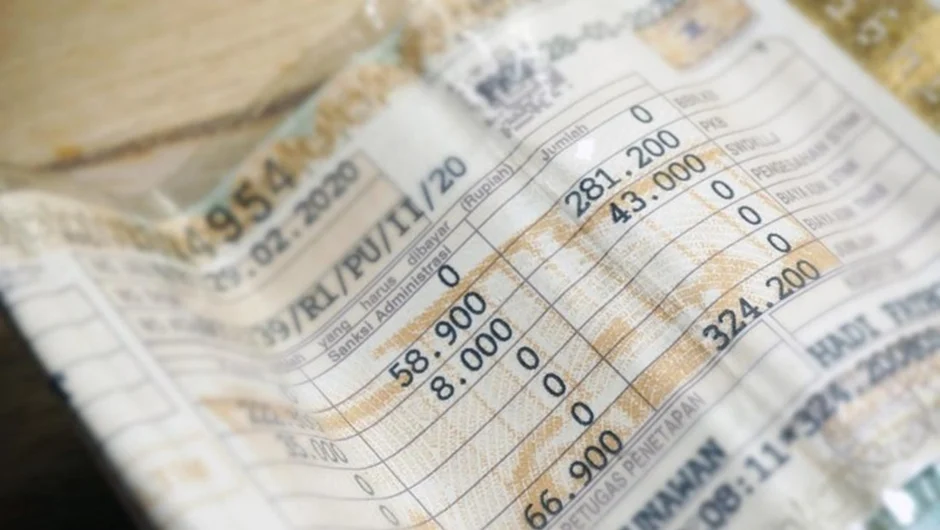
The provincial government of Bengkulu has officially launched a strategic motor vehicle tax amnesty program, locally known as "pemutihan," aimed at alleviating the financial burden on vehicle owners while simultaneously bolstering regional revenue streams. Governor Helmi Hasan announced that the initiative is scheduled to run from May 1, 2026, through August 31, 2026, providing a four-month window for citizens to settle their outstanding tax obligations without the accumulation of administrative fines. This policy comes as a direct response to widespread public demand and is designed to bring thousands of unregistered or delinquent vehicles back into the formal tax system.
The decision to implement this amnesty program follows a period of intensive consultation between the provincial executive branch and various stakeholders, including the Regional Revenue Agency (Bapenda) and the local police department. According to the Governor, the program is a calculated move to address the high volume of inquiries from the public regarding tax relief. By waiving late payment penalties, the government hopes to incentivize residents who have fallen behind on their annual Motor Vehicle Tax (PKB) and the Transfer of Vehicle Ownership Fee (BBNKB), thereby ensuring a more accurate and comprehensive database of vehicle ownership within the province.
Strategic Rationale and Public Demand
Governor Helmi Hasan emphasized that the 2026 tax amnesty is not merely a fiscal tool but a social policy intended to support the economic recovery of the Bengkulu people. In his official statement, the Governor noted that the provincial administration had received numerous requests via social media, public forums, and direct correspondence asking for the return of the "pemutihan" program. The government recognized that many citizens were eager to comply with their civic duties but were deterred by the compounding interest and penalties associated with years of unpaid taxes.
"Because many members of the community have been asking when the motor vehicle tax amnesty would be reopened, we have decided to open this opportunity once again," Governor Helmi Hasan stated during a press briefing at the provincial capital. He further clarified that this specific program is unique in its scope and timing, noting that it is intended to be a singular event during his current administrative period. This "once-in-a-term" approach is designed to create a sense of urgency among vehicle owners, discouraging the habit of waiting for annual amnesties and instead promoting a culture of consistent, timely tax payments.
Detailed Scope of the 2026 Amnesty Program
The 2026 amnesty program in Bengkulu covers several key areas of motor vehicle taxation. The primary focus is the total waiver of administrative sanctions or fines for late payment of the annual Motor Vehicle Tax (PKB). Under normal circumstances, these fines can significantly increase the total amount owed, often doubling the original tax principal over several years. By removing these penalties, the government allows taxpayers to settle only the principal amount owed for the current and previous years.
In addition to PKB fine waivers, the program typically includes incentives for the Transfer of Vehicle Ownership Fee (BBNKB). This is particularly relevant for residents who have purchased second-hand vehicles but have not yet updated the registration to reflect their own names. Providing relief for BBNKB encourages the "legalization" of vehicle ownership, which is crucial for law enforcement and traffic management. When vehicle data matches the actual owner, it simplifies the implementation of Electronic Traffic Law Enforcement (ETLE) and ensures that tax notices are sent to the correct addresses.
The program will be operational across all Samsat (One-Stop Integrated Funding System) offices throughout the Bengkulu Province. To accommodate the expected surge in applicants, the Regional Revenue Agency is expected to deploy mobile Samsat units and enhance digital payment platforms, allowing residents in remote areas of the province to participate without traveling long distances to the city centers.
Chronology and Implementation Timeline
The implementation of the tax amnesty follows a structured timeline designed to maximize outreach and efficiency. The Bengkulu provincial government has outlined a three-phase approach:
- Preparation and Socialization Phase (January – April 2026): Prior to the official launch on May 1, the government will engage in an extensive public awareness campaign. This includes the use of billboards, radio advertisements, social media campaigns via the Bapenda Instagram account, and community outreach programs. The goal is to ensure that every vehicle owner in the province, from the coastal regions to the mountainous interior, is aware of the dates and requirements.
- Operational Phase (May 1 – August 31, 2026): During this four-month period, the waiver of fines is active. Taxpayers can visit their local Samsat offices or use designated online applications to process their payments. Governor Helmi Hasan has urged the public not to wait until the final weeks of August, as history shows that the last-minute rush can lead to long queues and system delays.
- Evaluation and Enforcement Phase (September 2026 onwards): Once the amnesty period concludes, the provincial government, in coordination with the police, plans to intensify road checks and data verification. The Governor has issued a stern warning that no further extensions or delays will be granted. Vehicles found to be delinquent after the August 31 deadline will face the full weight of administrative sanctions, and in some cases, potential deregistration as per national regulations regarding "data deletion" for vehicles that have not paid taxes for two consecutive years after the expiration of the five-year registration.
Supporting Data and Economic Context
Bengkulu, like many other provinces in Indonesia, relies heavily on Regional Original Income (PAD) to fund infrastructure projects, healthcare, and education. Motor vehicle taxes are a cornerstone of this revenue. According to regional fiscal data, a significant percentage of registered vehicles in Bengkulu are currently classified as "non-active" or delinquent. In some districts, the delinquency rate has historically hovered between 30% and 40%, representing billions of rupiah in unrealized revenue.
The 2026 amnesty is expected to recover a substantial portion of these arrears. Previous iterations of similar programs in other Indonesian provinces have shown that while the government "loses" the revenue from fines, the influx of principal tax payments often exceeds the projected revenue targets for the fiscal year. Furthermore, by bringing these vehicles back into the system, the province secures a higher baseline of predictable tax revenue for subsequent years.
From a broader economic perspective, the program acts as a micro-stimulus. By removing the burden of heavy fines, the government leaves more disposable income in the hands of the citizens, which can then be spent within the local economy. For small business owners who rely on motorcycles or light trucks for logistics, this relief is particularly impactful, as it allows them to maintain legal compliance without sacrificing their operational capital.
Official Responses and Stakeholder Reactions
The announcement has been met with positive reactions from various sectors. The Regional Revenue Agency (Bapenda) of Bengkulu Province has expressed its readiness to handle the increased workload. In a statement released via their official social media channels, Bapenda representatives urged citizens to prepare their documentation, including the original Vehicle Registration Certificate (STNK), the Identity Card (KTP) matching the registration, and the original Vehicle Ownership Document (BPKB).
"We invite the people of Bengkulu to immediately take advantage of this program," a Bapenda spokesperson noted. "This is a golden opportunity that only comes once during this administration. It is a chance to start fresh with a clean tax record."
Logistics and transportation associations have also welcomed the move. Many transport operators in the province have struggled with fluctuating fuel prices and maintenance costs; the waiver of tax fines provides a much-needed financial breathing room. However, some fiscal analysts suggest that while amnesties are effective for short-term revenue spikes, the government must also focus on long-term structural reforms to make tax payment more convenient, such as further integrating digital payment systems and providing "early bird" discounts for those who pay before the deadline.
Analysis of Implications and Long-term Impact
The 2026 Bengkulu tax amnesty carries significant implications for both the government and the governed. For the provincial administration, the success of this program will be a litmus test for its ability to manage public expectations and fiscal responsibility. If the program achieves high participation rates, it will provide a much-needed boost to the provincial budget (APBD), enabling the completion of vital infrastructure projects such as road repairs in rural agricultural corridors.
However, there is an inherent risk associated with frequent tax amnesties. Behavioral economists often point out that if the public expects an amnesty every few years, they may become less inclined to pay taxes on time, essentially waiting for the next "pemutihan" to clear their debts. Governor Helmi Hasan’s emphasis that this is a "one-time" event for his term is a strategic communication effort to mitigate this "moral hazard." By framing the amnesty as a rare and limited opportunity, the government aims to reset the public’s payment habits rather than encouraging future delinquency.
Moreover, the program aligns with national efforts to synchronize vehicle data across Indonesia. With the implementation of the "Single Identification Number" (NIK-based taxation), having an accurate database of vehicle owners in Bengkulu is essential for national security and financial transparency. The amnesty serves as a "data cleansing" exercise, allowing the government to identify which vehicles are still in operation and which have been scrapped or moved out of the province.
Conclusion and Call to Action
As the May 1, 2026, start date approaches, the Bengkulu Provincial Government remains firm in its message: this is the final opportunity for residents to settle their vehicle tax debts without penalty. The program represents a balanced approach to governance—listening to the financial hardships of the people while maintaining the necessary fiscal discipline to fund public services.
Governor Helmi Hasan’s final remarks served as a clear directive to the citizenry. "Don’t let there be any more excuses. After this deadline, there will be no more delays in paying taxes," he asserted. For the residents of Bengkulu, the four-month window between May and August 2026 is a critical period to ensure their vehicles remain legal and to contribute to the continued development of the province. With the provincial government providing the platform for relief, the responsibility now shifts to the taxpayers to fulfill their obligations and take advantage of this limited-time offer.