Chalifah Fatihah
A groundbreaking study initiated by Chinese researcher Hongmei Wang is exploring a novel concept within reproductive health: the possibility of extending the interval between menstrual periods to once every three months and assessing its impact on female fertility. This research, originating from the Institute of Zoology at the Chinese Academy of Sciences, delves into the fundamental question of whether reducing the frequency of menstruation could lead to a prolonged reproductive lifespan for women.
The inquiry is driven by a desire to understand the intricate mechanisms of ovarian aging and its relationship with fertility. Wang, a professor with a specialization in reproductive biology, early human development, and ovarian aging, is uniquely positioned to lead this investigation. Her work aims to challenge conventional understanding of the menstrual cycle and its direct correlation with the depletion of ovarian reserves.
While the research is in its nascent stages and currently confined to scientific inquiry rather than providing medical recommendations, it has sparked considerable interest within the scientific community and among women concerned about their reproductive health. The core hypothesis is that by potentially slowing down the rate at which ovarian follicles are utilized, the window of fertility might be extended.
The Science Behind the Study
At the heart of Wang’s research lies the concept of ovarian reserve, which refers to the remaining pool of eggs a woman has. This reserve naturally diminishes with age, a process influenced by ovulation and the atresia (degeneration) of ovarian follicles. Current medical understanding, as outlined by organizations like the American Society for Reproductive Medicine (ASRM), indicates that reproductive aging is a multifaceted process not solely dictated by monthly ovulation. ASRM explains that the decline in the number of oocytes and the overall health of the ovarian reserve are influenced by a complex interplay of genetic factors, lifestyle, and the natural aging process itself.
The idea of manipulating menstrual frequency is not entirely new. The medical field has long utilized methods of menstrual suppression, primarily through hormonal therapies. These interventions are typically prescribed for specific medical conditions such as severe menstrual pain, endometriosis, or other gynecological issues where managing heavy or frequent bleeding is crucial for a patient’s well-being. The American College of Obstetricians and Gynecologists (ACOG) provides guidance on these medical management approaches. However, it is crucial to note that these established methods of menstrual suppression have not been proven to conserve eggs or extend fertility. Their primary objective is symptom management and is not directly linked to altering the fundamental biological clock of ovarian aging.
Wang’s research seeks to investigate a different avenue: a deliberate reduction in the frequency of menstruation, not necessarily for symptom relief but for its potential to influence the rate of ovarian reserve depletion. This approach moves beyond existing therapeutic applications of hormonal regulation and probes a more fundamental aspect of female reproductive biology.
Background and Context
The global decline in fertility rates and the increasing average age of first-time mothers worldwide have amplified the importance of understanding and potentially extending female reproductive potential. In many developed nations, women are delaying childbirth due to educational pursuits, career aspirations, and economic considerations. For instance, data from the Centers for Disease Control and Prevention (CDC) in the United States consistently shows an upward trend in the average age of first birth, with women in their early thirties becoming increasingly common as first-time mothers. This societal shift underscores the relevance of research that could offer insights into preserving or extending fertility.
Historically, the menstrual cycle has been viewed as a predictable monthly event, a biological rhythm integral to female reproduction. Its regularity has been a cornerstone of understanding reproductive health and timing. However, scientific advancements have begun to unveil a more nuanced picture. The concept of "menstrual suppression" has gained traction, particularly in managing debilitating menstrual symptoms. This has opened dialogues about whether the monthly cycle is an immutable biological necessity or a process that can be modulated for specific purposes.
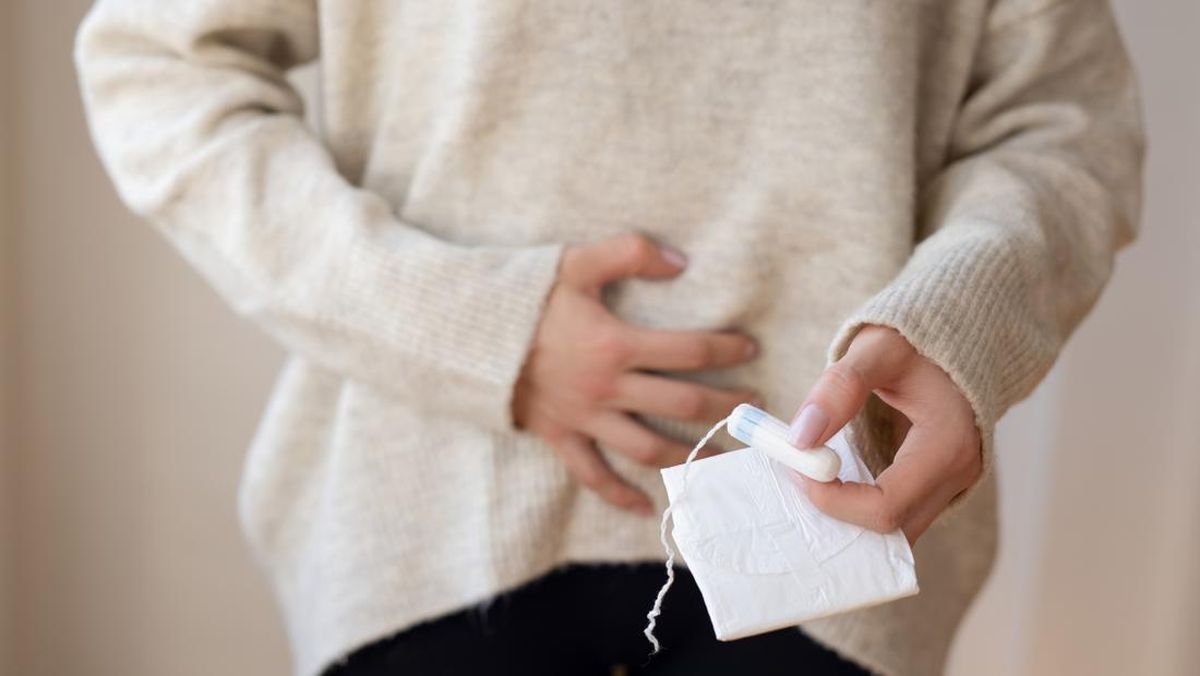
The current study by Wang can be seen as a natural progression of this evolving understanding. It asks: if we can suppress menstruation for medical reasons, could a controlled reduction in its frequency have a beneficial effect on fertility by potentially slowing down the natural attrition of ovarian follicles?
Timeline and Future Directions
The research is still in its early phases. While the exact timeline for the study’s progression is not publicly detailed, scientific investigations of this nature typically involve several stages:
- Pre-clinical Research: This would likely involve in-vitro studies and potentially animal models to understand the biological mechanisms at play. Researchers would explore how altering hormonal signals associated with menstruation affects ovarian follicle development and survival.
- Clinical Trials (Phase I): If pre-clinical studies yield promising results, human trials would commence. These initial trials would focus on safety and dosage, assessing how the human body responds to the proposed intervention.
- Clinical Trials (Phase II & III): Larger-scale trials would then evaluate the efficacy of the intervention in a significant patient population. This would involve measuring the impact on fertility markers, ovarian reserve, and potentially pregnancy rates.
- Regulatory Approval: If proven safe and effective, the findings would be submitted for regulatory approval by health authorities.
Given the complexity of reproductive biology and the ethical considerations involved in human fertility research, this process is likely to be lengthy, potentially spanning several years. The outcome of Wang’s research, regardless of its ultimate findings, is expected to contribute significantly to the scientific understanding of ovarian aging and female reproductive potential.
Potential Implications and Analysis
The implications of Wang’s research, should it prove successful, could be far-reaching.
- Extended Reproductive Window: The most direct implication would be the potential to extend the period during which women can conceive naturally. This could offer greater reproductive autonomy and flexibility, allowing women more time to plan families without the immediate pressure of diminishing fertility.
- Reduced Ovarian Aging: If the hypothesis holds true, it could lead to a better understanding of how to mitigate the effects of ovarian aging, potentially leading to interventions that slow down the biological clock of the ovaries.
- New Avenues for Fertility Treatments: The research might pave the way for novel fertility treatments or strategies, complementing existing assisted reproductive technologies like in-vitro fertilization (IVF).
- Societal Impact: A longer fertile window could influence societal norms around family planning, career progression, and education, potentially alleviating some of the pressures women face in balancing these aspects of their lives.
However, it is crucial to temper expectations. The human reproductive system is incredibly complex, and interventions that alter its natural rhythms carry inherent risks. Potential side effects of hormonal interventions, even those designed to reduce menstrual frequency, need thorough investigation. Furthermore, the concept of "extending fertility" must be carefully defined. While increasing the window of opportunity for conception is one aspect, the quality of eggs and overall reproductive health are also critical factors that may not be directly addressed by simply altering menstrual cycles.
Expert Reactions and Broader Context
While specific reactions from other leading reproductive endocrinologists to this nascent research are not yet widely published, the scientific community generally approaches such novel hypotheses with cautious optimism. Dr. Sarah Johnson, a reproductive endocrinologist not involved in the study, commented, "Any research that seeks to deepen our understanding of ovarian aging and female fertility is incredibly valuable. The concept of influencing the rate of follicle depletion by altering menstrual frequency is intriguing, but it is imperative that such research is conducted with rigorous scientific methodology and that the safety and long-term implications for women are thoroughly investigated."
The broader context of reproductive health research is increasingly focused on personalized medicine and understanding individual biological variations. Wang’s study aligns with this trend, aiming to uncover more nuanced biological pathways that govern fertility and aging.
Conclusion and Future Outlook
Hongmei Wang’s research into extending menstrual cycles to potentially enhance female fertility represents a bold step into uncharted territory within reproductive science. While the idea is compelling and addresses a growing societal need for greater reproductive flexibility, it remains a scientific hypothesis requiring extensive validation. The journey from a novel concept to a clinically proven intervention is long and complex, involving rigorous research, ethical considerations, and substantial evidence.
As this research progresses, the scientific and medical communities will be keenly observing its development. Regardless of the ultimate findings, Wang’s work is poised to contribute valuable insights into the intricate biological processes that govern female reproduction and aging, potentially reshaping our understanding of fertility and opening new dialogues about women’s reproductive health in the 21st century. The promise of extending the fertile window, while still speculative, highlights the continuous innovation and dedication within the field of reproductive medicine to address the evolving needs and challenges faced by women worldwide.