Azin Asro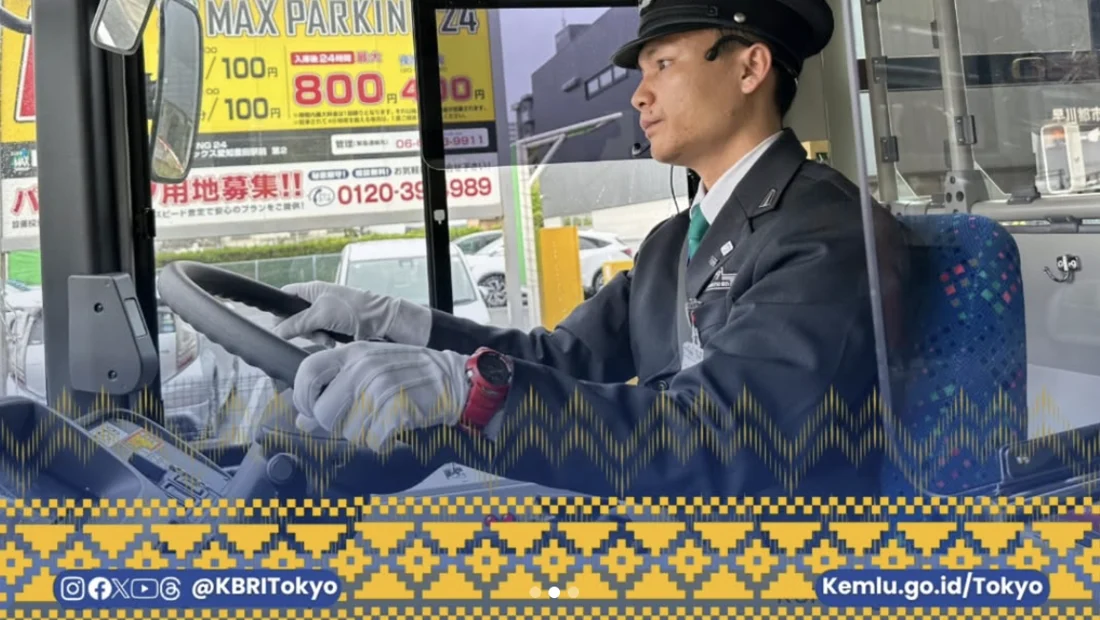
The landscape of Japan’s public transportation sector is undergoing a historic transformation as the nation looks toward Southeast Asia to solve its mounting labor shortages. Recently, three Indonesian nationals—Azzam Al Antar, Dwi Harjanto, and Seto Ramadhan Siswadi—made headlines after being officially appointed as professional bus drivers in Aichi Prefecture. This milestone is not merely an individual success story for these three men; it represents a strategic shift in Japanese immigration and labor policy, marking the beginning of a five-year plan to integrate tens of thousands of foreign drivers into the country’s logistics and transport infrastructure. As Japan grapples with an aging population and a shrinking workforce, the recruitment of Indonesian drivers has emerged as a preferred solution, driven by a unique combination of technical compatibility, cultural alignment, and rigorous specialized training programs.
The Demographic Imperative and the 2028 Goal
Japan’s decision to open its transport sector to foreign workers is a response to a critical demographic crisis. For decades, the country has faced a declining birthrate and a rapidly aging society, leading to a shortage of workers in essential service industries. The transportation sector, including taxis, buses, and trucks, has been among the hardest hit. To address this, the Japanese government announced an ambitious target in early 2024: to recruit 24,500 foreign nationals to work as drivers by the end of the 2028 fiscal year.
This policy shift was formalized in March 2024, when the Japanese government officially added the transportation of goods and passengers to the list of industries eligible for the "Specified Skilled Worker" (SSW) residency status. Previously, the SSW program was limited to sectors like construction, nursing care, and agriculture. By including bus, taxi, and truck driving, the government signaled that the labor shortage in the automotive transport industry had reached a level that could no longer be managed by the domestic workforce alone. The entry of Azzam, Dwi, and Seto into the Aichi Prefecture transit system is the first wave of this broader movement, proving that the pathway from Indonesian training centers to Japanese highways is now fully operational.
The Role of the Japan Indonesia Driving School
The successful deployment of Indonesian drivers is largely attributed to the establishment of specialized infrastructure designed to bridge the gap between the two nations’ driving standards. In August 2024, the Japan Indonesia Driving School (JIDS) was inaugurated in Karanganyar, Central Java. This facility is a collaborative venture between the Japanese firm KS Global Co. and local Indonesian vocational training institutions. It serves as a high-tech incubator for drivers who wish to pursue careers in Japan.
The JIDS facility is unique because it replicates the Japanese driving environment on Indonesian soil. The training grounds are equipped with Japanese-style road markings, including "Tomare" (Stop) signs written in Japanese characters and railway crossing signals that mirror the specific designs found in Japanese prefectures. Candidates are also trained on specialized "slope tracks" to master the hill-start maneuvers required in Japan’s mountainous terrain. Beyond technical skills, the curriculum includes intensive Japanese language courses. Drivers must achieve a level of proficiency that allows them not only to handle daily conversation but also to understand the complex legal and technical terminology required to pass the rigorous Japanese driver’s license examinations.
Navigating the Japanese Licensing System
For a foreign driver, the journey to becoming a bus driver in Japan is a multi-stage process that requires patience and high technical competence. Even after completing their preliminary training in Indonesia and passing the initial selection process, candidates face significant hurdles upon arrival in Japan. The first step is the conversion of their Indonesian driver’s license to a standard Japanese license. However, a standard license is insufficient for public transport.
To operate a bus or a taxi, drivers must obtain a "Class 2 License" (Dai-ni-shu Menkyo). This is a specialized certification for those who transport fare-paying passengers. The Class 2 exam is notoriously difficult, even for native Japanese speakers, as it requires a deep understanding of passenger safety regulations, advanced driving ethics, and high-precision vehicle handling. Once the Class 2 license is secured, the drivers do not immediately start their routes. They must undergo "Route Training," where they drive actual bus routes under the supervision of senior Japanese mentors to familiarize themselves with local traffic patterns, stop announcements, and the high standards of Japanese customer service.
Strategic Synergy Technical and Cultural Compatibility
The preference for Indonesian drivers over other nationalities is not accidental. Kenichi Hikawa, the Managing Director of KS Global, has pointed out that Indonesia offers a level of technical synergy that is rare. One of the most significant factors is the "Left-Hand Traffic" rule. Both Japan and Indonesia drive on the left side of the road with the steering wheel on the right side of the vehicle. This eliminates the need for drivers to "re-learn" their spatial orientation, which is a common hurdle for drivers from the United States, mainland Europe, or China.
Furthermore, the Indonesian automotive market is dominated by Japanese brands such as Toyota, Hino, and Isuzu. Most Indonesian commercial drivers have spent their entire careers operating vehicles that use the same mechanical layouts, dashboard configurations, and maintenance protocols as those used in Japan. This familiarity reduces the training time required for drivers to become comfortable with Japanese bus fleets.
The Role of Social and Religious Factors
In addition to technical skills, Japanese transport companies have identified social and religious factors that make Indonesian drivers particularly attractive. Naomi Irie, the Head of Recruitment for Meitetsu Bus Co. based in Nagoya, noted that the religious background of many Indonesian candidates plays a role in their reliability. As the majority of Indonesians are Muslims, they generally abstain from alcohol. In a profession where sobriety is a non-negotiable safety requirement, this cultural trait provides Japanese employers with a sense of "peace of mind."
"The fact that most Indonesians do not consume alcohol gives us confidence regarding safety and incident prevention," Irie stated during the recruitment process. She also praised the character of the Indonesian recruits, describing them as "friendly and serious" about their duties. This combination of religious discipline and a professional work ethic has positioned Indonesia as a primary "talent reservoir" for Japanese companies like Meitetsu Bus, which are under pressure to maintain service levels despite a dwindling local labor pool.
Economic and Social Implications
The implications of this program extend beyond the transportation sector. For Indonesia, the deployment of skilled drivers to Japan represents a significant opportunity for human capital development. These drivers earn significantly higher wages than they would in the domestic market, contributing to the nation’s economy through remittances. Moreover, they gain experience in one of the world’s most disciplined and technologically advanced transportation systems—skills that will be invaluable if they eventually return to Indonesia to work in the developing domestic transit sectors of cities like Jakarta or Surabaya.
For Japan, the program is a litmus test for the country’s ability to integrate foreign workers into public-facing roles. Unlike factory work or construction, bus driving requires constant interaction with the Japanese public. The success of Azzam, Dwi, and Seto will be closely watched by policymakers to determine if the "Specified Skilled Worker" program can be expanded even further. If the integration is successful, it could pave the way for foreign workers to enter other service-heavy sectors that were previously considered culturally "off-limits" to non-Japanese nationals.
A Timeline of the Transition
To understand the speed of this transition, one must look at the chronology of events leading to the current situation:
- March 2024: The Japanese Cabinet officially approves the expansion of the SSW visa category to include the automobile transport industry, setting a target of 24,500 workers over five years.
- August 2024: The Japan Indonesia Driving School (JIDS) opens in Karanganyar, Central Java, establishing a direct pipeline for recruitment and training.
- Late 2024: The first cohort of Indonesian drivers, including Azzam, Dwi, and Seto, completes their initial training and arrives in Japan to begin the license conversion and Class 2 certification process.
- 2025-2028: Japan plans to scale up recruitment, with Meitetsu Bus Co. and other major regional transport providers expected to hire hundreds of additional drivers from Indonesia annually.
Conclusion and Future Outlook
The arrival of Indonesian bus drivers in Aichi Prefecture is a symbolic and practical victory for both nations. It demonstrates Japan’s growing pragmatism in the face of its demographic challenges and highlights Indonesia’s role as a vital partner in the global labor market. By focusing on technical compatibility, such as left-side driving, and leveraging cultural traits that align with safety standards, both countries have created a model for international labor cooperation that is both sustainable and mutually beneficial.
As the program moves toward its 2028 goal, the focus will likely shift toward ensuring long-term retention and social integration. The success of these early pioneers will be the foundation upon which Japan builds a more diverse and resilient transportation network. For Azzam, Dwi, and Seto, the road ahead involves more than just navigating the streets of Aichi; they are driving the transition toward a new era of Japanese society, where international talent is the engine of national stability.