Azin Asro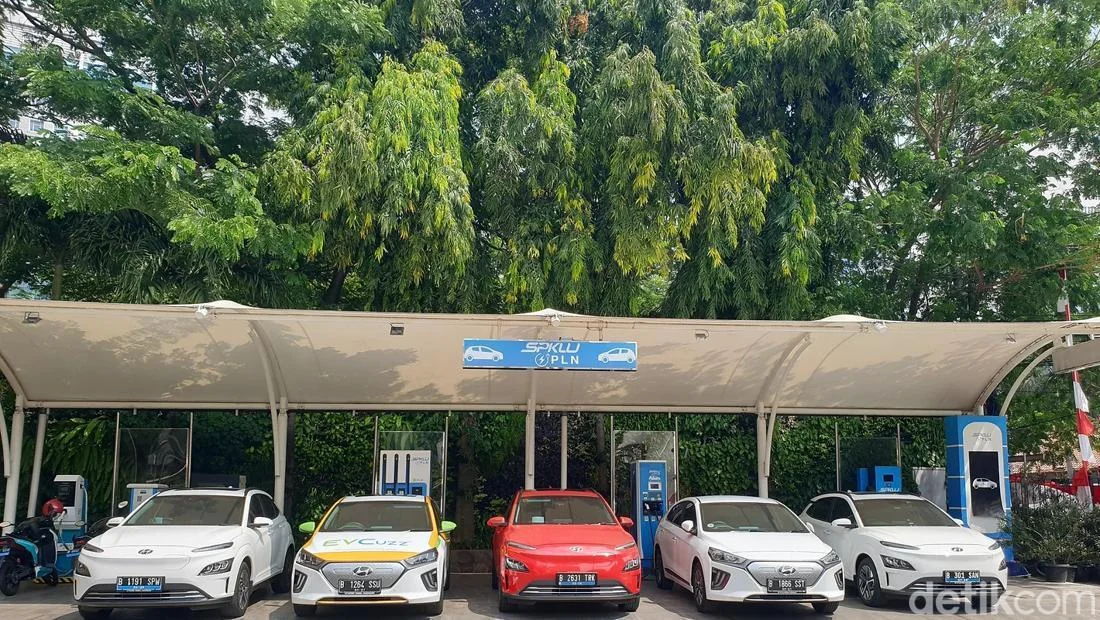
The Government of Indonesia has officially announced a refined incentive framework for the domestic electric vehicle (EV) sector, establishing a tiered subsidy system that prioritizes pure battery electric vehicles (BEVs) utilizing nickel-based battery chemistry. Finance Minister Purbaya confirmed that this strategic pivot is designed to align the nation’s fiscal policy with its long-term industrial downstreaming objectives, ensuring that Indonesia’s vast nickel reserves remain the cornerstone of the global energy transition. Speaking at the "APBN KITA" press conference on May 5, 2026, Minister Purbaya emphasized that the new scheme excludes hybrid vehicles, focusing exclusively on zero-emission technology to accelerate the country’s decarbonization efforts and industrial sovereignty.
A Strategic Pivot Toward Nickel-Based Battery Ecosystems
The core of the new policy lies in the differentiation of subsidies based on the chemical composition of the vehicle’s battery. While the global automotive market has seen a rise in the use of Lithium Iron Phosphate (LFP) batteries—primarily driven by Chinese manufacturers seeking lower production costs—Indonesia is doubling down on Nickel Manganese Cobalt (NMC) and other nickel-intensive chemistries. Minister Purbaya articulated that the government will offer significantly higher incentives for vehicles equipped with nickel-based batteries compared to non-nickel alternatives.
"The logic is simple and rooted in our national interest: we want to ensure our nickel is utilized," Minister Purbaya stated. "We are currently scanning the most effective application for the Value Added Tax (PPN) borne by the government. We are looking at a range where the government may cover between 40 percent and 100 percent of the PPN, depending on the technological specifications and local content requirements."
This move serves as a direct rebuttal to international skepticism regarding Indonesia’s ability to compete in the evolving battery landscape. Minister Purbaya referenced past editorial critiques from global publications, such as The Economist, which had suggested that Indonesia’s dream of becoming a global battery hub was fading as the industry shifted toward non-nickel alternatives. By tying the largest fiscal incentives to nickel-based technology, the government aims to force a market correction that favors domestic resources and ensures the viability of massive investments in nickel smelters and high-pressure acid leaching (HPAL) plants across the archipelago.
Chronology of Indonesia’s EV Policy Evolution
The June 2026 rollout of these incentives represents the latest chapter in a decade-long effort to transform Indonesia from a raw material exporter into a high-tech manufacturing hub. To understand the significance of this new scheme, one must look at the timeline of Indonesia’s industrial strategy:
- 2019: Presidential Regulation No. 55. This established the initial legal framework for the acceleration of the battery electric vehicle program for road transportation, setting the stage for local content requirements (TKDN).
- 2020: Nickel Ore Export Ban. Indonesia shocked global markets by banning the export of unprocessed nickel ore, a move designed to compel foreign investors to build processing facilities within Indonesian borders.
- 2021-2023: Establishment of the Indonesia Battery Corporation (IBC). The government formed a state-owned enterprise consortium to manage the end-to-end battery supply chain, from mining to recycling.
- 2024: Initial Subsidy Phase. The government introduced a flat IDR 7 million subsidy for electric motorcycles and PPN discounts for cars with at least 40% local content.
- May 2026: The Purbaya Announcement. The shift toward a "nickel-first" subsidy model marks a more aggressive protectionist and promotional stance, specifically targeting the 2026–2030 industrial phase.
The upcoming program, scheduled to commence in early June 2026, sets an initial target of 200,000 units. This quota is divided equally, with 100,000 slots allocated for electric motorcycles and 100,000 for electric cars. While the motorcycle subsidy has been finalized at IDR 5 million per unit, the specific figures for electric cars are still under rigorous deliberation between the Ministry of Finance and the Ministry of Industry to ensure the fiscal burden remains sustainable within the state budget (APBN).
Supporting Data: The Nickel Imperative
Indonesia’s insistence on nickel-based batteries is supported by its massive geological advantage. As of 2025, Indonesia holds approximately 21 million to 25 million metric tons of proven nickel reserves, representing nearly 25% of the global total. The nation produced an estimated 1.8 million metric tons of nickel in 2024, dwarfing competitors like the Philippines and Russia.
Furthermore, the government’s focus on Battery Electric Vehicles (BEVs) over hybrids is a calculated move to maximize the consumption of domestic nickel. A standard NMC battery in a BEV requires significantly more nickel than the smaller batteries found in hybrid electric vehicles (HEVs). By excluding hybrids from this specific incentive pool, the government is prioritizing the technology that offers the highest value-added potential for its natural resources.
Current market data indicates that while LFP batteries currently hold a significant share of the entry-level EV market due to their safety profile and lower cost, NMC batteries remain the preferred choice for high-performance and long-range vehicles. Indonesia’s policy seeks to bridge the price gap between these two technologies through aggressive subsidization, making nickel-based EVs more competitive for the average Indonesian consumer.
Official Responses and Industrial Implications
The Ministry of Industry is expected to release the technical guidelines (Petunjuk Teknis) for the new scheme within the coming weeks. Sources within the ministry suggest that the Local Content Requirement (TKDN) will be a critical factor alongside the battery chemistry. For a vehicle to qualify for the 100% PPN-borne-by-government status, it will likely need to utilize batteries manufactured in Indonesia using locally mined nickel.
Industry players have expressed a mix of optimism and caution. Major manufacturers who have already invested heavily in Indonesian production facilities, such as Hyundai and the LG Energy Solution joint venture, are poised to benefit significantly from the nickel-centric approach. These companies have focused their Indonesian operations on NMC technology, aligning perfectly with the government’s new directive.
Conversely, manufacturers that rely heavily on LFP batteries imported from overseas may find themselves at a disadvantage. This policy serves as a strong signal to these companies that to remain competitive in the Indonesian market, they must either pivot their battery technology or invest in domestic nickel-based supply chains.
Environmental advocacy groups have noted that while the push for EVs is positive for reducing tailpipe emissions, the expansion of nickel mining and smelting must be managed with strict environmental, social, and governance (ESG) standards. The government has responded to these concerns by integrating "green smelting" requirements into the broader industrial roadmap, though the primary focus of the June 2026 incentives remains economic and industrial.
Economic Analysis and Long-Term Impact
The decision to provide a lower subsidy for motorcycles (IDR 5 million compared to the previous IDR 7 million in 2023) suggests a maturing market. The government believes that as the ecosystem grows and charging infrastructure expands, the "nudge" required for consumers to switch to electric motorcycles has decreased. The focus is shifting from pure adoption to the quality and origin of the technology.
For the broader economy, the implications of this policy are twofold:
1. Fiscal Responsibility vs. Industrial Growth: By "scanning" the PPN scheme to find the most effective balance, the Ministry of Finance is attempting to prevent an unsustainable drain on the state budget. The 200,000-unit cap acts as a circuit breaker, allowing the government to evaluate the program’s impact before scaling up.
2. Global Market Positioning: Indonesia is effectively creating a "Nickel Fortress." By incentivizing domestic consumption of nickel-based EVs, the government is creating a captive market that supports its upstream mining and midstream smelting sectors. This reduces the country’s vulnerability to global fluctuations in LFP battery prices and positions Indonesia as an indispensable partner for global automakers looking to secure stable, nickel-rich supply chains.
As the June 2026 start date approaches, the eyes of the global automotive industry will be on Jakarta. The success of this policy will depend on the speed at which charging infrastructure can be deployed and the ability of domestic manufacturers to bring down the total cost of ownership for nickel-based EVs. If successful, Indonesia will not only have secured a future for its nickel industry but will have also established itself as a leader in the global transition to sustainable mobility.
Minister Purbaya’s concluding remarks at the press conference served as a firm reminder of the administration’s resolve: "We are moving past the era of being a mere commodity provider. We are building the technology of the future, with Indonesian resources at its heart. The hilirisasi (downstreaming) of battery technology is not just a plan; it is currently in motion."