Nila Kartika Wati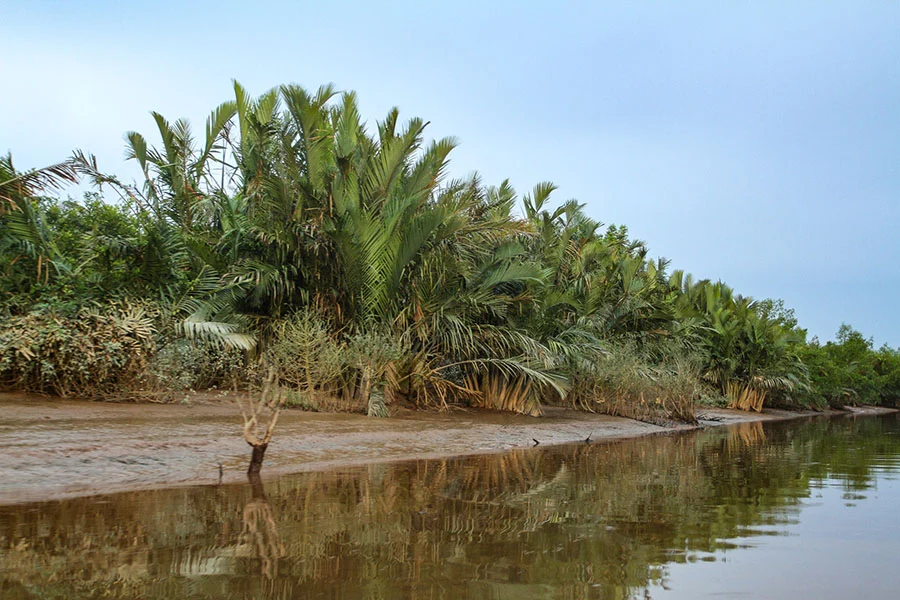
In the coastal enclave of Kelurahan Kutawaru, situated within the Central Cilacap District of Central Java, a quiet but significant environmental revolution is taking place. A group of local women, many of whom have returned from years of labor as migrant workers abroad, are now dedicating their days to the rhythmic art of weaving. Their material of choice is the leaf of the nipah palm (Nypa fruticans), a versatile plant that grows abundantly in the surrounding wetlands. Working under the banner of the Abhipraya Waste Bank (Bank Sampah Abhipraya), these women are transforming natural fibers into sustainable alternatives to plastic, specifically targeting the surge in packaging demand during the Islamic holy festival of Idul Adha.
The initiative represents a convergence of ecological stewardship, economic empowerment, and traditional preservation. By utilizing nipah leaves and, in other regions, nyangku leaves (Molinera capitulata), these communities are addressing one of Indonesia’s most pressing environmental challenges: the management of single-use plastic waste. As the nation prepares for the distribution of sacrificial meat—a tradition that typically consumes millions of plastic bags—the efforts in Cilacap and Banyumas offer a scalable model for a "Green Idul Adha."
The Socio-Economic Shift in Kutawaru
For many women in Kutawaru, the Abhipraya Waste Bank provides more than just a supplementary income; it offers a path to remain with their families. Sumiyati, a 56-year-old resident, explains that the nipah leaf is a familiar and accessible resource, sharing many characteristics with coconut leaves. It is easily woven into various functional items, ranging from traditional "besek" (woven baskets) to biodegradable polybags used for mangrove reforestation.
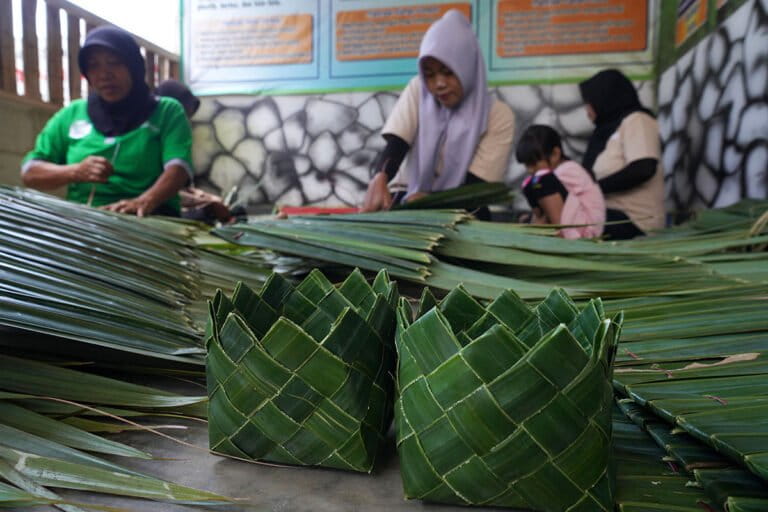
"During Idul Adha, these can be used as containers for sacrificial meat," Sumiyati noted during a recent session. "With the rising cost of plastic and the environmental damage it causes, the transition to nipah-based besek is both a practical and ethical choice."
The economic impact is notable. A single woven container fetches between Rp1,500 and Rp5,000, depending on its dimensions. While these figures may seem modest, the collective output provides a steady stream of revenue for the village. More importantly, it has changed the life trajectories of residents like Kasiyem (50) and Wagiyah (41). Both spent years working as migrant domestic workers in Saudi Arabia and Singapore, respectively. Today, they have chosen to stay in Kutawaru, balancing household responsibilities with productive labor at the waste bank. This shift highlights a growing trend of "re-localization," where natural resources are leveraged to create domestic jobs, reducing the necessity for hazardous overseas migration.
The Ecological Role of Nipah Palms
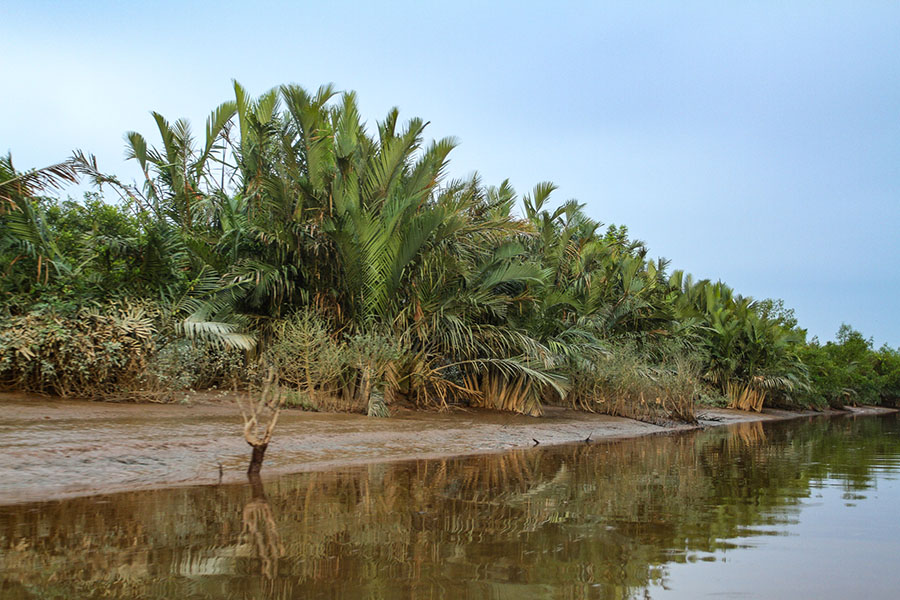
The choice of nipah is not merely coincidental. According to data from the Indonesian Ministry of Agriculture, Nypa fruticans is a palm species that thrives in coastal zones, particularly along riverbanks, estuaries, and the fringes of mangrove forests. It is an essential component of the wetland ecosystem, providing a buffer against coastal erosion and acting as a habitat for various aquatic species.
However, the health of these nipah and mangrove forests has been increasingly threatened by plastic pollution. Rato Mirza, the manager of the Abhipraya Waste Bank, points out that Kutawaru, with a population exceeding 11,000, previously struggled with waste management. Historically, much of the village’s plastic waste ended up in the sea. This debris often becomes entangled in the roots of mangroves and nipah palms, leading to the "smothering" and eventual death of these vital trees.
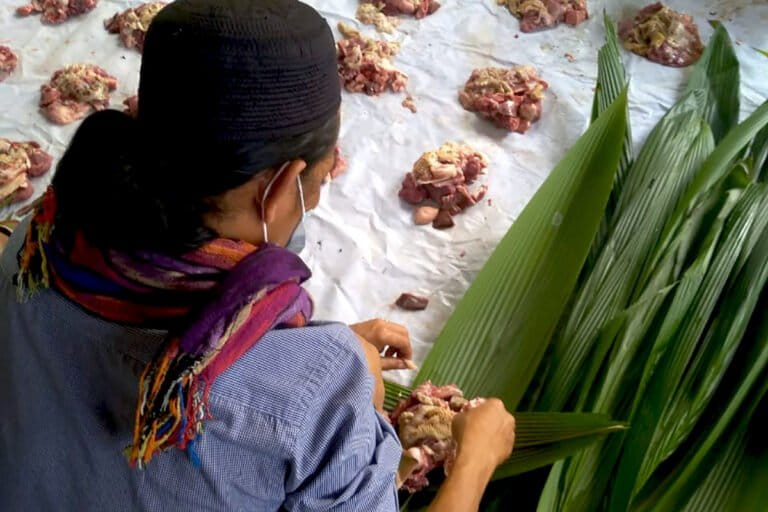
By creating a market for nipah-based products, the waste bank incentivizes the protection of these wetlands. If the community views the nipah forest as a source of sustainable raw materials, they are more likely to protect the habitat from pollution and land conversion. The transition to nipah packaging thus creates a circular economy: the community protects the forest, the forest provides the packaging, and the packaging replaces the plastic that would otherwise destroy the forest.
The Nyangku Leaf Initiative in Banyumas
The movement toward natural packaging extends beyond the coastal plains of Cilacap. In the highlands of Banyumas, specifically in the village of Gununglurah, the MTs Pakis alternative school has been championing the use of the nyangku leaf (Molinera capitulata) since 2021.
Isrodin, the head of MTs Pakis, has integrated environmental education into the school’s religious observances. For the past five years, the school has maintained a strict "no-plastic" policy for Idul Adha. Instead, they use the nyangku leaf, also known as palm grass. This plant, native to East and South Asia and widely distributed across the Indonesian archipelago, is prized for its durability and flexibility.
"The process is remarkably simple but effective," Isrodin explained. "Two leaves are typically used to wrap the meat, secured with fibers derived from the plant itself. Unlike banana leaves, which can tear easily when dry, nyangku leaves are resilient and hold moisture well, keeping the meat fresh without the need for synthetic liners."
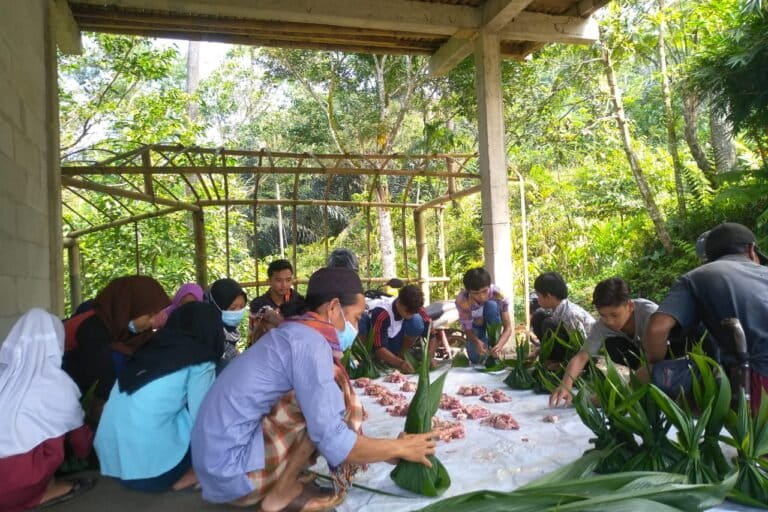
The use of nyangku at MTs Pakis serves a dual purpose. It provides a practical solution for waste reduction and acts as a pedagogical tool, teaching students that traditional knowledge often contains the answers to modern environmental crises. As a "stemless" evergreen plant that can reach heights of 100 cm, nyangku is a prolific grower, often categorized as a hardy species that requires little maintenance, making it an ideal renewable resource.
Quantifying the Impact: Plastic Waste and Religious Festivals
The urgency of these initiatives is underscored by Indonesia’s broader waste statistics. Indonesia is frequently cited as one of the world’s largest contributors to marine plastic pollution. During major religious holidays, the volume of waste spikes significantly. Estimates suggest that during Idul Adha, tens of millions of single-use plastic bags are distributed across the country within a 48-hour window.
The "Eco-Besek" movement, if adopted at scale, could drastically reduce this figure. In Cilacap alone, large corporations have begun to take notice. Rato Mirza reported that in previous years, local industrial firms placed orders for hundreds of nipah-based packages to facilitate their corporate social responsibility (CSR) meat distributions. This institutional support is crucial for moving these traditional crafts from a niche cottage industry into a mainstream supply chain.
Timeline of the Sustainable Packaging Movement in Central Java
The transition observed in 2026 is the result of a decade of incremental change:
- 2015-2018: Increasing reports of plastic pollution affecting mangrove health in Cilacap prompt local activists to look for alternatives.
- 2019: The Abhipraya Waste Bank begins formalizing the collection of organic waste and experimenting with nipah weaving as a revenue stream.
- 2021: MTs Pakis in Banyumas officially launches its "Plastic-Free Kurban" campaign, utilizing nyangku leaves.
- 2023-2024: Regional governments in Central Java begin issuing circulars encouraging the use of "besek" and natural leaves for religious festivals.
- 2025-2026: The movement gains economic momentum as former migrant workers return to their villages, providing the labor force necessary to meet the rising demand for eco-friendly packaging.
Analysis: The Future of Traditional Packaging
The success of the nipah and nyangku initiatives in Central Java suggests that the solution to plastic pollution may lie in "bioregionalism"—the practice of using materials that are naturally available within a specific local ecosystem. Coastal communities use nipah; mountain communities use nyangku or bamboo.
However, challenges remain. The scalability of leaf-based packaging depends on the preservation of natural habitats. If wetlands are reclaimed for industrial use or if highland forests are cleared for monoculture farming, the raw materials for these sustainable alternatives will vanish. Therefore, the "besek" industry is inextricably linked to land conservation policies.
Furthermore, there is a logistical hurdle. Plastic is cheap and requires no labor to produce at the point of use. Woven leaves, conversely, require time, skill, and a fair wage for the weavers. For this movement to survive, consumers and religious institutions must be willing to pay a "green premium"—a slightly higher price that accounts for the environmental and social benefits of the product.
Conclusion
The women of Kutawaru and the educators of Banyumas are proving that tradition is not a relic of the past, but a blueprint for the future. By replacing plastic bags with nipah and nyangku leaves, they are protecting the oceans, empowering the local workforce, and honoring the spiritual values of stewardship that define Idul Adha. As the 2026 sacrificial season approaches, their work stands as a testament to the power of community-led environmentalism, transforming a simple leaf into a shield for the planet.