Nila Kartika Wati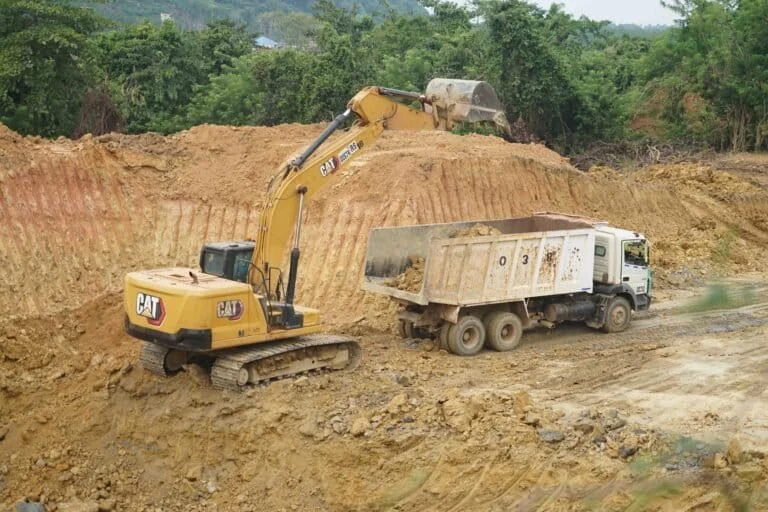
The peaceful landscape of Torobulu Village in the Laeya District of South Konawe, Southeast Sulawesi, has been transformed into a theater of environmental conflict and social unrest as residents intensify their opposition to the nickel mining operations of PT Wijaya Inti Nusantara (WIN). On May 12, the long-simmering tensions boiled over into a public demonstration at the South Konawe Regional Representative Council (DPRD) and the local Environmental Agency (DLH). Hermina, a local resident and activist, stood before officials to deliver a harrowing account of life on the front lines of an extractive industry that she claims has shown a "blind" disregard for human safety. Her plea—"Do you not see our suffering?"—has become the rallying cry for a community that feels abandoned by the state in the face of corporate expansion.
The conflict in Torobulu is not a recent development but rather the culmination of a decade-long encroachment of mining activities into residential spheres. PT WIN, a subsidiary of the Tridaya Group, began its exploration in the coastal village in 2017, but the roots of the industry in the area stretch back to 2010 when PT Billy Indonesia first operated on the site. Since PT WIN secured its Production Operation Mining Business License (IUP) in November 2019—a permit valid until 2029 covering a massive 1,931-hectare concession—the distance between the massive excavators and the doorsteps of villagers has shrunk to a perilous degree.
The Geography of Grievance: Mining in the Backyard
The primary grievance of the Torobulu residents centers on the physical proximity of the mining pits to essential infrastructure and private homes. In many areas of the village, mining activities are reportedly conducted within five to twenty meters of residential houses and public facilities, including a local primary school (SDN). This proximity has created a constant state of anxiety among the populace, who fear landslides, dust pollution, and the structural compromise of their homes.
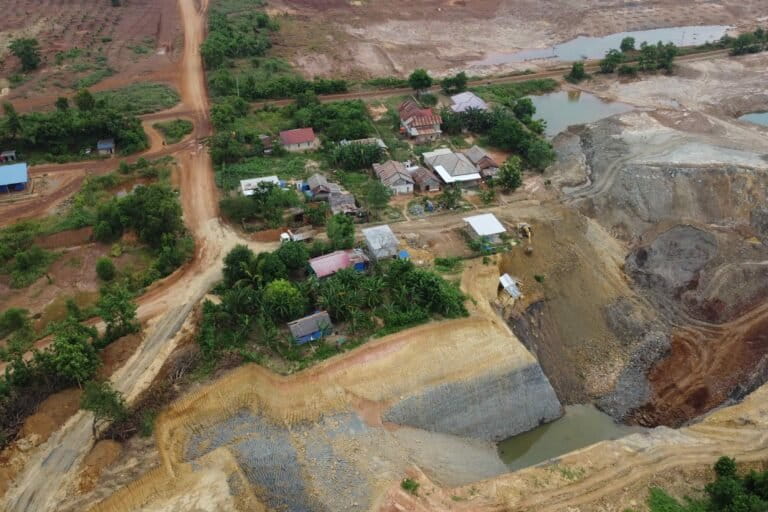
Ayunia Muis, another prominent female voice from the village, expressed the community’s deep-seated frustration during the recent protests. According to Muis, the government’s continued silence and its failure to intervene effectively suggest a protective stance toward the corporation rather than its citizens. "Our parents have nearly lost their lives due to the damage that has been allowed to persist," Muis stated, highlighting the life-threatening nature of the environmental degradation. The visible scars on the land—deep pits and stripped hillsides—serve as a daily reminder of a regulatory framework that residents believe has failed to protect them.
Regulatory Red Flags: The AMDAL and RKAB Controversy
The legal standing of PT WIN’s current operations has come under intense scrutiny from environmental watchdogs and legal experts. Central to the dispute is the lack of transparency regarding the Environmental Impact Assessment (AMDAL). Under Indonesian law, specifically Law No. 11/2020 on Job Creation, companies are mandated to involve the local community in the AMDAL process and make the document accessible. However, Torobulu residents claim they have never been shown the document despite repeated requests to both the provincial and district environmental agencies.
Hasran Parenda, the Head of the South Konawe Environmental Agency (DLH), responded to these allegations by stating that the agency is currently "collecting complaints" and intends to conduct field inspections. While he denied any intentional obstruction regarding the AMDAL, he insisted that residents must submit formal written requests to borrow the document—a bureaucratic hurdle that residents claim they have already attempted to clear multiple times since 2023 without success.
Beyond the AMDAL, a more immediate legal crisis looms over the company’s right to operate. Data indicates that as of April 2026, PT WIN may be operating without a valid Work Plan and Budget (RKAB), a document that is legally required for any mining activity to proceed. Reports suggest that the Ministry of Energy and Mineral Resources (KESDM) rejected the company’s RKAB submission in November 2025.
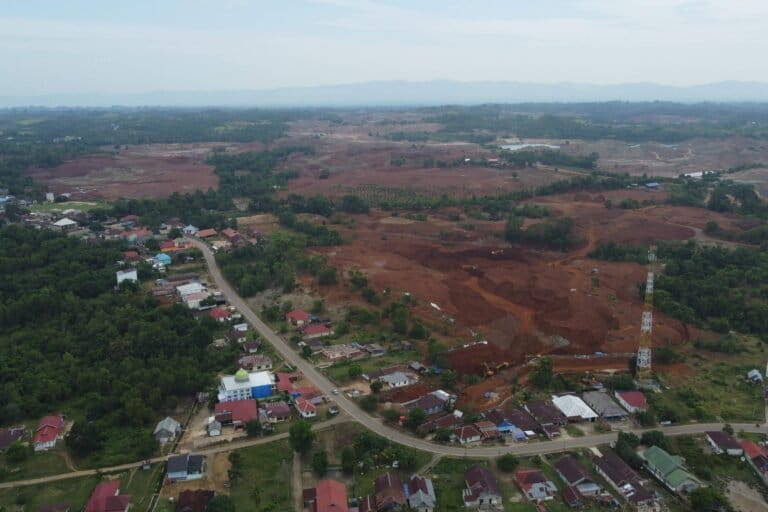
Andi Rahman, Director of the Indonesian Forum for the Environment (WALHI) in Southeast Sulawesi, emphasized that operating without an approved RKAB is a "serious violation" of national regulations. "The fact that mining continues in the field despite these regulatory gaps indicates a profound lack of oversight and a systemic failure of government monitoring," Rahman noted. He called for an immediate cessation of all PT WIN activities and a comprehensive audit of their licenses.
The Human Toll: From Intimidation to Criminalization
The struggle for Torobulu has not been fought solely in the halls of government but also in the courts. As residents organized the "Torobulu Melawan" (Torobulu Resists) movement, they were met with significant pushback, including allegations of intimidation and criminalization. In late 2023, 32 residents were reported to the police by the company for allegedly "obstructing" mining operations—a common legal tactic used against environmental defenders in Indonesia.
Among those targeted were Haslilin and Andi Firmansyah, who were named suspects and faced the prospect of imprisonment. The legal battle took a heavy toll on their personal lives; Haslilin described a period of intense psychological distress, economic hardship, and social isolation. However, in a landmark victory for environmental justice, the Andoolo District Court eventually acquitted both individuals, ruling that they were not proven guilty of the charges.
Despite the trauma of the trial, the resolve of the villagers remains unshaken. Andi Firmansyah reported that he had been offered money and positions by the company to drop his opposition, but he refused, citing the long-term interests of the community. Even former mining employees have joined the resistance. Awaludin, a local youth who once worked for the mine, resigned after feeling a "burden of the soul" for participating in the destruction of his own village. "I don’t want to work in the mines anymore; I cannot be comfortable knowing I am destroying my home," he said.
Violations of Spatial Planning and Reclamation
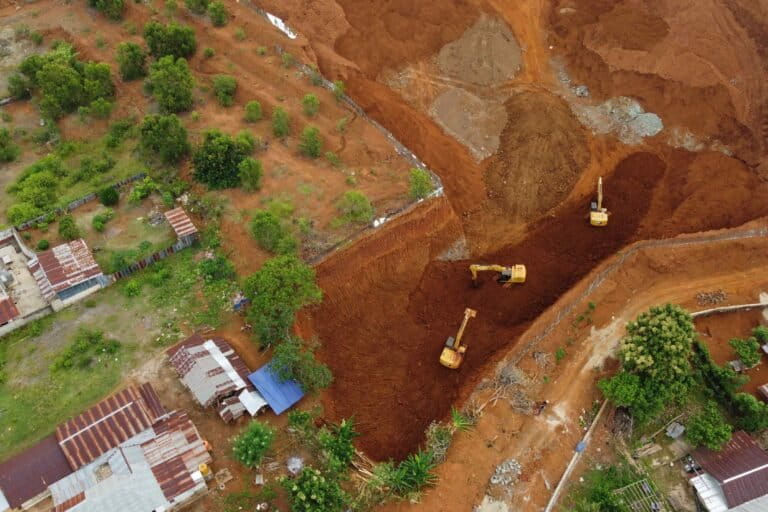
The Mining Advocacy Network (JATAM) of Southeast Sulawesi has raised further alarms regarding the technical execution of PT WIN’s operations. Mando Maskuri of JATAM Sultra pointed to Ministry of Energy and Mineral Resources Decree No. 1827 K/30/MEM/2018, which requires companies to maintain specific buffer zones and implement mitigation strategies for public facilities. In Torobulu, these buffer zones are allegedly non-existent or insufficient.
Furthermore, JATAM’s preliminary findings suggest that PT WIN may be mining outside the coordinates specified in its official IUP. Under Article 158 of Law No. 3/2020, mining outside of official coordinates is categorized as illegal mining, carrying heavy criminal penalties. There are also concerns regarding post-mining reclamation. Instead of restoring the original ecosystem, some areas have reportedly been planted with oil palm—a practice that critics argue does not fulfill the legal requirements for ecological restoration and instead serves as a secondary commercial venture for the landholders.
The failure to properly reclaim land is punishable by up to five years in prison and fines of up to IDR 100 billion. Despite these clear legal mandates, the reality on the ground in Torobulu remains one of open pits and unmitigated environmental hazards.
Broader Implications: The Paradox of Indonesia’s Nickel Boom
The situation in Torobulu is a microcosm of a much larger challenge facing Indonesia. As the world’s largest producer of nickel, Indonesia is a critical player in the global transition to green energy, specifically for the production of electric vehicle (EV) batteries. However, the "green" promise of the EV revolution often masks the "red" reality of the extraction process in provinces like Southeast Sulawesi.
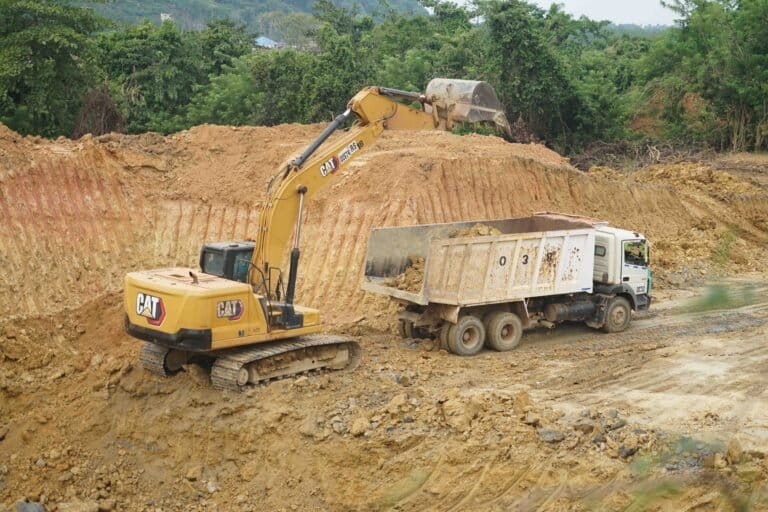
The case of PT WIN highlights the "Green Energy Paradox," where the quest for climate-friendly technology leads to local environmental destruction and the violation of human rights. When mining companies are allowed to operate with impunity near residential areas, and when the state prioritizes investment over the safety of its citizens, the legitimacy of the entire industry is called into question.
The ongoing conflict in Torobulu serves as a critical test for the Indonesian government’s commitment to its own laws. If the allegations of mining without an RKAB, violating spatial planning (RTRW), and failing to provide AMDAL transparency are proven true, the cancellation of PT WIN’s license may be legally required under Supreme Court Decision No. 31 P/HUM/2012.
As of the time of reporting, PT WIN’s Mine Technical Head, Muhammad Nur Iman Djalani, has not responded to requests for comment regarding the residents’ allegations or the status of the company’s RKAB. For the people of Torobulu, the silence from the company and the slow response from the government are not merely administrative delays—they are an existential threat. The residents of Torobulu continue to stand their ground, insisting that their village is a place to live, not a commodity to be excavated. Their struggle is a stark reminder that in the global rush for minerals, the voices of those living atop the ore must not be buried.