Nasution Nanang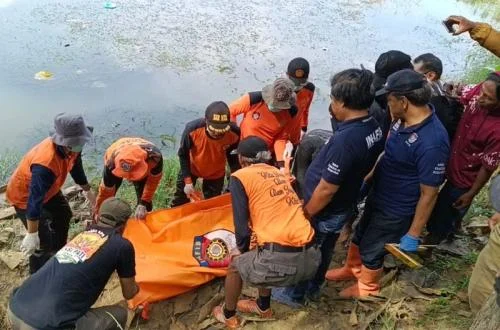
Pati, Central Java – Law enforcement authorities in Pati, Central Java, have launched a comprehensive and urgent investigation following the discovery of an unidentified male body found floating in Embung Terpus, a local reservoir in Desa Beketel, Kecamatan Kayen, on Monday, May 4th. The grim find has sent ripples of concern through the quiet rural community, prompting a focused police effort that extends beyond the immediate discovery to include significant evidence of bloodstains found in the vicinity days prior. The case presents a complex challenge for investigators, who are working tirelessly to identify the victim, ascertain the cause of death, and uncover the circumstances surrounding this deeply unsettling incident.
The initial report of the floating body reached authorities at approximately 06:30 AM local time, when a local farmer, identified as Rebo (67), a resident of the area, was tending to his fields near the Embung Terpus. His routine morning took a sudden, disturbing turn as he noticed a suspicious object adrift on the water’s surface. Upon closer inspection, the farmer realized the object was, in fact, the body of a human male. Shocked by the discovery, Rebo immediately reported his findings to the village officials, who in turn promptly alerted the Kayen Sector Police (Polsek Kayen). The swift reporting by the vigilant citizen allowed for rapid deployment of police personnel to secure the scene and initiate preliminary investigative procedures.
Upon receiving the report, officers from Polsek Kayen, led by Kayen Sector Police Chief AKP Parsa, swiftly converged on the location. The scene, a tranquil reservoir typically used for irrigation and local fishing, was immediately cordoned off to preserve potential evidence. A thorough crime scene investigation (olah tempat kejadian perkara, or olah TKP) was initiated, involving forensic teams and criminal investigation units. Initial observations focused on the body itself, its position in the water, and any visible signs of trauma, as well as the surrounding banks of the embung for any clues that might shed light on how the victim came to be there. The presence of bloodstains, which residents had reportedly observed as early as Saturday, May 2nd, two days before the body was found, adds a critical and suspicious dimension to the unfolding narrative, suggesting potential foul play or a prior incident at the location.
Chronology of a Disturbing Discovery
The timeline of events leading to the discovery of the body is crucial to the ongoing investigation and suggests a potential sequence of disturbing occurrences.
- Saturday, May 2nd (Evening): Local residents, whose identities are being protected for the investigation, reportedly observed fresh bloodstains on the ground near the Embung Terpus. At the time, the significance of these stains was unclear, and it appears no immediate report was made to the police. This initial sighting, now viewed retrospectively, has become a pivotal piece of evidence, strongly suggesting that a violent incident or severe injury occurred at or near the reservoir days before the body surfaced. The precise location and pattern of these bloodstains are now undergoing meticulous forensic analysis to determine their origin, volume, and potential relation to the victim. Investigators are working to establish if the blood belongs to the deceased and if the area was the primary crime scene or merely a point of disposal.
- Monday, May 4th (Morning, 06:30 WIB): Farmer Rebo (67) makes the horrifying discovery of the male body floating in the embung. His immediate and responsible actions in reporting the incident set the official investigation into motion.
- Monday, May 4th (Post-Discovery):
- Police Response: Officers from Polsek Kayen, followed by specialized units from the Pati Resort Police (Polres Pati), including the Criminal Investigation Unit (Satreskrim) and the Indonesian Automatic Fingerprint Identification System (Inafis) unit, arrive at Embung Terpus.
- Crime Scene Preservation: The area is secured, and a preliminary crime scene investigation is conducted. This involves photographic documentation, mapping the scene, and collecting any visible evidence.
- Body Retrieval: The unidentified body is carefully retrieved from the water. The process is handled with extreme care to avoid disturbing potential evidence on or around the remains.
- Transfer to Forensics: The deceased is then transported to the Regional General Hospital (RSUD) R. Soewondo Pati for a comprehensive autopsy. This critical step is aimed at establishing the precise cause and manner of death, estimating the time of death, and collecting forensic samples for identification purposes.
Background and Context: Embung Terpus and Pati Regency
Embung Terpus, located in Desa Beketel, Kecamatan Kayen, is one of many small to medium-sized reservoirs common in agricultural regions across Indonesia, particularly in Central Java. These "embung" or artificial lakes primarily serve as crucial water sources for irrigation, supporting the local agricultural economy which heavily relies on rice cultivation and other crops. Beyond their functional role, these reservoirs often become part of the local landscape, sometimes used for recreational fishing by residents or as quiet, secluded spots away from the hustle of daily life.
Pati Regency itself is situated on the northern coast of Central Java, known for its fertile agricultural lands and a mix of rural and semi-urban communities. While generally considered a peaceful region, like any other area, it is not entirely immune to criminal activity. The discovery of a body under suspicious circumstances in a public yet often secluded location like an embung can have a profound psychological impact on the local populace, particularly in close-knit village communities where such events are rare and deeply unsettling. The relative isolation of Embung Terpus, while beneficial for its intended purpose, also means it might not be under constant surveillance, making it a potential site for clandestine activities.
The Intricacies of Forensic Investigation and Identification Challenges
The investigation into this incident is multi-faceted, relying heavily on the meticulous work of forensic experts. The primary objectives are clear: identify the victim, determine how he died, and identify those responsible.
- Autopsy at RSUD R. Soewondo Pati: The post-mortem examination is paramount. Forensic pathologists will analyze internal and external injuries, if any, to determine the cause of death (e.g., drowning, blunt force trauma, stab wounds, gunshot wounds). They will also look for defensive wounds, signs of struggle, and any foreign objects. Crucially, the autopsy will help establish the approximate time of death, which can be challenging for bodies recovered from water due to varying decomposition rates influenced by water temperature and currents. Samples for toxicology, DNA analysis, and other specialized tests will also be collected.
- Identification Process: With the victim’s identity currently unknown, this forms a major hurdle. Police are utilizing several methods:
- Fingerprint Analysis: The Inafis unit will attempt to obtain usable fingerprints from the deceased to cross-reference against national databases of Indonesian citizens.
- Dental Records and DNA: If fingerprints are inconclusive or unavailable, dental records (if any missing persons reports match the victim’s physical characteristics) and DNA samples will be critical. DNA profiles can be compared with those of relatives from missing persons reports.
- Physical Characteristics: Detailed descriptions of the body, including approximate age, height, build, hair color, unique tattoos, scars, clothing, and personal effects found with the body, are being widely circulated internally and potentially to the public (once authorized) to aid identification.
- Missing Persons Reports: Investigators are actively reviewing all recent missing persons reports filed in Pati and surrounding regencies, hoping to find a match.
- Crime Scene Analysis (Bloodstains): The bloodstains discovered on Saturday are a critical piece of evidence. Forensic bloodstain pattern analysis can reveal information about the type of weapon used, the number of blows, the movement of the victim and assailant, and the sequence of events. DNA profiling from these bloodstains will be crucial to determine if they belong to the deceased and, if so, further corroborate the theory of a prior incident at the scene. If the blood belongs to someone else, it could indicate the presence of another injured party or an assailant.
- Witness Interviews: Beyond farmer Rebo, police are interviewing anyone who lives or works near Embung Terpus, or who might have been in the area on Saturday night or early Monday morning. Any unusual sights, sounds, or vehicles could provide vital leads. The initial witnesses to the bloodstains are also being re-interviewed for more specific details.
Official Responses and Calls for Public Cooperation
AKP Parsa, the Kayen Sector Police Chief, has been at the forefront of the police response, emphasizing the gravity of the situation and the commitment of law enforcement. "We are treating this case with the utmost seriousness," he stated. "Our teams are working around the clock, deploying all available resources to unravel this mystery. The discovery of the body, coupled with the prior finding of bloodstains, points to a highly suspicious event, and we are exploring all possible angles, including homicide."
Parsa also made a direct appeal to the community, urging patience and discouraging speculation that could hinder the investigation. "We understand that such an incident can cause anxiety and rumors," he added. "However, it is vital that the public refrains from speculating or spreading unverified information. Such actions can inadvertently mislead the investigation or cause undue distress." He reiterated the police’s commitment to transparency once concrete facts are established and confirmed.
The Pati Resort Police (Polres Pati) has confirmed that its Criminal Investigation Unit (Satreskrim) is providing full support and resources to the Kayen Sector Police, ensuring a coordinated and comprehensive approach. A spokesperson for Polres Pati underscored the importance of community involvement: "We urge anyone who possesses any information, no matter how insignificant it may seem, related to this incident or to any missing persons in the area, to come forward immediately. Information can be shared anonymously through our 24-hour call center at 110. Every piece of information could be the key to unlocking this case."
Hospital officials at RSUD R. Soewondo Pati have confirmed receiving the body and that the autopsy process is underway. They stated that the findings of the autopsy would be communicated directly to the police investigators and would remain confidential until officially released by law enforcement, in accordance with standard operating procedures for criminal investigations.
Local community leaders in Desa Beketel have expressed their shock and concern, acknowledging the fear and uncertainty that has gripped the village. The village head (Kepala Desa) has called for calm and solidarity, urging residents to cooperate fully with the police investigation and to report any suspicious activities they may have observed. "Our community is deeply saddened and disturbed by this tragic event," a local leader commented. "We trust the police to bring justice, and we stand ready to assist them in any way we can to restore peace and security to our village."
Broader Implications and the Quest for Justice
The discovery of an unidentified body in a public water body carries significant implications, particularly in a generally peaceful rural setting. It raises concerns about public safety and the potential presence of serious criminal activity within the community. The fact that the body remains unidentified adds an additional layer of tragedy and complexity, leaving families potentially unaware of the fate of a loved one.
This case highlights the critical role of robust forensic science and meticulous police work in modern criminal investigations. The integration of crime scene analysis, pathology, and witness testimony is essential to build a comprehensive picture of events. Furthermore, the case serves as a poignant reminder of the importance of community vigilance and the crucial partnership between citizens and law enforcement. The swift reporting by Rebo, while tragic in its content, was instrumental in initiating the investigation promptly.
The Pati police force faces the arduous task of piecing together fragments of evidence to construct a coherent narrative. The goal is not only to identify the victim and determine the exact cause of death but also to apprehend those responsible, ensuring that justice is served. The successful resolution of this case will be vital in reassuring the residents of Pati that their safety is paramount and that serious crimes will be met with decisive action by the authorities. As the investigation progresses, the community holds its breath, hoping for answers and the swift apprehension of any perpetrators involved in this unsettling discovery at Embung Terpus.