
 Paryono Ramadhan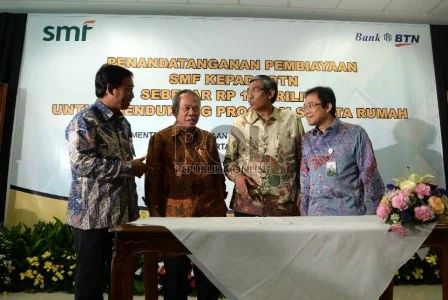
The Indonesian government is committing all available resources to ensure the successful implementation of the ambitious One Million Houses Program (Program Sejuta Rumah), a critical initiative designed to address the nation’s significant housing deficit, particularly for low-income communities. This resolute commitment was underscored by Minister of Public Works and Public Housing, Basuki Hadimuljono, during a pivotal signing ceremony in Jakarta last week, which saw PT Sarana Multigriya Finansial (SMF) extend a substantial loan facility to PT Bank Tabungan Negara (Persero) Tbk (BTN). The IDR 1.5 trillion (approximately USD 115 million at the time) injection of funds is specifically earmarked to bolster BTN’s capacity to finance housing units under the government’s flagship program, making homeownership more accessible for eligible low-income households. This strategic partnership represents a significant step in mobilizing capital from the financial sector to meet the pressing social need for affordable housing across the archipelago.
The Ambitious "One Million Houses Program": A National Imperative
Launched in April 2015 by President Joko Widodo, the One Million Houses Program (PSR) emerged as a cornerstone of the administration’s development agenda, aiming to construct one million housing units annually to alleviate Indonesia’s persistent housing backlog. At the time of its inception, the national housing deficit was estimated to be around 13.5 million units, a figure that continues to present a formidable challenge to sustainable urban and rural development. The program targets both low-income communities (Masyarakat Berpenghasilan Rendah – MBR) and non-MBR segments, though a significant majority of the planned units are designated for MBRs, recognizing their greater need and limited access to conventional housing finance. The PSR is not merely a construction project; it is a multi-faceted national endeavor encompassing land provision, infrastructure development, financial mechanisms, and regulatory reforms, all geared towards fostering a more equitable and prosperous society.
Minister Basuki Hadimuljono reiterated the government’s unwavering dedication, emphasizing that "all our resources are being mobilized in the framework of the One Million Houses Program, especially for low-income communities." This statement highlights the program’s dual objectives: stimulating economic activity through large-scale construction and, more importantly, improving the quality of life and social equity by providing decent and affordable housing. The government recognizes that access to adequate housing is a fundamental human right and a crucial factor in poverty reduction, health, education, and overall social stability. The program’s success is thus seen as intrinsically linked to broader national development goals, fostering a sense of ownership and community among beneficiaries.
Strategic Financial Mobilization: The SMF-BTN Partnership
The IDR 1.5 trillion loan from SMF to BTN is a crucial element in the program’s financial architecture. SMF, a state-owned enterprise operating in the secondary mortgage market, plays a vital role in providing liquidity to primary mortgage lenders like BTN. By securitizing mortgage loans and issuing bonds, SMF allows banks to free up capital, enabling them to extend more new loans without being constrained by their balance sheets. This mechanism is particularly critical for housing programs that require significant long-term financing.
BTN, as the primary state-owned bank specializing in housing finance, has historically been at the forefront of government-backed housing initiatives. Its extensive branch network and deep experience in administering subsidized housing loans make it an indispensable partner in the PSR. The capital injection from SMF will empower BTN to expand its lending capacity for KPR Sejahtera (subsidized mortgage loans), directly benefiting MBRs who often struggle to qualify for conventional bank financing due to their income levels or lack of collateral. The partnership aims to streamline the process for MBRs to acquire homes, making the dream of homeownership a tangible reality for thousands of families across Indonesia. This collaboration exemplifies a synergistic approach, leveraging the strengths of state-owned enterprises to achieve a national development objective, ensuring that financial resources are efficiently channeled to where they are most needed.
Diverse Funding Streams for Housing Development
Beyond the SMF-BTN collaboration, Minister Basuki outlined several other significant potential funding sources for the One Million Houses Program, illustrating the multi-pronged financial strategy adopted by the government. These diverse streams are essential to meet the massive capital requirements of such an ambitious undertaking:
-
BPJS Ketenagakerjaan (Workers’ Social Security Agency): A substantial potential contribution of IDR 48.5 trillion (approximately USD 3.7 billion at the time) from BPJS Ketenagakerjaan underscores the government’s innovative approach to leverage social security funds for productive investments that benefit its members. BPJS Ketenagakerjaan manages vast funds accumulated from workers’ contributions and is mandated to invest these funds prudently. Channeling a portion into housing finance for its members, particularly those in low and middle-income brackets, represents a win-win scenario. It provides a stable, long-term investment opportunity for BPJS while simultaneously offering affordable housing solutions to its participants, aligning social welfare with economic development. This mechanism can take various forms, including direct mortgage financing, construction loans, or equity participation in housing projects.
-
FLPP (Fasilitas Likuiditas Pembiayaan Perumahan – Housing Finance Liquidity Facility): The government’s direct allocation through FLPP stands at IDR 5.1 trillion (approximately USD 390 million). FLPP is a crucial government subsidy program that provides liquidity to banks to enable them to offer highly affordable mortgage rates to MBRs. Under this scheme, the government covers a portion of the interest rate, making monthly installments significantly lower and more manageable for eligible beneficiaries. This direct subsidy is indispensable for bridging the affordability gap, allowing families with limited incomes to access long-term housing loans that would otherwise be out of reach. The FLPP mechanism is a testament to the government’s direct financial commitment to housing affordability.
-
DIPA APBN (Daftar Isian Pelaksanaan Anggaran Anggaran Pendapatan dan Belanja Negara – State Budget Implementation List): An additional IDR 8.1 trillion (approximately USD 620 million) is allocated directly from the State Budget (APBN) through DIPA. These funds typically support various aspects of housing development, including land acquisition, infrastructure development (roads, water, electricity, sanitation) for new housing estates, and potentially direct construction of public housing units. This allocation signifies the government’s direct investment in creating the enabling environment and physical infrastructure necessary for housing projects to materialize, especially in underserved areas. It ensures that critical public services accompany new residential developments, enhancing livability and sustainability.
Cumulatively, these identified funding sources—including the SMF loan, BPJS Ketenagakerjaan funds, FLPP, and direct state budget allocations—demonstrate a concerted effort to marshal substantial financial resources from various public and quasi-public entities. This integrated financial strategy is critical for sustaining the momentum and achieving the ambitious targets of the One Million Houses Program.

Addressing Systemic Hurdles: Insights from Industry Experts
While the government’s financial commitment is robust, industry observers have consistently highlighted systemic challenges that require equally robust solutions. Indonesia Property Watch, a prominent property research and consulting firm, identified five critical areas that the government must effectively address to ensure the successful realization of the One Million Houses Program:
-
Land Availability and Land Bank Mechanism: The scarcity and escalating cost of land, particularly in urban and peri-urban areas, remain the single largest impediment to affordable housing development. Indonesia Property Watch emphasized the urgent need for a "land bank" mechanism. A land bank would allow the government or a dedicated agency to acquire and hold land for future public purposes, including affordable housing, preventing speculative price increases driven by market forces. By securing land at reasonable prices, the government can significantly reduce the input costs for developers, thereby making housing units more affordable for MBRs. Without a proactive land acquisition strategy, even substantial financial subsidies may be insufficient to counteract soaring land values.
-
Dedicated Institution for People’s Housing: The complexity and scale of the housing challenge necessitate a dedicated, focused institution. Such an entity, with a clear mandate to manage and oversee all aspects of people’s housing, from planning and land acquisition to project implementation and post-occupancy support, could enhance efficiency and coordination. Currently, housing responsibilities are distributed across various ministries and agencies, which can sometimes lead to bureaucratic inefficiencies and fragmented efforts. A centralized body, similar to successful models in other countries, could provide a more cohesive and strategic approach to addressing the housing needs of the populace, ensuring accountability and consistent policy implementation.
-
Diversified and Sustainable Funding: While the current funding streams are significant, the need for diversified and sustainable long-term financing mechanisms is paramount. This includes expanding the role of BPJS Ketenagakerjaan, exploring new securitization models, encouraging private sector participation through various incentives, and potentially developing social impact bonds or other innovative financial instruments. The long-term nature of housing projects requires funding sources that are not subject to annual budget fluctuations. Continuous exploration and integration of new financing models are essential to ensure the program’s longevity and resilience.
-
Accurate Data and Information on Housing Shortages: Effective policy formulation and resource allocation hinge on precise data. Indonesia Property Watch underscored the need for comprehensive and up-to-date data on housing shortages, including geographical distribution, income demographics, and specific needs (e.g., rental, ownership, types of units). Accurate data would enable the government to target interventions more effectively, ensuring that resources are directed to areas and populations with the greatest need. This involves robust data collection, analysis, and a centralized information system accessible to all stakeholders.
-
Streamlining Costs and Bureaucracy: The cumulative burden of administrative costs, including complex permitting processes, high certification fees, and charges for utility connections (electricity from PLN, water, etc.), significantly adds to the final price of housing units. Simplifying and accelerating the permit acquisition process, reducing associated fees, and streamlining connections to essential utilities are critical steps. These reforms would not only reduce development costs but also incentivize developers to participate in affordable housing projects by mitigating bureaucratic hurdles and accelerating project timelines. Such measures could significantly improve the ease of doing business in the housing sector, translating directly into more affordable homes for the end-users.
The Broader Socio-Economic Impact of Affordable Housing
The successful implementation of the One Million Houses Program, supported by these robust funding mechanisms and systemic reforms, carries profound socio-economic implications for Indonesia. Providing affordable housing units is not merely about erecting buildings; it is a catalyst for broader national development. For low-income families, access to stable and decent housing can dramatically improve living conditions, leading to better health outcomes, improved educational attainment for children, and enhanced overall well-being. A secure home provides a foundation for economic stability, enabling families to save, invest in their future, and break cycles of poverty.
Economically, the program stimulates growth across various sectors. The construction of one million houses annually generates significant demand for building materials, labor, and related services, creating jobs and fostering local economies. It also drives infrastructure development, as new housing estates require roads, utilities, and public amenities. Furthermore, increased homeownership contributes to national wealth accumulation and can serve as collateral for small business development, indirectly boosting entrepreneurship. Socially, the program promotes equity and reduces urban inequality, preventing the proliferation of informal settlements and improving the quality of urban environments. It fosters a sense of community and civic pride, contributing to social cohesion and stability.
Challenges and the Path Forward
Despite the significant progress and robust financial commitments, the One Million Houses Program faces ongoing challenges. The sheer scale of the housing deficit, coupled with issues like rapid urbanization, climate change impacts, and the need for sustainable construction practices, demands continuous innovation and adaptive strategies. The recommendations from Indonesia Property Watch underscore that financial allocations alone, while crucial, are insufficient without parallel reforms in land policy, institutional frameworks, data management, and regulatory efficiency.
The government’s unwavering commitment, as articulated by Minister Basuki Hadimuljono, signals a strong political will to overcome these obstacles. The partnership between SMF and BTN, along with the mobilization of funds from BPJS Ketenagakerjaan, FLPP, and the state budget, demonstrates a comprehensive, multi-stakeholder approach. The success of the One Million Houses Program will ultimately hinge on the sustained collaboration between government agencies, financial institutions, private developers, and local communities, all working in concert to ensure that every Indonesian has access to a safe, decent, and affordable place to call home. The ongoing efforts represent a testament to Indonesia’s determination to achieve inclusive growth and enhance the well-being of all its citizens.








