Azin Asro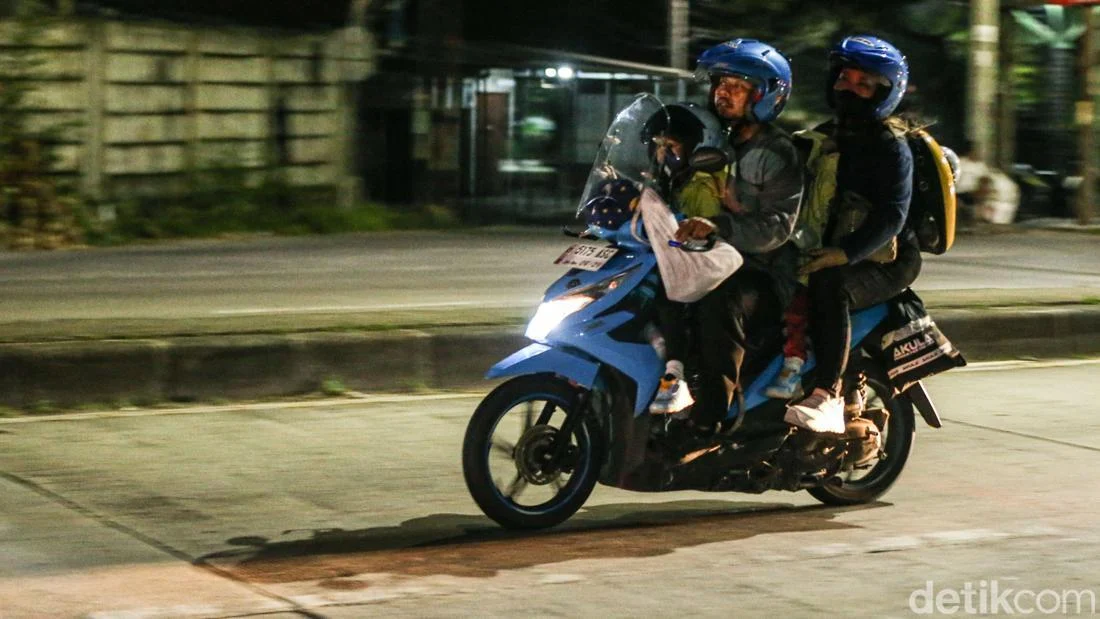
Indonesia is currently navigating a profound road safety crisis that disproportionately affects its youngest citizens, prompting a coalition of safety advocates to demand immediate regulatory reform regarding protective gear for children. As motorcycles remain the primary mode of transportation for millions of Indonesian families, the lack of specialized safety equipment for children has become a critical public health concern. In response, the Indonesian Motor Association (Ikatan Motor Indonesia or IMI), through its SADAR Commission (Awareness of Traffic Rules and Safety), in partnership with the AIP Foundation, is urgently calling on the Indonesian government to adopt the Global Child Helmet Standard (GCHS1:2025). This initiative seeks to bridge a dangerous gap in national safety regulations by ensuring that children are protected by equipment specifically engineered for their unique physiological needs rather than being forced to use downsized adult gear.
The urgency of this move is underscored by harrowing data from the World Health Organization (WHO). According to the latest WHO Global Status Report on Road Safety, approximately 1.19 million people perish annually due to traffic accidents. Perhaps most distressingly, road traffic injuries have emerged as the leading cause of death for children and adolescents aged 5 to 29 years globally. In the Southeast Asian region, the situation is particularly acute; motorcyclists account for an estimated 48% of all road traffic fatalities. Within this demographic, head injuries are the primary cause of death, contributing to a staggering 88% of fatalities in low- and middle-income countries (LMICs) like Indonesia. Despite these figures, the specific safety requirements for children—who are frequently seen as passengers on motorcycles in Indonesia—have long been overlooked in national manufacturing standards.
The Cultural Context of the "Family Motorcycle"
In Indonesia, the motorcycle is far more than a simple commuting tool; it functions as the "de facto" family car. It is a common sight across the archipelago, from the congested streets of Jakarta to remote rural villages, to see entire families balanced on a single two-wheeled vehicle. Children are often positioned between parents or seated in front of the rider. While this practice is born out of economic necessity and the lack of accessible public infrastructure, it places children in a position of extreme vulnerability.
The current regulatory landscape in Indonesia relies on the Indonesian National Standard (SNI). While SNI certification is mandatory for adult helmets, the criteria used for testing and certification are largely derived from international standards such as the ECE (Economic Commission for Europe) and DOT (Department of Transportation) frameworks. Crucially, these standards are built upon the biomechanical parameters of adult males. They do not account for the fragile anatomy of a developing child. Consequently, even if a child wears a "small" helmet that bears an SNI sticker, that helmet is often nothing more than an adult shell with thicker padding, offering inadequate protection and potentially introducing new risks, such as neck strain or spinal injury due to excessive weight.
The Science of Vulnerability: Why Adult Standards Fail Children
The push for GCHS1:2025 is rooted in pediatric physiology. Experts point out that a child’s head is not merely a smaller version of an adult’s head. Erreza Hardian, the Project Leader for the Indonesian Child Helmet initiative and a member of IMI’s SADAR Commission, emphasizes that the human skull does not fully fuse and close until approximately age 20. Before this maturity, children have a significantly lower tolerance for skull fractures and brain trauma compared to adults.
"Membiarkan anak-anak menggunakan helm yang tidak sesuai dengan parameter fisiologis mereka adalah sebuah kesenjangan moral yang harus segera kita sudahi," Hardian stated, describing the current situation as a "moral gap." He noted that using a helmet designed for an adult on a child is scientifically unsound. The GCHS1:2025 standard provides a science-based solution that is available for adoption without licensing fees, aimed specifically at saving thousands of young lives in Indonesia.
Beyond the skull’s structural integrity, the weight of the helmet is a decisive factor. A child’s neck muscles and cervical spine are not yet strong enough to support the heavy weight of standard adult helmets, especially during the high G-forces experienced during an impact or sudden braking. A helmet that is too heavy can cause a "pendulum effect," where the weight of the helmet actually increases the likelihood of a neck fracture during a crash.
Technical Specifications of GCHS1:2025
The Global Child Helmet Standard (GCHS1:2025) is the first technical standard in the world developed exclusively for child head protection. The standard was meticulously crafted by an international consortium of experts, including Dr. Terry Smith of Galeatus (Italy) and Greig Craft, President of the AIP Foundation. The development was supported by the FIA Foundation through the Global Helmet Vaccination Initiative (GHVI).
The standard introduces a rigorous classification system based on age groups to ensure that helmet weight is proportional to a child’s physical development:
- Type A (Ages 2 to 6): These helmets are designed for the youngest passengers. They prioritize extreme lightness to prevent neck injuries while maintaining high impact absorption.
- Type B (Ages 6 to 13): These helmets are designed for older children whose neck strength has increased but whose skulls are still in a critical state of development.
The testing parameters for GCHS1:2025 are notably more stringent than those for adults. For instance, the maximum peak acceleration (the measure of impact force transmitted to the head) is capped at ≤ 225 g for Type A and ≤ 200 g for Type B. Furthermore, the standard recognizes the environmental challenges of tropical nations. To ensure the materials do not degrade or lose their protective qualities in Indonesia’s heat and humidity, the helmets must undergo performance testing under five extreme conditions. These include exposure to temperatures as high as 50°C and total water immersion, ensuring that the protection remains reliable regardless of the weather.
Advocacy and the Path to Policy Implementation
The IMI and its partners have already begun the formal process of advocating for these standards within the Indonesian government. An official advocacy document titled "Perlindungan Kepala Anak di Kendaraan Bermotor Roda Dua" (Protection of Children’s Heads on Two-Wheeled Motor Vehicles) has been submitted to several key ministries and agencies.
The success of this initiative depends on a multi-sectoral approach involving:
- The Ministry of Industry: To update the technical regulations for helmet manufacturing and encourage local producers to adopt the GCHS1:2025 specifications.
- The National Standardization Agency (BSN): To integrate these global standards into the existing SNI framework, creating a specific sub-category for child helmets.
- The Ministry of Transportation and the National Police (Korlantas Polri): To enforce the use of certified child helmets and conduct public awareness campaigns.
- The Ministry of Health: To provide data and support regarding the long-term economic and social costs of pediatric head injuries.
By involving these stakeholders, the IMI hopes to create a mandatory requirement for child helmets that is backed by law, making it illegal to sell or use uncertified "toy" helmets that offer no real protection.
Economic and Social Implications
The implications of adopting a dedicated child helmet standard extend far beyond immediate physical safety. Traffic accidents represent a significant drain on Indonesia’s economy. The loss of young lives or the burden of long-term disability resulting from head injuries creates a massive loss in human capital and productivity. Furthermore, the medical costs associated with treating traumatic brain injuries can push middle- and low-income families into cycles of poverty.
From a social perspective, establishing a "helmet culture" for children helps instill safety habits from a young age. If children grow up seeing helmet use as a non-negotiable part of mobility, they are more likely to carry those habits into adulthood, eventually leading to a generational shift in how Indonesians perceive road safety.
A Global Movement for Local Safety
The adoption of GCHS1:2025 in Indonesia would place the country at the forefront of global road safety innovation. While developed nations have long had strict regulations, the specific challenges of the "motorcycle-dependent" LMICs require unique solutions like the GCHS. The AIP Foundation and the FIA Foundation have expressed that Indonesia could serve as a model for other Southeast Asian nations, such as Vietnam and Thailand, which face similar challenges with child passengers on motorcycles.
The transition to these new standards will require cooperation from the private sector. Helmet manufacturers in Indonesia, which boast a robust production capacity, will need to invest in new molds and testing equipment. However, advocates argue that the cost of innovation is negligible compared to the societal cost of losing children to preventable injuries.
Conclusion: A Call for Immediate Action
The data is clear, the technology is available, and the moral imperative is undeniable. Indonesia stands at a crossroads where it can continue to allow its children to ride with inadequate protection or take a decisive step toward a safer future. The push by the IMI and its international partners for the adoption of GCHS1:2025 is not just a request for a new regulation; it is a plea for the survival of the next generation. As the advocacy documents move through the halls of the Ministry of Industry and the Ministry of Transportation, the hope is that policy will soon catch up with the reality on the streets, ensuring that every child who climbs onto a motorcycle is shielded by the best science and engineering available. Only through the formal adoption of these global standards can Indonesia truly claim to be protecting its most precious resource: its children.