Azin Asro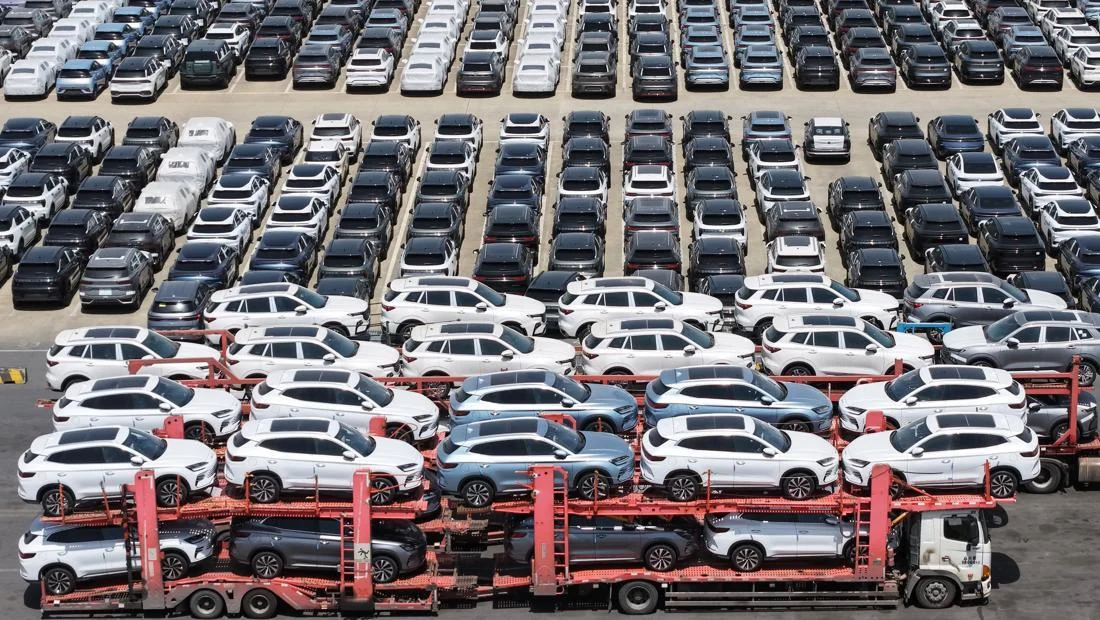
The automotive landscape in Thailand, long referred to as the "Detroit of the East," is currently navigating a period of unprecedented turbulence as a coalition of domestic industry leaders issues an urgent plea for government intervention. Representing more than 1,500 operators across the manufacturing and supply chain sectors, a powerful group of 10 automotive associations has formally requested that the Thai government drastically increase the excise tax on imported electric vehicles (EVs), specifically those originating from China. The proposal suggests raising the tax rate to 32 percent, a move designed to counteract the influx of low-cost Chinese imports that industry experts warn could lead to the collapse of Thailand’s storied automotive manufacturing ecosystem.
The coalition, which includes influential bodies such as the Electric Vehicle Association of Thailand (EVAT) and the Thai Auto Parts Manufacturers Association (TAPMA), is preparing to submit a comprehensive emergency proposal to the Ministry of Finance and the Board of Investment. The group asserts that the rapid transition from internal combustion engine (ICE) vehicles to EVs, while environmentally necessary, has been mismanaged in a way that disproportionately favors foreign importers over local producers. According to the coalition, the cost of manufacturing an electric vehicle within Thailand is currently 30 to 40 percent higher than the cost of importing a fully assembled unit from China. This price disparity has created an unlevel playing field that threatens the survival of thousands of local businesses and tens of thousands of jobs.
The Economic Disparity and the 32 Percent Proposal
At the heart of the controversy is the current excise tax structure and the trade agreements that facilitate the entry of Chinese vehicles into the Thai market. Under the ASEAN-China Free Trade Agreement, electric vehicles imported from China currently benefit from a zero percent import duty. Furthermore, under Thailand’s current EV incentive schemes (EV 3.0 and EV 3.5), the excise tax for these vehicles has been reduced to just 2 percent. While these measures were originally intended to stimulate consumer adoption and position Thailand as a regional EV hub, the unintended consequence has been a flood of cheap Chinese EVs that undercut any potential for domestic production to be price-competitive.
The automotive coalition’s proposal seeks to bridge this 30 percent cost gap. By raising the excise tax on imported EVs to 32 percent while maintaining the 2 percent rate for locally manufactured EVs, the government would create a 30-percentage-point differential. The associations argue that this is not a protectionist move in the traditional sense, but rather a corrective measure to offset the inherent advantages enjoyed by Chinese manufacturers, who benefit from massive economies of scale, lower energy costs, and significant state subsidies in their home country.
"The Thai automotive industry is facing its most serious crisis in decades," a representative from the coalition stated during a recent press briefing in Bangkok. "Without a significant adjustment to the tax structure, we risk losing our entire supply chain. If it is cheaper to import than to build, no rational manufacturer will invest in local factories, and our local parts manufacturers will have no one to sell to."
A Threat to the "Detroit of the East" Legacy
For decades, Thailand has been a global powerhouse for automotive manufacturing, particularly for internal combustion engine pickup trucks and passenger cars. The country has built a sophisticated "Tier 1, Tier 2, and Tier 3" supply chain that provides components for major Japanese, American, and European brands. However, the shift to electric mobility represents a fundamental technological disruption. An EV requires significantly fewer parts than an ICE vehicle—approximately 20,000 parts for an ICE car versus 2,000 to 3,000 for an EV.
The Thai Auto Parts Manufacturers Association (TAPMA) has been particularly vocal about the existential threat posed by the current import surge. Many of its members are specialized in engine components, transmissions, and exhaust systems—parts that are obsolete in the EV era. While the government has encouraged these manufacturers to pivot to EV components, the transition requires massive capital investment. If the market is dominated by imported Chinese vehicles that use components sourced entirely from China, local manufacturers have no market to pivot toward.
The coalition warns that the "hollowing out" of the Thai automotive sector would have ripple effects throughout the national economy. The automotive industry contributes approximately 10 to 12 percent of Thailand’s GDP and employs over 800,000 people. A collapse in this sector would lead to widespread unemployment and a significant reduction in industrial output.
Chronology of the Thai EV Surge
The current crisis is the result of a rapid sequence of events over the last three years:
- 2022: Launch of EV 3.0: The Thai government introduced the EV 3.0 package, offering subsidies of up to 150,000 THB per vehicle and slashing import duties and excise taxes. The condition was that for every vehicle imported, the manufacturer must eventually produce one vehicle locally (a 1:1 ratio).
- 2023: Chinese Dominance: Brands like BYD, GWM (Great Wall Motor), and MG aggressively entered the market, capturing over 80 percent of the EV segment. Total EV registrations in Thailand jumped from roughly 9,000 in 2022 to over 76,000 in 2023.
- Early 2024: The Price War: As the Chinese domestic market slowed, manufacturers began exporting excess inventory to Thailand. This led to a brutal price war, with some brands slashing prices by as much as 300,000 THB (approximately $8,000 USD). This decimated the resale value of used cars and put immense pressure on local dealers.
- Mid-2024: Industrial Backlash: Realizing that the "1:1 production" requirement was still years away from being fully realized and that imported stock was saturating the market, local associations began forming the current coalition to demand immediate tax reforms.
Comparative Global Context
Thailand is not alone in its concerns regarding Chinese EV exports. The global automotive industry is currently grappling with what many call "Chinese overcapacity." In 2024, the European Union announced provisional countervailing duties of up to 37.6 percent on Chinese-made EVs following an anti-subsidy investigation. Similarly, the United States recently moved to increase tariffs on Chinese EVs to 100 percent to protect its domestic manufacturing base.
The Thai coalition’s demand for a 32 percent excise tax mirrors these global trends. However, Thailand’s position is more delicate due to its membership in the ASEAN-China Free Trade Area. Any move to raise taxes must be carefully structured as an internal excise tax rather than a direct import tariff to avoid violating international trade agreements. By applying the tax based on the "import versus local" distinction rather than country of origin, the associations believe they can navigate these legal complexities.
Impact on Consumers and the "EV Hub" Ambition
Critics of the proposed tax hike argue that it could slow down the adoption of clean energy vehicles by making them more expensive for the average Thai consumer. Thailand has set an ambitious "30@30" goal—aiming for 30 percent of all vehicles produced in the country to be zero-emission by 2030. Higher taxes on imports could lead to a temporary spike in prices until local production lines are fully operational.
However, the 10 associations counter that a "hub" built solely on consumption of foreign goods is not a true industrial hub. They argue that for Thailand to remain an automotive leader, it must be a center of production, not just a showroom for foreign brands. They point out that several Chinese manufacturers, including BYD and GAC Aion, have already opened or are in the process of building plants in Thailand. The 32 percent tax would serve as a powerful incentive for these companies to accelerate their local assembly operations and, crucially, to source components from Thai suppliers rather than importing kits from China.
Strategic Implications and Future Outlook
The Thai government now finds itself at a crossroads. On one hand, the Srettha Thavisin administration is keen to maintain strong economic ties with China and continue the momentum of the EV transition. On the other hand, the government cannot ignore the pleas of a domestic industry that has been the backbone of the country’s middle class for decades.
If the proposal is accepted, it would signal a major shift in Thailand’s economic policy, moving from an "open-door" approach to a more "managed transition." This would likely force Chinese manufacturers to change their strategy from high-volume exporting to deep-rooted local manufacturing. It would also provide a lifeline to Thai parts manufacturers, giving them the time and the market certainty needed to invest in new technologies.
The coming months will be critical. The Board of Investment and the Ministry of Finance are expected to review the proposal alongside data regarding current inventory levels at Thai ports and the progress of local factory construction. As the "Detroit of the East" struggles to reinvent itself for the electric age, the decision on the 32 percent excise tax may well determine whether Thailand remains a manufacturing titan or becomes a mere satellite market for the global EV giants.