Nila Kartika Wati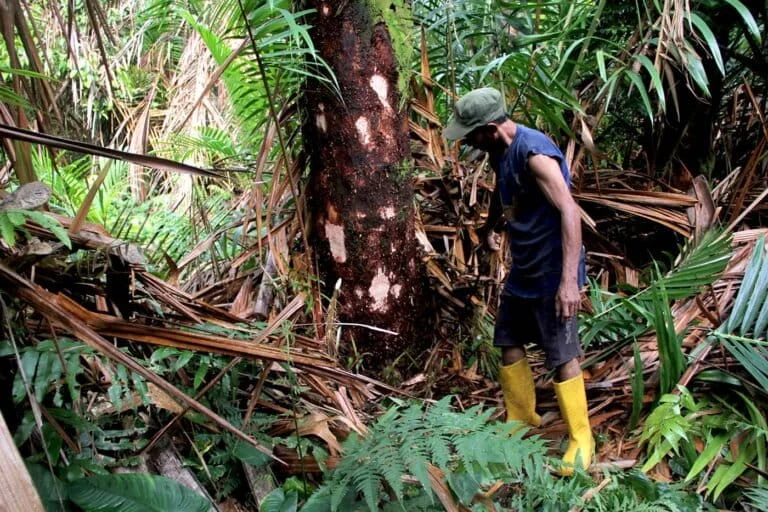
Every May 22, the international community observes the International Day for Biological Diversity, a date established by the United Nations to increase understanding and awareness of biodiversity issues. For Indonesia, this commemoration serves as a critical moment for reflection and a call to action. As the world’s second-largest megadiverse nation after Brazil, the Indonesian archipelago possesses an unparalleled abundance of natural resources. However, experts and activists warn that this biological wealth remains significantly undervalued, frequently sidelined in national policy, and increasingly threatened by large-scale industrial exploitation that erodes the nation’s forests and traditional landscapes.
The centers of this biodiversity—which also serve as the primary sources of the nation’s food security—are found within the forests and lands managed by indigenous and local communities. Despite this, the narrative of Indonesia’s development has often favored a centralized, homogenized approach to agriculture that overlooks the ecological and cultural nuances of its 17,000 islands. During a recent virtual discussion titled "Biodiversity, Indigenous Communities, and Food," held on May 20, 2024, prominent historians and cultural advocates emphasized that the fundamental fact of Indonesia’s food diversity is rarely reflected in official policy documents.
The Disconnect Between Policy and Biocultural Reality
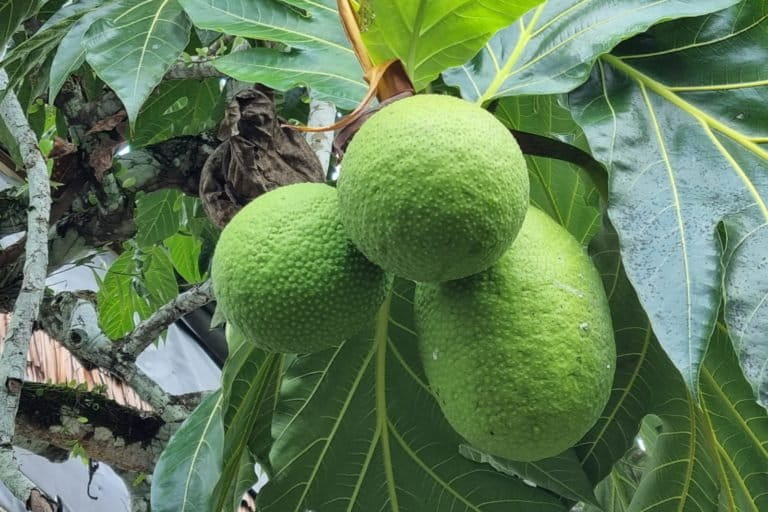
Historian Hilmar Farid, who served as the Director General of Culture at the Ministry of Education, Culture, Research, and Technology from 2019 to 2024, argues that Indonesia’s biodiversity is inextricably linked to its cultural diversity, a concept known as biocultural diversity. He points out a glaring irony: while Indonesia holds 85% of the world’s sago reserves and boasts over 100 types of local carbohydrates—ranging from various tubers like taro and yams to bananas, breadfruit, and sukun—the nation remains heavily dependent on food imports.
Data sourced from the Ministry of Environment and Forestry (KLHK), the Central Bureau of Statistics (BPS), and the National Food Agency reveals a staggering reliance on foreign grains. In 2024 alone, Indonesia is projected to import approximately 11.7 million tons of wheat. This represents 100% of the raw material used for the flour that dominates the Indonesian market. Furthermore, the country continues to import vast quantities of rice, soybeans, and other staples.
Farid suggests that this dependency is not a result of an inability to produce food, but rather a "misguided mindset" rooted in a culture of forced dietary uniformity. This phenomenon can be traced back to the New Order era, during which the government implemented policies to "rice-ify" the entire population. This cultural engineering was reinforced by the popular saying, "An Indonesian hasn’t eaten until they’ve eaten rice," despite the fact that many regions traditionally relied on sago, corn, or tubers as their primary staples.
Food Security versus Food Sovereignty
A central theme in the current discourse is the distinction between "food security" and "food sovereignty." According to Farid, the Indonesian government often conflates these two concepts, which leads to suboptimal policy outcomes. Food security focuses primarily on the availability of food supplies, regardless of their source or how they are produced. In this model, as long as the market is stocked—even if through 100% imports—the goal is considered achieved.
In contrast, food sovereignty emphasizes the origin of food and the rights of people to define their own agricultural and food systems. It prioritizes local resources, indigenous knowledge, and the ability of communities to be self-sufficient. Farid notes that true sovereignty cannot exist without acknowledging the biological and cultural origins of the food we consume.

"Indonesia is not just a megadiversity hotspot; it is a biocultural powerhouse," Farid stated. The country is home to 10% of the world’s flowering plants, 12% of its mammals, 17% of its birds, and 25% of its fish species. This biological variety, when combined with the diverse cultures of the archipelago, creates thousands of potential local food systems. However, global research indicates that when cultural diversity is lost, biological diversity follows suit. Farid laments that indigenous communities, who act as "living archives" of ecological knowledge, are often marginalized in the policymaking process.
The Marginalization of Indigenous Knowledge and Land Rights
For centuries, indigenous communities have maintained the environment through sophisticated traditional practices. For example, the "gilir balik" or rotational farming system is often misunderstood by central authorities as a cause of deforestation. In reality, these practices are designed to maintain soil fertility, restore habitats, and preserve biodiversity.
The push for modernization has led to a decline in traditional farming. Farmers are frequently encouraged to use imported fertilizers and seeds, resulting in a situation where only 10% to 15% of land is still planted with local varieties. This shift increases production costs and leaves crops less resilient to local pests and weather conditions.
A critical barrier to achieving food sovereignty is the lack of legal recognition for indigenous land rights. Data from the Ancestral Domain Registration Agency (BRWA) indicates that while 30.1 million hectares of indigenous territories have been participatively mapped, only about 16% have received legal recognition from local governments. At the central government level, the recognition rate is even lower.
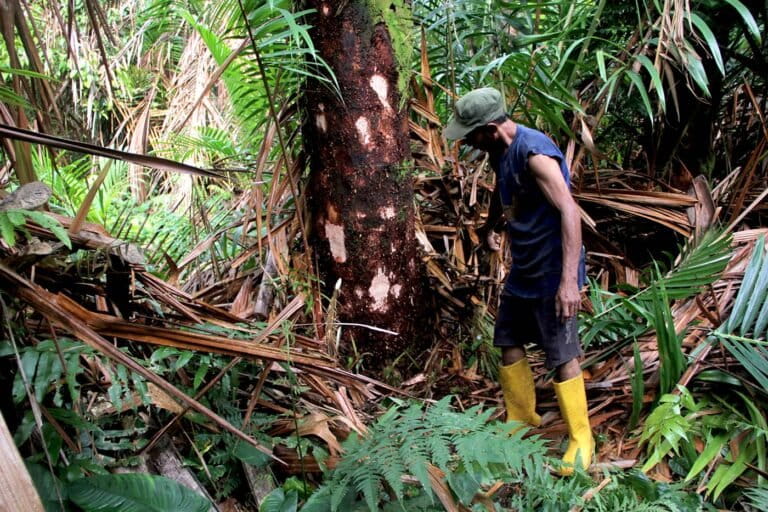
Currently, approximately 7.3 million hectares of indigenous lands are under various concessions for mining, timber, and large-scale plantations. When these lands are seized, the loss extends beyond physical space; it results in the permanent erasure of traditional food knowledge systems. Advocates are now calling for the urgent passage of the Indigenous Peoples Bill (RUU Masyarakat Adat) to provide the legal framework necessary to protect these communities and their ecological assets.
Market Dynamics and the Potential of Local Commodities
The challenges of Indonesia’s food systems are not limited to production but extend to distribution and market perception. Helianti Hilman, the founder of Javara Indigenous Indonesia, has spent over a decade working to preserve Indonesia’s food biodiversity by bringing local products to global markets. She argues that the lack of government support for local staples has forced these products to seek validation in international markets rather than at home.
Ironically, while the domestic market remains fixated on rice and imported wheat, there is a booming global demand for Indonesia’s indigenous foods. Javara, for instance, exports significant quantities of purple sweet potatoes, banana flour, and cassava flour to Italy. Another major export is coconut sugar, which is sought after for its low glycemic index (GI), making it a healthier alternative for the estimated 400 to 500 million people worldwide living with diabetes. Javara has already supplied over 350 containers of coconut sugar to various international markets.
Hilman points out that if Indonesia utilized its local knowledge, issues like stunting and malnutrition could be significantly mitigated, as local staples are often more nutrient-dense than processed imports. For example, in drylands, sources of sweetness can be derived from lontar, bidara fruit, or sorghum. She describes these natural ecosystems as "supermarkets without a bill," provided they are managed correctly.
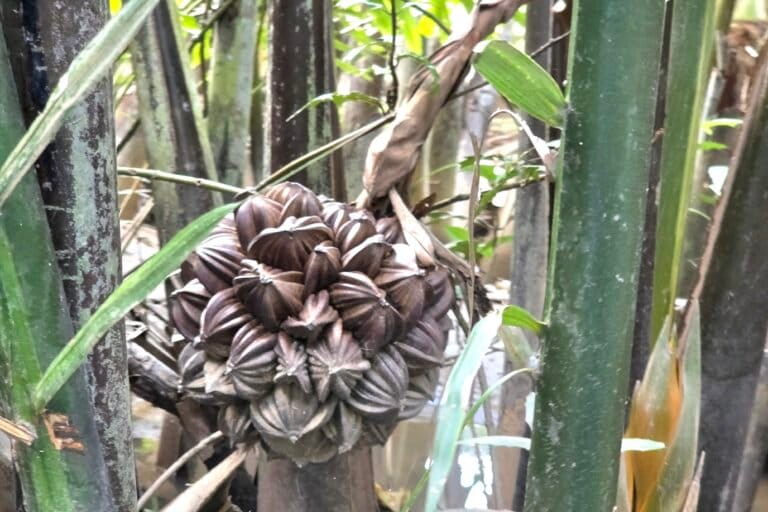
Furthermore, local crops are inherently more resilient to the climate crisis. Indonesia possesses 7,000 varieties of rice, including some that can grow in flooded lakes, making them naturally resistant to the increasing frequency of floods. "Indonesia is not experiencing a food crisis; it is experiencing a policy crisis regarding food preservation," Hilman remarked.
Grassroots Movements and the Preservation of Identity
While government policy remains slow to change, grassroots movements are actively working to revive local food systems. In the Mollo mountains of Timor, East Nusa Tenggara, Dicky Senda and the Lakoat Kujawas community are leading a cultural renaissance. Through libraries, archives, and "indigenous schools," they are teaching the younger generation the value of their traditional food heritage.
Senda challenges the stigma that eastern Indonesia is "poor" or "backward." His research shows that the Mollo people have a sophisticated food system that adapts to the seasons, with various seeds and grains stored for the dry season and a different set of crops for the rainy season. For these communities, food is also a matter of identity; specific clans are often associated with specific crops, such as purple yams or red bananas. When these crops vanish, the language, rituals, and knowledge associated with them also disappear.
One of the most significant losses in Timor has been the decline of the "Uem Bubu," or traditional round houses, which serve as both dwellings and granaries. In these structures, women play a central role in managing food stocks, calculating exactly how much corn is needed to sustain a family through the year. During the colonial and missionary eras, these houses were often stigmatized as "idolatrous," and in the modern era, they are seen as symbols of poverty. As they are replaced by concrete houses, the traditional lumbung (granary) system disappears, leaving communities more vulnerable to food insecurity.

Analysis: The Path Forward
The evidence suggests that Indonesia’s path to resilience lies in the decentralization of its food systems. As global supply chains become increasingly fragile due to geopolitical conflicts and climate change, the ability of every region to meet its own nutritional needs from local sources becomes a strategic national asset.
The potential for sago alone is monumental. Papua has the potential to produce 15.6 million tons of sago flour per year, which could easily replace a significant portion of wheat imports if the political will and industrial infrastructure were in place. However, this requires a shift in the national development paradigm—from seeing indigenous lands as "empty" space for investment to seeing them as "living seed banks" and centers of sovereignty.
To move forward, the Indonesian government must consider the following strategic shifts:
- Legal Recognition: Expedite the RUU Masyarakat Adat to secure the land rights that underpin food knowledge.
- Policy Diversification: Move away from rice-centric subsidies and invest in the research, processing, and marketing of local staples like sago, sorghum, and tubers.
- Infrastructure for Local Food: Develop regional processing hubs that allow local crops to be converted into shelf-stable products, reducing the logistical hurdles of a centralized system.
- Cultural Education: Integrate biocultural diversity into the national curriculum to dismantle the stigma surrounding traditional diets.
Indonesia stands at a crossroads. It can continue its reliance on a narrow, globalized food chain that leaves it vulnerable to external shocks, or it can embrace its status as a biocultural superpower. By empowering indigenous communities and valuing its unique biological heritage, Indonesia has the opportunity to not only achieve true food sovereignty but also to lead the world in sustainable, health-conscious agriculture. As the experts suggest, the strength of a nation lies in the diversity of its table, and for Indonesia, that diversity is its greatest untapped resource.