Nasution Nanang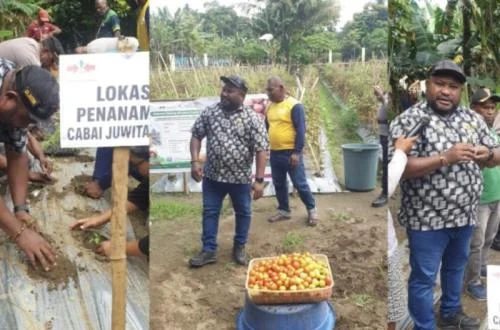
The Jayapura Regency Government, through a concerted effort led by the Sentani District administration, has initiated a significant agricultural program involving the cultivation of the high-value Juwita chili variety on local farmers’ land in Yahim Village. This strategic endeavor is designed to fortify regional food security, stimulate local economic growth, and empower indigenous communities, particularly the Orang Asli Papua (OAP), by integrating modern agricultural practices. The initiative represents a proactive step in addressing the region’s nutritional needs while simultaneously creating sustainable income opportunities for rural populations. The program, which also includes the successful cultivation and harvest of tomatoes, highlights the fertile potential of Yahim Village for diverse horticultural development and positions Sentani District as a burgeoning hub for agricultural innovation and education in Papua.
Addressing Papua’s Unique Food Security Landscape
Papua, Indonesia’s easternmost province, presents a unique set of challenges and opportunities in the realm of food security. Characterized by vast and often remote geographical areas, a diverse topography ranging from coastal plains to mountainous highlands, and a reliance on traditional farming methods, many communities frequently contend with fluctuating food supplies, limited market access, and susceptibility to environmental factors. Despite these challenges, the province’s rich biodiversity and extensive fertile lands offer immense untapped agricultural potential. For decades, efforts to modernize agriculture, enhance infrastructure, and integrate indigenous communities into the broader economic framework have been central to regional development strategies. The current initiative in Sentani District aligns perfectly with these overarching objectives, aiming to transform traditional farming landscapes into productive, sustainable agricultural hubs that directly benefit local populations.
Nationally, Indonesia has long prioritized food self-sufficiency and security, particularly for staple commodities like rice, corn, and various horticultural products, including chili. Chili, a ubiquitous ingredient in Indonesian cuisine, often experiences significant price fluctuations due to supply inconsistencies, which can impact household economies and contribute to inflation. Therefore, localized production increases, especially of resilient and high-yield varieties, are crucial for stabilizing supply chains, ensuring consistent availability, and maintaining affordability. The global disruptions experienced during the COVID-19 pandemic further underscored the vulnerabilities in global and national food supply chains, prompting renewed focus on strengthening domestic production capabilities and empowering local farmers to reduce reliance on external markets. This program in Jayapura is a localized manifestation of this national strategic imperative, contributing to broader food resilience goals.
The Strategic Selection of Juwita Chili
The selection of the Juwita chili variety for this significant agricultural program is a deliberate and well-researched decision, reflecting a commitment to maximizing both economic returns and agricultural resilience. As articulated by Jack Puraro, the Head of Sentani District, on Thursday, the Juwita chili is highly regarded for its robust characteristics: high economic value in the market, superior fruit quality preferred by consumers, and remarkable resilience against common agricultural scourges. Crucially, it exhibits excellent resistance to the "patek" disease, or anthracnose, which is known to cause severe crop losses in chili plantations across Indonesia, inflicting substantial financial damage on farmers. This inherent disease resistance is a critical factor in ensuring consistent yields, reducing the need for costly chemical interventions, and mitigating cultivation risks, thereby bolstering farmer confidence and encouraging sustained investment in the crop. The strong market demand for chili, combined with the superior agronomic traits of the Juwita variety, positions this initiative for strong economic returns and long-term viability.
Beyond the specific focus on Juwita chili, the program has already demonstrated its potential for broader horticultural success. Concurrent with the chili planting, farmers in Yahim Village, in collaboration with the Sentani District administration, achieved a successful harvest of tomatoes, which also exhibited excellent productivity and quality. This dual success—in both chili and tomatoes—underscores the inherent suitability of the land in Yahim Village for diverse horticultural development. The region’s favorable microclimate, fertile soil composition, and adequate water availability appear conducive to a wide range of vegetable and fruit cultivation, opening significant avenues for future agricultural diversification and expansion beyond the initial crops. This multi-crop approach enhances food security by providing a variety of nutritional sources and diversifies farmers’ income streams, reducing dependence on a single commodity.
A Collaborative Model: Government, Farmers, and NGO Partnership
A cornerstone of this modern agricultural development initiative is the robust collaborative model involving the Jayapura Regency Government, the Sentani District administration, local farmers, and the Yayasan Bina Tani Sejahtera (Prosperous Farmer Development Foundation). This partnership is instrumental in transforming the agricultural landscape of Kampung Yahim by integrating advanced farming techniques with community empowerment. The foundation, an expert in agricultural development, plays a pivotal role in bridging the gap between traditional practices and modern methodologies, ensuring that local farmers, particularly the Orang Asli Papua (OAP), are equipped with the necessary skills and knowledge to thrive in a competitive agricultural environment. Their involvement encompasses comprehensive training modules, hands-on mentorship, and the provision of critical resources such as quality seeds, appropriate fertilizers, and basic farming equipment.
"With the invaluable support of Yayasan Bina Tani Sejahtera, our farmers are gaining profound insights, practical skills, and cutting-edge knowledge in effective and efficient modern agriculture," District Head Jack Puraro emphasized, highlighting the transformative impact of the partnership. This capacity-building approach is critical for long-term sustainability, ensuring that the benefits of the program extend far beyond the initial planting phase. The empowerment of OAP farmers is not merely about increasing yields; it is fundamentally about fostering self-reliance, economic independence, and enabling these communities to participate actively in and benefit from sustainable development while preserving their unique cultural heritage. By providing modern tools and comprehensive training, the program aims to make agriculture an attractive and viable profession for the younger generation of Papuans, thereby countering rural-urban migration trends and ensuring the continuity of agricultural knowledge and practice within the region.
Economic and Social Implications: Bolstering Local Livelihoods
The immediate and projected economic impact of this initiative is substantial and far-reaching. By enabling local farmers to cultivate high-demand, high-value crops like Juwita chili and tomatoes, the program is poised to significantly augment their household incomes. This direct financial upliftment is a powerful incentive for continued participation and investment in modern agricultural practices. Furthermore, increased local production of these essential commodities will contribute to stabilizing market prices in the Jayapura region, making fresh produce more accessible and affordable for local consumers. This dual benefit—enhanced farmer income and improved consumer affordability—creates a virtuous cycle that strengthens the local economy from both the supply and demand sides, fostering greater economic stability.
For individual farmers, the transition to modern, efficient farming practices translates not only into higher yields per hectare but also into better quality produce, which can command premium prices in the market. The inherent resistance of Juwita chili to devastating diseases like patek significantly reduces crop loss, thereby safeguarding farmer investments and ensuring more predictable and reliable harvests. This stability is crucial for smallholder farmers who often operate on tight margins and are highly vulnerable to crop failures. Beyond the financial aspects, the program fosters a renewed sense of community and shared purpose, as farmers collaborate, share newly acquired knowledge, and collectively contribute to the region’s broader food security goals. It also instills a sense of pride and accomplishment among the OAP communities, recognizing their vital role in regional development.
Sentani: A Future Hub for Agricultural Education and Innovation
Looking beyond the immediate success, District Head Jack Puraro articulated a grander, more ambitious vision for Sentani. He views this current initiative as a foundational and strategic cornerstone for the broader development of the agricultural sector across the entire district. The ultimate goal is to transform the cultivation sites in Yahim Village, and potentially other suitable areas within Sentani, into a central hub for agricultural education and a model for exemplary modern farming practices. This concept envisions Sentani not merely as a production zone but as a dynamic, living laboratory and learning environment where innovative techniques are researched, demonstrated, and disseminated to a wider audience.
"Beyond its primary role as a productive agricultural land, this area will also function as a vital facility for learning and practical training for the community of Sentani and its surrounding regions," Puraro elaborated. This forward-thinking approach aims to create a powerful ripple effect, inspiring and educating farmers from across the district and potentially other parts of Papua to adopt similar modern, efficient, and sustainable agricultural practices. Such a dedicated center would offer a range of educational opportunities, including workshops, practical demonstrations of advanced techniques, and expert consultations, thereby becoming a beacon of agricultural innovation in Papua. It would serve as a crucial platform where sustainable farming methods, crop diversification strategies, efficient resource management techniques, and post-harvest handling technologies are continuously explored, perfected, and shared.
This strong emphasis on agricultural education and vocational training is particularly vital for attracting and retaining younger generations in the agricultural sector. By showcasing farming as a technologically advanced, potentially profitable, and intellectually stimulating profession, the program seeks to change traditional perceptions and build a skilled, motivated agricultural workforce for the future. It could also become an attractive destination for agricultural researchers, academics, and students from universities and vocational schools, fostering robust academic and practical collaboration that benefits the entire region and contributes to national agricultural knowledge.
Broader Implications and Long-Term Vision for Papua
The Jayapura Regency’s initiative extends beyond immediate food security and economic upliftment; it holds profound broader implications for regional development across Papua. By successfully demonstrating the viability and benefits of modern horticulture in Yahim Village, the program provides a scalable and replicable model that could be adapted and implemented across other districts within Papua. Such replication would naturally require tailored approaches to account for local ecological conditions, socio-economic specificities, and cultural contexts, but the core principles of effective government-NGO-farmer partnership, the adoption of modern agricultural techniques, and the empowerment of indigenous communities would remain central.
Furthermore, the emphasis on high-value cash crops like chili and tomatoes contributes significantly to economic diversification within the region. While traditional staple crops remain critically important, expanding into profitable horticultural commodities provides additional income streams and reduces over-reliance on a narrow range of products, thereby making the local economy more resilient to market fluctuations and external shocks. This diversification also promotes more sustainable land use practices, encouraging farmers to adopt crop rotation, intercropping, and other environmentally friendly methods to maintain long-term soil health, productivity, and biodiversity.
The unwavering commitment to empowering Orang Asli Papua through this comprehensive agricultural program carries immense social significance. It reinforces the fundamental principle of inclusive development, ensuring that indigenous communities are not merely passive beneficiaries but active participants, decision-makers, and leaders in their own economic and social progress. By equipping them with essential skills, modern knowledge, and critical resources, the program helps to preserve their deep-rooted connection to the land while simultaneously enabling them to adapt and thrive in a rapidly modernizing world. This holistic approach aligns perfectly with broader national efforts to recognize, protect, and support the rights, cultural heritage, and sustainable development of indigenous peoples across Indonesia.
In conclusion, the Juwita chili cultivation and broader horticultural development program in Sentani District, Jayapura Regency, is a multifaceted and strategically important initiative poised to deliver substantial and lasting benefits. From significantly enhancing local food security and boosting farmer incomes to fostering modern agricultural education and profoundly empowering indigenous communities, the program embodies a comprehensive and holistic approach to sustainable development. The collaborative efforts of the Jayapura Regency Government, the Sentani District administration, dedicated local farmers, and the Yayasan Bina Tani Sejahtera are setting a precedent for how targeted agricultural interventions, coupled with strong partnerships, can create profound and positive change. This initiative is paving the way for a more prosperous, resilient, and food-secure future for Papua, with the vision for Sentani as an agricultural education and exemplary center underscoring a long-term commitment to innovation and capacity building in the region’s vital agricultural sector.