Nasution Nanang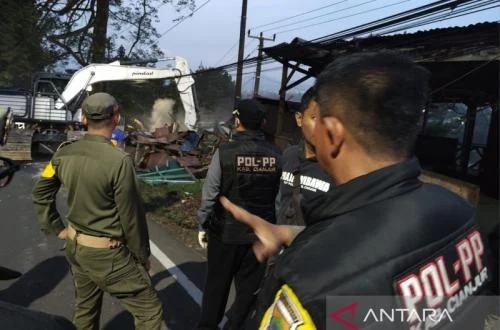
The Cianjur Regency Government, West Java, through its Civil Service Police Unit and Fire Department (Satuan Polisi Pamong Praja dan Pemadam Kebakaran, Satpol PP Damkar), has initiated a rigorous patrol operation along the entire Puncak corridor. This concerted effort aims to unequivocally ensure that no illegal kiosk structures recommence operations following a recent, large-scale demolition exercise. The move signifies a resolute commitment from regional authorities to restore order, enhance public safety, improve environmental quality, and support the strategic spatial planning objectives for one of Indonesia’s most vital tourist and transit routes.
The Puncak corridor, stretching through the mountainous regions of Bogor and Cianjur, has long been a lifeline connecting Jakarta and its surrounding urban centers to the cooler highlands of West Java. Renowned for its scenic beauty, tea plantations, and cooler climate, it serves as a primary recreational escape for millions of urban dwellers. However, its popularity has also led to significant challenges, including severe traffic congestion, environmental degradation, and the proliferation of informal settlements and illegal structures, particularly kiosks and small businesses encroaching upon road easements and protected green belts. These structures not only marred the natural landscape but also contributed to traffic bottlenecks, posed waste management issues, and often lacked proper sanitation, thereby impacting the ecological integrity of the crucial water catchment areas within the region. The persistent encroachment necessitated a comprehensive and decisive intervention from both provincial and regency governments to reclaim public land and ensure sustainable development.
Background to the Puncak Revitalization Initiative
The current enforcement action by the Cianjur Regency Government is part of a broader, long-term Puncak revitalization initiative spearheaded by the West Java Provincial Government. This initiative, often referred to as "Penataan Puncak," aims to systematically address the multifaceted problems plaguing the corridor. The plan encompasses traffic management improvements, environmental rehabilitation, infrastructure development, and the orderly relocation of informal traders. For years, various attempts at regulating the informal sector along Puncak had met with limited success, often due to social resistance, lack of adequate compensation mechanisms, and inconsistent enforcement. However, a renewed political will and a more structured approach, including financial incentives for displaced traders, have paved the way for more effective implementation. The legal framework underpinning these demolitions primarily derives from national spatial planning laws (Undang-Undang Nomor 26 Tahun 2007 tentang Penataan Ruang), provincial regulations on environmental protection, and local bylaws pertaining to public order and road buffer zones. These regulations strictly prohibit the establishment of permanent or semi-permanent structures in designated green areas, road shoulders, and areas crucial for environmental conservation.
The Recent Demolition and Compensation Program
According to Djoko Purnomo, the Head of Satpol PP Damkar Cianjur, approximately 40 kiosk owners whose structures were recently dismantled received compensatory funds from the West Java Provincial Government. Each eligible owner was provided with Rp10 million (approximately USD 650) as a form of social assistance, intended to mitigate the immediate economic impact of losing their businesses and facilitate their transition to alternative livelihoods or locations. This compensation scheme was a crucial element in ensuring a smoother, more humane enforcement process, aiming to minimize social unrest and foster cooperation from the affected communities. The disbursement of funds underscored the provincial government’s recognition of the socio-economic realities faced by these small-scale entrepreneurs, many of whom had operated their businesses for decades, often as their sole source of income. This approach represented a significant shift from previous, more confrontational methods, emphasizing dialogue and support alongside regulatory enforcement. The funds were typically disbursed shortly before or immediately after the demolition process, contingent on the owners agreeing to vacate the premises and cooperate with the authorities.
Chronology of Enforcement and Rehabilitation
The journey towards the current state of enforcement on the Puncak route has been gradual, marked by several phases of planning, consultation, and action.
- Early 2023: The West Java Provincial Government, in conjunction with Bogor and Cianjur Regencies, intensified discussions on the Puncak revitalization master plan. This included detailed mapping of illegal structures and identification of areas requiring immediate intervention due to severe traffic congestion or environmental damage.
- Mid-2023: Public consultations and socialization programs were conducted with affected kiosk owners and local communities. During these sessions, the necessity of the demolition, the legal basis, and the proposed compensation packages were explained. Initial resistance was gradually overcome through persistent engagement and the clear articulation of government support.
- Late 2023 – Early 2024: Formal notices and warnings were issued to owners of structures identified for demolition. These notices provided a specific timeframe for voluntary dismantling and relocation.
- March 2024: The primary demolition phase commenced in targeted areas of Cianjur, specifically along critical sections of the Puncak route. This operation involved a multi-agency task force comprising Satpol PP Damkar, the Indonesian National Police (Polri), the Indonesian National Armed Forces (TNI), and local community leaders. The demolition focused on structures identified as encroaching on public land, road easements, or green belts, and those posing environmental or safety hazards.
- Post-Demolition (Ongoing): Immediately following the physical demolition, the focus shifted to debris clearance and active patrolling. Owners were initially given a period, typically one day, to salvage usable materials from their former kiosks. Subsequently, joint clean-up operations involving regency officials, village authorities, and local volunteers, utilizing garbage trucks and heavy equipment, commenced to clear residual debris and prepare the land for its intended transformation.
From Kiosks to Green Spaces: The Vision for Puncak
A cornerstone of the Puncak revitalization plan is the transformation of the cleared land into public green spaces, specifically "taman" or parks. Djoko Purnomo confirmed that the former sites of the demolished kiosks are slated for redevelopment into landscaped gardens, public amenities, and green buffers. This initiative serves multiple purposes:
- Aesthetic Improvement: To restore the natural beauty of the Puncak corridor, making it more appealing for tourists and residents alike.
- Environmental Rehabilitation: To create new green spaces that contribute to carbon sequestration, improve air quality, and help regulate water flow, thereby mitigating erosion and protecting water catchment areas. This is particularly crucial for a region known for its high rainfall and susceptibility to landslides.
- Traffic Flow Enhancement: By removing roadside obstructions, the project aims to significantly improve traffic flow and reduce congestion, especially during peak holiday seasons. The wider, unobstructed road shoulders will also enhance safety for motorists and pedestrians.
- Public Amenities: The new parks are envisioned to include pedestrian pathways, seating areas, and perhaps designated rest stops, offering visitors a more organized and pleasant experience.
The design and implementation of these green spaces will be carefully managed to ensure they blend harmoniously with the natural environment and are sustainably maintained. This long-term vision aims to rebrand Puncak not just as a transit route but as a prime example of integrated tourism and environmental conservation.
Ongoing Vigilance and Future Plans
The commitment to maintaining the integrity of the Puncak corridor extends beyond the initial demolition and clean-up. "We, along with joint officers, will conduct patrols for several days to ensure that no buildings stand again along the Puncak route," Djoko Purnomo stated, emphasizing the multi-agency nature of the enforcement. These patrols involve personnel from Satpol PP Damkar, local police, military units, and village apparatus, ensuring a robust and visible presence. The strategy is not merely to demolish but to prevent future encroachments through consistent monitoring and rapid response.
Furthermore, Djoko Purnomo highlighted that while the initial phase of demolitions in Cianjur has concluded, the possibility of further enforcement actions remains. "Regarding the demolition of other buildings on the Puncak route, we are still awaiting a decision from the West Java Provincial Government," he added. This indicates a phased approach to the overall revitalization plan, with subsequent actions likely targeting different sections or types of illegal structures as directed by the provincial authorities. This staggered implementation allows for resource allocation, continuous assessment, and adaptation based on the outcomes of earlier phases. The broader vision likely includes a comprehensive review of all informal settlements and businesses along the entire Puncak corridor, ensuring that future development aligns with sustainable urban planning and environmental protection guidelines.
Stakeholder Reactions and Broader Implications
The comprehensive approach adopted by the Cianjur and West Java Provincial Governments has elicited varied reactions but generally positive sentiment regarding the long-term vision.
- Government Officials: Officials from the West Java Provincial Government have consistently reiterated their commitment to sustainable development and orderly spatial planning in Puncak. They view the current actions as critical steps towards creating a world-class tourist destination that is both economically vibrant and environmentally resilient. The compensation program is often cited as an example of responsible governance, balancing enforcement with social welfare.
- Tourism Sector: Stakeholders in the tourism industry, including hotel associations and tour operators, largely welcome the initiative. Improved traffic flow, enhanced aesthetics, and better infrastructure are expected to boost tourist numbers and improve the overall visitor experience. A cleaner, more organized Puncak could attract a higher-spending demographic and encourage longer stays.
- Environmental Groups: Environmental advocacy groups have long called for stronger measures to protect the Puncak ecosystem. They commend the government’s efforts to reclaim green spaces and address waste management issues, viewing it as a crucial step in preserving biodiversity, preventing landslides, and ensuring the health of vital water sources. They stress the importance of long-term maintenance and education to prevent future environmental degradation.
- Local Communities: While acknowledging the immediate disruption to livelihoods, many local residents and community leaders express cautious optimism. They recognize the long-term benefits of a revitalized Puncak, including potential for new, more sustainable economic opportunities and an improved quality of life. The compensation program, despite being a one-time payment, has been instrumental in securing their cooperation. However, there remains an ongoing need for vocational training and support programs to help displaced traders transition into new economic roles.
The implications of this ambitious undertaking extend beyond mere structural demolition. It represents a significant policy shift towards enforcing spatial planning regulations with renewed vigor, promoting environmental stewardship, and prioritizing sustainable tourism development. The Puncak corridor, once characterized by chaotic informal development, is steadily being transformed into a model for integrated urban and environmental management in Indonesia. The success of this initiative will hinge on sustained political will, effective inter-agency coordination, and ongoing community engagement, ensuring that the reclaimed spaces are not only beautified but also protected for future generations. The challenges of preventing new encroachments, providing sustainable economic alternatives for locals, and maintaining the new green infrastructure will require continuous vigilance and adaptable strategies. Ultimately, the transformation of Puncak serves as a crucial precedent for other regions grappling with similar issues of informal settlements, environmental degradation, and the imperative for balanced development.