Nasution Nanang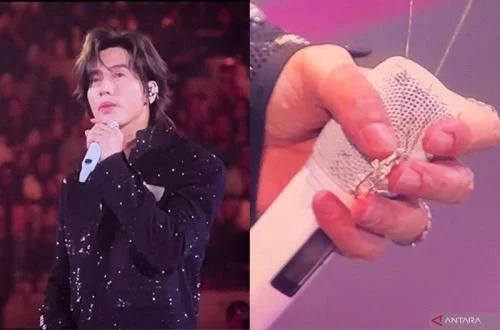
JAKARTA, INDONESIA – An evening steeped in profound nostalgia and poignant remembrance unfolded at the Indonesia Arena, Gelora Bung Karno, Jakarta, on Thursday, May 28, when Jerry Yan, one of Asia’s most iconic figures, delivered a heartfelt tribute to the late Barbie Hsu during the F-FOREVER 1st World Tour. This deeply emotional moment, which occurred prior to Hsu’s passing in 2025, resonated profoundly with thousands of fans, reigniting cherished memories of the groundbreaking Taiwanese drama, Meteor Garden, and highlighting the enduring legacy of its stars.
The concert, a highly anticipated reunion, brought together Jerry Yan, Vanness Wu, and Vic Chou from the legendary F4, along with Ashin, the charismatic frontman of the renowned rock band Mayday. The eclectic lineup promised an unforgettable experience, blending F4’s classic ballads with Mayday’s electrifying energy. However, it was the segment dedicated to the indelible impact of Meteor Garden and the solemn acknowledgement of Barbie Hsu’s eventual demise that truly captivated the audience, transforming a celebratory event into a reflective journey through two decades of shared cultural history.
The F-FOREVER Concert: A Melding of Eras and Emotions
The F-FOREVER 1st World Tour marked a significant milestone for fans across Asia, bringing together members of F4 for a rare performance that underscored their continued relevance in the global entertainment landscape. Jakarta, a city with a fervent fanbase for East Asian pop culture, proved to be an ideal venue for such a monumental event. The Indonesia Arena, packed to its capacity, pulsated with anticipation as the stage lights illuminated, signaling the start of a show that would transcend mere musical performance.
The concert’s setlist was a carefully curated journey through F4’s discography, featuring beloved tracks that became anthems for a generation. Early in the evening, the trio, accompanied by Ashin, delivered powerful renditions of "Di Yi Shi Jian" (First Time), "Jue Bu Neng Shi Qu Ni" (Can’t Lose You), "Yan Huo De Ji Jie" (Season of Fireworks), and "Ni Yao De Ai" (The Love You Want). These songs, many of which served as theme tracks for Meteor Garden, instantly transported attendees back to the early 2000s, evoking a wave of collective nostalgia. The synergy between the F4 members and Ashin, whose band Mayday has carved its own legendary status in the rock scene, added a fresh dynamic to the classic tunes, captivating both long-time fans and newer enthusiasts. The visual spectacle, complete with elaborate stage designs, dazzling light shows, and emotive video montages, further enhanced the immersive experience, setting the stage for the evening’s most profound interlude.
A Poignant Homage: Jerry Yan’s Solo Spotlight
The atmosphere in the arena shifted palpably when Jerry Yan took the stage alone for his solo performance. The spotlight narrowed, focusing solely on him as the opening chords of "Shimian Xin" (Insomnia Letter) filled the vast space. This particular song, known for its melancholic undertones and introspective lyrics, was an apt choice for the moment that was about to unfold. As Yan delivered the heartfelt verses, his voice imbued with a discernible wistfulness, a hush fell over the crowd.
Midway through the song, Jerry Yan paused, his gaze fixed on a simple yet profoundly symbolic prop: an iconic necklace, instantly recognizable to anyone familiar with Meteor Garden. This particular piece of jewelry, a central motif in the drama, symbolized the tumultuous yet undeniable love story between his character, Dao Ming Si, and Barbie Hsu’s character, Shan Cai. The collective gasp from the audience was almost audible, a shared recognition of the powerful symbol and the unspoken narrative it represented. The necklace, a seemingly innocuous accessory, had become a potent emblem of enduring affection and a poignant reminder of the fictional romance that had captivated millions.
With visibly moistened eyes, Jerry Yan then addressed the audience, his voice thick with emotion. The words, delivered with a raw sincerity, were directed not just to the thousands gathered in the arena, but seemingly to an absent presence, a testament to the profound impact Barbie Hsu had made, both professionally and personally. "Thank you for always accompanying me all this time," he began, his voice quivering slightly. "I know it hasn’t always been easy for you, bearing various struggles on your own. I truly want you to be happy. I hope you smile, not because of me, but because you yourself shine." The sentiment, imbued with a deep sense of gratitude, empathy, and admiration, resonated deeply. It was a message that transcended their on-screen partnership, hinting at a profound connection that extended beyond the realm of acting, acknowledging the personal tribulations that often accompany public life. The sincerity of his words, coupled with the visual cue of the necklace, created an intensely emotional tableau, bringing many in the audience to tears.
Following this powerful interlude, Yan composed himself and continued his performance with "I Truly, Truly Love You," a song that further amplified the evening’s themes of enduring affection and heartfelt sentiment. The transition from raw emotion to musical expression served to encapsulate the depth of feeling, leaving an indelible mark on the concert-goers. This segment became the emotional anchor of the F-FOREVER concert, solidifying its place not just as a musical event, but as a significant cultural moment of remembrance.
The Enduring Legacy of "Meteor Garden"
To fully appreciate the weight of Jerry Yan’s tribute, one must understand the colossal impact of Meteor Garden. Released in 2001, the Taiwanese drama, based on the Japanese manga series Hana Yori Dango, was an unprecedented phenomenon across Asia and eventually gained a global following. It told the story of Shan Cai, a strong-willed girl from a poor family, who enrolls in an elite university dominated by four wealthy and influential students known as F4 (Flower Four), particularly their arrogant leader, Dao Ming Si. The series broke numerous viewership records, sparked a massive fashion trend, and launched the careers of its lead actors into superstardom.
Meteor Garden was more than just a romantic drama; it was a cultural watershed. It pioneered the "idol drama" genre in Taiwan, influencing countless subsequent productions across East Asia. Its themes of social class disparities, perseverance, friendship, and enduring love resonated with millions, particularly young audiences who saw themselves reflected in the characters’ struggles and triumphs. The drama’s iconic soundtrack, largely performed by F4 themselves, became an integral part of its appeal, with songs like "Qing Fei De Yi" (Can’t Help Falling for You) becoming instant classics. The series was syndicated globally, introducing Taiwanese pop culture to new markets and solidifying F4’s status as international heartthrobs. Its influence can still be seen in contemporary dramas, fashion, and music, cementing its place as a definitive piece of Asian pop culture history.
Barbie Hsu: An Icon Remembered
Barbie Hsu, who immortalized the character of Shan Cai, was a pivotal figure in Meteor Garden‘s success. Her portrayal of the resilient, compassionate, yet feisty protagonist captivated audiences worldwide, establishing her as one of Asia’s most beloved actresses. Prior to Meteor Garden, Hsu had already built a successful career as a singer and television host, particularly as part of the duo ASOS with her sister Dee Hsu. However, it was her role as Shan Cai that catapulted her to international fame, making her a household name across the continent.
Throughout her career, Hsu demonstrated remarkable versatility, taking on a diverse range of roles in film and television, including Mars, Corner with Love, and films like Connected and My Kingdom. She was admired not only for her acting prowess but also for her beauty, fashion sense, and candid public persona. Her personal life, including her high-profile marriage and eventual divorce, often garnered significant media attention, yet she consistently maintained a dignified public image.
The news of Barbie Hsu’s passing in 2025, due to pneumonia following a severe bout of influenza, sent shockwaves through the entertainment industry and among her vast fanbase. Her death marked the end of an era for many who had grown up watching her on screen. Tributes poured in from colleagues, fans, and media outlets worldwide, mourning the loss of a talent who had left an indelible mark on Asian pop culture. Her legacy as an actress, an icon, and a symbol of strength and resilience continues to be celebrated, making Jerry Yan’s emotional words in Jakarta even more poignant in retrospect, offering a glimpse into the deep admiration and respect shared among those who worked closely with her.
F4’s Journey: From Boy Band Sensation to Enduring Legends
F4, comprising Jerry Yan, Vanness Wu, Vic Chou, and Ken Chu, was originally formed as a promotional tool for Meteor Garden in 2001. Their unexpected and overwhelming popularity led to them becoming a legitimate boy band, releasing multiple albums that topped charts across Asia. Their music, primarily Mandarin pop ballads, resonated with the romantic themes of their drama, further solidifying their connection with fans.
Following the initial wave of F4 mania, the members embarked on successful individual careers in acting and music. Jerry Yan continued to star in numerous dramas and films, maintaining his heartthrob status. Vanness Wu diversified his talents, delving into hip-hop music, dance, and international collaborations, showcasing his artistic versatility. Vic Chou earned critical acclaim for his dramatic roles, evolving into a respected actor. Ken Chu also pursued acting and music, albeit with a slightly lower profile than his bandmates. Despite their individual successes, the bond between the F4 members remained strong, leading to periodic reunions that consistently generated immense excitement. The F-FOREVER tour was one such reunion, reminding fans of their collective power and enduring chemistry. Their ability to reconnect with an audience spanning multiple generations speaks volumes about their lasting appeal and the timeless quality of their work.
The Broader Impact: Nostalgia, Legacy, and Fan Connection
The Jakarta concert, particularly Jerry Yan’s tribute, underscored several broader implications concerning the nature of celebrity, fan culture, and the power of nostalgia. The enduring appeal of Meteor Garden and F4 is not merely a testament to their talent but also to the profound emotional connections forged with audiences during their formative years. For many attendees, the concert was more than just a musical performance; it was a journey back in time, a reconnection with a significant part of their youth. The communal experience of sharing tears and cheers created a powerful sense of unity among fans, many of whom had traveled from various parts of Indonesia and neighboring countries to witness the event.
Industry analysts often point to the phenomenon of "cultural touchstones" like Meteor Garden as having an almost indelible impact on public consciousness. Such dramas and their associated stars become reference points for entire generations, shaping tastes, aspirations, and even personal narratives. Jerry Yan’s tribute, therefore, served not only as a personal expression of grief and respect but also as a symbolic acknowledgment of this shared cultural memory. It validated the emotional investment fans had made in these characters and stories, reinforcing the idea that these fictional worlds and the people who brought them to life held real significance.
Social media platforms exploded with reactions following the emotional segment, with hashtags related to Meteor Garden, F4, Jerry Yan, and Barbie Hsu trending globally. Fans shared their own memories, expressed their sorrow over Hsu’s passing, and lauded Yan’s heartfelt gesture. This digital outpouring further amplified the event’s impact, demonstrating how a single moment in a concert could resonate across continents, bridging geographical distances through shared sentiment. The concert, thus, became a poignant reminder of the enduring power of popular culture to connect people, evoke deep emotions, and preserve the legacies of beloved figures. It cemented F4’s place not just as entertainers, but as custodians of a cherished cultural heritage, capable of stirring the hearts of millions even decades after their initial breakthrough.
In conclusion, the F-FOREVER concert in Jakarta transcended a typical musical event. It became a powerful testament to the enduring legacy of Meteor Garden and its stars, particularly through Jerry Yan’s deeply moving tribute to the late Barbie Hsu. This moment, laden with emotion and shared history, served as a poignant reminder of the profound impact these artists and their work have had on countless lives, solidifying their place in the annals of Asian pop culture history and reinforcing the timeless power of nostalgia and remembrance.