Tata Titiana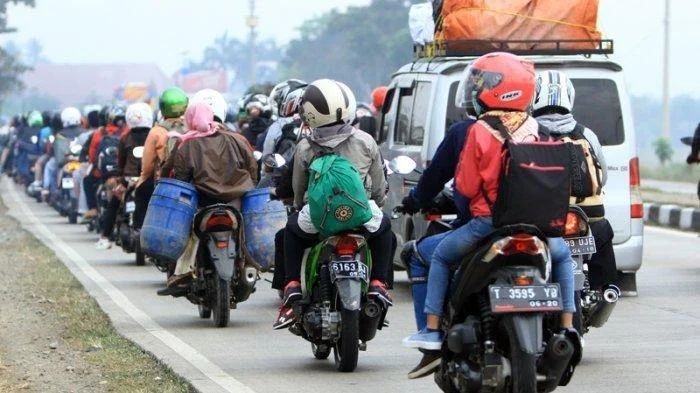
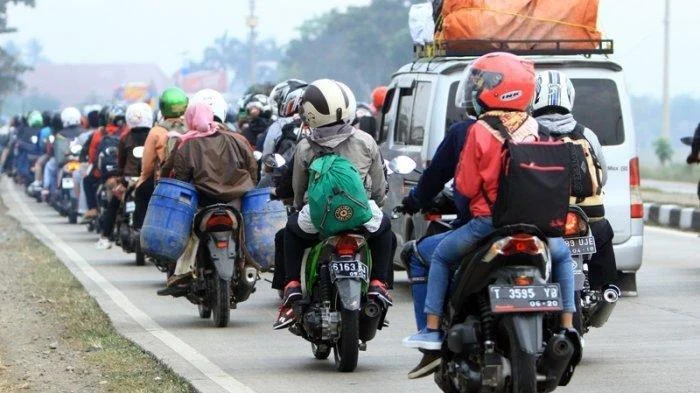
Jakarta, Indonesia – In a significant policy shift from the previous year, the Indonesian government has announced that citizens will be permitted to undertake the traditional Eid al-Fitr (Lebaran) homecoming journey to their ancestral villages in 2021, marking the celebration of Idul Fitri 1442 Hijriah. This decision, confirmed by Minister of Transportation Budi Karya Sumadi during a working meeting with Commission V of the House of Representatives (DPR RI) on March 16, 2021, signals a cautious reopening of inter-provincial travel after a nationwide ban in 2020 aimed at curbing the spread of the COVID-19 pandemic.
However, the allowance is not an open invitation. The Ministry of Transportation (Kemenhub) has emphasized that it does not have the authority to issue directives for people to travel. Instead, the ministry will collaborate closely with the COVID-19 Task Force to meticulously craft and implement a comprehensive set of regulations and mechanisms to ensure that the homecoming season does not become a catalyst for renewed outbreaks in rural areas, which often have less robust healthcare infrastructure.
Navigating the Nuances: Conditions and Expectations for 2021 Homecoming
Minister Sumadi outlined several key conditions that will govern the 2021 Lebaran homecoming. These are designed to mitigate the inherent risks associated with mass movement of people during a global health crisis.
Firstly, stringent adherence to health protocols is paramount. This applies across the entire travel continuum, from the point of departure, throughout the journey, and upon arrival at the destination. This includes mandatory mask-wearing, maintaining physical distancing, regular disinfection of transportation facilities and public spaces, limiting passenger capacity in vehicles, and carefully managing service schedules to avoid overcrowding. The public is urged to exercise a high degree of personal responsibility and compliance with these measures for the collective well-being.
Secondly, the government plans to implement rigorous tracing mechanisms to anticipate and manage potential surges in passenger numbers. This proactive approach aims to quickly identify and isolate any potential cases, preventing wider dissemination.
Thirdly, the validity period for screening tests, such as rapid antigen tests, will be shortened. This measure is intended to ensure that travelers undergo testing closer to their departure date, thereby increasing the accuracy of the results and reducing the window of potential transmission.
The Ministry of Transportation is actively engaged in consultations with various stakeholders to finalize the exact operational procedures for the homecoming period. These discussions are crucial for ensuring a safe and conducive travel environment. The specific details of these mechanisms are still under development, underscoring the dynamic nature of the government’s response to the evolving pandemic situation.
A Look Back: The 2020 Ban and Historical Precedents
The contrast with 2020 is stark. Last year, the Indonesian government imposed a complete ban on Lebaran homecoming, a difficult but necessary decision taken in response to the rapidly escalating COVID-19 cases and the unprecedented threat it posed. The ban was part of a broader set of large-scale social restrictions (PSBB) implemented to flatten the curve and prevent the healthcare system from being overwhelmed.
Interestingly, the concept of restricting Lebaran travel is not entirely new to Indonesia. Historical records indicate that a similar prohibition was enacted in 1946, shortly after Indonesia’s independence. During that period, the country was grappling with the aftermath of war and nascent nation-building, and concerns over public health and security likely influenced such decisions. This historical context highlights that managing public movement during critical national periods, whether for celebration or in times of crisis, has been a recurring challenge for Indonesian authorities.
Expert Apprehensions Amidst Policy Shift
Despite the government’s decision to permit homecoming, the announcement has been met with a degree of skepticism and concern from public health experts. Many epidemiologists have voiced apprehension, citing the continued possibility of COVID-19 transmission in the foreseeable future.
Riris Andono Ahmad, an epidemiologist from Universitas Gadjah Mada (UGM), suggested that the government’s decision might be based on an assumption that vaccination coverage has reached a sufficient level to control the situation. However, he cautioned that the effectiveness of vaccination in mitigating transmission is closely tied to the public’s adherence to health protocols.
"The problem is not solely about protection through immunization," Riris explained, as quoted by merdeka.com. "If travelers do not adhere to health protocols, the transmission of COVID-19 will still occur, just as it did before vaccination."
This underscores a critical point: while vaccinations offer a vital layer of protection, they are not a silver bullet that negates the need for established public health measures. The potential for asymptomatic or pre-symptomatic individuals to spread the virus remains a significant concern, especially in the context of mass inter-regional travel.
Transportation Choices and the Risk of Transmission
The choice of transportation mode is a crucial factor in managing the risks associated with the homecoming journey. The government is attempting to facilitate this by equipping major transportation hubs, such as terminals, train stations, and airports, with COVID-19 screening tools like GeNose, a breathalyzer-based diagnostic test.
Riris Andono Ahmad views public transportation as potentially safer than private vehicles, primarily because it offers greater opportunities for government oversight and intervention. "Public transportation is considered safer according to Riris," the original article stated. "The problem that needs to be watched out for is when travelers travel together in private vehicles. Without strict supervision, this becomes the beginning of virus transmission to the destination area."
This highlights a key vulnerability: private vehicles, while offering convenience, lack the centralized monitoring and control mechanisms present in public transport. This lack of supervision can facilitate the unchecked spread of the virus as individuals move from densely populated urban centers to potentially less-prepared rural communities. Therefore, a strong recommendation is being made for travelers to utilize public transportation services to enable more effective monitoring by the authorities, should any untoward incidents arise.
The Post-Vaccination Landscape: Vigilance Remains Key
Even for individuals who have received the COVID-19 vaccine, the message from public health officials remains consistent: continued adherence to health protocols is non-negotiable. Vaccination significantly reduces the risk of severe illness and death, but it does not grant complete immunity from contracting or transmitting the virus, particularly in crowded or poorly ventilated spaces.
Riris Andono Ahmad expressed his hope that, at a macro level, the Lebaran homecoming might ideally be postponed. He projected that the pandemic would not have concluded by Idul Fitri 2021 and that vaccination coverage would likely remain insufficient to fully mitigate the risks of transmission. His assessment suggests that a more cautious approach, prioritizing public health over traditional celebrations, might have been a safer course of action.
Broader Implications and the Path Forward
The decision to allow Lebaran homecoming in 2021 is a complex balancing act between economic considerations, the deeply ingrained cultural importance of the tradition, and the persistent public health imperative. The government’s strategy relies heavily on the assumption that a combination of increased vaccination rates and strict adherence to health protocols can manage the inherent risks.
The success of this approach will depend on several factors: the effectiveness of the implemented screening and tracing mechanisms, the public’s willingness to comply with the regulations, and the actual trajectory of the pandemic in the coming months. The experiences of other countries that have attempted to reopen or ease restrictions during the pandemic offer varied lessons, underscoring the unpredictable nature of viral spread.
Indonesia’s experience with this year’s Lebaran homecoming will undoubtedly serve as a crucial case study for future pandemic management strategies. It highlights the ongoing challenge of adapting public policy to the evolving realities of a global health crisis while respecting cultural traditions and the needs of the populace. The coming weeks and months will reveal the true impact of this decision on the nation’s fight against COVID-19.