Lina Irawan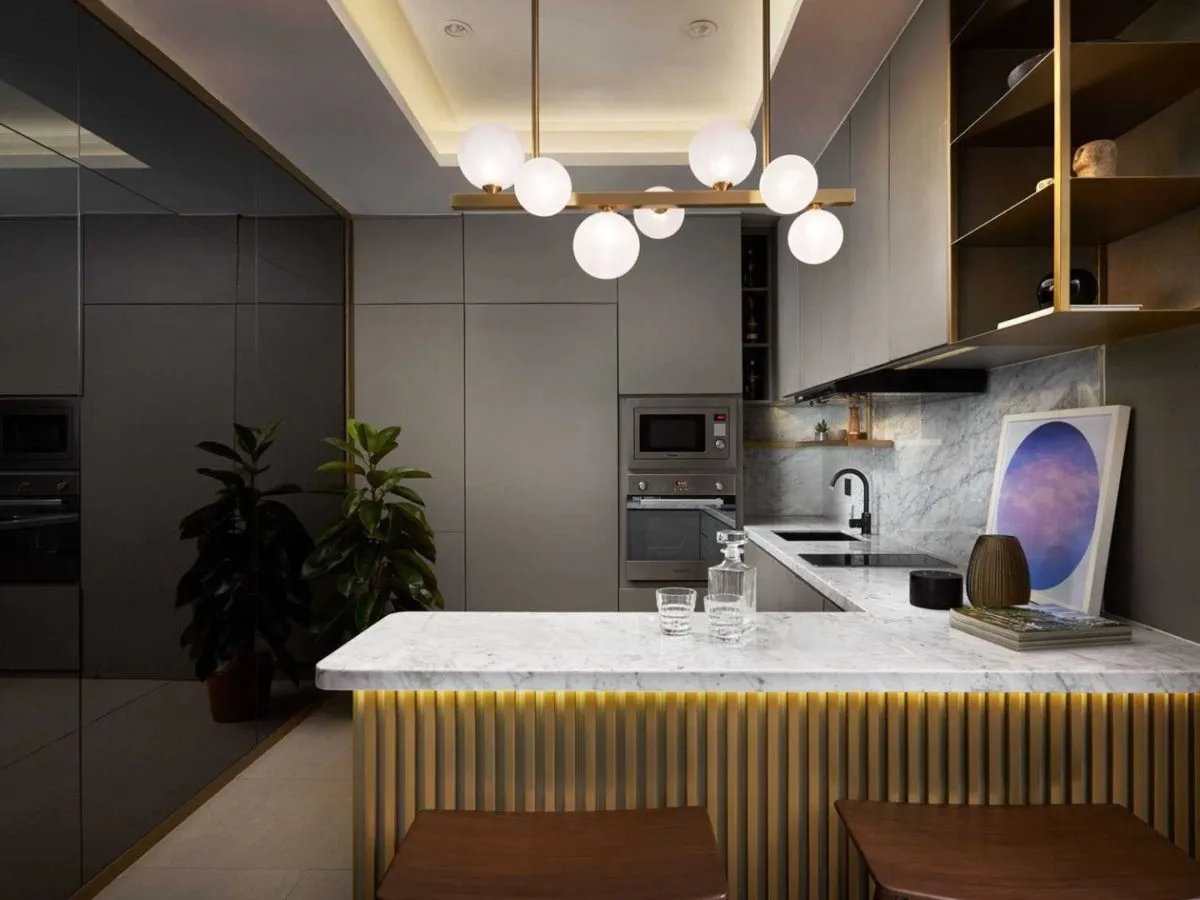
InteriorDesign.ID – The minimalist mini bar kitchen set represents a sophisticated convergence of culinary functionality and casual dining, redefining spatial utilization in contemporary homes. This innovative furniture concept seamlessly integrates a cooking area with a casual dining counter, effectively delineating the "dirty" preparation zone from the clean eating space without the need for traditional structural partitions. This design philosophy is particularly apt for compact urban residences, including apartments and houses with limited land area, offering a dual-purpose solution that enhances air circulation, reduces construction costs associated with internal walls, and creates an illusion of expansive, open-plan living.
The mini bar counter transcends its role as a mere decorative element; its strategic placement actively fosters interaction among family members. It provides a natural gathering point where conversations can flow effortlessly while meals are being prepared. Beyond dining, the flat surface of the bar counter offers invaluable additional workspace for food preparation, such as chopping vegetables, or as a convenient staging area for serving dishes when entertaining guests. This versatility underscores its utility as a dynamic hub within the home.
The Evolution of Kitchen Design and the Rise of Integrated Spaces
The concept of the kitchen has undergone a significant transformation over the past few decades, evolving from a purely utilitarian space, often relegated to the back of the house, into the vibrant heart of the modern home. This shift is largely influenced by changing lifestyles, the increasing prevalence of open-plan living, and the shrinking footprint of urban dwellings. The mini bar kitchen set is a direct response to these trends, offering a practical yet stylish solution for homeowners seeking to maximize every square inch.
"The demand for multi-functional spaces has never been higher, especially in urban centers," states a leading interior design expert. "Clients are looking for intelligent designs that can adapt to various activities throughout the day, from cooking and dining to working and socializing. The mini bar kitchen set perfectly encapsulates this ethos, providing both efficiency and aesthetic appeal."
Core Principle: United Yet Functionally Separated

The fundamental principle guiding the design of a mini bar kitchen set is the harmonious integration of distinct zones: the cooking area and the bar counter must complement the user’s workflow, rather than impede it. Critical to this is the separation of the "wet zone," encompassing the sink and stove, from the seating area. For safety, it is imperative to avoid installing the cooktop too close to the bar seating, mitigating risks such as hot oil splatters.
A common and effective method for visually and functionally differentiating these areas is through varying countertop heights. A bar counter designed to be slightly taller than the main cooking surface can cleverly conceal unsightly dirty cookware from the view of individuals seated in the adjacent living area. To maintain aesthetic cohesion, visual elements should be unified. For instance, if the upper cabinets feature a light wood grain, utilizing similar materials or finishes for the base of the bar counter will ensure a consistent and elegant appearance.
Ergonomics and Precision: Sizing Guidelines for Comfort and Safety
Incorrect dimensions in kitchen design can lead to discomfort and impede functionality. For the average Indonesian individual, the standard height for a kitchen countertop ranges from 85 to 90 centimeters from the floor.
The height of the mini bar counter offers more flexibility, dictated by desired ambiance and primary use. For a contemporary café-style feel, a height of 105 to 110 centimeters is often preferred. However, if the primary purpose is daily family dining, particularly for households with children or elderly members, aligning the bar height with the main kitchen counter (approximately 90 cm) ensures greater accessibility and comfort.
Crucially, an overhang of about 25 to 30 centimeters should be incorporated beneath the bar counter. This critical clearance prevents knees from bumping against the cabinet structure, ensuring comfortable seating.
Selecting the Right Bar Stools

The ideal vertical distance between the seat of a bar stool and the countertop surface should be approximately 25 to 30 centimeters. Therefore, for a 105 cm high bar table, a stool with a seat height of around 75 cm would be appropriate. Conversely, a 90 cm high table would pair best with a 65 cm high stool. Prioritizing stools with backrests and footrests significantly enhances comfort, especially during extended use. For practical maintenance, upholstery made from synthetic leather, such as Oscar fabric, is highly recommended due to its ease of cleaning, readily wiping away spills from food or beverages.
Material Science: Durable Surfaces for High-Traffic Zones
The surface of the kitchen counter and mini bar is subjected to daily wear and tear, including contact with hot pots, sharp knives, and various liquids. Selecting materials that offer high resistance to scratches, heat, and moisture is paramount for longevity and ease of maintenance.
- Quartz: Engineered stone composed of natural quartz minerals mixed with resins. Highly durable, non-porous (stain-resistant), and available in a wide range of colors and patterns. Excellent for hygiene.
- Granite: Natural stone known for its extreme hardness, heat resistance, and unique patterns. Requires periodic sealing to maintain stain resistance, but is a long-lasting, premium option.
- Solid Surface: A man-made material (e.g., Corian, Staron) that is non-porous, seamless, and can be easily repaired. Offers design flexibility with integrated sinks and custom shapes. Less heat resistant than quartz or granite.
- Compact Laminate: A high-density laminate material known for its thin profile, impact resistance, and water resistance. It’s a more budget-friendly yet durable option, available in numerous finishes.
- Hardwood: Offers warmth and a classic aesthetic. Requires more maintenance (sealing, oiling) and is susceptible to scratches and water damage if not properly cared for. Adds a natural touch.
"When advising clients, we always emphasize the functionality and durability of countertop materials," explains a kitchen manufacturer representative. "For an integrated mini bar, a non-porous and easy-to-clean surface like quartz or solid surface is often the most practical choice, especially for busy families."
Illuminating the Space: Strategic Lighting Design
Effective lighting is crucial for both functionality and ambiance in an open-plan kitchen and bar area. Different zones necessitate different lighting types and color temperatures. In the main kitchen area, bright, cool-toned ceiling lights (natural white) are ideal. This ensures optimal visibility for cooking tasks, allows for thorough cleaning by revealing dirt, and accurately renders the true colors of ingredients.
For the mini bar area, installing two or three pendant lights directly above the counter with warm white (yellowish) bulbs creates a more relaxed and inviting atmosphere. This softer light also has the psychological effect of making food appear more appetizing. Furthermore, integrated LED strip lighting installed beneath the upper kitchen cabinets provides crucial task lighting, directly illuminating the prep areas and eliminating shadows cast by the user’s body.

Maximizing Every Inch: Intelligent Storage Solutions
In minimalist design, every centimeter of cabinetry must be meticulously planned to maximize storage efficiency. For heavy kitchen equipment such as pressure cookers and blenders, lower cabinets are ideal. Instead of traditional hinged doors, large drawers equipped with double-rail (tandem) systems are highly recommended. This design allows users to pull out drawers fully, accessing contents without bending or rummaging through dark, deep spaces.
The space beneath the mini bar counter itself presents a valuable storage opportunity. Shallow cabinets designed with doors opening towards the living area can be created. This area is perfect for storing items like cookbooks, children’s toys, or hobby supplies, keeping them accessible yet out of sight. A dedicated cutlery drawer, strategically placed at the intersection of the kitchen and bar, ensures easy access for both the cook and those seated, awaiting their meal.
Layout Options for Mini Bar Kitchen Sets
The optimal placement of a mini bar counter is contingent upon the room’s shape, size, and available space.
- Island Bar: A freestanding unit in the center of the kitchen, offering ample workspace and seating on multiple sides. Ideal for larger open-plan spaces.
- Peninsula Bar: Extends from an existing wall or kitchen counter, acting as a natural room divider. Excellent for creating definition in open layouts without fully separating spaces.
- Straight Line Bar: Integrated into a single wall kitchen, with the bar counter extending along the same line or perpendicular to it. Best for narrow or galley kitchens.
- L-Shape Bar: Follows an L-shaped kitchen layout, providing continuous counter space and often incorporating the bar at one end.
- U-Shape Bar: Similar to an L-shape but creating a more enclosed, efficient workspace, with the bar often forming one arm of the ‘U’.
Regardless of the chosen configuration, it is essential to maintain a minimum clear walkway of 90 to 100 centimeters between the cooking area and the bar counter. This ensures that two people can comfortably pass each other without obstruction, maintaining a smooth flow within the space.
The Psychology of Color: Creating Illusions in Small Spaces

In confined environments, color plays a pivotal role in creating optical illusions that enhance spatial perception. Light base colors such as white, light gray, or cream are highly effective as they maximize light reflection, making rooms feel brighter and more spacious. Applying these hues to upper cabinets and wall tiles can make the ceiling appear higher.
For homeowners wishing to incorporate darker tones or wood textures, these elements are best reserved for lower cabinets and the body of the bar counter. This "two-tone" color scheme introduces character and depth without overwhelming the space, preventing it from feeling cramped or heavy.
Critical Infrastructure: Water and Electrical Installations
Meticulous planning for electrical outlets is paramount and must occur during the initial design phase, ideally before any concrete work commences. Provisions for high-power outlets are essential for heavy-duty appliances such as refrigerators, microwaves, and induction cooktops.
Furthermore, accessible power outlets in the bar area are a modern necessity. Users will undoubtedly require electricity for charging laptops or mobile phones while seated. The integration of pop-up sockets, which can be flush-mounted and hidden when not in use, offers both practicality and a sleek aesthetic.
For plumbing installations, ensuring the correct slope for the sink drainage pipes is crucial to prevent water accumulation. Installing a grease trap in the drainage line is a proactive measure against pipe blockages caused by cooking oils and food residue, safeguarding the home’s main plumbing system.
Backsplash: Protection and Style

The wall space between the kitchen countertop and the upper cabinets, commonly known as the backsplash, is a high-impact zone susceptible to splashes and stains. Lining this area with a suitable material is not just for aesthetics but crucial for protection and ease of cleaning.
- Ceramic/Porcelain Tiles: Versatile, durable, water-resistant, and available in countless colors, patterns, and sizes. Easy to clean and cost-effective.
- Glass: Offers a modern, sleek look. Highly reflective, easy to clean, and can be back-painted for custom colors.
- Stainless Steel: Industrial and highly durable. Excellent heat resistance and very easy to wipe clean, though prone to fingerprints.
- Natural Stone (Marble, Travertine): Luxurious and unique, but often porous and requires sealing to resist stains. More maintenance-intensive.
- Engineered Quartz: Matches quartz countertops, providing a seamless and highly durable, non-porous surface.
Regardless of the chosen material, the junction where the backsplash meets the countertop must be meticulously sealed with anti-fungal silicone sealant. This prevents water from seeping behind the cabinetry, which can lead to damage and mold growth.
Longevity Through Diligence: Essential Maintenance Practices
Consistent maintenance is key to preserving the beauty and functionality of a mini bar kitchen set. For cabinets finished with High-Pressure Laminate (HPL), routine cleaning with a damp microfiber cloth and mild dish soap is sufficient. Abrasive scrubbing pads or harsh bleach-based cleaners should be strictly avoided, as they can damage the laminate surface.
Spills, particularly from highly pigmented substances like turmeric powder, tomato sauce, or coffee, should be wiped clean immediately. The longer these stains are left to dry, the more likely they are to penetrate the surface and become permanent blemishes.
Every six months, a small application of anti-rust lubricant (such as WD-40) to cabinet door hinges is recommended. This prevents rust buildup, which can cause doors to become stiff and compromise the functionality of soft-close mechanisms. Furthermore, consistent use of the exhaust fan during cooking is vital to prevent cooking fumes and grease from adhering to cabinet surfaces and spreading odors throughout the open-plan living area.
Common Pitfalls to Avoid in Mini Bar Design

While highly advantageous, mini bar kitchen sets require careful planning to avoid common design missteps that can compromise functionality and aesthetics.
- Oversizing the Bar: A frequent error is forcing a large bar counter into a space that cannot comfortably accommodate it. If the remaining primary walkway is less than 80 centimeters, it is more practical to forgo a mini bar entirely to avoid creating an inconvenient and cramped pathway. "The biggest mistake we see is clients sacrificing circulation space for a bar that’s too large," notes a real estate analyst. "This actually diminishes the value and livability of the home."
- Neglecting Ventilation: In open-plan layouts, the absence of an effective exhaust system is a critical oversight. Cooking aromas, especially from strong spices or frying, will permeate the entire living space, clinging to upholstery and furniture. A high-capacity cooker hood that ducts air directly to the outside (rather than just recirculating through carbon filters) is an absolute necessity.
- Aesthetic Disparity: Ignoring the overarching design theme of the home can lead to a disjointed and unappealing interior. If the living room embraces a clean, minimalist Japandi aesthetic, designing a mini bar with ornate, classical European profiles would create a jarring visual clash. Harmony in design ensures a cohesive and sophisticated living environment.
Cost Estimation: Investing in a Functional Kitchen
The cost of fabricating a kitchen set, including integrated mini bar components, is typically quoted by vendors on a per linear meter (m1) basis.
For standard materials such as multiplex plywood laminated with HPL (High-Pressure Laminate), prices generally range from IDR 1.8 million to IDR 2.5 million per linear meter. Opting for more advanced materials like PVC Board, known for its superior water and termite resistance, will incur higher costs, typically ranging from IDR 3 million to IDR 4 million per linear meter.
It is crucial to note that these figures usually cover only the wooden cabinet structures. Premium countertop materials such as granite or solid surface are priced separately. Homeowners are strongly advised to request a highly detailed quotation (RAB – Rencana Anggaran Biaya or Bill of Quantity) from the vendor. This document should explicitly itemize all costs, including the thickness of the wood used and the specific brand of hinges and hardware to be installed, ensuring transparency and preventing unexpected expenses. A well-designed kitchen and mini bar, while an investment, can significantly enhance property value and daily living experience.