Lina Irawan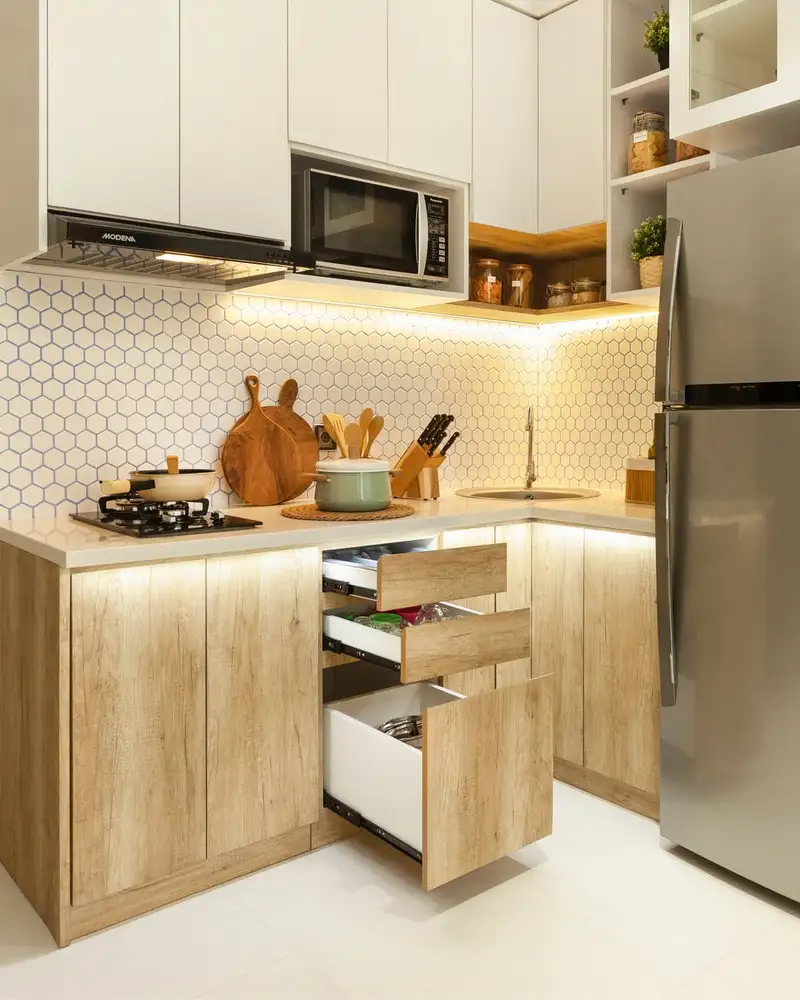
The modern kitchen, once relegated to the utilitarian confines at the back of a home, has dramatically transformed into the undisputed heart of the household, a vibrant hub for culinary exploration, family gatherings, and social interaction. This profound shift has catalyzed a revolution in kitchen design, with minimalist kitchen sets emerging as the dominant trend, prioritizing concealed appliances, ultra-matte anti-fingerprint materials, and serene earth-tone color palettes. Intricate details, such as protruding cabinet handles, are increasingly being phased out in favor of clean lines and seamless surfaces, designed to amplify a sense of spaciousness and tranquility. This aesthetic is often achieved through floor-to-ceiling cabinetry and the integration of subtle, hidden LED lighting, creating an uncluttered yet sophisticated environment. Homeowners are consciously moving away from high-gloss finishes, which are prone to visible smudges and fingerprints, and ornate carved cabinets, instead embracing streamlined designs that offer both aesthetic appeal and ease of maintenance.
At the forefront of this design evolution, design consultancies like InteriorDesign.ID report a significant surge in client requests for kitchen designs that fluidly integrate with living areas. The traditional demarcation of the kitchen as a mere "dirty area" is rapidly dissolving, replaced by a vision of a harmonious, multi-functional space. For those contemplating renovation or new home construction, the enduring appeal of minimalist design extends beyond current trends, offering timeless elegance and a demonstrable increase in property value. This article will delve into the intricate details of the visual trends, material innovations, and layout configurations that are shaping the contemporary kitchen in the current year and beyond.

Driving Forces Behind the Minimalist Movement
The fundamental shift in kitchen design is not merely an aesthetic preference but a response to evolving lifestyles and living arrangements. As homes increasingly embrace open-plan living, the kitchen’s visibility within the main living space necessitates a design approach that blends seamlessly with the surrounding décor. This evolution underscores several key drivers:
- The Rise of the Integrated Living Space: With the blurring of lines between kitchen, dining, and living areas, there’s a heightened demand for kitchens that look less like a utilitarian workspace and more like an extension of the main living furniture. This integration fosters a more communal atmosphere, supporting the kitchen’s role as a central gathering point.
- Emphasis on Cleanliness and Order: The desire for a perpetually tidy and organized home environment is a powerful force. Exposed appliances and cluttered countertops detract from the serenity of an open-plan space. The minimalist approach, with its focus on hidden storage and integrated appliances, directly addresses this need, creating visually calm and orderly surroundings.
- Technological Advancements and Material Innovation: The development of sophisticated materials and smart home technologies has enabled designers to achieve previously challenging minimalist aesthetics. From anti-fingerprint surfaces to automated lighting and concealed outlets, technology plays a crucial role in enhancing both the functionality and clean aesthetic of modern kitchens.
- Space Optimization in Urban Living: In an era of shrinking living spaces, particularly in urban centers, efficient design is paramount. Minimalist principles, by maximizing storage and minimizing visual clutter, make small apartments and compact homes feel significantly larger and more functional. The perception of spaciousness is doubled when the visual field is not interrupted by an accumulation of disparate objects.
This convergence of lifestyle, aesthetic preference, and technological capability has paved the way for the sophisticated and highly functional minimalist kitchens we see today.

Key Pillars of Contemporary Minimalist Kitchen Design
The minimalist kitchen, far from being stark or barren, derives its character from a thoughtful interplay of textures, colors, and intelligent design elements.
Visual Aesthetics: A Seamless and Serene Canvas

- The Allure of Ultra-Matte, Anti-Fingerprint Surfaces: The era of highly reflective cabinet surfaces, prone to showcasing every smudge and fingerprint, is waning. The trend has decisively shifted towards ultra-matte finishes, particularly for deeper hues such as sophisticated navy or rich charcoal. Modern matte laminates and High-Pressure Laminate (HPL) panels often incorporate advanced nano-coating technologies, imbuing them with anti-fingerprint properties. This innovation is a boon for busy households, significantly reducing the frequency of cleaning required to maintain a pristine appearance, even after energetic cooking sessions or children’s curious touches.
- The Elegance of Handleless Cabinetry: Protruding handles disrupt the smooth, uninterrupted lines quintessential to minimalist design. To achieve a sleek, monolithic appearance, handleless systems are increasingly popular. Two primary options dominate:
- Push-to-Open Mechanisms: Cabinets and drawers open with a gentle press, ideal for a completely seamless look.
- Integrated J-Profile Aluminum Channels: These discreet channels are routed into the top or side edge of cabinet doors and drawers, providing a subtle grip for opening. This option is often favored for its robustness and durability, particularly in high-traffic kitchens.
- Embracing Earth Tones and Natural Textures: While white kitchens will always have a place, contemporary minimalist design extends beyond sterile palettes. Colors like sage green, taupe, and greige are gaining immense popularity for their calming and visually comfortable qualities. These muted, nature-inspired tones can be beautifully paired with natural wood grain textures, adding warmth and organic appeal. A balanced palette often follows a 60-30-10 rule: 60% dominant cabinet color, 30% wood accents (e.g., on countertops or shelving), and 10% for metallic or ceramic details like faucets and accessories.
- Strategic Illumination: The Power of Hidden LEDs: Large, obtrusive spotlights are being replaced by integrated LED strip lighting, carefully concealed beneath wall cabinets or within kick plates. Under-cabinet LEDs provide essential task lighting, illuminating prep areas for chopping and cooking, enhancing both safety and functionality. Meanwhile, LED strips along the base of lower cabinets create a subtle glow that visually lifts the cabinetry, giving the illusion of a floating structure and adding an element of sophisticated ambiance.
- Unified Backsplashes: Functionality Meets Form: The traditional tiled backsplash, with its grout lines prone to mold and staining, is being re-evaluated. The modern preference leans towards seamless materials like tempered glass, solid surface, or large format metal sheets. These continuous surfaces are not only aesthetically clean but also exceptionally hygienic and easy to clean, allowing sauce splatters to be wiped away in a single motion without the hassle of scrubbing grout.
- Smart Integration: The Connected Kitchen: The smart home revolution has firmly extended into the kitchen. Power outlets are now designed as pop-up units, emerging from the countertop only when needed, maintaining an uncluttered surface otherwise. Drawers can be fitted with automatic lights that illuminate upon opening, enhancing visibility and convenience. The meticulous planning of cable routes for these smart devices is crucial during the initial design phase to ensure all electronics are seamlessly integrated and hidden within custom cabinetry.
- Balanced Storage: Openness Amidst Concealment: While concealment is a hallmark of minimalism, an entirely closed-off kitchen can feel rigid. Introducing a limited number of open shelves, or "ambalan," can break visual monotony and add personality. These areas are ideal for displaying aesthetically pleasing items like curated coffee mugs or a small potted plant, adding a touch of warmth and life. Strategic placement, away from the immediate vicinity of the stove, helps prevent items from becoming greasy or dirty.
Material Innovation for Enduring Performance
Given the kitchen’s inherent exposure to moisture, heat, and spills, material selection is paramount for durability and longevity.
- The Resilience of WBP Plywood for Cabinetry: Many conventional kitchen cabinets still utilize blockboard or MDF, materials susceptible to swelling from moisture and vulnerable to termite infestation. For main structural frames, WBP (Water Boiled Proof) plywood offers superior resistance to humidity and boasts excellent load-bearing capacity. Further protection can be achieved by lining the interior of cabinets with white PVC sheets and meticulously sealing all raw wood edges with machine-applied edge banding, creating a robust barrier against moisture ingress.
- Sintered Stone: The Pinnacle of Countertop Durability: Natural granite has long been a popular choice for countertops, but its inherent porosity makes it susceptible to staining from vibrant spices like turmeric. Sintered stone, a cutting-edge alternative, is manufactured under extreme heat and pressure, resulting in a material with near-zero porosity. This makes it virtually impervious to stains, scratches, and heat damage, allowing for direct food preparation, such as chopping onions, without fear of marring the surface.
- Advanced HPL: Beyond Aesthetics: High-Pressure Laminate (HPL) remains a favorite for cabinet finishes due to its versatility and cost-effectiveness. Modern HPL variants, however, go beyond basic aesthetics. Some come with anti-bacterial certifications, crucial for a hygienic food preparation zone. Others feature self-healing properties, where minor surface scratches from everyday use can be gently remedied by applying warm heat, such as from an iron, restoring the surface to its original pristine condition.
Optimizing Layouts for Ergonomic Efficiency

An intelligently designed kitchen layout minimizes unnecessary movement, enhancing efficiency and comfort during meal preparation. The "kitchen work triangle" – the path between the refrigerator, sink, and cooktop – remains a fundamental principle, adapted to various spatial configurations.
- The Versatility of the Single-Line Configuration: Ideal for compact spaces like studio apartments or narrow galleys, the single-line layout arranges all primary work zones (refrigerator, sink, cooktop) along one wall. To compensate for horizontal limitations, vertical storage is maximized with full-height cabinets extending to the ceiling. A crucial design element is maintaining at least 60 centimeters of clear countertop space between the cooktop and sink, designated as the primary food preparation area.
- L-Shape: Defining Zones with Grace: The L-shaped kitchen effectively delineates wet (sink, dishwasher) and dry (cooktop, oven) zones, allowing multiple individuals to work simultaneously without impeding each other’s flow. The central space created by the L-shape is often perfectly suited for a compact, round dining table, fostering interaction.
- The Multifunctional Kitchen Island: In open-plan living environments, a kitchen island serves as a powerful visual anchor and a natural room divider between the kitchen and living areas. Typically standing at a height of approximately 90 centimeters, islands can incorporate additional storage (e.g., drawers for crockery) or even house a secondary sink or cooktop. Critical to its functionality is ensuring a minimum circulation path of 90 centimeters around all sides, allowing for comfortable movement and easy access to drawers and appliances.
Intelligent Storage Solutions: Every Item in Its Place
A truly minimalist kitchen champions efficient storage, ensuring every item has a designated, accessible spot, contributing to an overall sense of order.

- Revolutionizing Corner Spaces with Pull-Out Racks: Corner cabinets in L-shaped layouts are notoriously difficult to access, often becoming "dead space." Innovative corner pull-out mechanisms, such as kidney-shaped or "magic corner" units, address this by allowing interior shelving units to glide out with the opening of the door, bringing even large pots and pans within easy reach.
- Drawer Organization: Precision and Accessibility: Deep drawers under prep areas benefit immensely from custom dividers, separating cutlery, cooking utensils, and spices. For heavier items like stacks of bowls or small appliances, tandem box drawer systems with robust, full-extension runners offer superior weight-bearing capacity and allow for an unobstructed top-down view of contents. Investing in high-quality drawer slides that can support tens of kilograms is crucial for long-term functionality.
- Vertical Storage: Maximizing Small Footprints: Storing tall bottles of oil and sauces horizontally on a countertop can quickly consume valuable space. A slender, vertical pull-out cabinet, typically around 20 centimeters wide, installed adjacent to the cooktop, provides a highly efficient solution. Multi-tiered racks within keep bottles upright and secure, making ingredients easily accessible yet neatly concealed from view.
Navigating the Renovation Journey: Costs and Common Pitfalls
Undertaking a kitchen renovation requires careful planning and budgeting. Cost estimates for custom kitchen sets are typically calculated per linear meter for both upper and lower cabinets. In 2026, standard multiplex plywood finished with HPL is estimated to range from IDR 2,500,000 to IDR 3,500,000 per linear meter per side. This cost generally includes essential hardware like soft-close hinges and upper dish racks.
Countertop materials vary significantly in price: solid surface options start from approximately IDR 1,800,000 per linear meter, while the premium sintered stone can exceed IDR 3,000,000 per linear meter. It is also advisable to allocate a separate budget for specialized functional accessories like corner pull-out racks. Critically, investment in branded, high-quality hinges and drawer runners is paramount. Inferior hardware can quickly corrode or sag, leading to misaligned cabinet doors and drawers that compromise both the functionality and aesthetic integrity of the design.

Several common mistakes frequently derail kitchen renovation projects:
- Insufficient or Misplaced Electrical Outlets: Failing to accurately anticipate the number and precise location of electrical outlets for blenders, air fryers, and other appliances often results in unsightly extension cords cluttering pristine countertops. Detailed planning of appliance placement is essential before cabinet design commences.
- Neglecting Ventilation: Omitting a proper cooker hood or ventilation system allows cooking fumes and grease to accumulate, leading to persistent odors and sticky residue on surfaces and furniture. Effective ventilation is crucial for maintaining air quality and preserving the cleanliness of the kitchen and adjacent living areas.
- Inappropriate Flooring: Selecting slippery ceramic tiles, especially in a high-traffic area prone to oil and water spills, poses a significant safety hazard. Opting for anti-slip or textured flooring materials is a practical and vital consideration for kitchen safety.
Maintaining the Pristine Look: Care for Modern Kitchens
Maintaining the sophisticated appearance of a minimalist kitchen, particularly those with matte finishes, requires specific care. For matte cabinet surfaces, a damp microfiber cloth moistened with a small amount of mild dish soap is generally sufficient. Gently wipe the surface and immediately dry it to prevent water spots. Harsh chemical cleaners, especially glass cleaners with strong scents, should be avoided as their chemical composition can gradually fade dark matte colors.

For hydraulic door hinges, a monthly dusting with a small brush helps prevent the accumulation of debris that can impair their smooth operation. Additionally, avoid hanging excessively heavy spice racks or other items on cabinet doors, as this can put undue stress on the hinges, leading to premature sagging or misalignment.
Expert Guidance for Tailored Kitchen Solutions
Designing a truly functional and aesthetically pleasing kitchen demands precision and expertise that extends beyond simply replicating online images. The selection of flooring materials, the meticulous measurement of distances between work zones, and the ergonomic placement of every element collectively determine the comfort and efficiency of your daily culinary experience. The team at InteriorDesign.ID specializes in translating client visions into detailed, executable designs, ensuring that every structural and aesthetic consideration aligns with the specific dimensions of your space and your unique cooking habits. We invite prospective clients to contact us for a comprehensive consultation to discuss how we can help realize your ideal kitchen.

Conclusion: A Vision for the Future Kitchen
The minimalist kitchen trend represents more than just a passing fad; it signifies a fundamental evolution in how we perceive and interact with our homes’ most vital space. By blending cutting-edge materials, intelligent design principles, and a deep understanding of modern lifestyles, these kitchens offer a harmonious balance of form and function. They are spaces designed not only for cooking but for living, embodying elegance, efficiency, and enduring appeal, poised to enhance both daily life and property value for years to come.