Nila Kartika Wati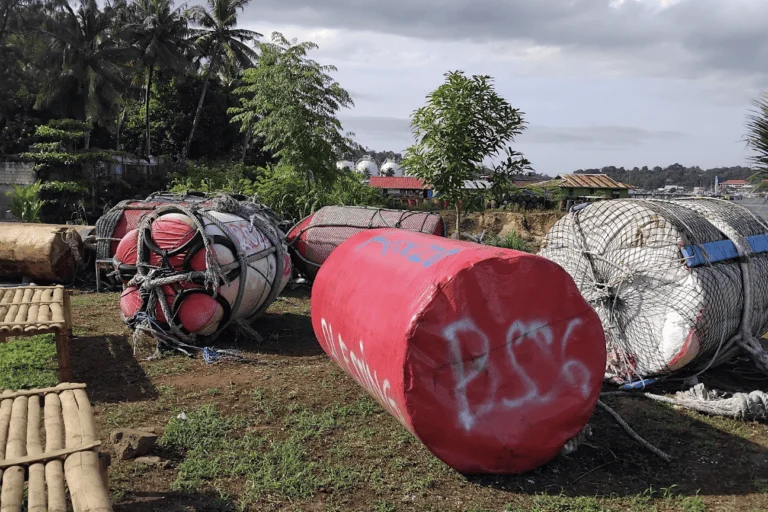
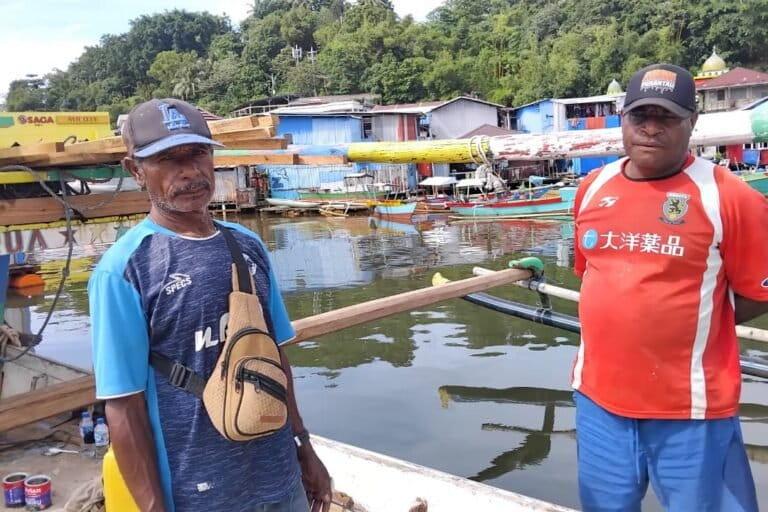
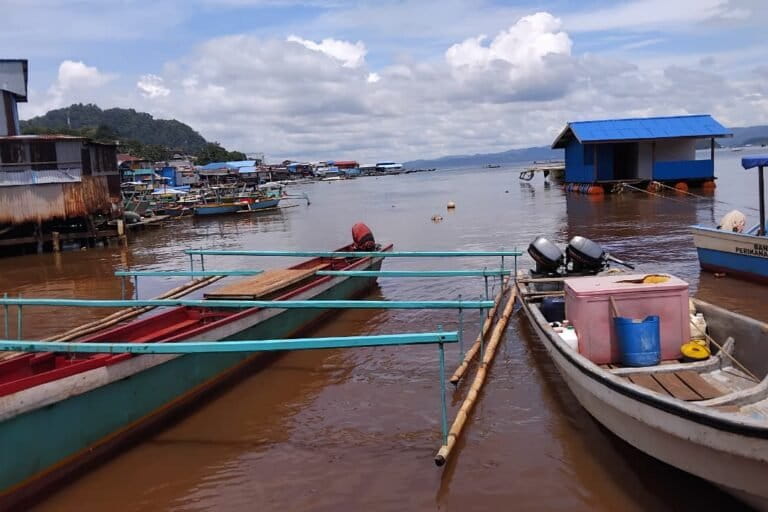
The Dok 9 Pier in the North Jayapura District of Jayapura City, Papua, normally a center of rhythmic maritime commerce, has recently become a site of simmering resentment and economic anxiety. While fishermen can still be seen repairing nets and maintaining their wooden vessels, the atmosphere is heavy with the weight of an uncertain future. Since the end of last year, local fishing communities have reported a sharp decline in yields, a crisis they attribute directly to the seismic survey operations associated with the Northern Papua Oil and Gas Block. The tension reached a breaking point as traditional fishing grounds, essential for the survival of thousands of families, have been encroached upon by industrial interests seeking to map the region’s fossil fuel potential.
Yonas Lawan, a senior member of the Karya Fishermen Group in Inpres Dok 9, expressed the collective fear of a community that feels its heritage is being erased. Beyond the perennial challenges of unpredictable weather and fluctuating market prices, the fishermen now face a man-made obstacle: the forced removal of their fish aggregating devices, known locally as rumpon. These structures, which serve as the primary source of their catch, were reportedly cut and removed by the surveyor vessel owned by PT Huatong Service Indonesia (HSI). The vessel has been conducting extensive mapping of sub-surface geological structures to identify oil and gas reserves within the Northern Papua Block, a project of national strategic importance that many locals feel has come at the cost of their basic survival.
The Economic Significance of the Rumpon System
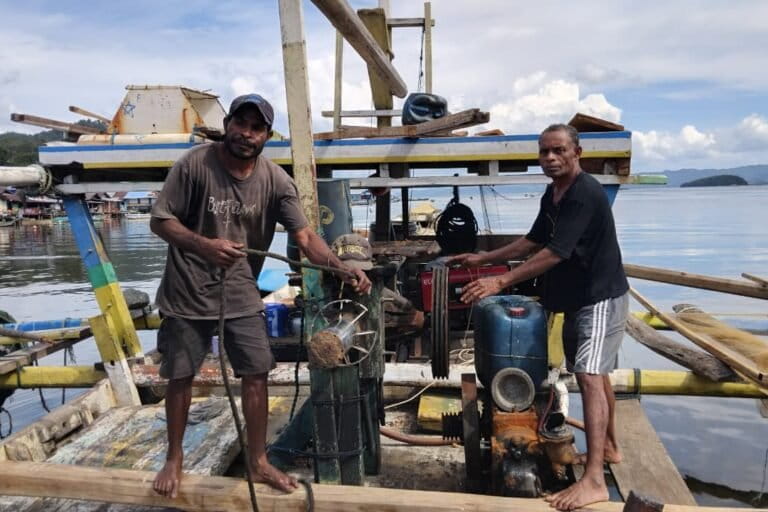
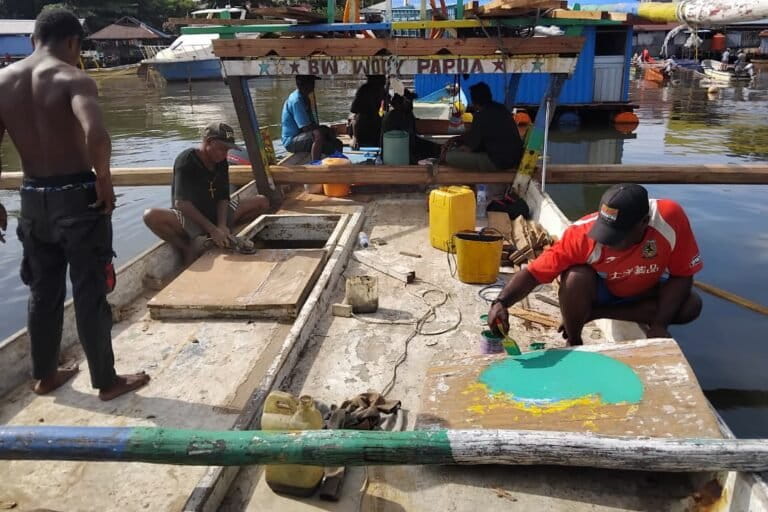
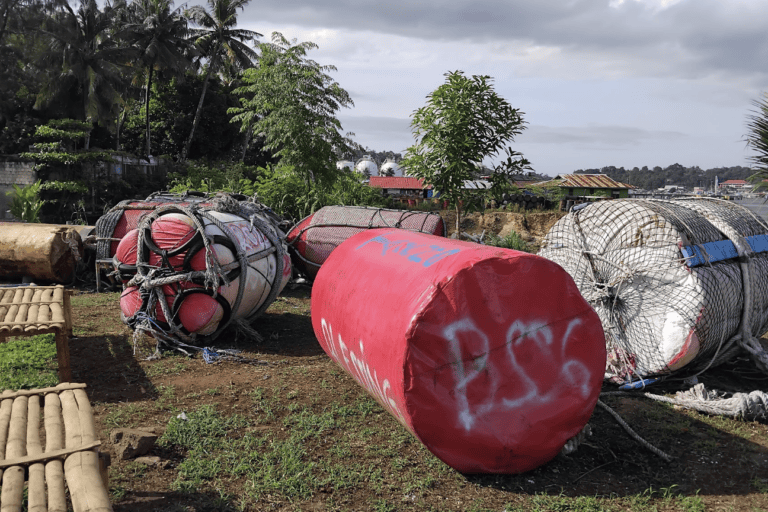
For the coastal communities of Jayapura, a rumpon is far more than a simple fishing tool; it is a significant capital investment and the "kitchen" of the household. Constructing a single rumpon—often made from recycled materials such as scrap metal from Papua New Guinea or the Philippines, bound with ropes and coconut fronds—can cost between IDR 50 million and IDR 100 million (approximately USD 3,200 to USD 6,400). These devices are typically owned by cooperatives of at least ten fishermen who pool their resources to maintain two or more units at varying distances from the shore.
"We were shocked," Yonas Lawan stated during an interview in mid-April 2026. "We feel as though they have reached onto our dinner plates and taken our food." For Lawan, the stakes are deeply personal. His life as a fisherman enabled him to put six children through school, with one already holding a university degree and entering the professional workforce. The removal of the rumpon threatens to sever this path of upward mobility for the next generation.
The rumpon functions as an artificial reef, providing a habitat where fish such as tuna, skipjack, and mackerel gather to spawn and feed. Without these markers, fishermen are forced to venture much further out to sea, often 20 to 30 miles from the coast, in small wooden boats powered by outboard motors. This significantly increases fuel consumption—typically requiring at least 30 liters of gasoline per trip—and elevates the risk to human life in the open waters of the Pacific. "The rumpon is like a house for the fish," explained Semba Rosumbere, another local fisherman. "Without it, we have to search blindly, which wastes fuel and puts us in danger."
Chronology of the Northern Papua Block Development
The conflict over the Northern Papua Block is the latest chapter in a long-standing government effort to tap into the energy wealth of the northern New Guinea coastline. While the current seismic surveys have brought the issue to the forefront, the block’s history dates back to 2009. On April 29 of that year, the Director General of Oil and Gas issued Decree No. 8012/13/DJM.E/2009, naming Sarmi Papua Asia Oil Ltd. as the winner of the tender for the Northern Papua working area.
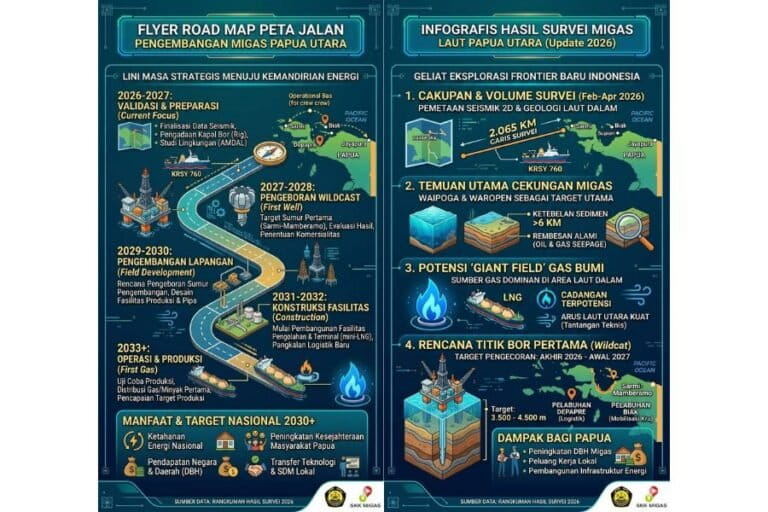
Despite this early designation, the project remained largely dormant for over a decade. It resurfaced in late 2025 when the Ministry of Energy and Mineral Resources (KESDM), through its Geological Survey Center, commissioned PT Huatong Service Indonesia to conduct a 2D seismic survey. This survey covers a massive trajectory of approximately 2,061 kilometers, stretching from the waters of Supiori through Mamberamo and Sarmi, and ending in Jayapura City.
On March 4, 2026, the KESDM officially offered the Northern Papua Block as one of ten new potential oil and gas areas in Indonesia. Technical documents indicate that the Jayapura portion of the block alone spans approximately 7,328 square kilometers, covering parts of the Sarmi and Yalimo Regencies. However, the survey’s impact has been felt most acutely by the 4,200 fishing families in Jayapura who depend on these specific waters for their daily bread.
Escalation: From Secret Surveys to Public Protest
Between December 2025 and March 2026, the HSI survey team reportedly disconnected 58 rumpon units across the Jayapura maritime region. The company justified these actions by stating that the devices were located directly in the path of the seismic cables and sensors required for mapping. However, fishermen claim the removals were conducted without prior consultation or adequate warning.
Kosmos Kendi, a fisherman from the BW Woi Group, reported that he has been unable to go to sea for two months because his group’s rumpon was destroyed. "We only realized it was gone when we arrived at the coordinates and found nothing," Kendi said. "They are operating in secret, and only now do we realize it is for an oil and gas project."
The lack of transparency triggered a violent outburst of frustration on March 16, 2026, when hundreds of fishermen marched to the Papua Province Maritime Affairs and Fisheries Office. The protest turned chaotic as some demonstrators, fueled by the loss of their livelihoods, threw rocks at the building, shattering several windows. Asbani Wiyawari, the coordinator for the BW Woi fishermen, emphasized that the anger stemmed from a total lack of coordination. "If a company wants to enter our territory for a survey, they must coordinate with the small people. The government failed to bridge that gap, and now we are the ones suffering," Wiyawari stated.
Corporate and Government Justifications
In response to the growing backlash, representatives from the industry and the provincial government have attempted to downplay the long-term risks. Tommy Yehezkiel Sinaga, the Public Relations officer for HSI, claimed that the company had indeed conducted socializations and that compensation for the 58 severed rumpon units had been processed in March.
Sinaga further argued that fears of environmental pollution are premature. "We are still in the upstream phase, and it is a very long process before production begins," he said. He asserted that modern drilling technology is significantly safer than in previous decades, with automated maintenance systems designed to prevent the catastrophic leaks seen in historical oil disasters. "Even if there is drilling in the future, it will not contaminate the land or the fishing grounds because the technology is advanced," Sinaga claimed.
Echoing this sentiment, Ronald Wanggai, Head of the Oil and Gas Division at the Papua ESDM Office, argued that oil and gas exploration is less invasive than land-based mining. "Mining requires clearing forests and can pollute rivers across a wide area. Oil and gas, by contrast, is concentrated at a single point where the drill enters the seabed," Wanggai explained. He highlighted the potential for increased regional fiscal revenue, which the province desperately needs.
Academic Warnings and Environmental Risks
However, the optimistic outlook provided by officials is contested by environmental experts and academics. Nathan Baransano, a researcher in Marine Science at Cendrawasih University, warned that the "advanced technology" narrative often ignores the cumulative impact of industrial operations on fragile ecosystems.
Baransano pointed out that once an oil and gas block is established, large swaths of the ocean become restricted zones. "Fishermen will lose access to their traditional grounds because security protocols will prevent them from entering near the platforms," he said. Furthermore, he warned of the inevitability of "chronic" pollution—small, persistent leaks of oil and chemicals that, over time, degrade the health of mangroves, seagrass beds, and coral reefs.
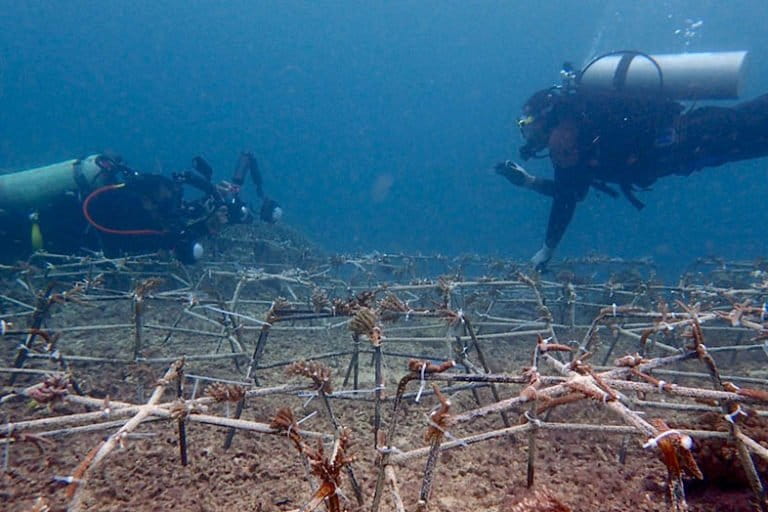
Of particular concern is the impact on the leatherback sea turtle (Dermochelys coriacea), a critically endangered species that nests in areas like Skow. "The recovery of a marine ecosystem takes decades," Baransano noted. "The damage caused by installing anchors, pipelines, and seismic blasts can destroy habitats in a fraction of that time." He urged the government to move beyond temporary compensation and instead include the community in the decision-making process as permanent stakeholders, rather than mere recipients of impacts.
Broader Implications for Food Security and Social Stability
The conflict in Northern Papua highlights a recurring tension in Indonesia’s development strategy: the clash between national energy targets and the rights of indigenous and local communities. Jayapura’s fishermen are not just individual earners; they are the backbone of the city’s food security. Approximately 80% of the fresh fish sold in Jayapura’s local markets comes from these traditional rumpon operations.
Iman Djuniawal, Head of the Papua Maritime Affairs and Fisheries Office, acknowledged that the rumpon is the "vital pulse" of the local economy. "While we need the fiscal boost from resource extraction, we must ensure it does not destroy the existing economy that thousands of people rely on every day," he said.
As the government moves toward the bidding and exploration phases of the Northern Papua Block, the local community remains defiant. For men like Kosmos Kendi, the sea is not a resource to be exploited, but a "garden" to be tended for future generations. "We have seen what happened with Freeport," Kendi said, referencing the environmental controversies surrounding the massive Grasberg mine in central Papua. "We do not want that for our sea. If our kitchen is destroyed, what will our children eat?"
The situation in Jayapura serves as a critical test case for the Indonesian government’s ability to manage its "Blue Economy." Without a transparent framework that prioritizes the environmental and economic rights of coastal residents, the Northern Papua Oil and Gas Block risks becoming a source of long-term social instability rather than a beacon of regional prosperity. For now, the fishermen of Dok 9 continue to wait, their boats idle and their "kitchens" at sea severed by the march of industrial progress.