Nila Kartika Wati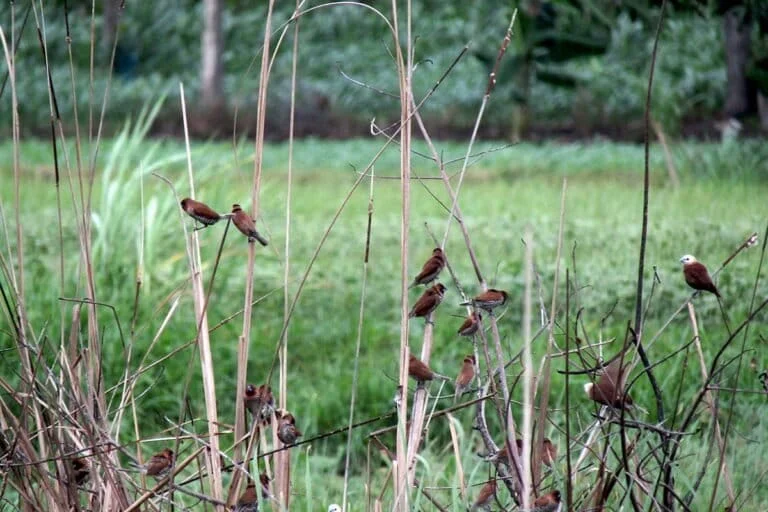
The perception of snakes among the general public is often dominated by primal fear and the immediate association of these reptiles with lethal danger. However, for Clarissa Amelia, a 22-year-old Biology student at the Bandung Institute of Technology (ITB), a series of direct encounters with the Oriental Whip Snake (Ahaetulla prasina) has served to dismantle these long-held stigmas, revealing a creature that is not only misunderstood but also vital to the health of Indonesia’s ecosystems. As the head of GARDA Nymphaea, a student organization at ITB focused on biodiversity and environmental conservation, Amelia’s recent field observations in West Java provide a compelling look at how these arboreal predators navigate the increasingly blurred boundaries between wild habitats and urban sprawl.
The Oriental Whip Snake, locally known in Indonesia as Ular Pucuk, is a common yet fascinating species that thrives across South and Southeast Asia. Amelia’s documentation of the species took place in two starkly different environments: the Masigit Kareumbi Hunting Park in Sumedang and the Cikacika River area in Bandung. While Masigit Kareumbi represents a relatively well-preserved conservation area with dense vegetation, the Cikacika River site is located within an urbanized zone, frequently subjected to human activity. The presence of Ahaetulla prasina in both locations highlights the species’ remarkable adaptability, while simultaneously raising questions about the long-term viability of wildlife corridors in rapidly developing cities.
Field Observations and Species Behavior
During her fieldwork, which Amelia discussed on Monday, May 12, 2026, she noted that the snakes were surprisingly resilient in the face of human-induced habitat disturbance. In the Masigit Kareumbi conservation area, the snakes were found in their natural element, draped over high branches and hidden within thick foliage. Conversely, along the Cikacika River, the reptiles were forced to coexist with the noise and pollution of the city. "It can survive in two very different habitat conditions," Amelia observed, noting that the snake’s ability to persist near human settlements suggests a degree of tolerance, provided there is enough vegetative cover to facilitate their arboreal lifestyle.
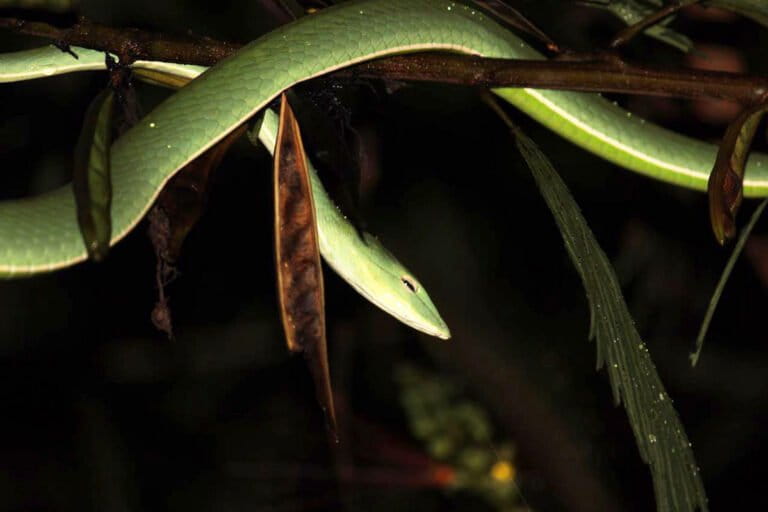
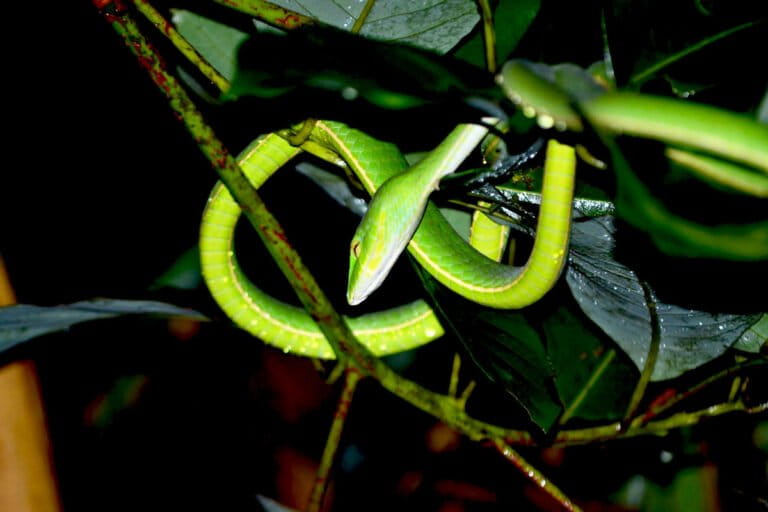
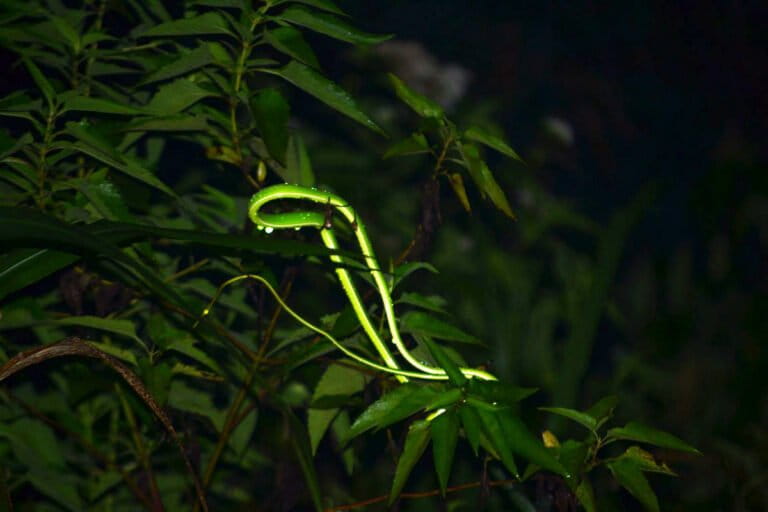
The Ahaetulla prasina is an arboreal specialist, meaning it spends the vast majority of its life in trees or shrubs. Its physical form is a masterclass in evolutionary adaptation; the snake possesses an incredibly slender, elongated body and a vibrant green coloration that allows it to blend seamlessly with leaves and vines. This camouflage is its primary defense against predators and its main tool for ambushing prey. Amelia described the snakes as typically being found "coiled on stems or among leaves," often remaining motionless for long periods.
One of the most striking aspects of Amelia’s report was the timing and nature of these encounters. Most sightings occurred during the night, yet when she returned to the same locations the following morning, the snakes were frequently found in exactly the same spots. While the species is technically diurnal—meaning it is most active and hunts during the day—it appears to utilize specific "sleeping perches" where it remains stationary throughout the night. This behavior allowed Amelia to conduct close-range photography, often approaching within less than a meter. She described the snakes as "tending to be quiet and calm," showing no signs of the aggression often attributed to reptiles by the fearful public.
Biological Uniqueness: The Eye of the Vine Snake
A defining characteristic of the Oriental Whip Snake that Amelia highlighted is its unique ocular structure. Unlike most snakes, which have round or vertical slit pupils, the Ahaetulla genus possesses horizontal, keyhole-shaped pupils. This anatomical feature provides the snake with binocular vision, a rarity among reptiles, allowing for precise depth perception which is essential for striking at fast-moving prey amidst complex three-dimensional environments like tree branches. "At a glance, it looks like they are closing their eyes or squinting," Amelia remarked, referring to the horizontal slit that gives the snake a deceptively sleepy appearance.
Despite being venomous, the Oriental Whip Snake is classified as "rear-fanged" (opisthoglyphous). Its venom is considered weak and is generally not medically significant for humans, typically causing only localized swelling or itching in the rare event of a bite. Its primary purpose is to immobilize small prey such as lizards, frogs, and small birds. This low level of risk to humans, combined with the snake’s non-aggressive temperament, makes it an ideal candidate for public education efforts aimed at reducing "ophidiophobia" (the fear of snakes).
The Ecological Role of Mesopredators
The importance of the Oriental Whip Snake extends far beyond its biological curiosities; it plays a fundamental role as a "mesopredator" within the Indonesian food web. Adian Dwi Sulistio, a 27-year-old member of the Endemic Indonesia Society, emphasized that snakes are essential regulators of biological balance. Speaking on Wednesday, May 13, 2026, Sulistio explained that in the island of Java alone, there are approximately 90 species of snakes, each occupying a specific ecological niche.
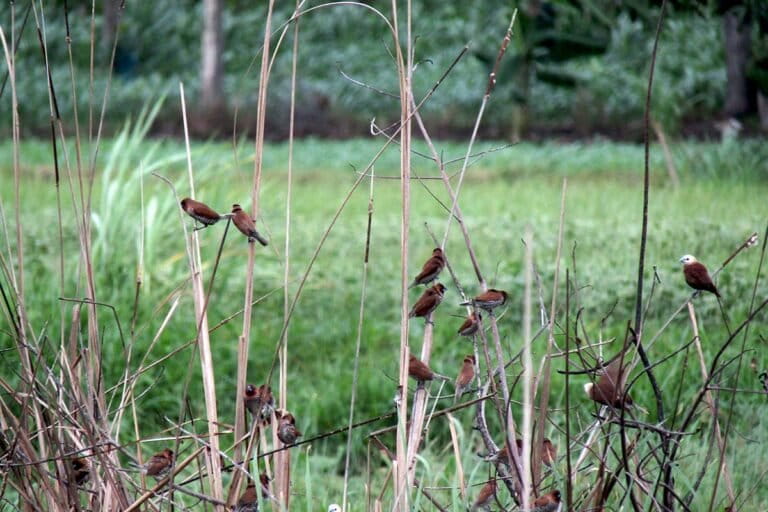
As a mid-level predator, the Oriental Whip Snake helps control the populations of small animals that could otherwise become pests. In agricultural contexts, these snakes are silent allies to farmers. They are known to prey on small birds such as the Eurasian Tree Sparrow (Passer montanus) and various species of munias or "pipit" (Lonchura), which frequently descend on rice paddies in large numbers to consume grain. "If farmers understood the role of the Oriental Whip Snake, they would certainly let them live because they help control pests," Sulistio stated. By keeping these bird populations in check, the snakes contribute to higher crop yields and reduce the need for chemical interventions.
Furthermore, the presence of snakes in an ecosystem is often an indicator of environmental health. Because they rely on a diverse diet of frogs, toads, and lizards, a thriving snake population suggests that the lower levels of the food chain are also robust. When snakes disappear from an area, it often triggers a "top-down" ecological collapse, where prey species overpopulate, leading to overgrazing of vegetation or the spread of diseases.
Urbanization and the Loss of "Green Heavens"
The primary threat to the Oriental Whip Snake and its kin is the rapid loss of vegetation and green spaces. Sulistio noted that for a snake, "vegetation is a hiding heaven." In the wild, they require a complex architecture of shrubs, roots, tree trunks, and wetlands to hunt and avoid larger predators like birds of prey or larger snakes.
As urban centers like Bandung expand, these natural habitats are being fragmented or paved over entirely. When green spaces shrink, snakes are forced into closer proximity with humans, often ending up in gutters, gardens, or even inside buildings. These are not the snakes’ preferred habitats; they are "accidental" encounters driven by desperation as their homes disappear. Sulistio pointed out that the increased visibility of snakes in urban areas is not usually a sign of an increasing population, but rather a sign that the snakes have nowhere left to hide.
"The loss of vegetation and green space makes the natural habitat of snakes narrow," Amelia added. This environmental degradation creates a vicious cycle: as snakes lose their camouflage and cover, they are more easily spotted by humans, which—due to lack of education—often leads to the snake being killed on sight.
The Path Forward: Education and Coexistence
Both Amelia and Sulistio agree that the key to conserving Indonesia’s reptilian biodiversity lies in education and a fundamental shift in public perception. The prevailing "stigma" that all snakes are a mortal threat leads to the unnecessary slaughter of thousands of beneficial animals every year.
"Education is very important. So far, the negative stigma against snakes has meant that these reptiles are often killed rather than understood," Sulistio lamented. He argued that the public needs to be taught how to identify common species and understand which ones are actually dangerous. In the case of the Oriental Whip Snake, its distinctive green color and slender profile make it easy to recognize, and its benefits to the local environment should make it a welcome neighbor rather than a target for eradication.
Amelia’s work with GARDA Nymphaea aims to bridge this gap between scientific knowledge and public awareness. By documenting these animals in their natural habitats and sharing their stories, she hopes to foster a sense of appreciation for the complexity of the natural world. "They are an important part of nature," she concluded, emphasizing that the goal is not necessarily for everyone to love snakes, but for everyone to respect their right to exist and recognize the services they provide to the planet.
The story of the Oriental Whip Snake in West Java is a microcosm of the broader challenges facing biodiversity in the 21st century. As cities grow and natural spaces retreat, the survival of species like Ahaetulla prasina will depend on our ability to design "smarter" cities that include green corridors and our willingness to coexist with the predators that keep our world in balance. The findings of young researchers like Clarissa Amelia serve as a vital reminder that even in the heart of a bustling city, nature is present, persistent, and deserving of our protection.