Nasution Nanang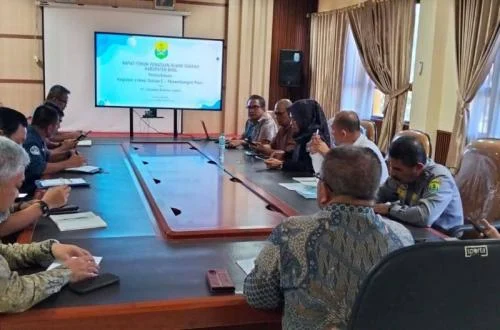
The Buol Regency administration in Central Sulawesi is embarking on a significant initiative to harness its natural resources, announcing plans to collaborate with Perumda Berkah Buol, a regional state-owned enterprise, and PT Sulawesi Kuarsa Lestari for a substantial quartz sand mining investment. This strategic partnership targets the utilization of quartz sand deposits in Matinan, Taat, and Pandangan villages within the Gadung District, with the overarching goal of stimulating local economic growth and delivering tangible benefits to the communities residing in these areas. The move signifies Buol’s commitment to leveraging its mineral wealth, a common strategy across resource-rich regions in Indonesia, to uplift socioeconomic conditions.
Project Genesis and Objectives
The discussions surrounding this ambitious project have been spearheaded by key figures within the Buol administration. According to Moh. Yamin Rahim, the Buol Regency Secretary, the primary objective of these ongoing deliberations is to establish clarity regarding the investment framework, addressing any public concerns and ensuring a transparent process. The local government has publicly affirmed its support for the investment, contingent upon strict adherence to all pertinent regulations, particularly those concerning spatial planning, environmental protection, and technical recommendations from relevant authorities. This commitment underscores the delicate balance the administration seeks to strike between economic development and sustainable resource management.
The proposed mining area spans approximately 176 hectares, a considerable footprint that necessitates thorough and meticulous planning. A critical aspect of this planning involves obtaining a Persetujuan Kesesuaian Kegiatan Pemanfaatan Ruang (PKKPR), or Spatial Utilization Activity Suitability Approval. Secretary Yamin Rahim highlighted that the PKKPR assessment must strictly align with the Buol Regency Spatial Plan (RTRW) as stipulated in Regional Regulation Number 13 of 2024. This adherence is particularly crucial given that the specified area currently lacks a more detailed spatial plan (RDTR). Initial assessments have already raised flags, indicating that a portion of the proposed mining site overlaps with protected zones, including mangrove forests, significant water bodies, and existing agricultural lands. These preliminary findings emphasize the need for rigorous environmental impact assessments and sensitive land-use planning to mitigate potential ecological and social disruptions.
The Strategic Importance of Quartz Sand
Quartz sand, also known as silica sand, is a critical industrial mineral with a vast array of applications across numerous sectors globally. Its primary uses include the production of glass (flat glass, container glass, specialty glass), ceramics, foundry sand, abrasives, and as a raw material for silicon-based products, including semiconductors and solar panels. The global demand for high-purity quartz sand has been steadily increasing, driven by advancements in technology and a growing emphasis on renewable energy. For Indonesia, a nation rich in diverse mineral resources, quartz sand represents a valuable commodity that can contribute significantly to its industrial base and export revenues. The country possesses extensive deposits, particularly across Sumatra, Kalimantan, and Sulawesi, making it a key player in the regional market.
The investment in Buol aligns with Indonesia’s broader national strategy to enhance the value addition of its raw materials through downstream processing. Rather than merely exporting raw commodities, the government encourages investments that process minerals domestically, thereby creating more jobs, fostering local industries, and increasing national income. This strategic direction positions projects like the one in Buol as potential catalysts for regional industrial development beyond just extraction.
Regulatory Landscape and Environmental Safeguards
Indonesia’s mining sector operates under a comprehensive, albeit sometimes complex, regulatory framework designed to govern exploration, exploitation, and environmental protection. For a project of this scale, several key regulations and permits are indispensable. PT Sulawesi Kuarsa Lestari has already secured an IUP Eksplorasi (Exploration Mining Business Permit) for quartz sand, covering 175.5 hectares. This permit allows the company to conduct geological surveys, drilling, and other exploratory activities to ascertain the quantity and quality of deposits. However, moving from exploration to production requires a new set of approvals and strict adherence to environmental and technical standards.
Before commencing production, PT Sulawesi Kuarsa Lestari must fulfill rigorous technical and environmental prerequisites. These include, but are not limited to, the preparation of a detailed Environmental Impact Assessment (AMDAL), a comprehensive Reclamation Plan, and a Post-Mining Plan. The AMDAL process is particularly critical; it involves an in-depth study of the potential positive and negative impacts of the mining operation on the environment and society, proposing mitigation measures, and requiring public consultation. Given the initial findings that parts of the proposed area are ecologically sensitive (mangroves, water bodies), the AMDAL will be subject to intense scrutiny from environmental agencies and local communities. Mangrove ecosystems, for instance, are vital for coastal protection, biodiversity, and as breeding grounds for marine life, making their disturbance a significant environmental concern. Similarly, impacts on water bodies could affect local water sources and agricultural irrigation.
Beyond environmental considerations, the project must also address crucial logistical and social infrastructure. The availability and condition of access roads, as well as the development of supporting port facilities for transporting the mined material, are vital for the project’s viability. Furthermore, the social and environmental impacts extend to local communities, encompassing potential displacement, changes in livelihood patterns (e.g., for farmers and fishermen), and the need for fair compensation and community development programs.
The Role of Perumda Berkah Buol
Perumda Berkah Buol, as a regional state-owned enterprise, plays a pivotal role in this partnership. In Indonesia, Perumda entities are often tasked with managing local assets and resources to generate revenue for the regional government and promote local economic development. Ahmad Andi Makka, the Director of Perumda Berkah Kabupaten Buol, confirmed that his organization has initiated preliminary discussions and cooperation agreements with PT Sulawesi Kuarsa Lestari. He noted a generally positive reception from the communities in Gadung District, indicating an initial level of public acceptance. However, he also acknowledged that several aspects of the partnership and project implementation still require further maturation and detailed planning. The involvement of Perumda is intended to ensure that the economic benefits generated by the mining operation are channeled back into the local economy, contributing directly to Buol’s development agenda and the welfare of its citizens. This often includes job creation for locals, local content requirements, and contributions to community development funds.
Community Engagement and Expected Benefits
The success of any large-scale resource extraction project is heavily dependent on obtaining and maintaining a "social license to operate" from the affected communities. While initial responses from Gadung District have been positive, local residents and community leaders will undoubtedly have specific expectations and concerns. These typically revolve around:
- Job Creation: A primary expectation is that the project will generate employment opportunities for local residents, both skilled and unskilled, throughout the various phases of mining (exploration, construction, operation, reclamation).
- Economic Opportunities: Beyond direct employment, communities often seek opportunities for local businesses to provide goods and services to the mining operation, fostering a broader economic ecosystem.
- Fair Compensation: For any land acquisition or impact on livelihoods, communities expect fair and transparent compensation processes.
- Environmental Protection: Despite the promise of economic gain, communities living in close proximity to mining sites are often acutely aware of potential environmental degradation and demand robust measures to protect their natural surroundings, water sources, and agricultural land.
- Community Development: Expectations often include commitments from the company and government to invest in local infrastructure (roads, schools, health clinics), education, and social programs.
Broader Implications and Future Outlook
The quartz sand mining project in Buol carries significant implications across economic, social, and environmental dimensions. Economically, if managed responsibly, it could provide a substantial boost to Buol Regency’s local revenue through taxes, royalties, and direct contributions from Perumda. It could also attract further investment in related industries, such as processing plants or logistics. Socially, the project promises job creation and improved infrastructure, potentially elevating living standards. However, it also carries risks, including potential social conflicts over land use, environmental impacts on traditional livelihoods (e.g., fishing in affected water bodies or farming on adjacent lands), and challenges related to managing community expectations.
Environmentally, the project presents the most significant challenges. The presence of mangroves, water bodies, and agricultural land within the proposed mining area necessitates exceptionally stringent environmental management. Mining operations, if not executed with the highest environmental standards, can lead to habitat destruction, soil erosion, water pollution, and disruption of ecological balance. The success of the project in this regard will hinge on the effectiveness of the AMDAL, the implementation of comprehensive mitigation measures, and consistent monitoring by regulatory bodies.
From a governance perspective, the project will test the Buol Regency government’s capacity to balance development aspirations with regulatory compliance and community welfare. Transparency in licensing, contract negotiation, revenue management, and grievance mechanisms will be crucial for building trust and ensuring the long-term sustainability of the project. The absence of a detailed spatial plan (RDTR) for the area places an even greater responsibility on the authorities to ensure that the PKKPR process is robust and considers all potential impacts meticulously.
As PT Sulawesi Kuarsa Lestari progresses from exploration to the production phase, the focus will intensify on its ability to demonstrate adherence to all regulatory requirements, implement sustainable mining practices, and foster genuinely positive relationships with local communities. The Buol Regency government, through Perumda Berkah Buol, will play a critical oversight role, ensuring that the investment truly serves the interests of the people of Buol while protecting its valuable natural heritage. The coming months will be crucial as the project moves through the detailed assessment and permitting stages, shaping the future economic and environmental landscape of Buol.