Nasution Nanang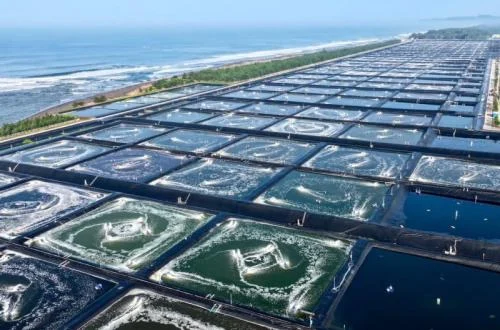
The inauguration of the Area-Based Shrimp Cultivation (BUBK) project in Kebumen, Central Java, in March 2023, marks a significant pivot in Indonesia’s strategy towards achieving food self-sufficiency and modernizing its critical fisheries sector. Spanning 100 hectares in Tegalretno Village, this ambitious initiative is designed as a blueprint for national fisheries industrialization, directly addressing the persistent challenges of low productivity and frequent harvest failures that have long plagued traditional shrimp farmers across the archipelago. This project, which has already demonstrated remarkable success, is now heralded as a cornerstone of President Prabowo Subianto’s administration’s commitment to strengthening domestic protein supply and overall food sovereignty.
A New Paradigm in Aquaculture: The Kebumen Model
The Kebumen BUBK project is not merely an expansion of existing aquaculture practices but a fundamental re-engineering of shrimp farming through the application of advanced technology and integrated management. Of the total 100 hectares, 65 hectares have been meticulously developed into a sophisticated network of hydrological infrastructure. This includes a state-of-the-art seawater intake unit, designed to ensure a consistent supply of clean, pathogen-free water, and critically, 17 units of advanced wastewater treatment plants (IPALs). This comprehensive water management system is paramount, ensuring that all water discharged back into the sea is rigorously cleaned and free from harmful pollutants like ammonia, thereby safeguarding the delicate coastal ecosystems of South Java. The environmental stewardship embedded within the project design sets a new benchmark for sustainable aquaculture, moving away from the often-criticized practices of traditional pond farming that can lead to environmental degradation and disease outbreaks.
Beyond the core cultivation ponds and water management systems, the Kebumen BUBK boasts an array of integrated support facilities. These include a dedicated disease diagnostics laboratory, strategically located adjacent to the cultivation areas, allowing for rapid detection and mitigation of potential health issues in the shrimp population. A modern logistics warehouse further enhances operational efficiency, ensuring timely supply of feed, equipment, and other necessities, minimizing disruptions to the cultivation cycle. This holistic approach to infrastructure and operational support is a key differentiator from traditional, often fragmented, farming methods.
The tangible results from this modern approach have been nothing short of transformative. The project has achieved an impressive productivity rate for vannamei shrimp, reaching 40 tons per hectare by its eighth cultivation cycle. This level of output is significantly higher than the typical yields from traditional methods, often just a few tons per hectare. The remarkable success was personally observed by President Prabowo Subianto, underscoring the national importance and strategic recognition of the project. From 139 active ponds, the total production volume has reached 1.15 kilotons, contributing a substantial Rp 83.34 billion to the Non-Tax State Revenue (PNBP). With a stable market price of Rp 70,000 per kilogram, the project generates an economic value of Rp 67.2 billion per cycle, with an annual potential soaring to Rp 134.4 billion. These figures not only highlight the economic viability of the BUBK model but also its significant contribution to regional and national coffers.
The socio-economic impact at the local level has also been profound. The Kebumen BUBK project has directly created 145 permanent jobs and an additional 500 daily casual positions, predominantly filled by local residents. This influx of employment opportunities has invigorated the local micro-economy, providing stable incomes and fostering skill development within the community. The palpable success and positive externalities of this project have prompted the government to reassess its expenditure priorities, leading to the deferment of new office building projects and a decisive shift in focus towards investing in productive sectors crucial for national food security.
Indonesia’s Quest for Food Sovereignty: A Broader Context
Indonesia, an archipelago nation with vast marine resources, has long grappled with the complex challenge of ensuring robust food security for its over 270 million people. While significant strides have been made in achieving self-sufficiency in staple crops like rice and corn, the quest for animal protein self-sufficiency remains a critical objective. Historically, the nation has often relied on imports for certain protein sources, exposing it to global market fluctuations and supply chain vulnerabilities. The vision of "Nawacita," or nine priorities, introduced by previous administrations, laid the groundwork for strengthening food security, with a particular emphasis on maritime potential. President Prabowo Subianto’s administration has intensified this focus, articulating a clear strategy to leverage Indonesia’s natural endowments to achieve comprehensive food sovereignty. The Kebumen BUBK project aligns perfectly with this national agenda, positioning the fisheries sector, particularly aquaculture, as a frontline in this strategic endeavor.
Traditional shrimp farming in Indonesia, while a source of livelihood for many, has faced numerous systemic issues. These include vulnerability to disease outbreaks, often exacerbated by poor water quality management and inadequate biosecurity measures; reliance on extensive, low-density farming methods resulting in suboptimal yields; and environmental concerns such as mangrove destruction for pond creation and untreated wastewater discharge. The BUBK model directly addresses these deficiencies by integrating advanced scientific principles, technological innovation, and sustainable practices, thereby offering a viable path for the modernization and revitalization of Indonesia’s shrimp industry.
Timeline and Chronology of a Transformative Project
The journey of the Kebumen BUBK project from concept to a national model represents a testament to strategic planning and execution. While the precise inception date of the idea may trace back further within the Ministry of Marine Affairs and Fisheries (KKP), significant progress in its realization began in the preceding years.
- Pre-2022: Conceptualization and Planning: The idea for a large-scale, modern, and integrated aquaculture facility, designed to overcome traditional farming shortcomings, was developed. This phase likely involved feasibility studies, site selection (Kebumen’s coastal characteristics made it ideal), and securing initial funding.
- 2022: Construction and Development Phase: Construction of the extensive infrastructure, including the 139 cultivation ponds, the seawater intake unit, 17 IPALs, and supporting facilities like the laboratory and logistics warehouse, commenced. This phase required significant engineering expertise and coordination.
- Early 2023: Operational Launch and Initial Cycles: The project initiated its first cultivation cycles, meticulously monitoring water quality, shrimp health, and growth rates.
- March 2023: Official Inauguration: The Kebumen BUBK project was formally inaugurated, signaling its readiness for full-scale operation and its strategic importance to the national agenda.
- Mid to Late 2023: Achieving Peak Productivity: Through successive cycles, the project refined its operational protocols, leading to the impressive productivity of 40 tons per hectare by the eighth cycle, demonstrating the model’s efficiency and robustness.
- Late 2023 – Early 2024: Presidential Recognition and National Replication Strategy: President Prabowo Subianto’s direct observation of the project’s success underscored its national significance. This visit cemented the government’s resolve to replicate the model across other strategic locations in Indonesia, as part of a broader push for protein self-sufficiency.
Supporting Data and Economic Impact
The global demand for shrimp continues to rise, with aquaculture playing an increasingly dominant role in meeting this demand. Indonesia, as one of the world’s largest archipelagic nations, possesses immense potential to become a leading global producer. However, to fully capitalize on this, a shift from traditional, low-yield methods to intensive, high-tech systems like BUBK is crucial.
- Vannamei Shrimp’s Role: The choice of vannamei shrimp (Litopenaeus vannamei) is strategic. Known for its fast growth rate, high survival rate, and adaptability to various farming conditions, vannamei has become the dominant species in global aquaculture. Its market acceptance and relatively stable pricing make it an economically attractive option for large-scale industrial farming.
- Environmental Stewardship Metrics: The 17 IPAL units are critical. Traditional shrimp farming often releases nutrient-rich effluent directly into coastal waters, leading to eutrophication, algal blooms, and oxygen depletion, harming marine life. The BUBK’s commitment to treating wastewater, specifically targeting ammonia and other nitrogenous compounds, significantly mitigates these environmental risks. This demonstrates a proactive approach to balancing economic development with ecological preservation.
- Economic Multipliers: Beyond the direct economic value of Rp 134.4 billion annually and the Rp 83.34 billion PNBP contribution, the BUBK project generates significant economic multipliers. The local employment of 145 permanent and 500 daily workers injects capital directly into the local economy through wages. This stimulates local businesses, from food vendors to transportation services, and enhances local purchasing power. Furthermore, the demand for feed, equipment, and support services creates opportunities for ancillary industries, fostering a broader regional economic uplift.
- Productivity Comparison: A yield of 40 tons per hectare from the BUBK project starkly contrasts with traditional extensive shrimp farming, which typically produces less than 1-2 tons per hectare, and even semi-intensive methods, which might reach 5-10 tons per hectare. This exponential increase in productivity per unit area underscores the efficiency gains achieved through modern technology, allowing for greater output with a smaller environmental footprint per kilogram of shrimp produced.
Official Responses and Strategic Imperatives
The success of the Kebumen BUBK project has elicited strong endorsements from various government levels, solidifying its role as a model for national development.
President Prabowo Subianto has consistently articulated a vision for a self-reliant Indonesia, particularly in vital sectors like food. His direct observation of the Kebumen project reinforces his administration’s commitment. "Our nation possesses immense maritime potential, and projects like Kebumen are tangible proof that with modern technology and integrated management, we can unlock this potential to achieve food sovereignty," a statement attributed to the President’s vision could emphasize. "We must ensure our people have access to affordable, high-quality protein, and the fisheries sector is a critical pillar in this endeavor. The success here demonstrates that focused investment in productive sectors yields far greater returns than traditional bureaucratic spending."
The Ministry of Marine Affairs and Fisheries (KKP), as the primary regulatory and developmental body for the sector, views Kebumen as a crucial proof of concept. "The Kebumen BUBK is a paradigm shift for Indonesian aquaculture," an official from KKP might state. "It showcases how sustainability, high productivity, and economic viability can coexist. Our goal is to scale this model, not just to boost production but also to elevate the living standards of our coastal communities and ensure the long-term health of our marine environment. The integrated water treatment systems, disease laboratories, and robust infrastructure are non-negotiable elements in our future aquaculture development plans."
Local Government of Kebumen has also expressed enthusiasm, recognizing the immediate benefits to the region. "The BUBK project has brought new life to Tegalretno and the wider Kebumen area," an official from the Kebumen Regency could remark. "The jobs created, the economic activity generated, and the modern infrastructure are invaluable. It puts Kebumen on the map as a center for advanced aquaculture and demonstrates the potential for local development through national strategic projects."
Broader Impact and Implications for Indonesia
The implications of the Kebumen BUBK project extend far beyond its immediate geographical and economic boundaries, touching upon various facets of Indonesia’s national development.
- Economic Transformation: The replication of the Kebumen model across other regions, such as Waingapu, NTT (a colossal 2,000-hectare project valued at Rp 7.2 trillion), Gorontalo, and the North Coast of West Java, signifies a monumental investment in the fisheries sector. These projects are poised to significantly boost Indonesia’s Gross Domestic Product (GDP), increase export potential for high-value shrimp products, and diversify the national economy. The move towards industrial-scale, high-tech aquaculture can position Indonesia as a global leader in sustainable shrimp production, capturing a larger share of the lucrative international market.
- Enhanced Food Security and Protein Self-Sufficiency: The primary goal of these initiatives is to strengthen domestic food sovereignty. By ensuring a stable and abundant supply of high-quality animal protein, Indonesia can reduce its reliance on imports, making the nation more resilient to global supply chain disruptions and price volatility. This is a crucial step in achieving the government’s ambitious target of animal protein self-sufficiency, building upon the successes already seen in rice and corn.
- Social Upliftment and Poverty Reduction: The creation of thousands of direct and indirect jobs in coastal communities, often among the most economically vulnerable, offers a powerful tool for poverty reduction and improved livelihoods. The transfer of skills associated with modern aquaculture operations, from technical maintenance to laboratory analysis, empowers local residents with new capabilities, fostering long-term socio-economic development.
- Environmental Sustainability and Blue Economy: The emphasis on advanced wastewater treatment and environmentally responsible practices aligns with Indonesia’s broader "Blue Economy" vision, which seeks to achieve economic growth through sustainable use of ocean resources. By setting a high standard for environmental management in aquaculture, the BUBK model can mitigate the historical ecological footprint of shrimp farming, preserving coastal biodiversity and ecosystem health for future generations.
- Technological Advancement and Innovation: The adoption of sophisticated hydrological infrastructure, disease diagnostics, and precision feeding systems encourages further research and development in aquaculture technology within Indonesia. This fosters an environment of innovation, attracting investment in related fields and potentially leading to the development of homegrown solutions tailored to Indonesia’s unique environmental conditions.
- Policy and Governance Evolution: The success of Kebumen provides a compelling case study for refining policies and regulatory frameworks for large-scale, sustainable aquaculture. It underscores the importance of integrated planning, inter-ministerial coordination, and public-private partnerships in executing national strategic projects. The government’s decision to prioritize productive food sector projects over new administrative buildings reflects a pragmatic and impactful shift in national spending philosophy.
While the potential benefits are immense, challenges remain. These include the substantial upfront investment costs for replication projects, the need for a highly skilled workforce to manage complex technological systems, and continuous monitoring to adapt to potential environmental changes or disease mutations. Furthermore, ensuring equitable benefit distribution and integrating existing traditional farmers into this modernized ecosystem will require careful planning and support mechanisms.
In conclusion, the Kebumen BUBK project stands as a beacon of Indonesia’s resolve to revolutionize its fisheries sector. It represents a strategic leap towards a future where food security is not just a policy aspiration but a tangible reality, underpinned by sustainable practices, technological innovation, and robust economic growth. As this model expands across the archipelago, it promises to redefine Indonesia’s position on the global aquaculture stage, securing a brighter, more prosperous future for its people and its vital marine resources.