Nila Kartika Wati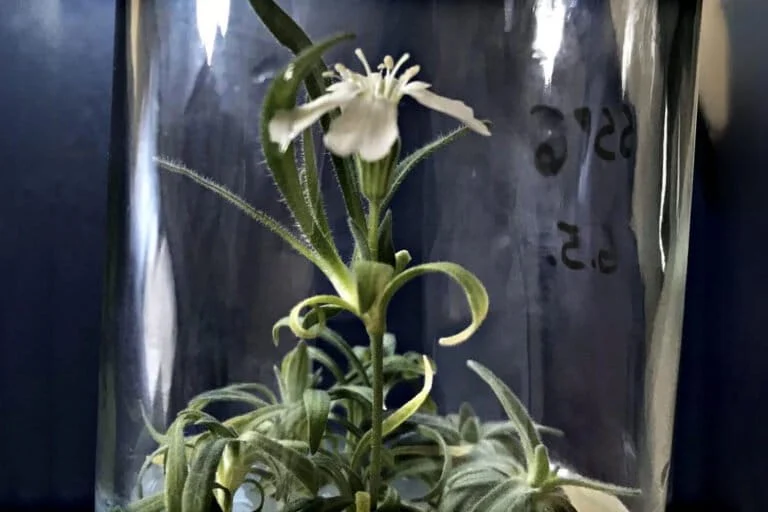
In a landmark achievement that bridges the gap between modern genetics and the prehistoric world, a team of researchers from the Russian Academy of Sciences has successfully resurrected a flowering plant from tissue that remained frozen in the Siberian permafrost for over 32,000 years. The plant, known as Silene stenophylla or the narrow-leafed campion, last bloomed during the Late Pleistocene epoch, a period when the Earth was dominated by megafauna such as woolly mammoths, cave lions, and giant rhinoceroses. This breakthrough, documented by the Institute of Cell Biophysics, represents the oldest multicellular organism ever to be brought back to life, shattering previous records and providing a transformative perspective on the longevity of biological life under extreme conditions.
The successful regeneration of Silene stenophylla is more than a feat of botanical curiosity; it serves as a profound demonstration of the "natural cryobank" capabilities of the Earth’s permafrost. As climate change continues to thaw the Arctic, the discovery highlights the potential for ancient genetic material to re-emerge, offering both a treasure trove for conservation biology and a complex set of questions regarding the resilience of life.
The Archaeological Discovery in the Kolyma River Basin
The journey to this discovery began deep within the Arctic Circle, along the lower reaches of the Kolyma River in northeastern Siberia. This region is home to some of the most stable and ancient permafrost on the planet. The research team, led by David Gilichinsky of the Institute of Physicochemical and Biological Problems in Soil Science, was exploring fossilized burrows located 38 meters (125 feet) below the modern surface.
These burrows were not geological accidents but the intentional constructions of Arctic ground squirrels (Spermophilus parryii) from the Pleistocene era. During the Ice Age, these squirrels created extensive hibernation chambers and food storage units. To survive the brutal winters, they filled these "larders" with thousands of seeds and fruits, which were then rapidly covered by drifting sediment and frozen solid. Because the Kolyma region remained unglaciated but consistently frozen, these burrows were never subjected to thawing or internal movement, effectively sealing the organic contents in a vacuum-like state of suspended animation for tens of millennia.
Upon excavation, the researchers discovered approximately 70 such hibernation burrows. Inside one specific chamber, they found a cache containing more than 600,000 seeds and fruits. The preservation was so exceptional that the delicate structures of the fruits remained intact, protected by the surrounding ice and the constant sub-zero temperatures of the permafrost, which averaged around -7 degrees Celsius (19 degrees Fahrenheit).
Methodology: From Frozen Tissue to Living Flora
Initially, the scientists attempted to germinate the seeds using traditional methods. However, despite their pristine appearance, the seeds failed to sprout. The researchers hypothesized that while the external structure of the seeds was preserved, the internal embryos had suffered subtle damage over the 32,000-year dormancy that prevented natural germination.
Undeterred, the team pivoted to a more advanced biotechnological approach: tissue culture and micropropagation. They focused on the placental tissue found within the immature fruits of the Silene stenophylla. The placenta is the part of the fruit to which the seeds are attached and which provides them with nutrients during development. Scientists believed these placental cells might possess greater regenerative potential than the fully formed embryos.
Working in a highly controlled, sterile laboratory environment, the researchers extracted the placental tissue and placed it on a nutrient-rich growth medium. By manipulating light, temperature, and hormone levels (specifically auxins and cytokinins), they induced the ancient cells to divide and differentiate. This process, essentially a form of cloning, allowed the scientists to bypass the damaged seed stage and grow entire plants directly from the prehistoric tissue.
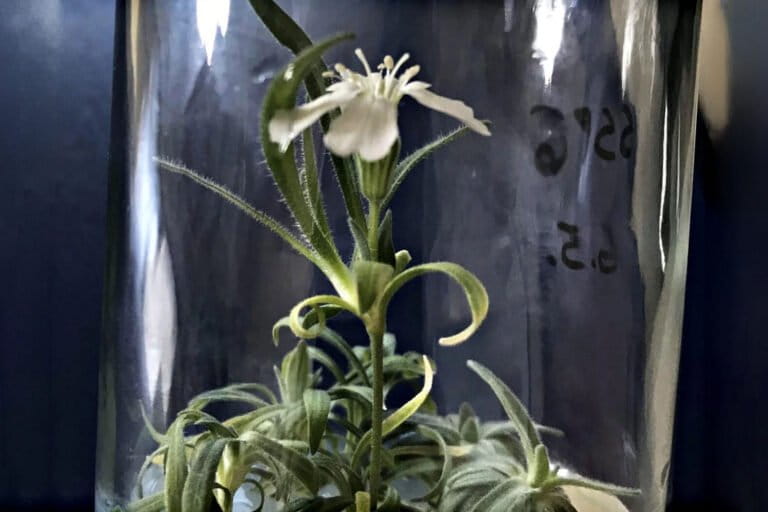
The experiment was a resounding success. The team managed to regenerate 36 individual plants. These "Lazarus" specimens were then transitioned from test tubes to soil. Remarkably, the plants grew at a normal rate, developed healthy root systems, and eventually produced white flowers. Most importantly, the regenerated plants were fertile; they were able to cross-pollinate and produce a second generation of seeds, proving that the ancient genetic blueprint remained fully functional and viable.
Chronology and Supporting Data
The timeline of this discovery and its subsequent verification is critical to its scientific standing. The burrows were first identified and excavated in the late 2000s, followed by years of rigorous testing to ensure the age of the specimens.
- 32,000 Years Ago: During the Late Pleistocene, an Arctic ground squirrel stores Silene stenophylla fruits in a burrow. Rapid freezing occurs shortly thereafter.
- 2007–2010: Fieldwork along the Kolyma River unearths the fossilized burrows.
- 2011: Radiocarbon dating is conducted at the University of Arizona and the University of Vienna. The results confirm the organic material dates back to between 31,800 and 32,200 years ago.
- 2012: The Institute of Cell Biophysics publishes the full findings in the Proceedings of the National Academy of Sciences (PNAS), titled "Regeneration of whole fertile plants from 30,000-y-old fruit tissue buried in Siberian permafrost."
- 2012–Present: Comparative genomic studies are initiated to contrast the ancient specimens with their modern-day descendants.
Data from the study showed that the ancient Silene stenophylla is phenotypically distinct from the modern version of the species currently growing in the Siberian tundra. The ancient plants exhibited different petal shapes and a more robust growth habit in the early stages of development. These differences provide a rare, direct look at "evolution in real-time," showing how a species has adapted over 30,000 years of environmental shifts.
Scientific and Global Implications
The successful revival of the Silene stenophylla has sent shockwaves through the scientific community, sparking discussions in fields ranging from cryobiology to astrobiology.
Conservation and Biodiversity
One of the most immediate implications is for conservation. The ability to revive plants from ancient tissue suggests that permafrost acts as a "global backup drive" for Earth’s biodiversity. As modern species face extinction due to habitat loss and climate change, the techniques used by the Russian team could theoretically be applied to seeds or tissues preserved in modern seed banks or even those found in more recent permafrost layers.
The Search for Extraterrestrial Life
Astrobiologists have taken a keen interest in the study. If a multicellular organism can survive for 32,000 years in Earth’s permafrost, it raises the possibility that similar life forms could exist in a state of dormancy in the icy crusts of Mars or the frozen moons of Jupiter and Saturn. The study proves that life can endure far longer than previously thought, provided the environmental conditions remain stable and cold.
De-extinction and Fauna
While reviving a plant is significantly different from reviving a mammal, the success with Silene has bolstered the hopes of those working on the de-extinction of the woolly mammoth. If placental tissues can be "re-awakened," it suggests that the preservation of cellular structures in permafrost is highly effective. However, scientists caution that animal cells are much more complex and lack the "totipotency" (the ability of a single cell to divide and produce all the differentiated cells in an organism) that many plant cells possess.
Risks and Ethical Considerations
Despite the excitement, the discovery carries a note of caution. The same permafrost that preserved the Silene stenophylla also harbors ancient bacteria and viruses. As the Arctic warms at a rate twice as fast as the rest of the world, there is a risk that "pathogens of the past" could be released into the modern ecosystem.
Furthermore, the study has prompted a debate over the ethics of "resurrecting" species. While the Silene is not extinct—its descendants still thrive in the region—the prospect of bringing back truly extinct species requires careful consideration of ecological impact. Would a plant from 30,000 years ago be invasive in a modern environment? Would it carry ancient diseases? These are questions that researchers are now beginning to address as they continue to monitor the regenerated plants.
Conclusion
The revival of the 32,000-year-old Silene stenophylla stands as a testament to the incredible resilience of life. By looking backward into the frozen depths of the Siberian soil, Russian scientists have opened a new door for the future of biology. This experiment confirms that the permafrost is not just a graveyard of the Ice Age, but a vibrant, albeit frozen, repository of the Earth’s evolutionary history. As the scientific community continues to analyze the offspring of these ancient flowers, the world watches to see what other secrets the ice might hold, waiting for the right moment to bloom once again.