Nila Kartika Wati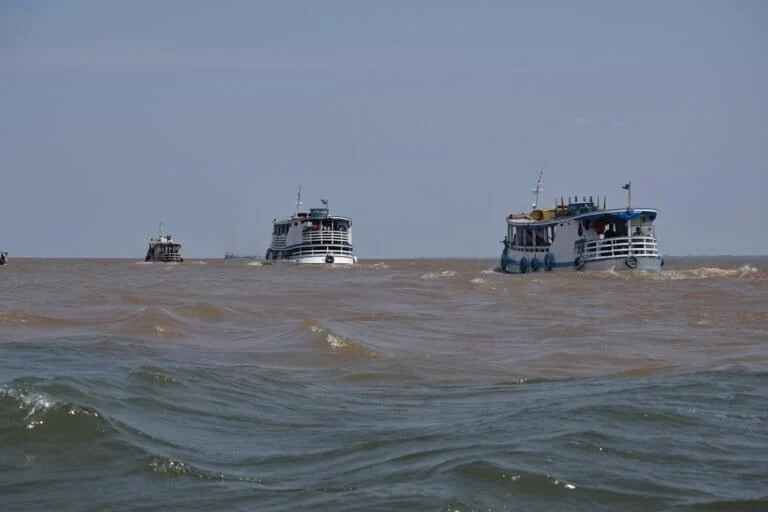
The Amazon River, a colossal artery of freshwater winding approximately 6,800 kilometers across the South American continent, remains one of the few places on Earth where human engineering has chosen to yield to the forces of nature. Despite its status as the world’s largest river by discharge volume and its second-longest by length, not a single bridge crosses the main stem of the Amazon. This absence is not a failure of modern architectural capability but rather a calculated convergence of extreme technical challenges, logistical redundancies, and a growing recognition of the catastrophic environmental risks associated with terrestrial infrastructure in the world’s most vital rainforest.
The Amazon basin represents a unique topographical environment where the river is not merely a body of water but a shifting, living entity. For engineers, the primary obstacle is the river’s extraordinary seasonal variability. During the dry season, the Amazon’s main channel maintains a formidable width of approximately three to ten kilometers. However, during the wet season, the river undergoes a dramatic metamorphosis. Fed by torrential tropical rains, the water level can rise by more than nine meters, causing the river to overflow its banks and expand to a width of nearly 50 kilometers in certain stretches. This seasonal "pulse" creates a vast floodplain known as the varzea, where the land becomes a saturated, unstable marshland. Constructing a bridge capable of spanning such a distance while remaining resilient against these fluctuations would require a structure of unprecedented scale and cost.
Beyond the sheer horizontal distance, the geological composition of the Amazon’s banks presents a nightmare for foundational engineering. Unlike the solid rock foundations found beneath many of the world’s great rivers, the Amazon’s banks consist of thick layers of soft sediment and fine silt that are constantly being eroded and redeposited by the current. To secure a bridge’s piers, engineers would be forced to drill hundreds of meters into the earth to reach the stable bedrock—a process that is both technologically demanding and prohibitively expensive. Furthermore, the river’s current is exceptionally powerful, carrying massive amounts of debris, including entire uprooted trees known as "sweepers." These floating hazards act as natural battering rams, capable of inflicting severe structural damage on any pilar placed within the main channel.
A History of Logistical Independence and Economic Reality
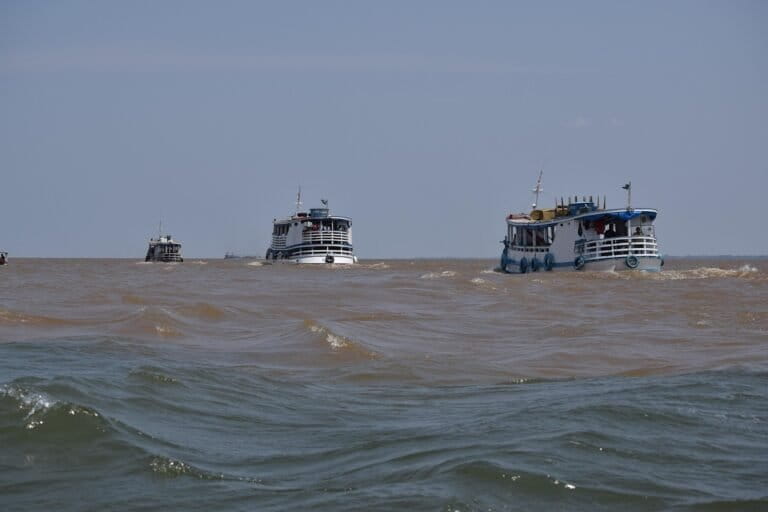
The historical development of the Amazon region has followed the path of the water rather than the road. For centuries, the river has functioned as a natural "superhighway," providing a cost-effective and efficient means of transporting goods and people across vast distances. Major urban centers like Manaus, Brazil, which sits at the confluence of the Rio Negro and the Amazon, have thrived as inland ports. Because the Amazon is deep enough for ocean-going vessels to navigate thousands of kilometers inland, the need for a bridge to facilitate trade is significantly diminished. Large cargo ships can reach Manaus from the Atlantic Ocean, while smaller barges and motorboats handle the local distribution of goods to remote settlements.
In terms of economic feasibility, the cost of building a bridge across the Amazon is estimated to be at least ten times higher than constructing a similar structure in a temperate or stable geological environment. For the governments of the Nine Amazonian countries—most notably Brazil, Peru, and Colombia—the return on investment for such a project is difficult to justify. Most of the territory the river traverses is sparsely populated, consisting of dense jungle with few connecting roads. Building a bridge without an extensive network of highways on either side would result in a "bridge to nowhere." Currently, the existing ferry systems, while slower, offer a level of flexibility that fixed infrastructure cannot match, adapting to the river’s seasonal shifts without requiring billion-dollar maintenance budgets.
The only significant bridge in the entire basin is the Ponte Rio Negro, completed in 2011 near Manaus. However, this bridge crosses the Rio Negro—a major tributary—rather than the main stem of the Amazon itself. Even this project, which cost approximately $625 million, has faced criticism regarding its long-term economic utility compared to the environmental disruption it caused, serving as a cautionary tale for those proposing a crossing of the Amazon proper.
The 2025 Conservation Outlook: Infrastructure as a Catalyst for Destruction
As the global community moves deeper into the 21st century, the debate over Amazonian infrastructure has shifted from engineering possibility to ecological preservation. A comprehensive 2025 report by the Amazon Conservation Association (ACA) has provided a stark warning regarding the potential consequences of bridge construction. According to the research, the introduction of a permanent river crossing could trigger a "cascade of deforestation" amounting to a 40% loss of forest cover within the bridge’s immediate 100-kilometer radius over a single decade.
The logic behind this prediction is rooted in historical patterns of South American development. In the Amazon, roads and bridges do not merely facilitate travel; they act as conduits for exploitation. A permanent bridge provides year-round, 24-hour access to previously inaccessible primary forests. This accessibility is quickly exploited by land speculators, illegal loggers, and wildcat miners. The ACA report highlights that once a road or bridge is established, "fishbone" patterns of deforestation inevitably follow, as secondary roads are illegally carved into the jungle from the main artery.
Environmental scientists emphasize that the Amazon serves as a "biotic pump," a critical component of the global climate system that recycles moisture into the atmosphere to produce rain across South America and beyond. Pushing the forest toward a "tipping point" through infrastructure-led deforestation risks transforming the lush rainforest into a dry savannah. Such a shift would not only result in a catastrophic loss of biodiversity—the Amazon is home to one of every ten known species on Earth—but would also release billions of tons of stored carbon, accelerating global warming.
Official Responses and the Shift Toward Sustainable Mobility
Governmental bodies and regional planners have begun to internalize these environmental risks, leading to a shift in official rhetoric. While some political factions continue to lobby for "integration" through traditional infrastructure, many environmental ministries are now advocating for "green corridors" and the modernization of waterborne transport.
In response to the 2025 ACA findings, several regional governors in the Brazilian Amazon have expressed a preference for "technological leapfrogging" rather than traditional bridge building. This strategy involves the deployment of high-capacity, electric-powered ferry fleets and the modernization of river ports with solar-powered charging infrastructure. By optimizing the river as a transit route, the region can achieve the necessary logistics for economic growth without providing the physical entry points required for illegal deforestation.
"The river is our road, and it has been for millennia," stated a representative from the Brazilian Ministry of Infrastructure in a recent forum. "Our challenge is not to conquer the river with concrete, but to modernize our interaction with it. By investing in cleaner, faster vessels and digitalizing our port logistics, we can bridge the economic gap without physically bridging the water."
Broader Implications: The Global Precedent for Conservation
The continued absence of a bridge over the Amazon is increasingly viewed by the international community as a symbol of environmental restraint. In an era where human footprints are visible in every corner of the globe, the Amazon’s unbridged main stem stands as a testament to the necessity of prioritizing planetary health over traditional notions of "progress."
The implications of this choice extend far beyond South America. It sets a global precedent for how nations might manage sensitive ecosystems. If the Amazon can remain unbridged to protect its integrity, it provides a blueprint for other regions—such as the Congo Basin or the Arctic—to reconsider the true cost of "connectivity."
As we look toward the future, the focus remains on maintaining the Amazon’s role as a climate regulator. The technical difficulty of building a bridge may have been the initial deterrent, but the ecological imperative has become the permanent barrier. In the balance between the convenience of a road and the survival of the "lungs of the planet," the river’s natural flow continues to win. For now, and perhaps forever, the Amazon will remain a river that connects the world through its climate impact, even as it remains a river that no bridge can cross.