Bambang Pamungkas
Belgrade, Serbia – The Serbian capital of Belgrade was once again gripped by a wave of massive demonstrations on Saturday, May 24, 2026, as tens of thousands of citizens flooded the city center, demanding accelerated parliamentary and presidential elections. The protests, a powerful continuation of an anti-corruption movement that has now spanned over a year, underscored the enduring public anger against the government of President Aleksandar Vučić and his ruling Serbian Progressive Party (SNS). What began as a demand for transparent accountability following a tragic infrastructure collapse has escalated into a broad-based political challenge, threatening the stability of the nationalist administration.
The Day of Discontent: A Chronology of May 24, 2026
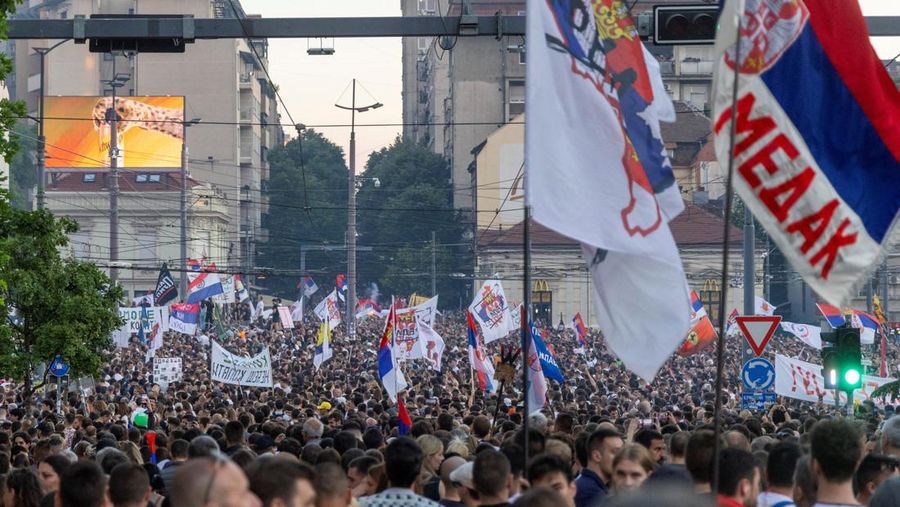
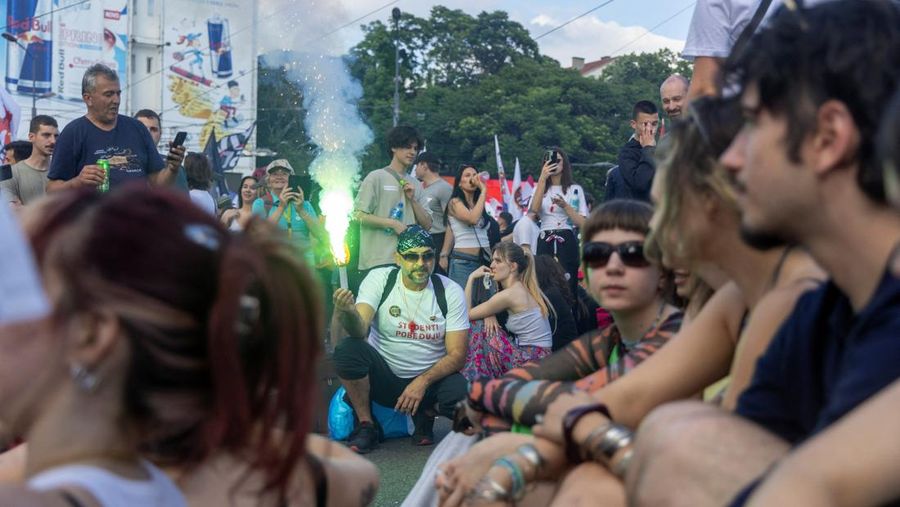
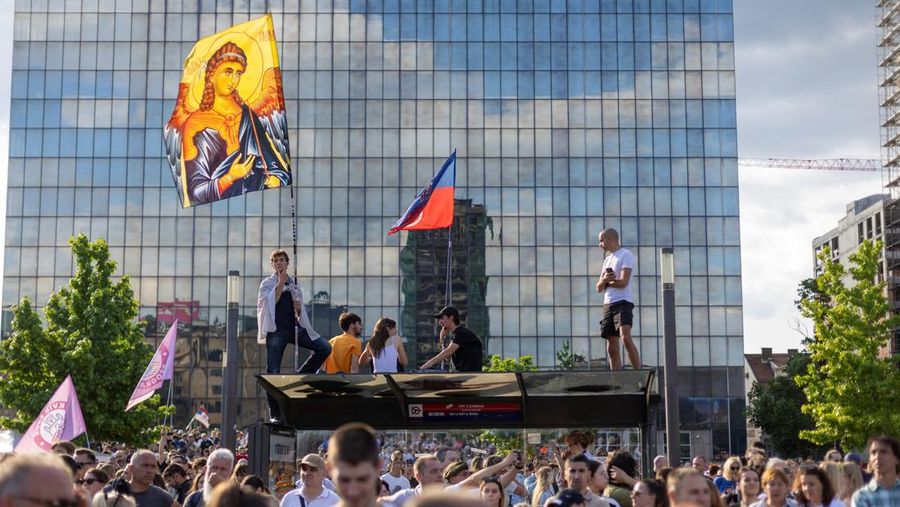
The Saturday protest began peacefully in the early afternoon, with demonstrators converging from various parts of the city. The air resonated with the rhythmic beat of drums and the sharp calls of whistles, creating a cacophony of dissent that echoed through Belgrade’s main thoroughfares. Participants, a diverse mix of students, civil society activists, opposition supporters, and ordinary citizens, carried an array of banners, t-shirts, badges, and stickers emblazoned with the movement’s rallying cries. A prominent slogan, "Studenti Pobeđuju" (Students are winning), a phrase with historical resonance in Serbian protest movements, was widely displayed, signaling the significant involvement and leadership of the youth.
The massive procession snaked its way through the heart of Belgrade, culminating in Slavija Square, a central hub often chosen for large public gatherings. The atmosphere during the main march was charged with a mixture of defiance and solidarity. Speakers from various opposition groups and civil society organizations addressed the crowd, reiterating calls for systemic change, accountability, and an end to what they described as a corrupt and authoritarian rule. They lambasted the government for its perceived inaction on critical issues, its alleged suppression of media freedom, and its failure to uphold democratic standards. The demands for early elections were presented as the only legitimate path to resolve the deep political crisis gripping the nation.
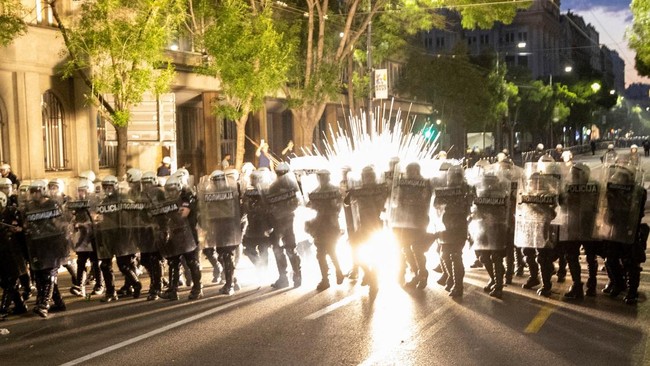
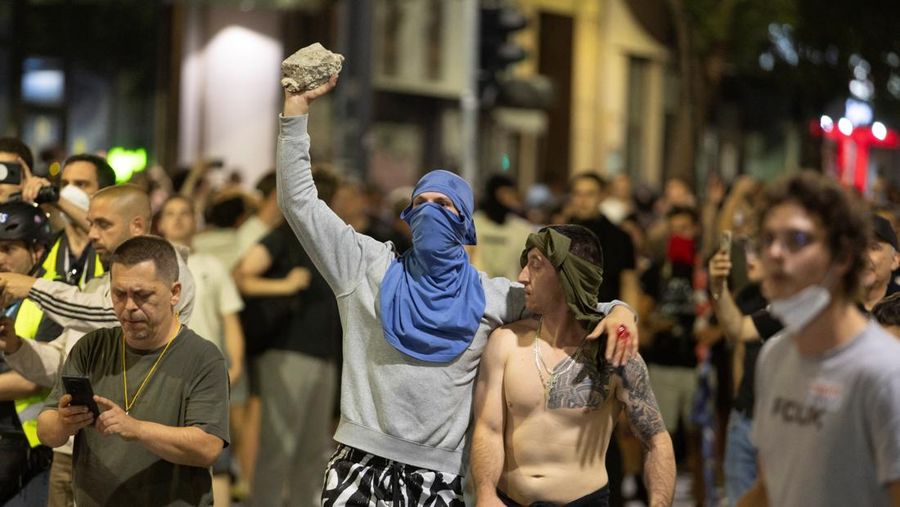
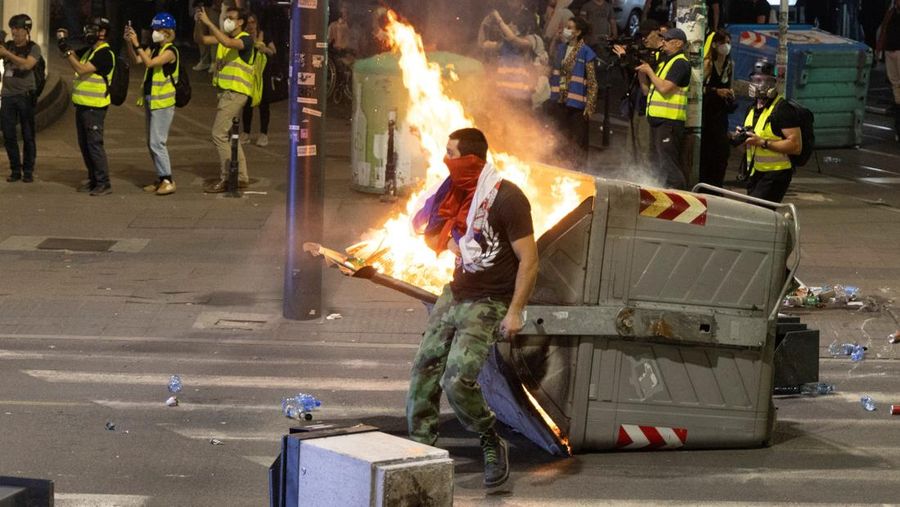
However, as the evening descended and the main demonstration began to disperse, the situation took a volatile turn. Pockets of masked individuals, seemingly detached from the organized core of the peaceful protest, clashed with riot police. These confrontations erupted near key government buildings, including the parliament and the presidential office, areas typically heavily secured during such events. Eyewitnesses reported masked demonstrators throwing stones, glass bottles, and firecrackers at police lines. The security forces responded swiftly and forcefully, deploying tear gas to disperse the agitated crowds. The clashes led to several arrests, though the exact number was not immediately clear. Armored vehicles carrying gendarmerie forces were visibly deployed, forming protective cordons around the sensitive government institutions, highlighting the heightened tension and the government’s determination to prevent any breach of state property.
The Catalyst: Novi Sad Tragedy and the Genesis of Discontent
The sustained wave of anti-government protests, which has now entered its second year, finds its origins in the devastating Novi Sad train station canopy collapse. In November 2024, a newly renovated canopy at the historic Novi Sad railway station tragically collapsed, claiming the lives of 16 individuals and injuring numerous others. The incident sent shockwaves across Serbia, igniting public outrage and immediately raising questions about the quality of construction, the transparency of public tenders, and the overall state of infrastructure maintenance under the current administration.
Initial investigations pointed towards significant structural deficiencies and potential oversight failures during the renovation project. Critics and independent experts quickly highlighted a pattern of rapid, often opaque, infrastructure projects undertaken by the government, frequently awarded to companies with close ties to the ruling party. This tragedy became a potent symbol of what many Serbians perceive as widespread corruption, cronyism, and a culture of impunity that prioritizes political expediency over public safety. The demand for a thorough, independent, and transparent investigation into the Novi Sad disaster, and for those responsible to be held accountable, became the initial rallying cry that united disparate segments of society.
As the government’s response to the tragedy was widely criticized as insufficient and lacking genuine commitment to accountability, the protests began to evolve. What started as a specific demand for justice for the victims of Novi Sad broadened into a more comprehensive critique of President Vučić’s leadership and the entire political system. Citizens expressed deep frustration with the perceived erosion of democratic institutions, the tightening grip of the ruling party on all aspects of public life, and the stifling of dissenting voices.
Broader Grievances and the Erosion of Democratic Norms
Beyond the immediate trigger of the Novi Sad tragedy, the enduring nature of the protests reflects deeper, long-standing grievances within Serbian society. President Aleksandar Vučić, a dominant figure in Serbian politics for over a decade, first as Prime Minister and then as President since 2017, has presided over a period of strong economic growth but also increasing concerns about democratic backsliding. His critics often accuse him of consolidating power, undermining independent institutions, and exerting undue influence over the judiciary and media.
A significant point of contention is the state of media freedom in Serbia. Numerous international watchdog organizations, such as Reporters Without Borders and Freedom House, have consistently downgraded Serbia’s ranking in press freedom indices, citing concerns about harassment of journalists, state control over public broadcasters, and the proliferation of pro-government tabloids that often engage in smear campaigns against opposition figures and critical voices. Protesters frequently decry the lack of objective information and the prevalence of propaganda, arguing that it prevents citizens from making informed decisions and holding their government accountable.
Economic issues also fuel public anger. While official statistics often paint a positive picture, many Serbians grapple with high unemployment, particularly among the youth, and a rising cost of living. Perceptions of corruption are rampant, with Serbia consistently ranking low on Transparency International’s Corruption Perception Index. Citizens often feel that the benefits of economic growth are not equitably distributed and that opportunities are often reserved for those connected to the ruling elite. The Novi Sad incident perfectly encapsulated these concerns, suggesting that public funds for infrastructure projects might be mismanaged or siphoned off, leading to tragic consequences.
Furthermore, the nationalist rhetoric often employed by the government, particularly concerning regional issues and Serbia’s relations with Kosovo, also contributes to societal divisions. While appealing to a segment of the electorate, it alienates others who seek a more progressive, European-oriented future for the country. The demand for early elections is therefore not merely about replacing a government but about a fundamental reorientation of the country’s political trajectory and a restoration of democratic checks and balances.
Government’s Stance and Opposition’s Unity
President Vučić and his government have consistently dismissed the protests as politically motivated, orchestrated by a desperate opposition lacking popular support. They often accuse protest organizers of attempting to destabilize the country and undermine its progress. Following the clashes on May 24, government officials were quick to condemn the violence, characterizing the masked individuals as "hooligans" and "provocateurs" intent on creating chaos. They asserted that the police acted professionally and proportionately to protect state institutions and ensure public order.
The government has repeatedly refused calls for early elections, arguing that they have a clear mandate from the last elections and that acceding to such demands would set a dangerous precedent, allowing street protests to dictate national policy. They emphasize their commitment to Serbia’s European Union accession path, economic reforms, and regional stability. However, critics contend that the government’s narrative often downplays the genuine grievances of the populace and seeks to delegitimize legitimate expressions of dissent.
In contrast, the diverse opposition parties, which have struggled to present a united front in previous elections, appear to have found common ground in the current protest movement. They have largely coalesced around the demands for accountability and early elections, hoping to capitalize on the widespread public dissatisfaction. Opposition leaders have condemned the police’s use of tear gas and the arrests, accusing the government of repressive tactics and attempting to silence dissent. They insist that the violence was either provoked or perpetrated by fringe elements, and that the vast majority of demonstrators remained peaceful. The "Students are winning" slogan is particularly significant in this context, as student movements have historically played a pivotal role in challenging authoritarian regimes in Serbia and the broader Balkan region.
International Scrutiny and Implications
The ongoing political turmoil in Serbia has not gone unnoticed by the international community. The European Union, to which Serbia is an aspiring member, has repeatedly called on Serbian authorities to uphold democratic standards, ensure media freedom, and guarantee the right to peaceful assembly. While refraining from direct intervention, EU officials have expressed concern over the political polarization and the erosion of rule of law. The violent clashes on May 24 are likely to draw further scrutiny from Brussels and international human rights organizations, potentially impacting Serbia’s progress in its EU accession negotiations.
Human rights groups have also voiced apprehension regarding the police response to protests, urging restraint and respect for fundamental freedoms. The deployment of gendarmerie and the swift arrests of demonstrators will likely be reviewed by these bodies, putting additional pressure on the Serbian government to justify its actions.
The implications of these sustained protests are far-reaching. For President Vučić and the SNS, the continued public dissent, despite efforts to dismiss it, poses a significant challenge to their authority and legitimacy. While the government still enjoys substantial support, particularly in rural areas and among older generations, the urban youth and educated segments of society are increasingly vocal in their opposition. A prolonged period of instability could deter foreign investment, damage Serbia’s international reputation, and potentially exacerbate existing societal divisions.
For the opposition, the movement offers a crucial opportunity to rebuild public trust and present a viable alternative to the current government. The ability to maintain unity and articulate a coherent vision for the country will be critical to translating street protests into electoral success.
Ultimately, the future political landscape of Serbia hinges on how the government chooses to respond to these demands. A continued refusal to engage in meaningful dialogue or to address the underlying causes of public discontent could further deepen the crisis. Conversely, any concession towards early elections or a genuine commitment to addressing corruption and democratic reforms could pave the way for a path out of the current stalemate. As the sun rises over Belgrade following a night of both peaceful protest and violent clashes, the eyes of Serbia, and indeed the international community, remain fixed on the unfolding drama in the heart of the Balkans.