Nila Kartika Wati
The South Jakarta District Court issued a monumental ruling on April 13, 2026, marking a decisive turning point in the protracted struggle for public information transparency within Indonesia’s energy sector. In a verdict that has reverberated across the nation’s legal and environmental landscapes, the court ruled in favor of Greenpeace Indonesia in its lawsuit against the state-owned electricity giant, PT PLN (Persero). The court officially designated emissions data from coal-fired power plants (PLTU) as public information that must be accessible to the citizenry. This decision effectively ends nearly three years of legal maneuvering and sets a profound precedent for how environmental data is managed by state-owned enterprises (SOEs) in Southeast Asia’s largest economy.
The ruling is viewed by legal experts and environmental advocates not merely as a procedural victory, but as a direct challenge to the long-standing culture of secrecy surrounding the industrial impact on the environment. For decades, critical data regarding the pollutants released by coal-fired power plants was often shielded from public view, frequently classified under the ambiguous banners of "trade secrets" or "national security." The court’s decision firmly rejects these justifications, asserting that the public’s right to know the contents of the air they breathe supersedes the corporate interests of energy providers.
A Chronology of the Legal Struggle
The journey to this landmark verdict began in 2023, when Greenpeace Indonesia first filed a public information request to PT PLN. The organization sought specific data regarding emissions levels and the roadmaps for emission monitoring across various coal-fired power plants operated by the utility. This request was rooted in the Public Information Disclosure Law (Law No. 14 of 2008), which mandates that public bodies, including state-owned enterprises, provide access to information that affects the public interest.
However, the path to transparency was fraught with obstacles. After PLN denied the initial request, the case moved to the Central Information Commission (KIP). In a controversial turn of events in 2025, the KIP issued Ruling No. 155/XI/KIP-PSI/2023, which largely sided with the state utility. The commission at the time accepted the argument that certain environmental monitoring data and changes to environmental permits could be withheld to protect business interests and state stability.
One of the most startling moments in the 2025 proceedings occurred when PLN representatives claimed the company did not actually possess or "master" the specific emissions data requested. This admission sparked immediate alarm among environmentalists and policy analysts. If the nation’s primary power generator was not in possession of granular emissions data, it raised existential questions about how environmental regulations were being enforced and how the company was measuring its own compliance with national air quality standards.
Dissatisfied with the KIP’s decision, Greenpeace Indonesia escalated the matter to the South Jakarta District Court. The recent April 2026 ruling represents a total reversal of the KIP’s previous stance, with the judiciary reinstating the principle that environmental information is inherently public property.
The Court’s Mandate and the Rejection of Secrecy
The South Jakarta District Court was explicit in its instructions. The presiding judges ordered PT PLN to release all requested information within a maximum period of one month. Crucially, the court also ruled that any modifications or updates to the environmental permits (Izin Lingkungan) of coal-fired power plants are also public documents.
In the Indonesian regulatory framework, environmental permits serve as the primary instrument for determining whether an industrial activity is operating within safe ecological limits. By declaring these permits as open information, the court has provided a tool for civil society to verify whether power plants are expanding their operations or increasing their pollution output without adequate mitigation strategies.
Chikita Edrini Marpaung, a public lawyer at the Legal Aid Institute for the Press (LBH Pers), emphasized that transparency is the bedrock of accountability. She noted that when state-owned enterprises operate in the dark, the public loses its ability to monitor regulatory compliance. Without data, there is no way to verify if a utility is adhering to the Ministry of Environment and Forestry’s standards or if it is benefiting from a lack of oversight.
Technical Context: The Stakes of Emissions Data
To understand the significance of this ruling, one must look at the technical reality of coal emissions. Coal-fired power plants are significant sources of particulate matter (PM2.5), sulfur dioxide (SO2), and nitrogen oxides (NOx). These pollutants are linked to a range of severe health issues, including chronic respiratory diseases, cardiovascular problems, and premature death.
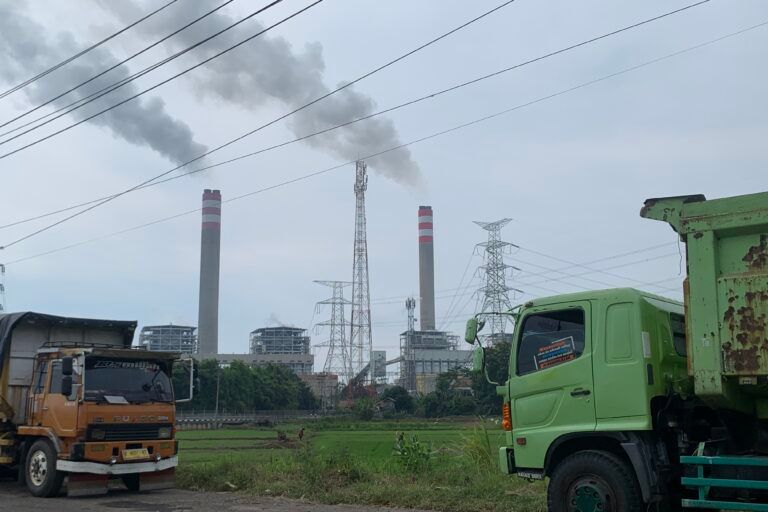
In Indonesia, where coal remains the backbone of the national power grid, the lack of transparent data has historically prevented independent researchers from accurately mapping the correlation between power plant operations and regional health crises. For years, communities living in the shadows of PLTU facilities—such as those in Bekasi, West Java, and Jepara, Central Java—have reported heavy coal dust contamination and rising rates of respiratory illness.
With the court-ordered disclosure, independent auditors and health experts will finally be able to test PLN’s claims. They can now ask: Are the emissions levels truly within the legal threshold? Are the scrubbers and filtration systems operating at maximum efficiency, or are they being bypassed to save costs? The transition from "narrative-based compliance" to "evidence-based accountability" is perhaps the most significant outcome of this legal victory.
Impact on Local Communities and Human Rights
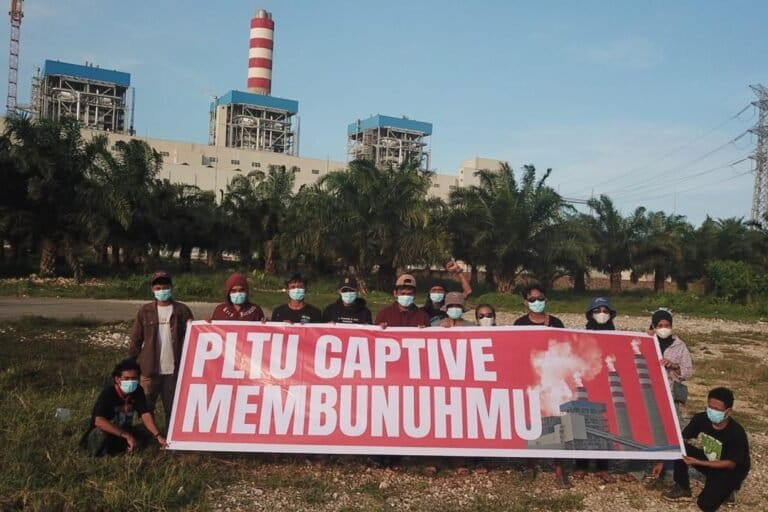
The human element of this legal battle is best illustrated by the communities directly affected by coal operations. In places like Desa Topogaro in Morowali, residents and activists have long protested the proliferation of "captive" coal plants—units dedicated to powering industrial parks, particularly in the nickel smelting sector. These communities have often been excluded from the decision-making processes, with environmental impact assessments remaining shrouded in mystery.
Similarly, in Jepara, the Tanjung Jati B power plant sits in close proximity to fishing villages. Local fishermen have documented declining catches and damage to coastal ecosystems, which they attribute to the thermal pollution and coal barge traffic associated with the plant. Until now, these communities had little recourse to prove the link between industrial activity and ecological decline. The South Jakarta District Court’s ruling empowers these vulnerable groups by providing them with the data necessary to seek legal redress or demand better environmental protections.
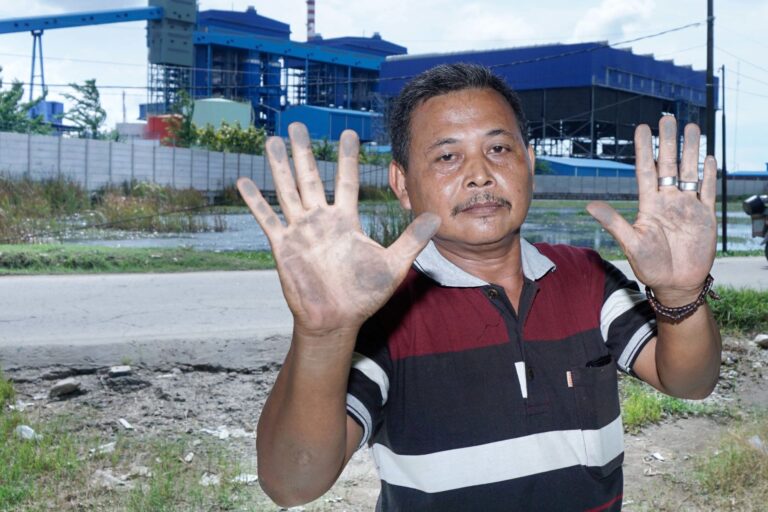
In Bekasi, residents have frequently shared images of coal dust accumulating inside their homes. For these citizens, the "trade secrets" argument used by PLN felt like a dismissal of their lived reality. The court has now affirmed that the right to a healthy environment—a right enshrined in the Indonesian Constitution—cannot be sacrificed for the sake of corporate confidentiality.
Broader Implications for Indonesia’s Energy Transition
The timing of this ruling is particularly critical as Indonesia attempts to navigate a complex energy transition. Under the Just Energy Transition Partnership (JETP), Indonesia has committed to reaching peak emissions in the power sector by 2030 and achieving net-zero emissions by 2060. These goals require billions of dollars in international investment, much of which is contingent on transparency and verifiable data.
International stakeholders and climate financiers require accurate baseline data to measure the progress of decarbonization. If the national utility is perceived as opaque regarding its current emissions, it risks undermining investor confidence and slowing the flow of "green" capital. By forcing transparency, the court is inadvertently helping the government align with international standards of environmental, social, and governance (ESG) reporting.
Furthermore, this data will serve as the foundation for future energy planning. Without an accurate understanding of which plants are the heaviest polluters, the government cannot effectively prioritize which facilities to retire early. Transparency ensures that the transition is not just a change in technology, but a shift toward a more just and accountable governance model.
Future Challenges and Implementation
While the ruling is a landmark success, the focus now shifts to implementation. There are three primary concerns regarding the aftermath of the court’s decision:
- Compliance and Timeliness: Will PT PLN adhere to the 30-day deadline, or will it seek further legal delays through a cassation appeal to the Supreme Court? Historical patterns suggest that large state entities often exhaust every legal avenue to avoid disclosure.
- Data Integrity and Accessibility: When the data is eventually released, will it be in a format that is "machine-readable" and easily analyzed? There is a risk that information could be provided in a fragmented or overly technical manner that obscures the true impact of the emissions.
- Institutional Standard-Setting: Will the Ministry of State-Owned Enterprises and the Ministry of Energy and Mineral Resources adopt this ruling as a new standard for all energy projects, or will each piece of data require a separate, multi-year legal battle?
Conclusion: A Foundation for Trust
The South Jakarta District Court’s decision on April 13, 2026, serves as a reminder that in a democracy, information regarding the public’s health and environment cannot be treated as a private asset. Transparency is not an obstacle to business; rather, it is the foundation of public trust. As Indonesia faces the dual challenges of economic growth and climate change, the ability to access factual, scientific data is more important than ever.
The ruling has successfully dismantled the "dark room" of energy governance. Whether the state is ready to face the consequences of what that light reveals remains to be seen. However, for the activists, lawyers, and local communities who have spent years fighting for this moment, the answer is clear: the era of "trust us, we’re the experts" is over, replaced by a new era of "show us the data." This is the first step toward an energy system that is not only clean in terms of its carbon footprint but also clean in its commitment to truth and justice.