Azin Asro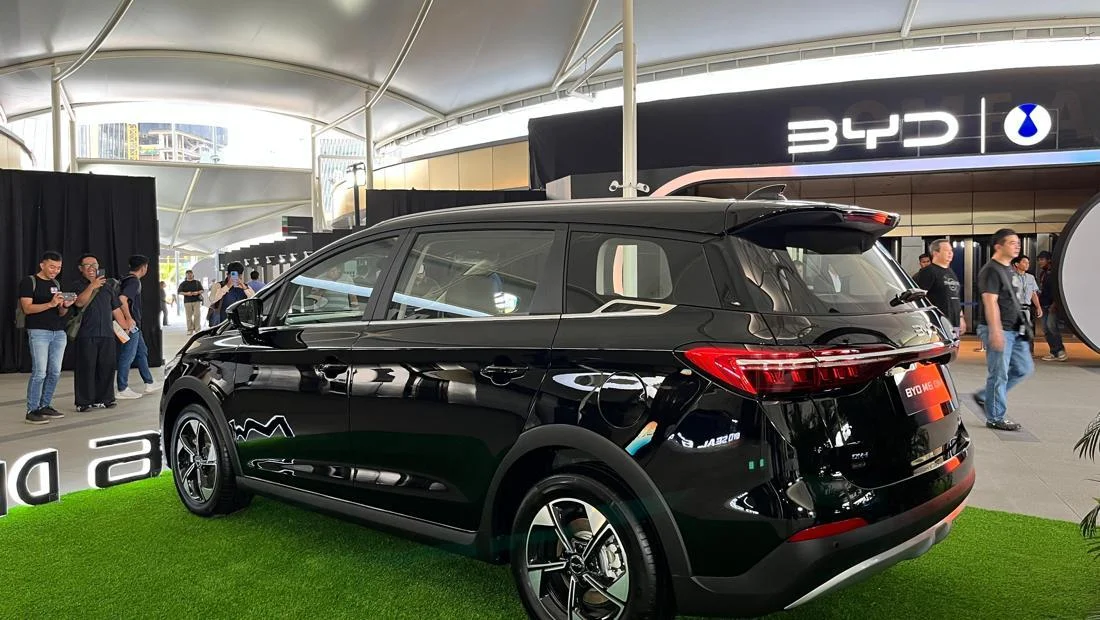
The Indonesian automotive market is currently abuzz with anticipation following the registration of the BYD M6 DM in official government records, sparking intense discussion regarding its eventual retail price. Although PT BYD Motor Indonesia has officially introduced the model to the public, the formal price list remains under wraps, leaving consumers and industry analysts to sift through regulatory filings for clues. The most significant indicator emerged from the Ministry of Home Affairs Regulation (Peraturan Menteri Dalam Negeri) No. 11 of 2024, which outlines the Base Value for Motor Vehicle Taxes (Nilai Jual Kendaraan Bermotor or NJKB). This document reveals that the BYD M6 DM carries a registered base value starting as low as Rp 104 million, a figure that has ignited widespread speculation about how the Chinese electric vehicle giant will position its latest Multi-Purpose Vehicle (MPV) against established Japanese competitors.
The strategy of withholding official pricing while allowing base valuations to circulate is a common precursor to major product launches in the Indonesian automotive sector. Eagle Zhao, the President Director of PT BYD Motor Indonesia, recently addressed the growing curiosity, emphasizing the company’s commitment to accessibility. Zhao stated that BYD is acutely aware of the current economic climate and intends to offer the M6 DM at a price point that is both competitive and affordable for the Indonesian middle class. This approach aligns with BYD’s global "Electric for All" philosophy, which seeks to lower the barrier to entry for New Energy Vehicles (NEVs). While Zhao stopped short of providing a specific range, his assurance of a "competitive" price suggests that BYD aims to disrupt the traditional MPV segment, which has long been dominated by internal combustion engine (ICE) models.
Understanding the NJKB Data and Variant Breakdown
The registration of the BYD M6 DM under the internal code "MEH" provides a detailed look at the variety of configurations the manufacturer plans to offer in the Indonesian market. According to the appendix of the Ministerial Regulation, there are eight distinct variants of the BYD M6 DM registered, each with a specific NJKB. These values represent the general market price before the application of various regional and national taxes, as well as dealer margins.
The registered values for the MEH (BYD M6 DM) series are as follows:
- MEH-FWD-10T (4×2) A/T: Rp 104,000,000
- MEH-FWD-20T (4×2) A/T: Rp 105,000,000
- MEH-FWD-10Y7 (4×2) A/T: Rp 112,000,000
- MEH-FWD-10Y6 (4×2) A/T: Rp 113,000,000
- MEH-FWD-20Y7 (4×2) A/T: Rp 115,000,000
- MEH-FWD-20Y6 (4×2) A/T: Rp 116,000,000
- MEH-FWD-10A7 (4×2) A/T: Rp 122,000,000
- MEH-FWD-10A6 (4×2) A/T: Rp 123,000,000
It is crucial for potential buyers to distinguish between the NJKB and the final On-the-Road (OTR) price. The NJKB is a standardized valuation used by the government to calculate tax liabilities and does not reflect the price a consumer pays at a dealership. In the Indonesian context, the transition from NJKB to OTR price involves a complex layer of fiscal obligations, including the Motor Vehicle Tax (PKB), the Motor Vehicle Title Transfer Fee (BBNKB), and Value Added Tax (PPN).
The Path from Base Value to On-the-Road Pricing
To estimate the final retail price of the BYD M6 DM, one must account for the various taxes mandated by Indonesian law. Under Law No. 1 of 2022 concerning Financial Relations between the Central Government and Regional Governments (HKPD), the PKB for a first-time vehicle owner is capped at 1.2% nationally. However, in high-demand regions like Jakarta, the provincial government sets this rate at 2%. Furthermore, the BBNKB can reach up to 12%, though in certain provinces, it may be as high as 20% depending on local regulations.
Beyond regional taxes, a 12% Value Added Tax (PPN) is applied. There is also the Luxury Goods Sales Tax (PPnBM), though for electric vehicles and certain hybrids, the Indonesian government has historically provided significant incentives or even exemptions to promote the adoption of clean energy. Additional administrative costs, including the issuance of the Vehicle Registration Certificate (STNK), License Plate (TNKB), Ownership Document (BPKB), and the mandatory Road Transport Accident Fund contribution (SWDKLLJ), add several million rupiahs to the final tally.
Historically, the final OTR price for a mass-market vehicle in Indonesia can be 30% to 40% higher than its NJKB. Applying this logic to the BYD M6 DM, a variant with an NJKB of Rp 123 million could theoretically be priced in the Rp 250 million to Rp 350 million range. However, BYD has demonstrated a unique pricing strategy in the past. For instance, with the BYD Atto 1 (known in some markets as the Dolphin Mini or Seagull), the company priced the base variant lower than its registered NJKB to gain a strategic foothold in the entry-level EV segment. In 2024, the Atto 1 had an NJKB of Rp 218 million but was marketed at an OTR price of approximately Rp 195 million. If BYD applies a similar aggressive subsidy or marketing strategy for the M6 DM, the MPV could potentially enter the market at a price point that significantly undercuts its hybrid and gasoline-powered rivals.
Chronology of BYD’s Expansion in Indonesia
The buzz surrounding the M6 DM is the latest chapter in BYD’s rapid expansion within Southeast Asia’s largest economy. The company officially entered the Indonesian passenger car market in early 2024, debuting three models: the Dolphin (hatchback), the Atto 3 (SUV), and the Seal (sedan). These models were positioned to showcase BYD’s technological prowess, specifically its proprietary Blade Battery technology and e-Platform 3.0.
The introduction of the M6 series is a strategic move designed to capture the "heart" of the Indonesian market: the three-row MPV segment. In July 2024, during the Gaikindo Indonesia International Auto Show (GIIAS), BYD launched the M6 as a Battery Electric Vehicle (BEV), marking it as the first all-electric MPV available at a relatively mass-market price point. The "DM" (Dual Mode) variant, which refers to BYD’s plug-in hybrid technology, represents a secondary phase of this launch. The DM technology is particularly relevant for the Indonesian market, where charging infrastructure is still maturing in rural areas. By offering a vehicle that combines electric motor efficiency with a gasoline engine for extended range, BYD is targeting consumers who are interested in electrification but suffer from "range anxiety."
Market Implications and Competitive Landscape
The potential pricing of the BYD M6 DM under the Rp 350 million mark would place it in direct competition with the "kings" of the Indonesian road, such as the Toyota Avanza, Mitsubishi Xpander, and the hybrid variants of the Suzuki Ertiga. More importantly, it would challenge the Toyota Innova Zenix Hybrid, which currently sits at a higher price bracket.
Industry analysts suggest that BYD’s aggressive valuation is part of a broader effort to secure market share before other international players fully localize their EV and hybrid production. By registering eight different variants, BYD is ensuring it has a product for every sub-segment of the MPV market, from fleet buyers looking for basic utility to families seeking premium tech features.
The "Dual Mode" (DM) system is BYD’s secret weapon in this competition. Unlike traditional hybrids, BYD’s DM-i (efficiency-focused) and DM-p (performance-focused) systems often prioritize the electric motor, using the internal combustion engine primarily as a generator or for high-speed cruising. This results in fuel consumption figures that are often superior to those of conventional hybrids. If the M6 DM can deliver these performance metrics at a price comparable to a standard gasoline MPV, it could trigger a significant shift in consumer preference.
Official Responses and Consumer Sentiment
While PT BYD Motor Indonesia remains tight-lipped about the exact launch date for the M6 DM’s official pricing, the company has been active in building a robust dealership and service network. BYD has partnered with local conglomerates to ensure that after-sales service—a major concern for Indonesian car buyers when considering a new brand—is readily available.
Initial consumer sentiment, as gathered from social media and automotive forums, shows a mixture of excitement and cautious optimism. Many potential buyers are waiting to see if the "competitive price" promised by Eagle Zhao translates into a figure that includes the necessary battery warranties and home-charging installation kits, which have been standard with BYD’s BEV offerings.
The Indonesian government’s stance remains supportive of such entries. The Ministry of Industry has repeatedly stated its goal of making Indonesia a regional hub for EV production. BYD has already committed to building a manufacturing plant in Subang, West Java, with an investment of over $1 billion. This local production commitment is a key factor in the company’s ability to navigate Indonesian tax structures and eventually offer even more competitive pricing through increased Total Kingdom Domestic Content (TKDN).
Conclusion: A Turning Point for the Indonesian MPV Segment
The disclosure of the NJKB for the BYD M6 DM serves as more than just a regulatory update; it is a signal of the changing tides in the Indonesian automotive industry. For decades, the MPV segment has been a stronghold of traditional combustion technology. BYD’s entry with a multi-variant, technologically advanced, and potentially disruptively priced plug-in hybrid suggests that the era of mass-market electrification is no longer a distant prospect but an immediate reality.
As the market awaits the official price announcement, the data suggests that BYD is preparing for a high-volume play. Whether the final price lands at Rp 280 million or Rp 380 million, the M6 DM is set to become a benchmark for value in the NEV space. For the Indonesian consumer, the result is more choice, better technology, and a faster transition toward a sustainable transportation ecosystem. The coming months will reveal whether BYD’s "competitive and affordable" promise can truly unseat the long-standing incumbents of the Indonesian archipelago.