
 Nila Kartika Wati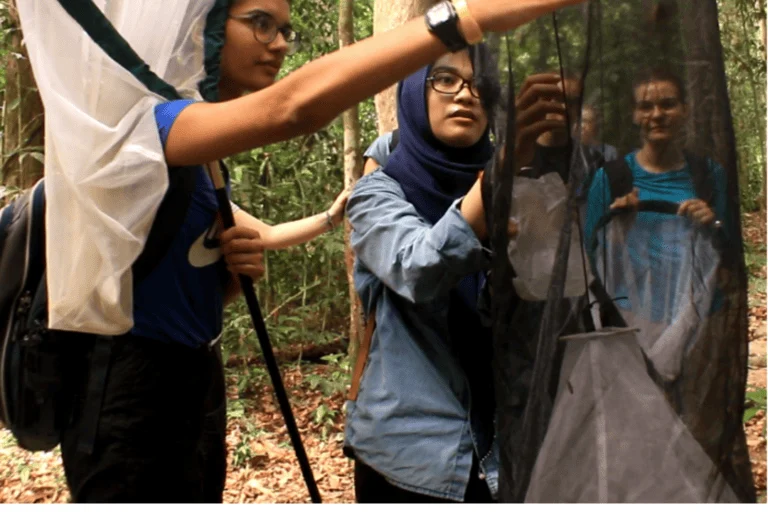
The preservation of the Sungai Lesan Protected Forest in Berau, East Kalimantan, has emerged as a cornerstone model for integrating community-led stewardship with scientific research, demonstrating that environmental sustainability is inseparable from the socio-economic welfare of local indigenous populations. Spanning approximately 10,000 hectares, this vital ecosystem serves as a critical buffer zone, regulating hydrological cycles, preventing soil erosion, and maintaining the ecological integrity of the Borneo landscape. However, as the region faces increasing pressure from encroaching palm oil plantations and potential land-use changes, the collaborative efforts between researchers from Operation Wallacea and the Dayak community in Lesan village offer a blueprint for reconciling development with rigorous conservation.
Ecological Significance and Biodiversity Wealth
The Sungai Lesan Protected Forest is not merely a geographic designation; it is a biodiversity hotspot of global significance. As a designated habitat for the Bornean orangutan (Pongo pygmaeus)—including individuals successfully released back into the wild after extensive rehabilitation—the forest provides a sanctuary for some of the most vulnerable megafauna on the planet.
Recent empirical data collected during an intensive three-month scientific expedition underscores the forest’s immense biological value. The census recorded a staggering array of species, including 55 species of herpetofauna, 38 species of terrestrial mammals, 112 species of butterflies, 187 species of birds, and 15 species of bats. These figures highlight that the forest acts as a vital biological corridor. The identification of 112 butterfly species, in particular, led to the creation of a comprehensive field guide, which now serves as an educational tool for both researchers and eco-tourists, effectively bridging the gap between scientific inventory and public awareness.
The Role of Indigenous Knowledge in Scientific Inquiry
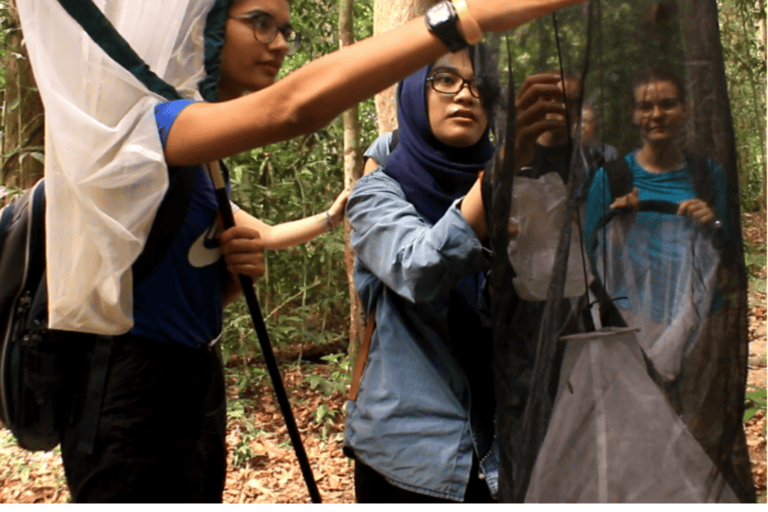
Historically, conservation efforts in Indonesia have often sidelined local communities, treating them as external to the ecosystem rather than as its primary custodians. The approach at Sungai Lesan represents a radical shift. In this model, the Dayak community is not a passive participant but an active collaborator. From the initial stages of expedition planning to the logistical execution of field research, the residents of Lesan village provide the essential expertise required to navigate the complex terrain.
Local guides are instrumental in identifying hidden animal trails, nesting sites, and seasonal changes in vegetation that would otherwise remain invisible to visiting scientists. Their intimate knowledge of the forest floor and canopy layers has been pivotal in conducting surveys on carbon stocks, mammal migration, and rare flora. By providing homestays, managing campsites, and serving as primary field assistants, the community has turned conservation into a tangible economic asset, creating a direct financial incentive to protect the forest from illegal logging or conversion.
Chronology of Conservation and Emerging Pressures
The history of the Sungai Lesan Protected Forest is marked by a transition from traditional land management to formal state protection, followed by modern scientific engagement. While the area has long been under the customary stewardship of the Dayak people, the last decade has seen a rise in external threats.
- Pre-2010s: The area remained primarily under traditional management with minimal external interference.
- 2015-2018: The formalization of the protected forest status by the Indonesian government was initiated to curb encroaching deforestation.
- 2020-2022: Increased pressure from surrounding palm oil concessions led to a period of heightened concern regarding the forest’s isolation from larger, contiguous forest blocks.
- 2023: Operation Wallacea and local partners launched the integrated research and ecotourism initiative, aiming to formalize the role of indigenous knowledge in biodiversity monitoring.
Despite these efforts, the forest remains at a precarious juncture. The expansion of the palm oil industry in Berau has created a "fragmentation effect," where the forest is increasingly surrounded by industrial monoculture. The risk of ecological isolation—where the forest becomes a "green island" disconnected from larger wildlife corridors—remains the primary concern for conservationists. If the corridors connecting Sungai Lesan to other forest blocks are severed, the long-term viability of orangutan populations and other wide-ranging mammals will be significantly compromised.
Official Perspectives and Expert Analysis
In a recent discussion regarding the future of the forest, Nanda Indah Dian Lestari, a researcher with Operation Wallacea, emphasized that the synergy between science and community is the only viable path forward. "We cannot view conservation as a vacuum where scientists dictate terms to locals," Lestari noted. "The true strength of the Sungai Lesan project lies in the democratization of data. When a local villager understands that the forest holds the key to both their heritage and their future income through ecotourism, the protection of that forest becomes a local priority rather than an external imposition."
This sentiment is echoed by environmental policy analysts who argue that "community-based conservation" (CBC) is the most effective deterrent against land-use change in regions where state enforcement is limited by geography. By elevating the community to the status of "primary actors," the project reduces the cost of monitoring and increases the speed of reporting illegal activities.
Economic Implications and Sustainable Development
The economic model being piloted in Lesan is designed to decouple development from deforestation. By transitioning from subsistence-based extraction or low-value land clearing to high-value service provision—such as expert-led ecotourism and scientific logistical support—the community creates a new income stream that relies on the forest remaining intact.
The publication of the butterfly field guide is a case study in how simple, accessible scientific data can translate into local economic empowerment. Local guides, now armed with the ability to identify and interpret forest life, can offer a premium experience to international birdwatchers, photographers, and university researchers. This increases the "value per hectare" of the forest, making it more profitable to protect as a living ecosystem than to clear for oil palm seedlings.
Broader Impact: The "Lesan Model" as a National Blueprint
The implications of the Sungai Lesan experience extend far beyond the borders of East Kalimantan. Indonesia, home to one of the world’s largest and most threatened rainforest ecosystems, is currently grappling with the challenge of meeting its climate targets while sustaining its agricultural output. The "Lesan Model"—which prioritizes the legal recognition of customary land rights alongside the integration of indigenous knowledge into formal biodiversity monitoring—offers a potential template for other provinces.
However, the model is not without its challenges. The sustainability of this approach depends heavily on continuous investment in human capital and the protection of the buffer zones. If the surrounding palm oil plantations continue to encroach, the ecological benefits of the internal research will be mitigated by the loss of external habitat. Therefore, policy advocacy must remain a parallel track to field research.
Conclusion: The Intersection of Science and Sovereignty
The conservation of Sungai Lesan is a testament to the fact that scientific rigor and indigenous sovereignty are not mutually exclusive. As the research continues, the primary objective remains the long-term protection of the area’s carbon stocks and biodiversity. The findings of the 2023 expedition—recording 187 species of birds and 38 species of mammals—are a stark reminder of the forest’s irreplaceable status.
Ultimately, the future of the Sungai Lesan Protected Forest will be determined by the strength of the alliances formed between the Dayak community, government agencies, and global research institutions. By institutionalizing the role of local knowledge, the project has ensured that the "guardians of the forest" are not just protecting a resource, but are actively shaping the narrative of Indonesian conservation for the 21st century. As the pressure on Kalimantan’s forests intensifies, the success of this collaboration serves as both a beacon of hope and a warning: the survival of the world’s most critical ecosystems depends entirely on the empowerment of the people who call them home.









