Nila Kartika Wati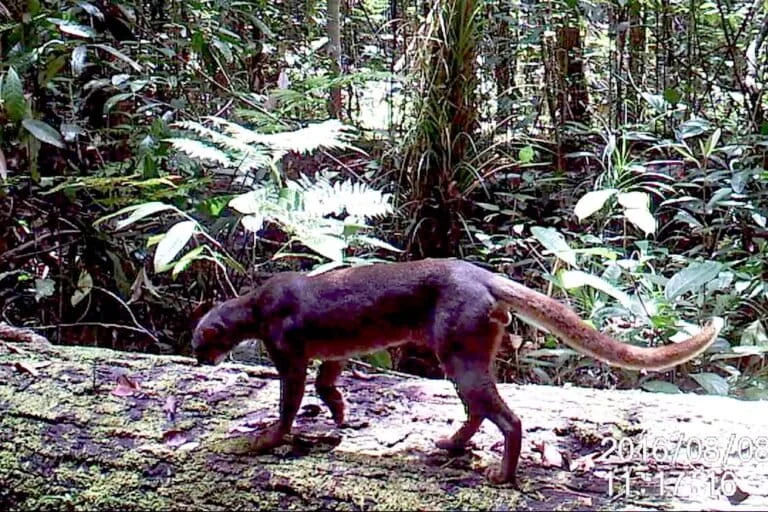
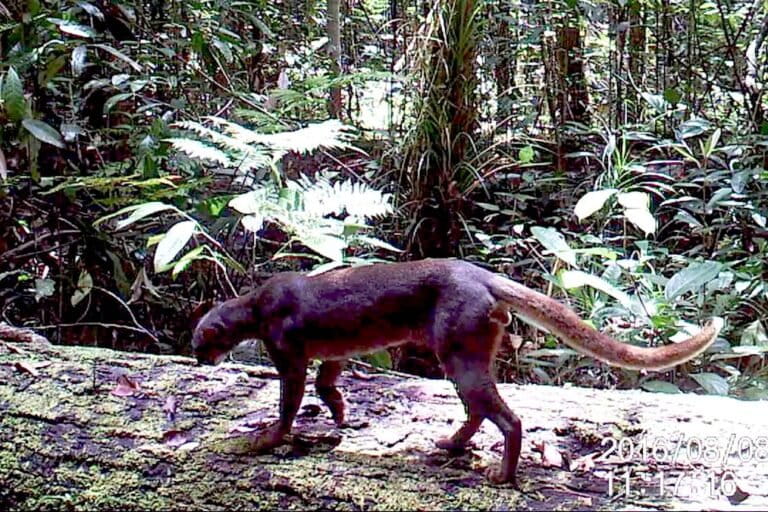
The Bornean bay cat, scientifically known as Catopuma badia, stands as the only feline species endemic exclusively to the island of Borneo. Characterized by its striking chestnut-red fur and an exceptionally long tail, this elusive predator has become a symbol of the island’s vanishing wilderness. Currently listed as Endangered on the International Union for Conservation of Nature (IUCN) Red List, the bay cat is teetering on the brink of extinction. With a wild population estimated to be fewer than 2,500 mature individuals, the species faces a precarious future as its natural habitat continues to shrink at an alarming rate due to human activities. Despite being one of the world’s rarest felids, much of its life remains shrouded in mystery, leaving conservationists in a race against time to understand the animal before it disappears forever.
A Century of Silence: The Chronology of Discovery
The history of the Bornean bay cat is a narrative of long absences and rare, fleeting encounters. The species was first brought to the attention of the Western scientific community by the renowned naturalist Alfred Russel Wallace in 1856. Wallace, who famously co-developed the theory of evolution by natural selection, collected the first specimen in Sarawak. For the next several decades, only a handful of skins and skulls were acquired by museums, providing the only physical evidence of the cat’s existence.
Following these initial collections, the bay cat seemingly vanished. For over 60 years, no confirmed sightings or specimens were recorded, leading some to fear that the species had already succumbed to extinction. This silence was finally broken in November 1992. In a dramatic turn of events, a female bay cat was captured by local residents in a forested area and brought to the Sarawak Museum. Although the animal was in a sickly state and died shortly thereafter, its discovery was a landmark moment for zoology. It allowed scientists to conduct the first modern morphological and genetic analyses, confirming that the bay cat was indeed a distinct species.
Since 1992, sightings have remained exceptionally rare. It took until 1998 for the first photograph of a live bay cat to be captured in the wild. Even with the advent of digital camera traps in the 21st century, the cat remains one of the most difficult animals to document. In 2002, the first high-quality images were obtained, yet the total number of photographic records globally remains under one hundred, a testament to the animal’s incredibly secretive nature.
Evolutionary Origins and Biological Profile
The Bornean bay cat occupies a unique position in the feline evolutionary tree. Genetic studies conducted on the 1992 specimen and subsequent samples have revealed that its closest relative is the Asian golden cat (Catopuma temminckii). However, the two species diverged from a common ancestor approximately 3.1 million years ago. This evolutionary split likely occurred when rising sea levels isolated Borneo from mainland Southeast Asia, allowing the bay cat to evolve independently in the island’s dense tropical rainforests.
Physically, the bay cat is roughly the size of a large domestic cat but possesses a much longer tail and a more elongated body. While its most famous coat color is a deep, reddish-brown, a grey morph also exists, though it is less common. One of its most distinguishing features is the white stripe on the underside of its tail, which extends to the tip. Despite these physical descriptions, the fundamental aspects of its biology remain unknown. Researchers have yet to determine its exact diet, its preferred ecological niche, or its reproductive cycles. Unlike the Sunda clouded leopard, which is the island’s apex feline predator, the bay cat appears to occupy a more specialized and sensitive role within the ecosystem.
The Ghost of the Forest: The Challenge of Field Research
The difficulty of studying the bay cat cannot be overstated. Dr. Susan Cheyne, a prominent conservationist with the Borneo Nature Foundation, documented the extreme challenges of tracking this species. During a 16-year research period in the Sebangau National Park, her team deployed an extensive network of camera traps. While they successfully recorded the other four species of Bornean wild cats—the Sunda clouded leopard, the marbled cat, the flat-headed cat, and the leopard cat—the bay cat never once appeared on their film.
"The bay cat is truly the ‘ghost’ of the Bornean jungle," remarked a conservation biologist familiar with the region. "You can spend a lifetime in the forest and never see one. Their low population density and avoidance of human-disturbed areas make them one of the hardest mammals to study on the planet."
Recent data from the Kalabakan Forest Reserve in Sabah has provided some of the only quantitative insights into the species. This research indicated a population density of approximately three individuals per 100 square kilometers. Furthermore, the study revealed that the bay cat is surprisingly mobile, recorded moving at speeds of up to 1.2 kilometers per hour—the fastest movement rate recorded for any cat species in Borneo. This suggests that the bay cat may require vast, uninterrupted territories to find sufficient prey and mates, making it particularly vulnerable to habitat fragmentation.
The Deforestation Crisis and Habitat Requirements
The primary threat to the Bornean bay cat is the massive loss of its primary habitat. Since the 1970s, Borneo has lost roughly 50% of its forest cover. This destruction is driven by large-scale logging, the expansion of industrial palm oil plantations, and the development of infrastructure. Unlike the more adaptable leopard cat, which can sometimes be found in agricultural landscapes, the bay cat is a forest specialist.
Research indicates that the bay cat is noticeably absent from peat swamp forests and oil palm estates. They appear to depend entirely on intact, primary lowland forests or highland forests that remain connected to larger ecosystems. As the "Heart of Borneo"—the mountainous interior of the island—becomes increasingly isolated from the lowland coastal forests, the bay cat’s range is being squeezed into smaller, disconnected pockets. This fragmentation limits genetic exchange, making the remaining populations more susceptible to disease and local extinction.
Anthropogenic Pressures and Human-Wildlife Conflict
Beyond habitat loss, the bay cat faces direct threats from human activity. While not typically a primary target for professional poachers due to its rarity, the cat often falls victim to indiscriminate snares set for deer or wild boar. In some rural areas, the bay cat is hunted for bushmeat or killed by villagers who perceive it as a threat to small livestock, such as poultry.
Furthermore, the illegal wildlife trade remains a lurking danger. Although there is little evidence of a dedicated market for bay cats, their extreme rarity makes them a high-value item for unscrupulous collectors of exotic animals. Given the critically low population numbers, the loss of even a few individuals to snares or hunting can have a devastating impact on the species’ overall viability.
Analysis of Implications: A Call for Targeted Conservation
The current state of bay cat conservation is hindered by a lack of dedicated funding and specific organizational focus. Because the cat is so difficult to find, it is equally difficult to study, and without data, it is challenging to secure the large-scale grants necessary for its protection. Most conservation efforts in Borneo are directed toward "umbrella species" like the orangutan or the pygmy elephant, with the hope that protecting their habitat will inadvertently save the bay cat.
However, experts argue that the bay cat’s specific needs may not be fully met by general conservation strategies. "We need a paradigm shift in how we approach small cat conservation in Southeast Asia," says a representative from a global feline conservation group. "The bay cat requires a tailored approach that includes community-led monitoring and a better understanding of its movement corridors."
One emerging strategy involves tapping into the traditional ecological knowledge of Borneo’s indigenous communities. For generations, the Dayak people and other local groups have lived alongside the island’s wildlife. Their oral histories, myths, and sightings could provide invaluable data on where the bay cat still roams. By involving local residents as "citizen scientists" and protectors, conservationists hope to create a more sustainable model for wildlife preservation.
Conclusion: The Race Against Time
The Bornean bay cat represents a significant piece of the planet’s evolutionary heritage. Its survival is intrinsically linked to the survival of the Bornean rainforest itself. If the current trends of deforestation and habitat fragmentation continue, the "red cat of the woods" may slip away into the shadows of history before we even understand how it lived.
Saving the species will require a monumental collaborative effort between the governments of Indonesia, Malaysia, and Brunei, alongside international conservation bodies and local communities. The expansion of protected areas, the enforcement of anti-poaching laws, and the establishment of wildlife corridors are essential steps. More importantly, there must be a global recognition of the bay cat’s plight. The mystery of the bay cat is a reminder of how much of the natural world we have yet to discover—and how quickly we are losing it. Without immediate and decisive intervention, the future of Borneo’s only endemic cat remains tragically uncertain, a flickering flame in a forest that is slowly going dark.