Lina Irawan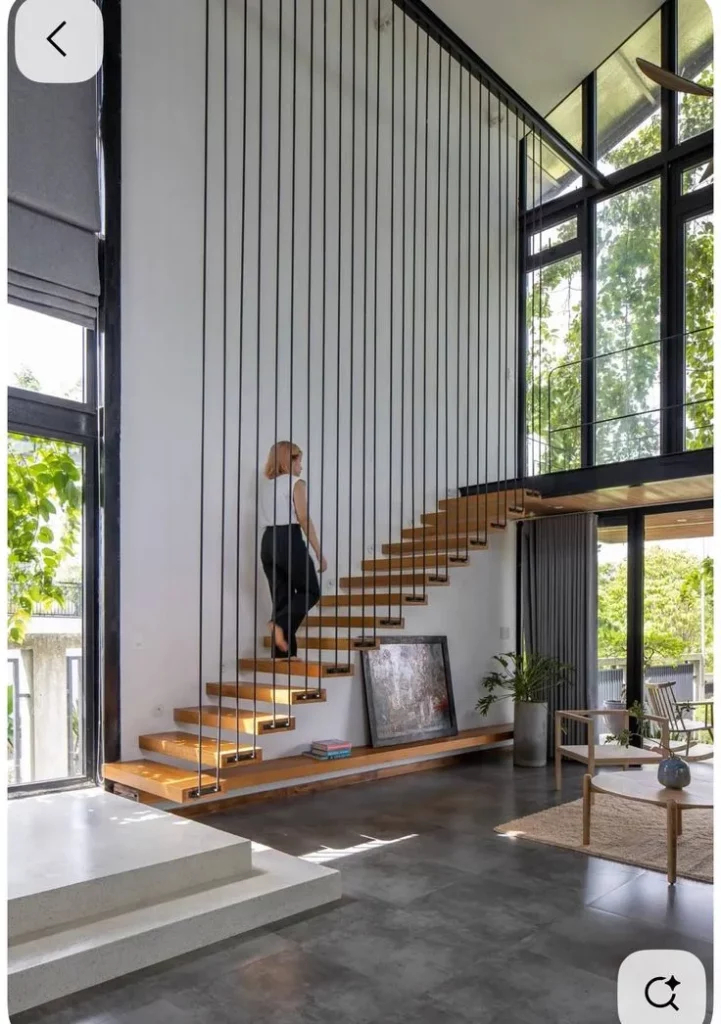
In contemporary architectural discourse, the selection of staircase materials frequently presents a dichotomy between structural integrity and aesthetic appeal. The innovative pairing of wooden treads with a steel frame has emerged as a sophisticated solution, seamlessly integrating both requirements for modern residences. This combination offers robust load-bearing capabilities inherent in steel construction, while the natural warmth and texture of wood imbue interior spaces with an inviting ambiance. The result is a design that provides unparalleled structural security alongside compelling visual presence, elevating the staircase from a mere functional element to a central design feature.
Many prospective homeowners initially harbor reservations about incorporating exposed steel, fearing their living spaces might adopt a cold, industrial, or even factory-like aesthetic. However, this concern is largely mitigated by the strategic integration of wood. The organic texture and inherent warmth of timber treads effectively neutralize any potential sterility from the steel, fostering a balanced and inviting atmosphere. Furthermore, the typical open design of steel frames facilitates improved air circulation and natural light penetration, a significant advantage for homes situated on compact urban plots or those aiming for an airy, expansive feel. This design philosophy ensures that the area beneath the staircase remains open and functional, dispelling any sense of confinement. Opting for this material synergy extends beyond mere aesthetic preference; it represents a pragmatic approach to enhancing a property’s inherent value and livability.
Architectural Endorsement: The Rationale Behind the Recommendation
The professional architectural community frequently champions the wood and steel combination due to the complementary nature of these seemingly contrasting materials. Steel, renowned for its exceptional tensile strength and precision engineering capabilities, provides unwavering support for heavy loads and ensures long-term structural stability. Its ability to be fabricated into slender yet robust profiles allows for minimalist designs that maximize spatial perception. Conversely, wood contributes a natural softness, tactile warmth, and crucial acoustic dampening properties, effectively absorbing the impact sounds of footsteps and preventing the echo often associated with hard surfaces.
When these two materials converge, the staircase transforms into an immediate focal point, capturing attention upon entry into a room. Its function transcends simple vertical circulation, becoming an integral decorative element that anchors the interior design scheme. From a technical standpoint, steel’s inherent strength allows for longer spans without requiring numerous intermediate supports, a characteristic that is particularly advantageous in open-plan layouts. This minimizes structural intrusion, freeing up the space beneath the staircase for diverse applications, such as integrated storage, a compact home office, or a cozy reading nook, thereby optimizing every square inch of the home. This blend of form and function underscores why leading architects consistently recommend this design choice for projects ranging from residential homes to commercial spaces.
Navigating the Trade-Offs: Advantages Versus Practical Challenges

Like any design choice, the integration of wood and steel staircases involves a careful consideration of benefits and potential challenges. A thorough understanding of these trade-offs from the outset is crucial for effective project planning and to mitigate unforeseen expenses or complications during installation and long-term maintenance.
1. Aesthetic Balance: Warmth vs. Industrial Edge
Wood inherently introduces an earthy, organic warmth into any interior, its distinct grain patterns and natural coloration softening the surrounding hard materials. Conversely, exposed steel, particularly in its raw form, can project a cool, stark, or distinctly industrial aesthetic. The primary design challenge lies in achieving an optimal material composition. If the steel framework is overly robust or visually dominant, the subtle charm of the wood treads may be overshadowed. Designers often advocate for using thinner, yet structurally dense, steel profiles to ensure that the natural texture and character of the wood remain a prominent visual element, fostering a harmonious visual dialogue between the two materials.
2. Structural Efficiency vs. Material Weight and Installation Complexity
Steel’s remarkable strength-to-weight ratio allows for the creation of slender, elegant frames capable of supporting substantial tonnage, contributing to an illusion of lightness and expanding the perceived volume of a room. However, the material itself is considerably heavy. Its installation necessitates specialized welding techniques and precise bolting directly into the primary structural walls of the building. Attaching such a frame to conventional lightweight partition walls (e.g., gypsum or lightweight concrete blocks) without specific structural reinforcement is not feasible. Contractors typically need to embed additional steel reinforcement within these walls during the initial construction phase to safely anchor the staircase. This requirement adds a layer of complexity and specialized labor to the construction process.
3. Long-Term Durability vs. Ongoing Maintenance Requirements
A well-fabricated steel frame, properly treated with anti-corrosion coatings, can endure for decades with minimal degradation. Similarly, high-quality solid wood, when adequately cared for, boasts an impressive lifespan. However, this hybrid material system demands consistent, albeit manageable, routine maintenance. Wood is susceptible to moisture fluctuations, abrasion from footwear, and pest infestations (like termites) if its protective finishes degrade. The steel component, especially in humid or coastal environments, requires periodic inspection for signs of rust. Prompt intervention – such as light sanding and repainting – is critical to prevent corrosion from spreading and compromising the structural integrity and aesthetic appeal of the staircase.
4. Design Integration vs. Visual Dominance
The combination of wood and steel is remarkably versatile, effortlessly complementing a wide array of interior design styles, including industrial, rustic, modern, minimalist, and Japandi. The challenge, however, lies in preventing the staircase from becoming overly dominant within the space. A design that is too visually striking can inadvertently overshadow other carefully selected furnishings and decorative elements. A common strategy to maintain visual equilibrium is to match the color of the steel frame with the ambient wall color, or to opt for neutral tones. Matte black or crisp white finishes are frequently chosen for steel frames, as they offer a sophisticated backdrop that allows the wood’s natural beauty to shine without overwhelming the room.
Tailoring for Modern Living: Minimalist Homes and Urban Apartments
The principles of minimalist design, which prioritize simplicity and the elimination of superfluous elements, find a perfect application in wood and steel staircases. This material combination inherently allows for sleek, uncluttered designs that eschew ornate carvings or bulky wooden railings. A single central steel stringer (mono-stringer) is often sufficient to support a series of wooden treads, creating a visually striking "floating" effect. This single-support design allows light from windows to permeate freely, unhindered by solid concrete walls or closed risers. Furthermore, omitting the vertical risers between treads creates an open-tread staircase, enhancing the sense of spaciousness in the stairwell and simplifying cleaning.

For residents of loft-style apartments or studio units, where efficient space utilization is paramount, the traditional cast concrete staircase is often impractical due to its substantial footprint and prohibitive weight, which building management typically restricts. Wood treads with a lightweight steel frame offer an intelligent alternative. The modular nature of steel allows for prefabrication of components in a workshop, which are then assembled on-site using bolts. This "dry" installation process significantly reduces construction mess and minimizes disruption within the apartment unit. The open space beneath such a staircase can be ingeniously repurposed, transforming into a compact workstation, bespoke wardrobe, or integrated shelving system, maximizing functionality in compact urban dwellings.
Exploring Diverse Staircase Configurations
The inherent malleability of steel, combined with its ease of welding and forming, facilitates a vast array of staircase designs beyond the conventional straight flight. Spiral staircases, for instance, have witnessed a resurgence in popularity, particularly for their space-saving footprint and dramatic visual appeal. Here, a central vertical steel post acts as the primary axis, from which the wooden treads radiate outwards like a fan.
Other popular configurations include L-shaped or U-shaped staircases, which often incorporate a landing (bordes) – a resting area that can be strategically placed near a window to enhance natural light or provide a moment for contemplation. For enthusiasts of a more pronounced industrial aesthetic, a double zigzag stringer design can be employed. In this model, the steel frame is custom-fabricated to follow the exact contour of the treads and risers, creating a bold, continuous linear pattern from the ground floor to the upper level. Each of these designs leverages the unique properties of steel and wood to create both functional and sculptural elements within the home.
Guiding Your Choice: Selecting the Ideal Wood for Treads
The selection of wood for staircase treads is a critical decision, as this component bears dynamic loads from daily foot traffic. The use of solid wood is imperative; engineered wood products such as MDF or particleboard are unsuitable due to their susceptibility to warping, delamination, and damage from moisture (e.g., from cleaning spills). The following are highly recommended choices for durable and aesthetically pleasing treads:
- Teak Wood (Kayu Jati): Renowned for its exceptional durability, teak possesses a high natural oil content that renders it resistant to termites, minimizes shrinkage, and enhances its resilience against humidity. Its distinctive grain patterns are often rich and luxurious, making it a premium choice.
- Merbau Wood (Kayu Merbau): For those who prefer darker wood tones, merbau is an excellent consideration. It boasts a hardness level comparable to teak but is often more economically accessible. Its deep reddish-brown hue pairs exceptionally well with matte black steel frames, creating a sophisticated contrast.
- Bangkirai Wood (Kayu Bengkirai): Often specified for exterior applications like decking due to its remarkable toughness and resistance to the elements, bangkirai is equally robust for interior stair treads. Its inherent density ensures it will withstand years of heavy foot traffic without cracking or deforming.
- White Oak (Kayu Ek Putih): A favorite in Scandinavian and Japandi interior styles, white oak offers a clean, straight grain pattern and a light, appealing color. Its porous nature readily accepts various stains and finishes, allowing for customization to match specific interior palettes.
Engineering for Safety: Technical Specifications for Steel Frames

Beyond aesthetics, the structural integrity of a steel-framed staircase hinges on precise technical specifications and adherence to construction standards. It is crucial to engage fabrication workshops that utilize construction-grade materials and employ certified welding techniques. For individual treads, hollow steel profiles (pipa kotak) are commonly used. For the main supporting stringers, a minimum steel thickness of 2.5 mm to 3 mm is recommended to prevent deflection or sagging under load.
If opting for a folded plate steel stringer design, a plate thickness of 8 mm to 10 mm is advisable. Thinner plates can result in noticeable vibration and bounce when the staircase is in use, compromising both comfort and perceived safety. For the individual tread supports, a 4 mm thick plate is generally sufficient. Furthermore, meticulous attention must be paid to the welding points; all connections should be full perimeter welds, not merely spot welds, to ensure maximum strength and durability.
The Art of Finishing: Ensuring Longevity and Visual Appeal
The finishing process is paramount in determining the lifespan and aesthetic quality of both the steel and wood components. Skimping on this stage can undermine the investment in high-quality materials. For steel, powder coating is widely regarded as the superior option. This process involves electrostatically applying a dry powder, which is then cured under heat in an oven, resulting in a highly durable, chip-resistant, and anti-corrosive finish with a perfectly even surface, free of brush marks.
For larger staircase structures that cannot fit into an industrial oven, a high-quality epoxy anti-corrosion primer must be applied first. This should then be followed by several coats of polyurethane (PU) paint, which offers excellent resistance to impact and abrasion. For the wooden treads, it is critical to avoid high-gloss varnishes, as these can create a dangerously slippery surface, especially when worn with socks. A matte or doff finish is highly recommended; it provides superior slip resistance and allows the natural texture of the wood to be felt and appreciated, enhancing both safety and sensory experience.
Seamless Installation: Expert Tips for a Flawless Outcome
Integrating wood and metal components requires meticulous attention to detail and patience, primarily because these materials expand and contract at different rates in response to temperature and humidity fluctuations.

1. Allow for Expansion Gaps: When securing wood treads to the steel frame, avoid overtightening screws. Drill bolt holes in the steel plates slightly larger than the screw body. This subtle allowance provides the wood with necessary room to expand during warm weather without causing cracking or splitting of its fibers.
2. Incorporate Dampening Materials: Inserting thin rubber pads or a bead of sealant between the steel support plates and the wooden boards is a crucial step. These dampening layers effectively absorb impact sounds, significantly reducing metallic clangs and eliminating potential creaking noises when the stairs are used, especially at night.
3. Install Wood in Final Stages: Erect the primary steel framework early in the construction project. However, store the finished wooden treads in a protected, climate-controlled environment. Install these treads as one of the final steps, just before the home is completed, to shield them from accidental spills of cement, paint, or scratches from construction workers’ footwear. This ensures the pristine condition of the wood upon handover.
Adhering to Safety and Ergonomics Standards
While unique design is a hallmark of wood and steel staircases, it must never compromise user safety and comfort. Adherence to established ergonomic standards is essential. The depth of the tread (antrade) for adult users should ideally be between 25 cm and 30 cm, ensuring that the entire foot, from heel to toe, can comfortably land without overhanging.
The height of each riser (optrade) is optimally between 15 cm and a maximum of 19 cm. Exceeding this height can make the staircase feel excessively steep and strenuous, causing rapid fatigue. Furthermore, the clear width of the stairwell should be at least 80 cm to 90 cm, allowing two individuals to comfortably pass each other without having to turn sideways. These dimensions are not merely guidelines but critical safety parameters.
Sustaining the Splendor: A Routine Maintenance Guide

Maintaining this hybrid material staircase is straightforward, provided specific care instructions are followed for each material. For the wooden treads, avoid using overly wet mops. Excessive moisture can penetrate the wood’s pores, leading to rot and premature deterioration. Instead, use a barely damp microfiber cloth or specialized wood floor cleaning sprays to remove dust and dirt.
Annually, it is advisable to inspect and tighten the screws beneath the wooden treads. Constant foot traffic can gradually loosen these fasteners, leading to creaking. Prompt tightening will restore stability and silence. For the steel frame, periodically check weld joints and corners for any signs of rust. Should small rust spots appear, gently buff them with fine-grit sandpaper and touch up with a suitable paint to prevent further spread and maintain the frame’s integrity.
Budgeting for Brilliance: Cost Estimation and Allocation
The total cost of a custom wood and steel staircase varies significantly based on design complexity, material choices, and local labor rates. Generally, the fabrication and welding of the steel components account for approximately 40% to 50% of the overall budget. The remaining allocation covers the cost of acquiring solid wood boards, precision cutting services, and the crucial finishing processes for both materials.
Opting for premium hardwoods like solid teak will naturally incur a higher expense, an investment that is typically justified by its luxurious appearance and exceptional longevity. For projects with more constrained renovation budgets, alternative hardwoods such as sungkai or mindi can offer a beautiful and durable solution at a more accessible price point. Further cost savings can be achieved by simplifying the steel frame design, opting for straightforward linear structures over intricate curves or elaborate zigzag patterns, thereby reducing specialized labor costs at the fabrication workshop.
Frequently Asked Questions (FAQ)
1. Is a steel frame staircase prone to noise when walked upon?
No, provided the installation is executed correctly. The strategic placement of rubber dampening pads between the wooden treads and the steel plates is highly effective in neutralizing metallic sounds and ensuring a quiet ascent and descent.

2. What is the ideal thickness for wooden stair treads?
Solid wood treads should be at least 3 cm to 4 cm thick to prevent bowing or deflection, especially crucial for open-tread designs without central supports.
3. Are open-tread staircases safe for toddlers?
Open-tread staircases feature gaps between the treads. To ensure the safety of toddlers and prevent them from slipping through, the vertical gap between treads should be restricted to a maximum of 10 cm.
4. Can this type of staircase be disassembled and reinstalled if I move houses?
Absolutely. This modularity is a significant advantage of steel-framed staircases. Constructed with high-tensile bolts, the frame can be systematically disassembled into manageable sections, transported, and reassembled in a new location, offering remarkable flexibility for homeowners.
Conclusion
The integration of wood and steel in staircase design represents a compelling and intelligent architectural choice. This fusion masterfully blends the inherent strength and industrial elegance of steel with the natural warmth and timeless appeal of wood. The result is a staircase that is not merely a functional means of vertical circulation but a dynamic architectural feature, providing a secure, aesthetically pleasing, and highly durable pathway within the home. Critical to the success of such a project is a meticulous assessment of the building’s structural load-bearing capacity and the engagement of reputable, skilled fabrication workshops to ensure precise welding and superior quality that will endure for decades. This design approach ultimately enhances both the functionality and intrinsic value of modern living spaces.