Tata Titiana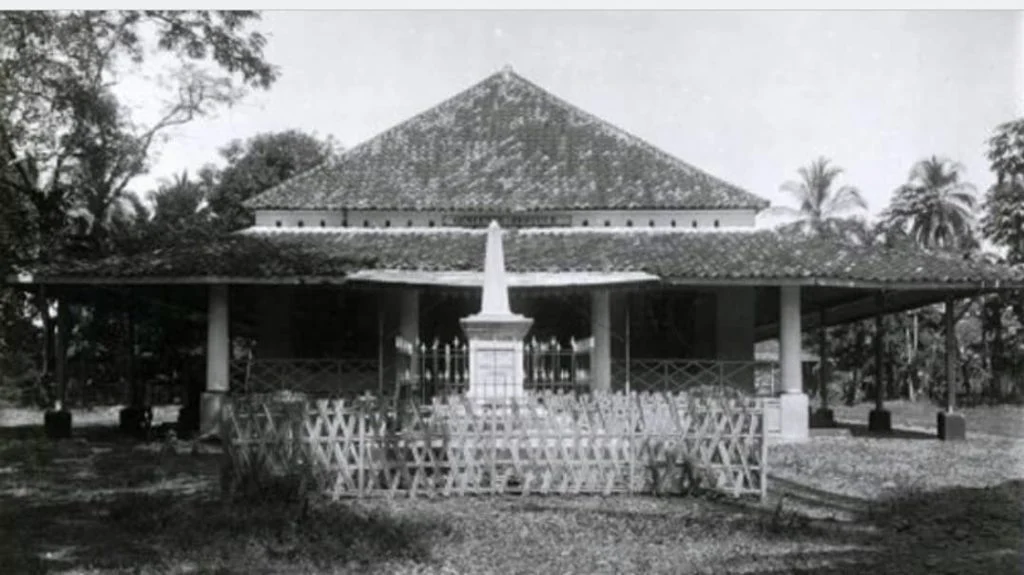
Depok, a municipality in West Java, Indonesia, boasts a rich and often overlooked history that predates its formal establishment as an administrative region on April 27, 1999. Before it was a district within Bogor Regency, Depok existed as a distinct entity, a private domain that eventually evolved into an independent state with its own elected president. This fascinating chapter, largely unknown to many, sheds light on a unique period of Indonesian history, demonstrating how a colonial-era land parcel transformed into a self-governing community long before Indonesia’s independence.
The Genesis of a Private Domain: Cornelis Chastelein’s Vision
The story of Depok begins in the late 17th century with Cornelis Chastelein, a wealthy Dutch merchant. Chastelein acquired a vast tract of land in Depok, approximately 12.44 square kilometers, for a sum of 2.4 million Dutch Guilders. This land held a unique status: it was a "particuliere land" or private land, exempt from the direct administrative control of the Dutch East Indies government. This legal distinction was crucial, allowing Chastelein to exercise almost sovereign power over his domain. By the 18th century, Depok operated as an administrative region with its own civilian government, known as a "gemeente bestuur." Cornelis Chastelein, as the proprietor and visionary, became its first ruler and founder.
At the time of Chastelein’s acquisition, the Depok area was largely untamed wilderness. With the labor of his enslaved people, who hailed from diverse ethnic backgrounds across the archipelago, Chastelein embarked on a monumental task of clearing the dense forests to establish agricultural lands. The scope of his private domain was remarkably extensive, encompassing what is now the modern Depok city, as well as significant portions of South Jakarta, including Pasar Minggu, and extending as far as Gambir in Central Jakarta. The initial inhabitants of this burgeoning territory were, in fact, Chastelein’s enslaved workforce, who would later become the foundational community of this unique land.
From Enslaved Labor to Emancipated Citizens: The Founding of a Self-Governing Community
Cornelis Chastelein was known to be a devout Catholic with a compassionate disposition towards his enslaved population. In his will, dated June 28, 1714, Chastelein made provisions for his enslaved individuals. He bequeathed them land, housing, livestock, and agricultural tools, and crucially, granted them their freedom upon his death. To prevent potential disputes and ensure a smooth transition, he appointed Jarong van Bali to lead and manage the newly freed community.

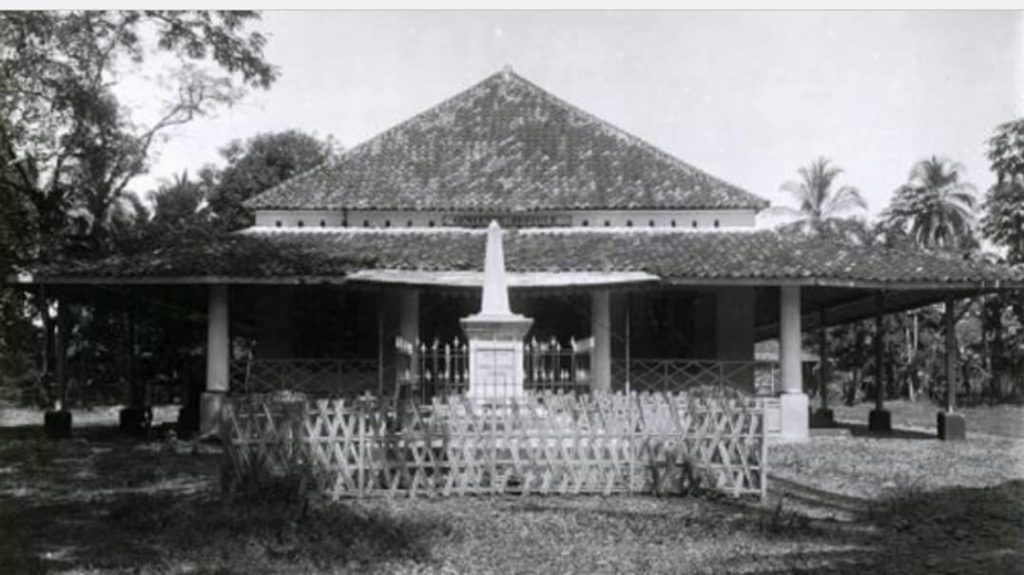
The freed individuals, now proprietors of their own land and livelihoods, faced a new challenge: maintaining order and governance after Jarong van Bali’s passing. Fearing a power vacuum and the potential for conflict, they collectively decided to implement a democratic system for selecting their leader. This innovative approach led to the establishment of a system where a president, chosen democratically by the people, would head their government. This system, formally established with a defined governance structure drafted by a Batavia lawyer, began to function in 1913. The administrative center of this nascent republic was located at the Kilometer 0 point, marked by a monument that still stands today. Nearby, the former government building, which housed the presidential offices, now serves as the Harapan Hospital. The presidential term was set at three years, a relatively short but significant period for leadership rotation.
The Presidential Lineage of Depok
The first president of this unique state, Gerrit Jonathans, assumed office in 1913. Following him, three other presidents led Depok through its period of self-governance: Martinus Laurens (1921), Leonardus Leander (1930), and Johannes Matjis Jonathans (1952), who was the last president. Despite the existence of these leaders and their terms, detailed historical records of their presidencies and the specific achievements or challenges during their tenures remain scarce, a common occurrence for many periods of local governance in colonial-era Indonesia.
The administrative structure of the "Het Gemeente Bestuur van Het Particuliere Land Depok" (The Municipal Government of the Private Land of Depok) was designed to be functional and inclusive for its time. While there was no vice president, the president was assisted by a secretary in carrying out governmental duties. This system, born out of the unique circumstances of a private land grant and the subsequent emancipation of its inhabitants, represented a remarkable early experiment in self-determination within the broader context of Dutch colonial rule.
Transition to Indonesian Municipality: A New Chapter
The unique status of Depok as a private land with its own governance eventually came to an end. In 1952, the last president, Matijs Jonathans, officially handed over the entirety of the private land to the Indonesian government through a deed of transfer. This marked the integration of Depok into the national administrative framework of Indonesia.
While Depok officially became a municipality only in 1999, its historical trajectory reveals a much longer and more complex journey. If one considers its establishment as a private domain and subsequent self-governance, Depok’s history spans over three centuries, signifying a community that experienced a form of independence and self-rule even before Indonesia itself achieved full sovereignty. This extended history challenges the perception of Depok as a purely modern administrative entity and highlights its deep roots in the colonial past, transformed by the vision of a landowner and the resilience of its people.
The Broader Context and Implications
The story of Depok offers valuable insights into the multifaceted nature of colonial Indonesia. It demonstrates how private land ownership could create unique administrative and social structures that operated parallel to, and sometimes outside of, direct government control. The emergence of an elected presidency within a formerly enslaved community is a testament to the agency and organizational capacity of the inhabitants, who, empowered by their emancipation, created a system of governance that prioritized democratic principles.
The voluntary handover of Depok to the Indonesian government in 1952 underscores a period of national consolidation and integration following independence. It signifies the end of a unique historical experiment and the absorption of this distinct community into the larger national narrative. The legacy of Depok’s self-governance, though often forgotten, serves as a reminder of the diverse historical experiences that have shaped modern Indonesia. It highlights that the path to national identity was not monolithic but comprised of numerous local narratives, each contributing to the complex tapestry of the nation.
The limited detailed records from the presidential eras of Depok are a common issue in historical research concerning less prominent administrative units or periods. However, the existence of a structured government and elected leadership, even for a limited duration, provides a significant point of historical interest. It allows for further research into the social, economic, and political dynamics of such private lands and their inhabitants during the colonial era. The transformation of Depok from a private colonial estate into a modern Indonesian municipality is a compelling narrative of change, resilience, and the enduring quest for self-determination, echoing through the centuries and contributing to the rich historical landscape of West Java and Indonesia as a whole.