
 Nila Kartika Wati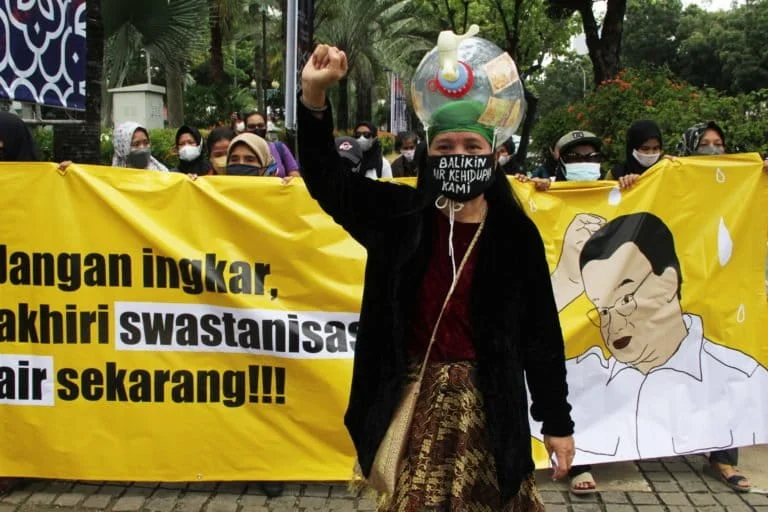
In the dense, sprawling neighborhoods of Jakarta, the fundamental human right to clean water remains an elusive luxury for thousands of residents. Despite the city’s status as the nation’s capital and economic engine, low-income households in areas such as Penjaringan and Pademangan are trapped in a cycle of water scarcity, poor quality, and exorbitant costs. This crisis is exacerbated by systemic regulatory hurdles, the legacy of long-term water privatization, and the failure of interim solutions like the "master meter" program to provide a sustainable path toward universal access.
The Anatomy of the Crisis: Living in the "Gray Zones"
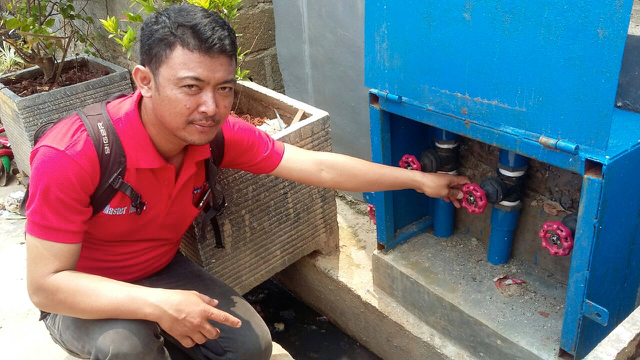
For residents like Titin Sumiyati, a resident of Pesanggrahan Timur in North Jakarta, the daily reality is a battle for basic hygiene. In her community, water from the municipal tap is often little more than a trickle, frequently arriving discolored and inconsistent. The master meter system—a communal arrangement where a single meter serves hundreds of families—was intended to bridge the gap for those living in "gray zones," or areas with disputed land status.
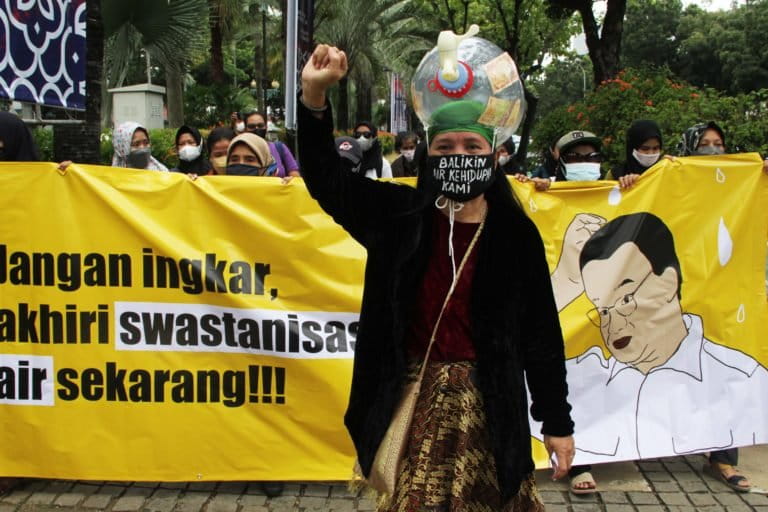
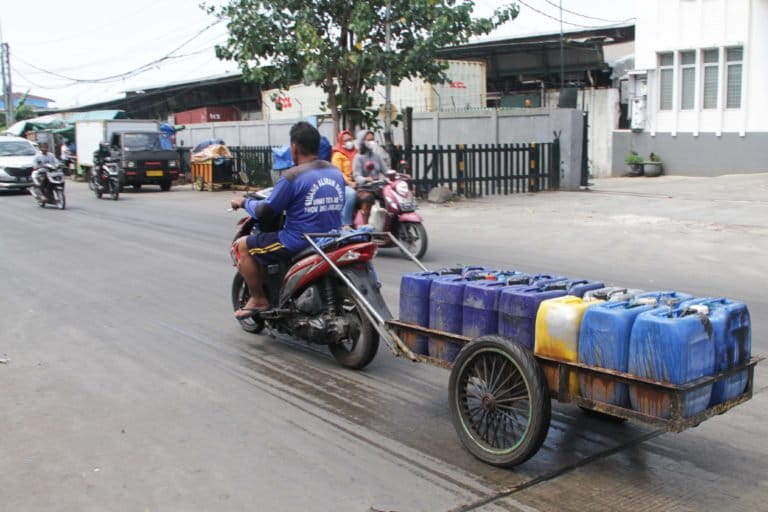
However, for the 1,500 families connected to this specific system, the solution has become a source of financial strain. Residents report that even when the water pressure is insufficient to fill a container, the meter continues to register usage, resulting in monthly bills that defy the economic reality of the neighborhood. During the extended dry seasons that have become increasingly common, water outages can last for weeks, forcing residents to rely on water peddlers. Purchasing water by the jerrycan costs a family roughly Rp48,000 per day—a staggering expenditure for low-income earners that often exceeds the cost of a standard municipal water connection.
A Chronology of Privatization and Policy Failure
The history of water management in Jakarta is marked by a contentious shift toward private sector involvement. In 1997, the Jakarta administration, through the municipal utility PAM Jaya, entered into long-term concession agreements with two private firms: PT PAM Lyonnaise Jaya (Palyja) and PT Aetra Air Jakarta. These contracts effectively divided the city into two operational zones, with the promise that private investment would accelerate the expansion of water infrastructure.
Twenty-five years later, the results remain deeply polarized. By 2017, the failure of these private entities to meet coverage targets led to a landmark legal challenge. The Indonesian Supreme Court eventually ruled in favor of citizens, ordering the termination of privatization and the restoration of water management to public control. Despite this ruling, the transition has been sluggish, and the structural reliance on private-sector logic—specifically the "full cost recovery" model—persists.
The recent transition of PAM Jaya’s legal status from a regional public corporation (Perumda) to a limited liability company (Perseroda) in late 2025 has ignited further debate. Critics, including the People’s Coalition for the Right to Water (KruHa), argue that this change may facilitate further private investment, potentially prioritizing profit margins over the public mandate to provide affordable water to the poor.
The Disproportionate Burden on Women
The crisis of water access is not gender-neutral. As highlighted by the Office of the United Nations High Commissioner for Human Rights (OHCHR), access to water is a prerequisite for a dignified life. In Jakarta’s informal settlements, the burden of managing water scarcity falls heavily upon women. Chatarina Pancer Istiyani, a commissioner at the National Commission on Violence Against Women (Komnas Perempuan), notes that when water is scarce, women are forced to divert significant time and meager household income to secure it.
This economic pressure is compounded by health risks. Inadequate water access directly impacts menstrual hygiene, prenatal care, and the health of infants. Furthermore, the financial stress caused by high water costs and the inability to maintain a clean household environment is a recognized stressor that can exacerbate domestic conflict and violence. The lack of clean water is, therefore, a multi-dimensional crisis that perpetuates cycles of poverty and vulnerability for women and children.
Institutional Responses and the Path to 2029
The Jakarta Provincial Government and PAM Jaya acknowledge the gaps in service but point to complex administrative hurdles as the primary obstacle. Maman Supratman of the Jakarta Department of Water Resources emphasizes that in areas with unclear land legality, the city faces significant difficulties in installing permanent underground piping and infrastructure. These "gray zones" often lack the necessary building permits (IMB) or PBB tax records required for official service installation.
In response, PAM Jaya has begun to shift its strategy. Gatra Vaganza, Senior Manager at PAM Jaya, stated that the utility is moving toward a service model that prioritizes building dimensions over land status. The objective is to achieve 100% coverage by 2029, a target that requires aggressive infrastructure investment. According to official data, current service coverage stands at approximately 82.65%. While this represents progress, the gap remains concentrated in the most impoverished neighborhoods where the cost of infrastructure installation is highest.
Analysis: The Conflict Between Public Service and Profit
The fundamental tension in Jakarta’s water sector lies in the application of market-driven pricing to a public necessity. Muhammad Reza Sahib of KruHa argues that the "master meter" system, while useful in the short term, serves as an institutional mechanism for utilities to offload risk. By delivering water to a single point, the utility avoids the technical and financial risks associated with laying pipes in narrow, congested alleys. Consequently, the residents themselves must manage the collection of payments and the maintenance of the internal distribution network, often leading to social friction and debt.

The pricing structure also reflects this inequity. When consumption exceeds 20 cubic meters, the rate for master meter users can soar to Rp18,000 per cubic meter—a rate comparable to that charged to luxury apartments and commercial industries. For families earning minimum wage, this represents a significant violation of the principles of social justice.
Implications for the Future
The path forward requires more than just infrastructure; it requires a radical shift in regulatory philosophy. To prevent the further erosion of public trust, the following steps are essential:
- Elimination of Discriminatory Pricing: Implementing a robust system of cross-subsidization where high-volume industrial and commercial users subsidize the basic needs of low-income residential areas.
- Decoupling Water Access from Land Tenure: As suggested by recent policy shifts, the city must decouple the right to water from land legalities. Water is a human right that should not be contingent upon the existence of formal building permits or land certificates.
- Governance Transparency: The transition to a Perseroda structure must include stringent oversight mechanisms to ensure that the involvement of private capital does not lead to the prioritization of shareholder dividends over the public service mission.
- Community-Led Solutions: As recommended by Komnas Perempuan, empowering local communities to participate in the planning and management of their water systems can lead to more responsive and accountable service delivery.
As Jakarta looks toward its 2029 universal access goal, the experiences of residents in North Jakarta serve as a critical reminder that statistics on infrastructure coverage often mask the lived reality of the marginalized. Unless the structural barriers to affordability and the legacy of privatized service models are addressed, the promise of universal water access will remain a distant objective, leaving the city’s most vulnerable populations to bear the highest costs for a basic necessity.









