Nila Kartika Wati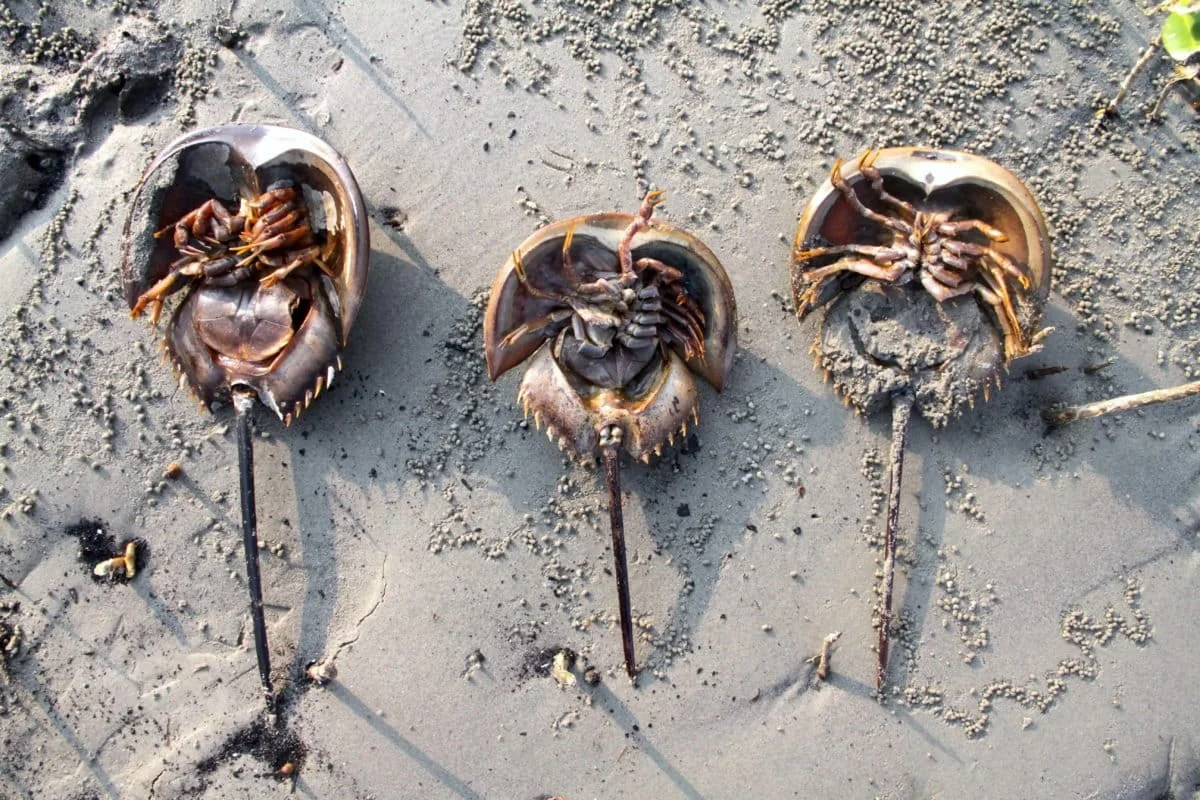
The horseshoe crab, a creature whose lineage predates the rise and fall of the dinosaurs, stands today as one of the most remarkable "living fossils" on the planet. Despite its common name, this marine arthropod is not a true crab but a member of the subphylum Chelicerata, making it more closely related to scorpions and spiders than to the crustaceans it superficially resembles. For over 450 million years, since the Ordovician period, these resilient organisms have patrolled the ocean floors, surviving five mass extinction events that wiped out the majority of life on Earth. Today, however, these ancient survivors face a modern array of threats—from habitat loss to the high demands of the global pharmaceutical industry—placing their future in a precarious balance, particularly within the vast coastal ecosystems of the Indonesian archipelago.
An Evolutionary Marvel from the Ordovician Era
To understand the significance of the horseshoe crab, one must look back nearly half a billion years. The earliest fossil records of horseshoe crab ancestors, such as Lunataspis aurora found in Canada, date back to approximately 445 million years ago. This places their origin in the Ordovician period, a time when life was primarily confined to the seas and the first primitive plants were only beginning to appear on land. While the world around them underwent cataclysmic shifts—the shifting of tectonic plates, the freezing and thawing of the planet, and the evolution of complex terrestrial life—the horseshoe crab remained largely unchanged in its physiological design.
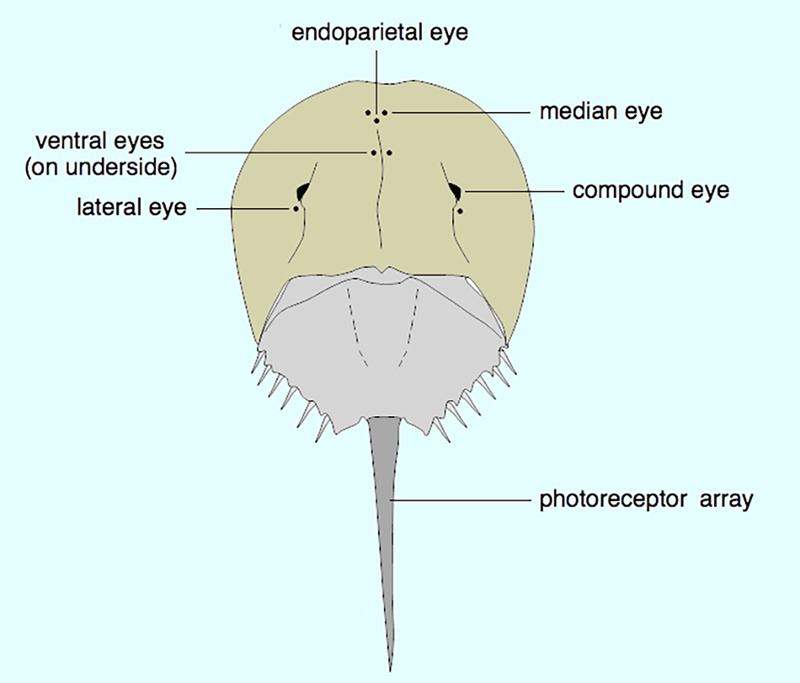
Scientifically classified under the Order Xiphosura, the horseshoe crab’s anatomy is a masterclass in evolutionary efficiency. Their bodies are divided into three primary segments: the large, horseshoe-shaped cephalothorax (or prosoma), a smaller, segmented abdomen (opisthosoma), and a long, rigid tail known as the telson. Contrary to popular myth, the telson is not a weapon; it is a vital tool used for steering while swimming and for flipping the animal over if it becomes stranded on its back. Furthermore, their visual system is one of the most complex in the animal kingdom, featuring two primary compound eyes and seven secondary simple eyes, which allow them to navigate the murky depths of estuaries and detect ultraviolet light.
The Indonesian Context: Diversity and Distribution
In Indonesia, the horseshoe crab is known by various local names, reflecting the country’s rich linguistic diversity. It is commonly referred to as belangkas, mimi, blangkas, kepiting lada, mintua, or pari kepiting. According to the comprehensive study "Bioecology of the Horseshoe Crab," published by the Universitas Maritim Raja Ali Haji (UMRAH) in Tanjung Pinang, Indonesia is home to three of the world’s four extant species. These include Tachypleus gigas, Tachypleus tridentatus, and Carcinoscorpius rotundicauda (the mangrove horseshoe crab). The fourth species, Limulus polyphemus, is found exclusively along the Atlantic coast of North America.
The distribution of these species across Indonesia is extensive, spanning the entire archipelago. Major populations have been identified in Balikpapan and Penajam Paser Utara in East Kalimantan; throughout Sumatra in Aceh, Medan, Sibolga, Langkat, and Rokan Hilir; and across the islands of Bintan and Bangka. In Java, they are frequently sighted along the northern coast (Pantura), including regions like Serang, Pandeglang, Subang, Indramayu, Cirebon, Brebes, Tegal, Kendal, Pati, Jepara, Demak, Tuban, Situbondo, Gresik, and Bangkalan. Their presence extends further east to Muna in Southeast Sulawesi and Barru in South Sulawesi. This wide distribution underscores Indonesia’s role as a critical global stronghold for horseshoe crab biodiversity.
The Miracle of Blue Blood: A Biomedical Necessity
The most extraordinary feature of the horseshoe crab, and the one that has made it indispensable to modern medicine, is its blood. Unlike human blood, which uses iron-based hemoglobin to transport oxygen and appears red, horseshoe crab blood uses copper-based hemocyanin, giving it a striking bright blue color. However, the true value lies not in the color, but in the presence of primitive immune cells called amebocytes.
In 1977, the United States Food and Drug Administration (FDA) licensed the Limulus Amebocyte Lysate (LAL) test, derived from the blood of Limulus polyphemus. A similar test, Tachypleus Amebocyte Lysate (TAL), is derived from the Asian species. These amebocytes are hyper-sensitive to endotoxins—toxic substances released by Gram-negative bacteria such as E. coli and Salmonella. When the blood comes into contact with even a trace amount of these toxins, it immediately clots into a gel-like substance, effectively trapping the bacteria.
This reaction is the global gold standard for safety testing in the pharmaceutical industry. Every intravenous drug, vaccine (including those developed for COVID-19), and medical implant must be tested using horseshoe crab blood to ensure they are free of bacterial contamination. For decades, this "blue gold" has saved millions of human lives, making the horseshoe crab a silent, involuntary guardian of public health. Beyond the blood, researchers are also exploring the potential of the perivitelline fluid—found in the eggs of the crab—for its unique biomedical and pharmaceutical properties.
Ecological Guardians of the Coastal Food Web
Beyond their medical utility, horseshoe crabs play an essential role in the health of marine and coastal ecosystems. As benthic (bottom-dwelling) organisms, they act as "biological turbators," stirring up the sediment as they forage for food. This process aerates the ocean floor, facilitating the exchange of nutrients and oxygen, which benefits a wide range of other marine species.
Their diet consists primarily of algae, marine worms, clams, mollusks, and organic detritus, positioning them as key predators and decomposers within the food chain. Perhaps most critically, their spawning cycle is a linchpin for global bird migrations. During the spawning season, female horseshoe crabs lay thousands of tiny, nutrient-rich eggs in the sand. These eggs provide a vital energy source for migratory shorebirds, such as the Red Knot, which time their transcontinental flights to coincide with the horseshoe crab’s nesting season. A decline in horseshoe crab populations directly threatens the survival of these avian species, demonstrating the interconnectedness of global biodiversity.
Legal Protection and Conservation Status
Recognizing their ecological and scientific importance, the Indonesian government has granted full protection to all three native species. This protection is enshrined in the Decree of the Minister of Forestry No. 12/Kpts-II/1987 and Government Regulation (PP) No. 7/1999. Under these laws, it is illegal to capture, kill, or trade horseshoe crabs or their derivatives within Indonesian territory.
On the international stage, however, the conservation status of these animals varies. The International Union for Conservation of Nature (IUCN) currently lists Tachypleus tridentatus as "Endangered," primarily due to habitat loss and over-harvesting in parts of East Asia. The other two Indonesian species, T. gigas and C. rotundicauda, are currently categorized as "Data Deficient" (DD). This classification is particularly concerning for scientists. As the UMRAH research publication notes, "Information on species becomes difficult to manage without accurate population data." Without a clear understanding of population trends, it is challenging for policymakers to implement effective conservation strategies.
Modern Threats and the Path Forward
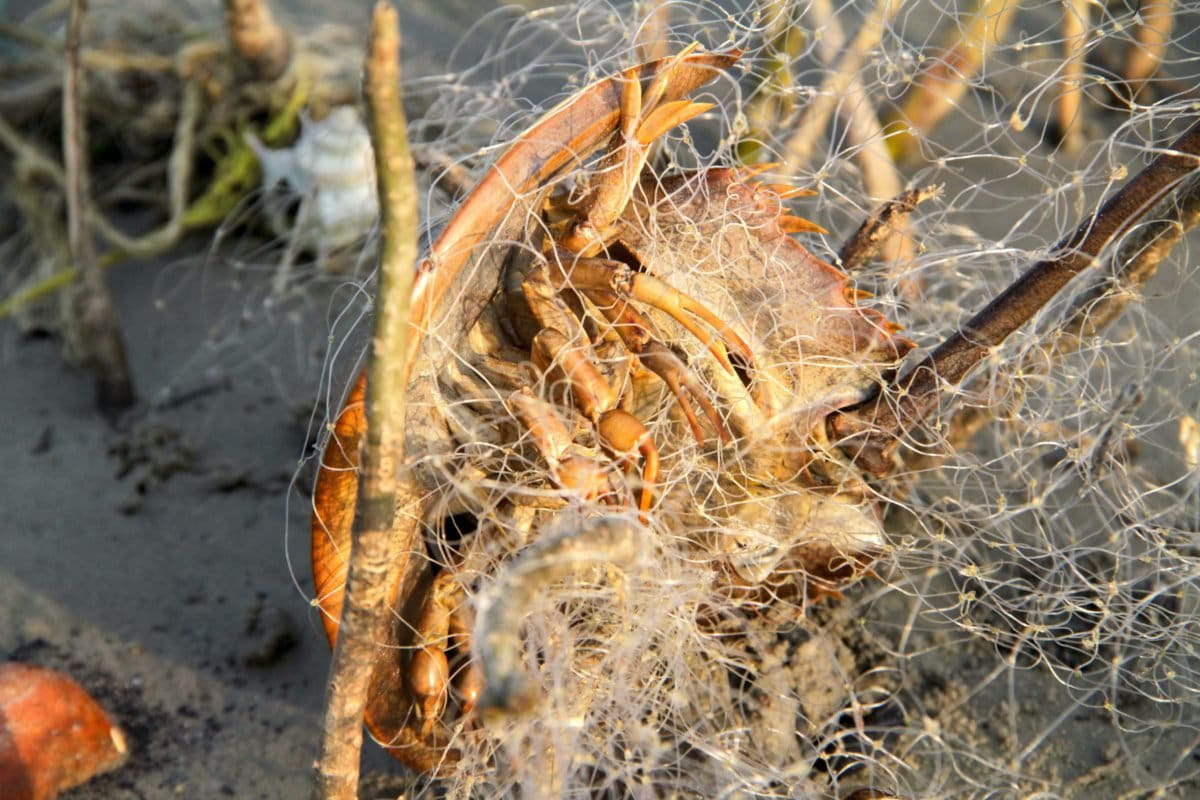
Despite their legal protection, Indonesia’s horseshoe crabs face a multitude of anthropogenic threats. Coastal reclamation projects, particularly in rapidly developing urban areas, destroy the sandy beaches required for spawning. Industrial pollution and chemical runoff from agriculture contaminate the estuaries where young crabs mature. Furthermore, they are frequently caught as "bycatch" in the nets of coastal fishermen. While some are released, many die from entanglement or are discarded on the shore.
There is also the dark shadow of the illegal wildlife trade. The high value of their blood and the demand for their shells (for chitin) create incentives for poaching. In some regions, they are even consumed as a local delicacy, despite the risk of tetrodotoxin poisoning associated with certain species like the mangrove horseshoe crab.
To address these challenges, a multi-faceted approach is required. First, there is an urgent need for more comprehensive field research to fill the "Data Deficient" gap in Indonesia. Mapping critical spawning habitats is essential for creating protected marine areas. Second, public awareness campaigns must be strengthened to educate coastal communities and fishermen about the legal status and ecological importance of the belangkas.
Finally, the global pharmaceutical industry is beginning to move toward synthetic alternatives, such as Recombinant Factor C (rFC), which does not require the bleeding of live animals. Transitioning to these synthetic tests could alleviate the pressure on wild populations, ensuring that these ancient "living fossils" continue to roam the seas for another 400 million years. The story of the horseshoe crab is a testament to resilience, but it is also a warning: even the world’s oldest survivors are not immune to the rapid changes of the modern era. Protecting them is not just an act of conservation; it is a preservation of a biological legacy that is inextricably linked to our own survival.