Nila Kartika Wati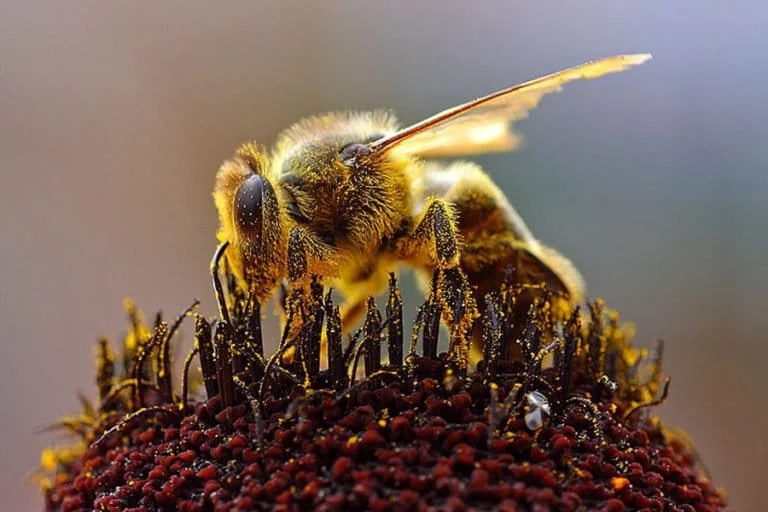
Honeybees are often viewed through the narrow lens of commodity production, primarily valued for the honey and wax they yield for human consumption. However, these industrious insects serve as the foundational pillars of global ecosystem stability and food security, acting as the primary pollinators for a vast majority of the world’s flowering plants. Today, this vital species stands at a critical crossroads. The convergence of rapid global climate change, aggressive land-use conversion by extractive industries, and the encroaching footprint of technological pollution has begun to erode their habitats, shorten their lifespans, and weaken the intricate biological networks they sustain. As these existential threats mount, a decentralized movement of beekeepers and local communities has emerged on the frontlines, blending scientific understanding with ancestral wisdom to preserve the forests and the bees that inhabit them. The struggle to secure the future of the honeybee is no longer a niche environmental concern; it is a fundamental prerequisite for the survival of human civilization.
The Economic and Biological Engine of the Planet
To understand the gravity of the current crisis, one must first quantify the role honeybees play in the modern world. According to data from the Food and Agriculture Organization (FAO) of the United Nations, approximately 75% of the world’s food crops that produce fruits or seeds for human consumption depend, at least in part, on pollinators. Honeybees are the most prolific of these, contributing to the production of everything from almonds and coffee to apples and canola.
Economically, the services provided by honeybees are staggering. Global estimates suggest that the annual value of agricultural crops directly attributed to animal pollination ranges between $235 billion and $577 billion. In regions like Southeast Asia, where the source text originates, the giant honeybee (Apis dorsata) and the Asian honeybee (Apis cerana) are not just ecological agents but also significant contributors to the livelihoods of rural populations. When bee populations decline, the ripple effects are felt in market prices, nutritional security, and the stability of rural economies. The loss of bees does not merely mean a shortage of honey; it signifies a potential collapse in the diversity and availability of nutrient-dense foods, particularly vitamins A and C and minerals like calcium and folic acid, which are heavily derived from bee-pollinated plants.
A Convergence of Existential Threats
The current decline in bee populations is not the result of a single factor but rather a "synergistic storm" of human-induced pressures. Climate change remains the most pervasive of these. Rising global temperatures have led to a phenomenon known as phenological mismatch. This occurs when the timing of flower blooming and the emergence of bees from hibernation no longer align. If flowers bloom too early due to an unseasonably warm spring, bees may miss their primary food source, leading to colony starvation and reduced reproductive success.
Furthermore, the expansion of extractive industries—such as mining, large-scale logging, and the conversion of primary forests into monoculture plantations—has decimated the natural forage areas for bees. In Indonesia, for example, the conversion of diverse rainforests into palm oil or pulpwood plantations creates "green deserts." While these areas may look green from above, they lack the floral diversity required to sustain a healthy bee population. The loss of nesting sites in hollow trees and the destruction of the understory where many wild bees forage have forced colonies into smaller, fragmented pockets of land, increasing competition and vulnerability to disease.
Technological and chemical pollution adds a third layer of complexity. The prompt highlights "technological pollution," a term that encompasses both the chemical runoff from industrial processes and the potential interference caused by electromagnetic radiation and air pollution. Studies have shown that air pollutants, such as nitrogen oxides from vehicle exhausts, can chemically alter the scent molecules of flowers. Bees, which rely on their acute sense of smell to navigate toward food sources, find it increasingly difficult to locate flowers in polluted environments. This increased "foraging time" wears down the physical strength of individual bees, effectively shortening their lifespans and reducing the overall efficiency of the hive.
A Chronology of Declining Populations
The alarm regarding bee health was first sounded on a global scale in the early 2000s with the emergence of Colony Collapse Disorder (CCD). While CCD was a specific phenomenon characterized by the sudden disappearance of worker bees, it paved the way for a broader understanding of "pollinator decline."
- 2006–2007: Beekeepers in the United States and Europe reported losses of 30% to 90% of their hives, bringing the plight of the honeybee to mainstream media attention.
- 2012–2015: Scientific research solidified the link between neonicotinoid pesticides and impaired bee navigation and immune function. Several countries began implementing partial bans on these chemicals.
- 2019: The Intergovernmental Science-Policy Platform on Biodiversity and Ecosystem Services (IPBES) released a landmark report stating that nearly 35% of invertebrate pollinators, particularly bees and butterflies, are facing extinction globally.
- 2021–2023: Recent data suggests that while managed honeybee colonies have seen some stabilization due to intensive human intervention, wild bee populations continue to plummet at an alarming rate due to habitat loss and climate-driven heatwaves.
Local Guardianship and the Revival of Traditional Wisdom
In response to these global pressures, the frontlines of conservation are often found in local villages and traditional beekeeping communities. In the Indonesian archipelago, the practice of Sialang—where communities protect specific giant trees that host dozens of Apis dorsata nests—serves as a model for sustainable coexistence. These communities understand that the health of the bee is inextricably linked to the health of the forest. By protecting the "mother trees" and the surrounding watershed, they ensure a continuous cycle of pollination and honey production.
Modern beekeepers are also adapting. In various regions, there is a shift toward "bee-centric" beekeeping rather than "production-centric" methods. This involves reducing the frequency of honey harvests to ensure the bees have enough winter stores, avoiding the use of synthetic chemicals within the hives, and planting "pollinator corridors" to link fragmented habitats.
"We are no longer just honey hunters or honey producers; we have become the forest’s primary security guards," says a representative from a local beekeeping cooperative in Kalimantan (inferred from the context of regional environmental movements). "If the bees leave, it means the forest is dying. If the forest dies, our water disappears and our crops fail. Protecting the bee is an act of self-preservation."
Scientific and Policy Responses
The scientific community has echoed the concerns of local practitioners, emphasizing that technology must be harnessed to protect, rather than harm, these insects. Researchers are now using micro-sensors and AI-driven monitoring to track hive health in real-time, allowing beekeepers to intervene before a colony collapses. However, experts warn that technological fixes are insufficient without systemic policy changes.
"There is a growing consensus that we cannot ‘engineer’ our way out of a biodiversity crisis," notes Dr. Elena Rossi, an environmental scientist specializing in entomology. "The solution lies in restoring the biological integrity of our landscapes. This means halting the expansion of extractive industries into primary forests and radically rethinking our use of agrochemicals. The honeybee is the ‘canary in the coal mine’ for our entire food system."
Governments are beginning to react, albeit slowly. The European Union has led the way with the "Pollinators Initiative," which aims to reverse the decline of pollinators by 2030 through habitat restoration and pesticide regulation. In Southeast Asia, movements are growing to certify "forest-friendly" honey, providing economic incentives for communities to maintain standing forests rather than clearing them for industrial use.
Implications for the Future of Humanity
The narrative of the honeybee is a microcosm of the broader environmental challenges facing the 21st century. The "merging of the magic of bee behavior science, current environmental issues, and touching local wisdom" mentioned in the source text points to a necessary shift in human consciousness. We are moving away from a world where nature is viewed as a resource to be extracted, toward a world where nature is understood as a web of life that must be maintained.
If honeybee populations continue to dwindle, the implications are profound. We face a future of "pollination poverty," where only the wealthiest nations can afford the labor-intensive hand-pollination of crops, or where the human diet becomes increasingly reliant on wind-pollinated staples like wheat and rice, leading to widespread micronutrient deficiencies.
The fragility of the honeybee is a mirror reflecting the fragility of human systems. Their shortened lifespans and the "thinning of the natural web" are warnings that the environmental carrying capacity of the planet is being stretched to its limit. The efforts of local beekeepers to "maintain the tradition and the sustainability of the forest" are not merely nostalgic endeavors; they are radical acts of resilience.
Conclusion: A Call for Critical Action
Saving the honeybee requires a multi-faceted approach that transcends borders and disciplines. It demands the protection of indigenous land rights, as these communities are the most effective stewards of bee habitats. It requires a transformation of the global agricultural model away from chemical-heavy monocultures toward regenerative practices that provide forage for pollinators. And finally, it requires the recognition that technological progress must be balanced with ecological safety.
The story of the honeybee is a reminder that the smallest creatures often carry the greatest weight. By ensuring that the "intelligent little creatures" have the space to thrive, we are essentially ensuring that the Earth remains a place capable of sustaining human life. The survival of the honeybee is not an optional environmental goal; it is a non-negotiable requirement for a stable, nourished, and prosperous future. The choice to protect them is, in every sense, a choice to protect ourselves.