Nila Kartika Wati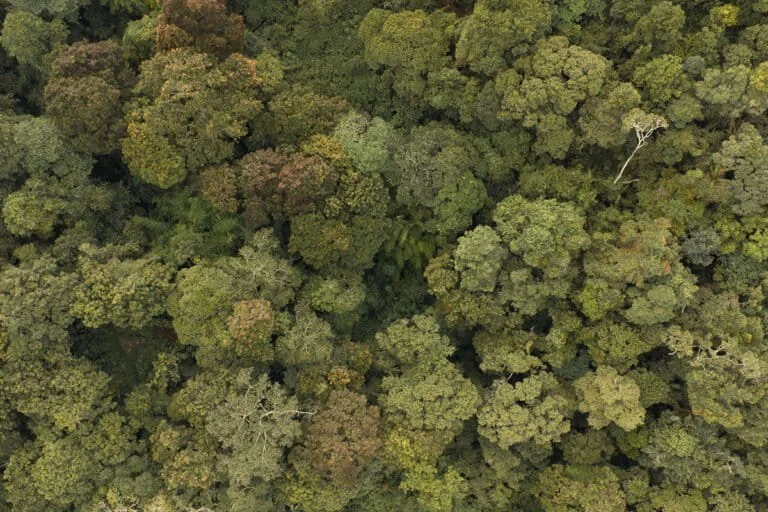
A pair of small, nimble hands reach out from behind the wire mesh of a three-by-two-meter enclosure, deftly grasping a container filled with a colorful assortment of vegetables and fruits. One by one, pieces of carrot, corn, cucumber, long beans, and eggplant disappear into the mouth of a young siamang. Despite the nourishment, the animal’s eyes remain wistful, gazing out of the quarantine cage as if searching for a mother who is no longer there. This infant, barely a year old, is one of the many victims of a clandestine trade that continues to threaten the biodiversity of Sumatra’s ancient rainforests.
According to Arnestasya Fitri Andriani, a veterinarian at the Punti Kayu Wildlife Rehabilitation Center (PRS) in Palembang, South Sumatra, this specific juvenile siamang was separated from its mother at an age when it should still be clinging to her fur for warmth and survival. The story of this infant is not an isolated incident but a representative snapshot of a much larger conservation crisis currently unfolding in the region.
As of mid-2026, the Punti Kayu Wildlife Rehabilitation Center, managed in partnership with The Aspinall Foundation since 2022, is caring for 29 individual gibbons. The population consists of 28 siamangs (Symphalangus syndactylus) and one agile gibbon, locally known as ungko (Hylobates agilis). Made Wedana, the Director of The Aspinall Foundation Indonesia, noted that while the focus has historically been on siamangs—with approximately 40 individuals successfully released back into the wild since the partnership began—the inclusion of the agile gibbon represents a new expansion of their conservation mandate in 2026.
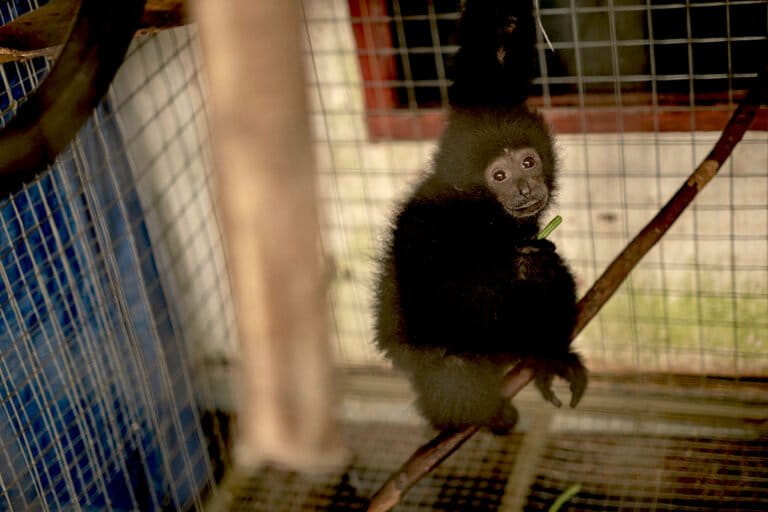
The majority of the primates housed at the facility share a harrowing background. They are almost exclusively former household pets, either surrendered voluntarily by owners who realized the difficulty of caring for a wild animal or confiscated by the Natural Resources Conservation Agency (BKSDA) during law enforcement operations. Most distressing to conservationists is the age of the arrivals; four of the recently confiscated individuals are infants around one year old.
The Biological Impact of Early Separation
In the wild, the developmental trajectory of a siamang is a complex process defined by a unique social structure and a specific parental hand-off. The forced separation of infants from their parents does more than just cause emotional distress; it creates a "knowledge gap" that can be nearly impossible to bridge.
Siamangs are known for their monogamous pair bonds and a highly coordinated parenting style. During the first year of life, the infant is entirely dependent on the female. The mother provides milk, warmth, and constant physical contact, carrying the baby on her abdomen. During this period, the male’s primary role is territorial defense and foraging. However, as the juvenile enters its second year, a remarkable behavioral shift occurs: the father takes over the primary caregiving duties. The male siamang begins to carry the offspring, grooms it, and facilitates its play, allowing the mother to recover her physical energy for future reproductive cycles.
When a hunter kills a mother siamang to steal her baby for the pet trade—which is the standard method of capture—this intricate cycle of learning is shattered. "When they are separated from their parents, there is a break in the transmission of essential survival knowledge," explains Dr. Arnestasya. "This becomes a significant challenge during the rehabilitation process. We have to teach them how to be siamangs again."
The Decade-Long Path to Freedom
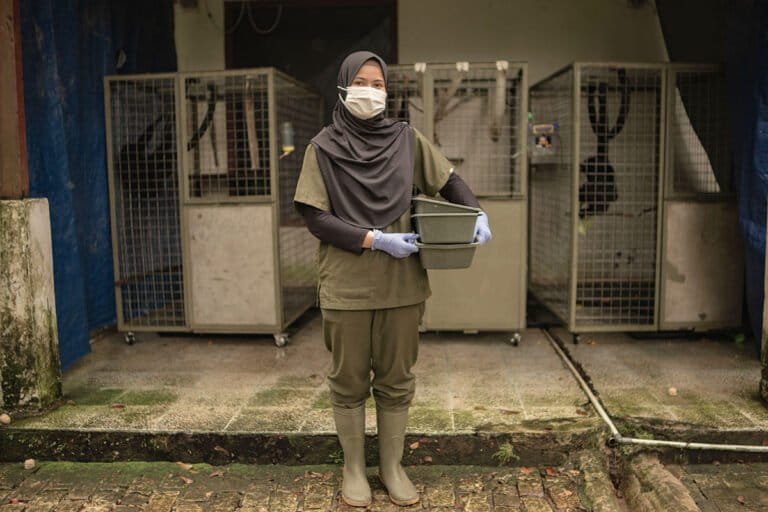
Rehabilitating a primate that has spent its formative years in a human household is a grueling, long-term commitment. Unlike animals that are rescued shortly after being displaced by habitat loss, former pets have often lost their natural fear of humans and their instinctive understanding of forest life.
The team at The Aspinall Foundation estimates that it takes between five to ten years to fully rehabilitate a former pet siamang. The process involves several stages, beginning with medical stabilization and progressing to "re-wilding," where the primates are encouraged to forage for natural foods and interact with their own kind rather than human caretakers.
A critical component of this process is ensuring that the animals no longer seek out human contact. If a siamang is released while still being "human-friendly," it is likely to seek out human settlements in the forest, leading to human-wildlife conflict or making them easy targets for poachers once again. "We have to be absolutely certain that their natural instincts have returned," Dr. Arnestasya says. "If they show signs of clinical illness or an inability to adapt, they may unfortunately have to spend the rest of their lives in sanctuary conditions rather than the wild."
The Zoonotic Threat: A Silent Killer
Beyond the behavioral challenges, the illegal pet trade introduces a far more insidious threat: zoonotic diseases. The close proximity between humans and wild primates in a domestic setting allows for the cross-species transmission of viruses. At PRS Punti Kayu, the case of a male agile gibbon named Gading serves as a somber warning.
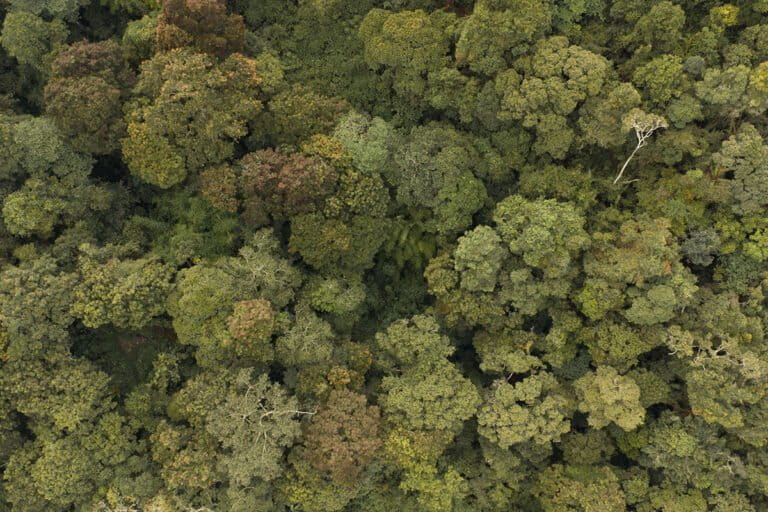
Gading, now six and a half years old, is physically mature and would otherwise be an ideal candidate for breeding and release. However, during a routine screening test after he was surrendered by an owner who had fallen ill, Gading tested positive for the herpes virus. While Gading appears clinically healthy, the diagnosis is a permanent barrier to his freedom.
"If we were to release Gading, the virus in his body could infect the wild population of gibbons," Dr. Arnestasya warns. "This would be catastrophic for the species. Because of his interaction with humans, Gading will likely never see the forest again."
The threat of herpes in primates is a well-documented concern in conservation circles. Similar to the Elephant Endotheliotropic Herpesvirus (EEHV) that has claimed the lives of numerous elephant calves across Asia and Africa, there is currently no vaccine that can eradicate the virus in gibbons. Conservation efforts are currently limited to mitigation and strict quarantine protocols to prevent further spread. This highlights the hidden cost of the pet trade; even if an animal is "rescued," the biological damage done by living in a human home can be irreversible.
South Sumatra as a Primate Stronghold
South Sumatra remains a critical habitat for both siamangs and agile gibbons. While exact population data for the province remains elusive due to the rugged terrain of their habitats, these primates are known to inhabit a wide range of landscapes. Their territory stretches from the high-altitude forests of the Bukit Barisan mountain range to the lowland wetlands surrounding the Musi River.
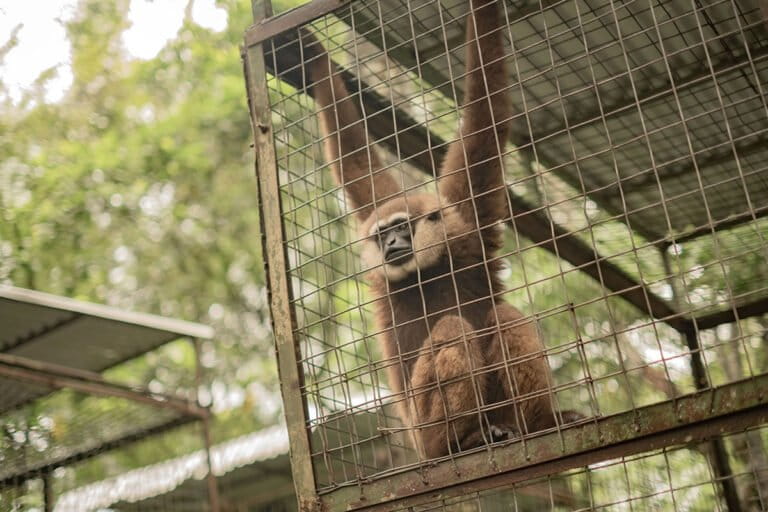
Siamangs, the largest of the gibbon species, are easily identified by their black fur and the large gray or pinkish throat sac which they inflate to produce their haunting, resonant duets. These calls can carry for several kilometers through the dense canopy, serving to mark territory and strengthen pair bonds.
The agile gibbon, or ungko, is smaller and more varied in color, ranging from golden-brown to black. Both species play an indispensable role in forest ecology as "gardeners of the woods." By consuming large quantities of fruit and traveling across vast distances through the canopy, they act as primary seed dispersers, ensuring the regeneration of the forest.
Regional Collaboration and the Role of PPS Alobi
The effort to save Sumatra’s primates extends beyond the borders of the province. Before PRS Punti Kayu became a primary hub for rehabilitation, many rescued animals were translocated to the Alobi Wildlife Rescue Center (PPS Alobi) in Bangka Belitung.
Endy R. Yusuf, the manager of PPS Alobi, currently oversees the care of three gibbons that have been in rehabilitation since 2019. One of them, an agile gibbon named Mong, is a survivor of the brutal side of the trade; he required surgery to remove an air rifle pellet lodged behind his right ear.
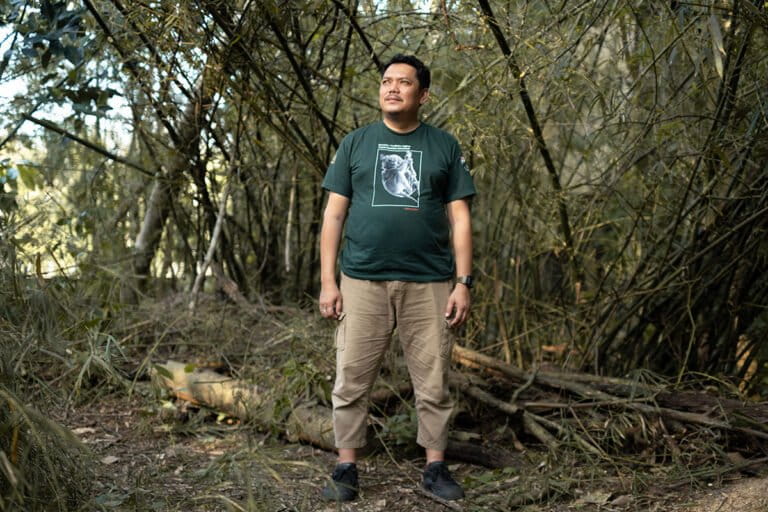
"The most challenging part is the instinct," Yusuf says. "Some of these animals have been pets since they were babies. We are working to move them to facilities that specialize specifically in gibbons, with the hope that they can eventually return to the wild."
A Call for Habitat Protection
The survival of the siamang and the agile gibbon is inextricably linked to the health of the Indonesian rainforest. Both species are currently listed as Endangered on the IUCN Red List, facing a dual threat of poaching and rapid habitat loss due to land conversion for agriculture and infrastructure.
Conservationists emphasize that keeping these animals in cages—even for rehabilitation—is a poor substitute for their natural existence. The ultimate goal of organizations like The Aspinall Foundation and PPS Alobi is to ensure that the "chain of life" in the ecosystem remains unbroken.
"In an ecosystem, every animal is part of a magnificent, interconnected web," Yusuf concludes. "When one link is broken, it eventually leads to a disaster that affects humans as well. We must protect their habitat and their right to live in the wild, not in a cage."
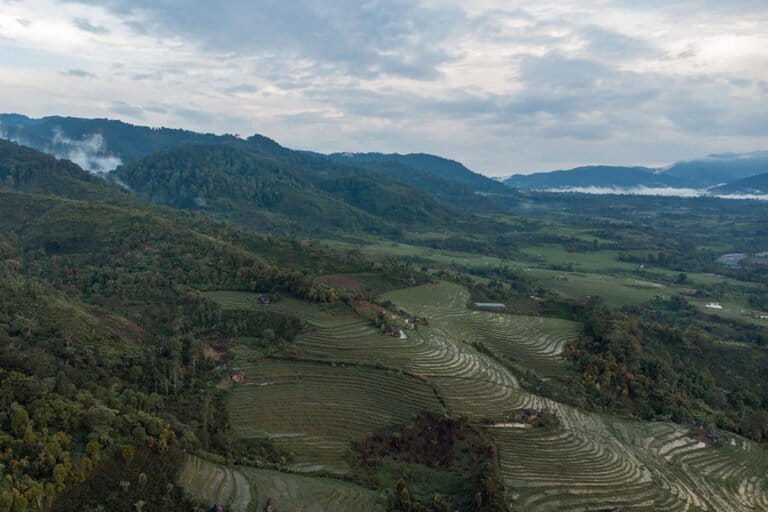
As the juvenile siamang in Palembang finishes its meal and settles back into the corner of its enclosure, the work of the veterinarians and conservationists continues. Their mission is a race against time: to heal the wounds of the past and to preserve the forests of Bukit Lumut Balai and beyond, ensuring that the haunting song of the siamang continues to echo through the Sumatran canopy for generations to come.