Nila Kartika Wati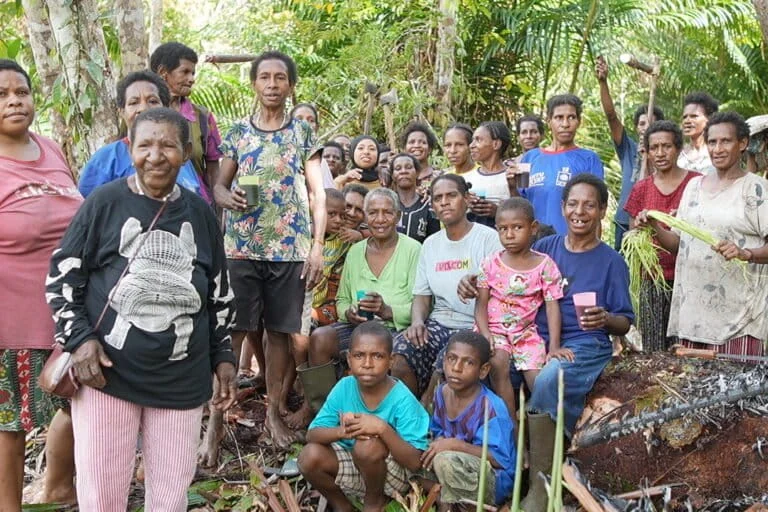
Across the Indonesian archipelago, from the dense rainforests of Sumatra to the coastal villages of Papua, a quiet but resolute movement is taking shape. While national headlines are often dominated by industrial expansion, economic growth figures, and high-level climate summits, a "silent path" is being forged by women who have positioned themselves as the frontline defenders of the environment. These women are not merely observers of ecological change; they are the primary guardians of local wisdom, food security, and natural resources. Despite facing systemic marginalization and often being excluded from formal policy-making processes, Indonesian women are increasingly recognized as the group most vulnerable to—and most proactive against—the escalating climate crisis and the encroachment of extractive industries.
The nature of this struggle is multifaceted, blending grassroots activism with a deep-seated commitment to communal survival. As noted in the Indonesian Journal of Conservation by researcher Marhaeni (2012), the patterns of female-led environmentalism in Indonesia are incredibly diverse. Their efforts extend far beyond simple protests against unfavorable development projects. Instead, they offer profound critiques of existing resource management models, advocating for approaches that are more humane, gender-sensitive, and ecologically sustainable. These women utilize their lived experiences to challenge the status quo, proving that the preservation of nature is inextricably linked to the preservation of culture and human dignity.

The Guardians of the Living Pharmacy in Jambi
In the heart of Jambi, Sumatra, the women of the Batin Sembilan tribe are engaged in a vital mission to protect their ancestral knowledge. For generations, the forest has served as a "living pharmacy" for the Batin Sembilan people, providing a vast array of medicinal plants used to treat everything from common ailments to complex spiritual conditions. However, the rapid expansion of monoculture plantations and the shifting lifestyles of the younger generation have put this heritage at risk.
Recognizing the urgency of the situation, the women formed the Kelompok Tani Hutan (KTH) Maju Besamo (Maju Besamo Forest Farmers Group). They currently manage 399 hectares of forest under a communal arrangement. This initiative is not just about land rights; it is about ensuring that the botanical knowledge of the elders is transferred to the youth. By securing this land, they create a buffer against land grabs by outsiders and industrial interests. Among the plants they protect is the Gendum, a fruit essential for the "Besale" traditional ceremony. By preserving the forest, they are effectively preserving the biological and spiritual backbone of their community, ensuring that the "living pharmacy" remains open for future generations.
Empowering the Next Generation through Renewable Energy in Papua
In the southern reaches of Papua, where access to formal education and modern infrastructure remains a significant challenge, the Girls and Women in Renewable Energy Academy (GAWIREA) is breaking new ground. This community-driven initiative focuses on empowering rural women and girls by providing education in renewable energy technologies and entrepreneurship. In a region where gender disparities in education are often stark, GAWIREA offers a pathway toward economic independence and environmental stewardship.
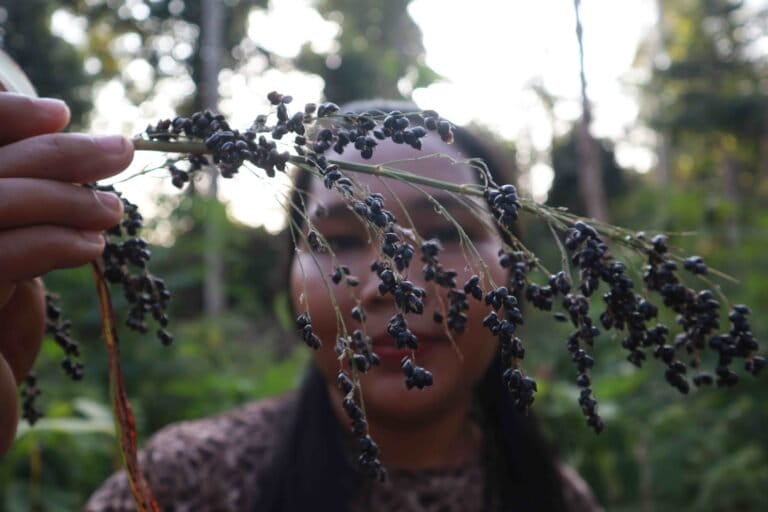
The participants learn to harness clean energy sources, such as solar power and biomass, to enhance their daily lives and income-generating activities. One of their flagship projects is the "Wani Yinio" sago house, which utilizes renewable energy-powered machinery to process sago, a staple food in Papua. This technological intervention reduces the physical labor traditionally required of women and increases efficiency. More importantly, the initiative aims to reintegrate young girls into the educational system. By providing them with marketable skills in the green economy, GAWIREA is addressing the intersection of energy poverty, educational inequality, and climate resilience.
Permaculture as a Tool for Climate Resilience in South Sulawesi
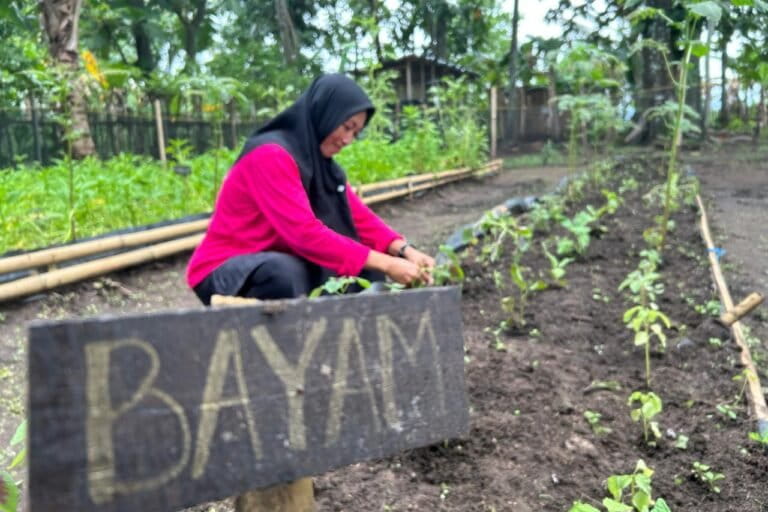
The coastal village of Bontomanai in South Sulawesi provides a compelling example of how local innovation can address global challenges. Here, 18 women have pioneered the Permaculture Field School, an initiative designed to bolster food sovereignty in the face of a changing climate. Coastal communities are particularly vulnerable to rising sea levels and unpredictable weather patterns, which often disrupt traditional supply chains and leave villages dependent on expensive food imports from outside the region.
The women of Bontomanai are transforming their home gardens into productive permaculture ecosystems. Permaculture, a design system based on ethical principles like "earth care" and "people care," emphasizes the building of symbiotic relationships between different elements of life. In these gardens, vegetables are grown using organic fertilizers derived from local livestock waste, creating a closed-loop system that eliminates the need for chemical inputs. The success of these gardens has not only provided the community with a steady supply of nutritious food but has also fostered a sense of collective resilience. The knowledge gained in the field school is now being passed from neighbor to neighbor, creating a grassroots network of climate-ready farmers.
Combatting Stunting through Organic Nutrition Gardens in East Java
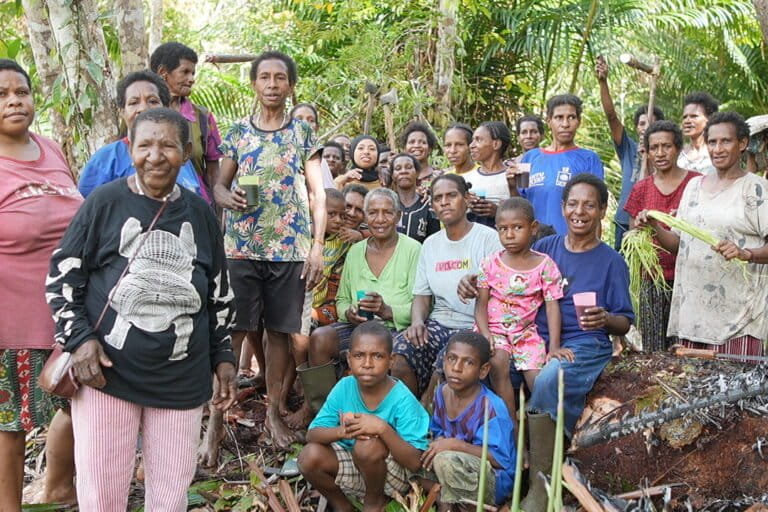
In the Sananrejo Village of Malang Regency, East Java, the struggle for the environment is being fought in the arena of public health. The Kelompok Perempuan Tani (KPT), or Women Farmers Group, has launched a "Nutrition Garden" (Kebun Gizi) project to combat the high rates of stunting (tengkes) among local children. Stunting, a condition resulting from chronic malnutrition, has long been a national concern in Indonesia, and the women of Sananrejo decided to take a proactive approach by focusing on food quality and accessibility.
The KPT manages a 2,000-square-meter plot dedicated to organic vegetable cultivation and livestock rearing. Their strategy is simple yet effective: provide healthy, pesticide-free food directly to those who need it most. Pregnant women and families with toddlers are given free packages of organic vegetables to ensure that the children receive adequate nutrition during the critical first 1,000 days of life. The impact has been measurable. Data from the village indicates a significant decline in stunting cases; five years ago, 120 out of 600 children were affected by stunting. By November 2025, that number had dropped to approximately 60 out of 425 toddlers. This success demonstrates that environmental sustainability—specifically organic farming—is a powerful tool for improving socio-economic outcomes.
Sago Sovereignty and Resistance against Nickel Mining in Halmahera
Perhaps one of the most intense battles for resource sovereignty is occurring in Maba Sangaji, East Halmahera. As Indonesia positions itself as a global hub for the electric vehicle (EV) battery supply chain, the demand for nickel has led to massive mining expansion in North Maluku. In Maba Sangaji, the operations of PT Position have had devastating effects on the local environment, particularly the rivers that the community relies on for water and food.
When several local men were arrested for protesting the mine’s encroachment, the women of Maba Sangaji stepped up to lead the resistance. Known as the Maba Women’s Struggle Group, they have turned their kitchens into sites of political and economic defiance. Sago, the traditional staple and cultural symbol of the region, has become the center of their movement. Despite the pollution of their waterways and the decline of their traditional economy, these women continue to process sago lempeng (sago cakes), refining their production techniques and exploring new markets to support their families. For them, sago is more than food; it is a symbol of their refusal to be displaced by industrial interests that threaten their ancestral lands. They view themselves as the final line of defense for their culture and their environment, proving that courage is the primary capital in the fight for sovereignty.
Analysis of Implications and the Path Forward
The stories from Jambi, Papua, South Sulawesi, East Java, and Halmahera underscore a critical reality: women are the backbone of environmental conservation in Indonesia. Their approach is characterized by a holistic understanding of the links between the land, the kitchen, the clinic, and the community. While the "silent path" they walk is often fraught with challenges—including lack of legal recognition, limited access to capital, and the physical threats inherent in land disputes—their impact is undeniable.
From a policy perspective, these case studies suggest that environmental and climate strategies must be gender-inclusive to be effective. When women are involved in decision-making, the focus often shifts toward long-term sustainability, community health, and food security. The success of the Sananrejo nutrition gardens in reducing stunting, for instance, aligns with national development goals, yet it was achieved through a localized, female-led organic initiative rather than a top-down bureaucratic program.

Furthermore, the resistance in Maba Sangaji highlights the growing tension between national industrial ambitions (such as the "downstreaming" of nickel) and the rights of indigenous communities. As the global demand for "green" minerals grows, the burden of extraction often falls on the very people who have lived in harmony with those landscapes for centuries. The women of Indonesia are making it clear that a "green transition" cannot be considered just if it results in the destruction of local cultures and the marginalization of those who guard the earth.
In conclusion, the environmental movement in Indonesia is being revitalized by women who refuse to remain silent. By blending traditional wisdom with modern innovation—whether through permaculture, renewable energy, or organic farming—they are providing a blueprint for a more resilient and equitable future. Their struggle is a reminder that the health of the planet is inseparable from the rights and voices of the women who care for it. As the effects of the climate crisis intensify, the "silent path" of these women may well become the most important road for the nation to follow.