Nila Kartika Wati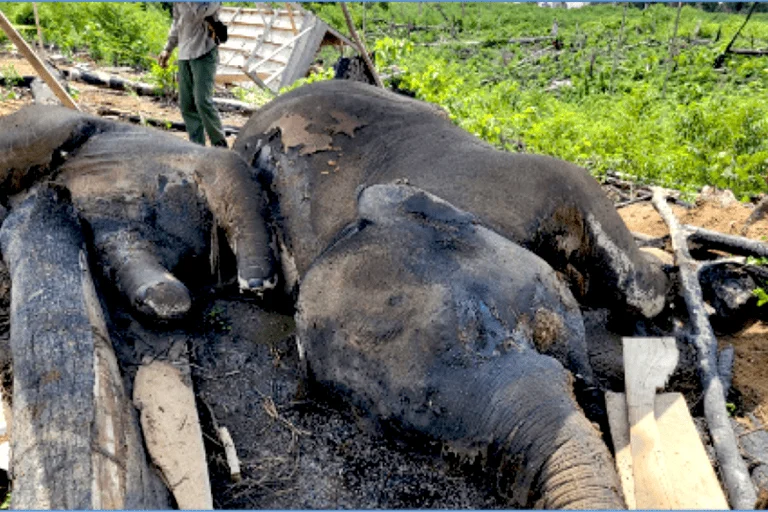
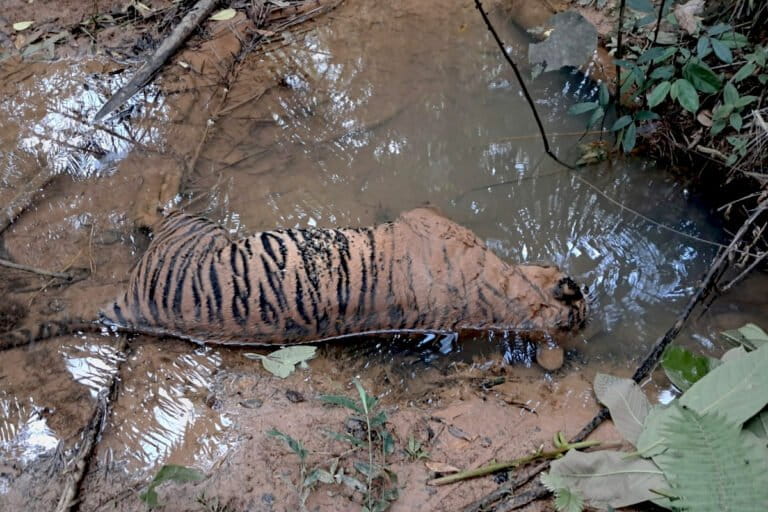
The Ministry of Forestry of the Republic of Indonesia has officially moved to revoke the forest utilization business approvals (PBPH) of two major timber companies, PT Bentara Arga Timber (BAT) and PT Anugerah Pratama Inspirasi (API), following a series of tragic deaths involving critically endangered Sumatran elephants and tigers within their concession areas. Minister of Forestry Raja Juli Anton announced the decision during a high-profile press conference at the Ministry’s headquarters on Thursday, May 7, 2026, signaling a significant shift toward more aggressive environmental law enforcement. The move comes as environmental advocacy groups and conservationists raise alarms over what they describe as a systemic failure to protect one of Indonesia’s most vital wildlife corridors, the Seblat Landscape in Bengkulu province.
The decision to terminate the operating licenses of PT BAT and PT API is not merely an administrative reaction to recent events but the culmination of a long-standing history of environmental mismanagement and regulatory non-compliance. Minister Raja Juli Anton emphasized that the government’s response would extend beyond administrative sanctions. He has directed the Ministry’s Directorate General of Law Enforcement (Gakkum) to pursue criminal investigations against the companies, citing evidence of illegal logging and the unauthorized cultivation of oil palm within areas designated for forest restoration. The Minister stated that the loss of flagship species like the Sumatran elephant and tiger serves as a definitive indicator that the current management of these concessions is incompatible with national conservation goals.
A Chronology of Negligence and Escalating Fatalities
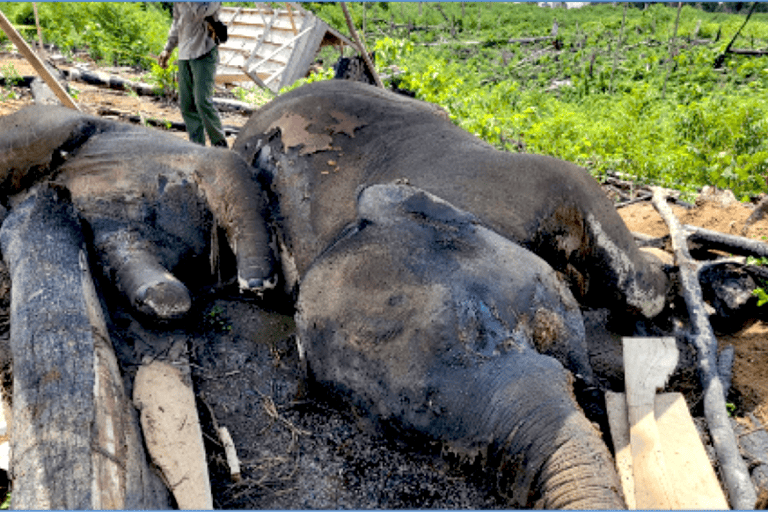
The crisis in the Seblat Landscape reached a breaking point on April 29, 2026, when the carcasses of two Sumatran elephants were discovered within the concession boundaries of the implicated companies. Preliminary investigations by the Seblat Landscape Consortium—a coalition of environmental NGOs—suggested that the deaths were the result of intentional poisoning. Field monitors found suspicious packets of poison coated in soap and attached to tree trunks. This method specifically targets the biological behavior of elephants, which frequently strip bark from trees to supplement their mineral intake.
However, these recent deaths are part of a much larger and more disturbing trend. Data compiled by Yayasan Genesis Bengkulu and the Seblat Landscape Consortium reveal that at least seven elephants have died in this specific region since 2018. The fatalities have been concentrated within the corporate boundaries: five deaths occurred within the PT BAT concession, while two were recorded in the PT API area. The methods of killing have varied over the years, ranging from the use of high-caliber firearms and snares to sophisticated traps involving large nails intended to puncture the sensitive soles of the elephants’ feet. In 2023, a particularly gruesome discovery was made involving an elephant that died from infected foot wounds caused by these hidden "nail traps."
The Seblat Landscape, spanning approximately 112,000 hectares, has long been recognized as a primary habitat for the Sumatran elephant (Elephas maximus sumatranus). Despite this, the government has historically granted logging and production forest permits in areas that overlap with critical wildlife corridors. According to Egi Ade Saputra, Executive Director of Genesis Bengkulu, the government’s current move to revoke licenses is a necessary step but one that arrives "painfully late." He argued that the repeated fatalities since 2018 should have triggered immediate revocation years ago, rather than allowing the companies to continue operating under a cycle of ineffective administrative warnings.
Failure of Restoration and the Rise of Illegal Land Clearing
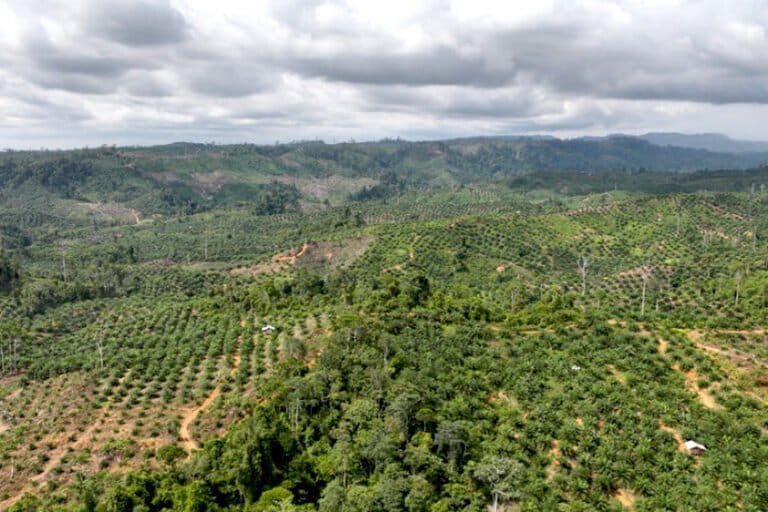
In 2025, both PT BAT and PT API were subjected to administrative sanctions that effectively froze their business approvals. The Ministry of Forestry at the time mandated that both companies undertake comprehensive ecosystem restoration projects to rehabilitate the degraded habitats within their concessions. However, the Ministry’s recent evaluation indicates that these restoration obligations were largely ignored. Instead of a return to natural forest cover, the government found that the "restoration" zones were being converted into illegal oil palm plantations.
The scale of land clearing in the Seblat Landscape remains staggering. Satellite imagery analysis conducted by Genesis Bengkulu using Landsat 8 data for the period of February to April 2026 reveals a relentless pace of deforestation. In February 2026 alone, investigators identified 307 separate points of land clearing covering 2,042.64 hectares. This was followed by another 102 points (566.9 hectares) in March and 12 points (32.35 hectares) in April. The vast majority of these clearings are located directly within the PBPH areas of PT BAT and PT API.
Wishnu Sukmantoro, Deputy Chairman of the Indonesian Elephant Conservation Forum (FKGI), noted that the presence of illegal oil palm within forest concessions is a primary driver of human-wildlife conflict. As forest cover vanishes, elephants are forced into closer proximity with human activities. Because elephants consume various types of vegetation—including grasses, leaves, fruits, and roots—they are often branded as "pests" by illegal loggers and palm oil farmers. This perception leads to retaliatory killings, such as the poisoning incidents observed in April. Sukmantoro argued that the failure of the permit holders to secure their areas against encroachment constitutes a violation of Law No. 41 of 1999 on Forestry and Government Regulation No. 23 of 2021 regarding Forestry Implementation.
Ecological Fragmentation and the Threat of Local Extinction
The biological implications of the degradation in the Seblat Landscape are severe. The Sumatran elephant is currently listed as "Critically Endangered" by the International Union for Conservation of Nature (IUCN). Data from the Ministry of Forestry suggests that out of 42 historical elephant "pockets" or habitats in Sumatra, only 21 remain active. The Seblat Landscape is one of the last strongholds for the species in the province of Bengkulu, yet it is becoming increasingly fragmented.
The habitat is currently divided into several disconnected blocks, including the Seblat Nature Tourism Park (TWA), the Air Rami production forest, the Air Teramang production forest, and the Air Dikit production forest. Analysis by Genesis Bengkulu shows that the Air Dikit pocket has already been effectively lost, with 100% of its forest cover replaced by oil palm. The remaining elephants are trapped in isolated fragments, unable to follow the ancestral migration routes that are essential for maintaining genetic diversity and population health.
"Elephants rely on specific corridors passed down through generations," Sukmantoro explained. "When these corridors are blocked by plantations or logging operations, the elephants become disoriented and isolated. This fragmentation is a slow march toward local extinction." The Seblat Landscape Consortium has reported that the 30,017 hectares of damaged forest—nearly a third of the total landscape—represent a critical loss of connectivity that cannot be fixed by simple administrative changes.
Calls for a Status Upgrade: From Production to Conservation
In light of the repeated failures of corporate management, environmental organizations including Kanopi Hijau Indonesia, FKGI, and Genesis Bengkulu are calling for a fundamental change in the legal status of the Seblat Landscape. They are urging the Ministry of Forestry to reclassify the area as a protected conservation zone, such as a Wildlife Sanctuary (Suaka Margasatwa).
Ali Akbar, Chairman of Kanopi Hijau Indonesia, expressed concern that simply revoking the licenses of PT BAT and PT API might only lead to the "revolving door" of forest permits. He warned that without a change in land status, the government might eventually grant the same land to other entities, such as PT Agrinas, which has also been linked to interests in the region. "We need a permanent solution that prioritizes the ecosystem over extraction," Akbar stated. "If the status remains as production forest, the pressure from the timber and palm oil industries will never truly dissipate."
The push for a Wildlife Sanctuary status is supported by the argument that the current centralized management of forests has failed to provide adequate oversight. Within just two years, 6,800 hectares of the Seblat Landscape were destroyed due to weak field supervision. Conservationists argue that a status upgrade would mandate a more robust presence of forest rangers and a management plan specifically tailored to wildlife protection rather than timber yields.
Government Response and Future Policy Directions
The Ministry of Forestry appears to be taking these concerns into account. Ristianto Pribadi, Head of the Bureau of Public Relations and International Cooperation, confirmed that the revocation process is currently in a "deepening" phase. This involves ensuring that the decision is legally watertight and based on objective factual evidence to withstand potential legal challenges from the companies. He indicated that a definitive decision and the issuance of the formal revocation decree (SK Pencabutan) are expected in the very near future.
Minister Raja Juli Anton has also pledged to develop a comprehensive "Elephant Habitat Map" that will serve as a binding reference for all future development projects. The goal is to ensure that no infrastructure or industrial activity is permitted within designated "home ranges" or migration corridors. The Minister even proposed the construction of wildlife underpasses or tunnels in areas where human infrastructure intersects with elephant paths, aiming to restore connectivity between isolated groups.
Legal experts have emphasized that the government must follow through on the criminal aspect of this case to create a deterrent effect. Andri Gunawan Wibisana, an environmental law expert from the University of Indonesia, stated that the evidence of poisoning and illegal land clearing provides a strong basis for prosecution. "The revocation of a permit is an administrative consequence, but the death of a protected species is a criminal matter," Wibisana noted. "True justice for the Seblat Landscape requires that those responsible for these deaths, whether through direct action or gross negligence, face the full weight of the law."
As the Ministry of Forestry prepares its final decision, the eyes of the international conservation community remain on Bengkulu. The fate of the Seblat Landscape is seen as a litmus test for the Indonesian government’s commitment to its "FOLU Net Sink 2030" goals and its ability to balance economic interests with the survival of its most iconic and endangered species. For the elephants of Seblat, the revocation of these licenses may be the first step in a long and difficult journey toward habitat recovery.