Nila Kartika Wati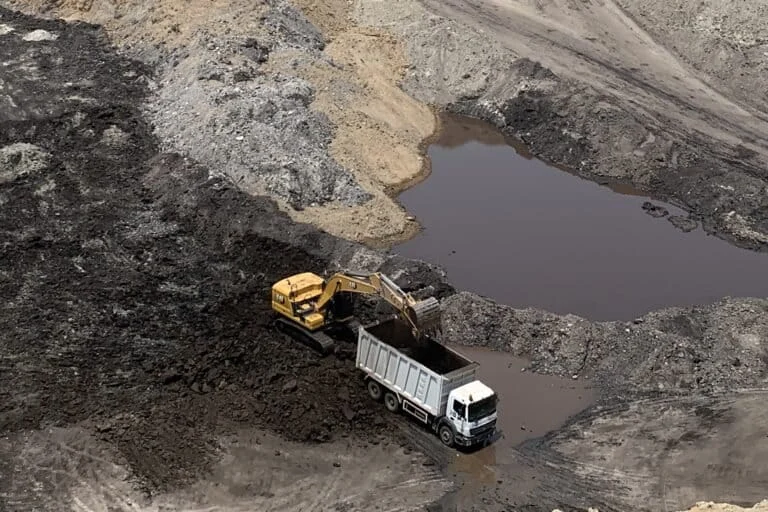
The integrity of Indonesia’s greenhouse gas (GHG) emission data is under intense scrutiny as new research suggests that the coal mining sector has significantly underreported its environmental impact, particularly regarding methane (CH4) emissions. While government monitoring frameworks have historically prioritized carbon dioxide (CO2) measurements, a growing body of evidence indicates that other potent gases, most notably methane, remain largely unrecorded or underestimated in official inventories. This discrepancy poses a severe threat to Indonesia’s ability to meet its Nationally Determined Contributions (NDC) and its long-term ambition of reaching Net Zero Emissions by 2060.
A collaborative study by the Extractive Industries Transparency Initiative (EITI) and Publish What You Pay (PWYP) Indonesia has highlighted a systemic gap in how the extractive industry accounts for its climate footprint. This follows a landmark 2024 report by the energy think tank EMBER, which estimated that methane emissions from Indonesian coal mines could be up to eight times higher than the figures officially reported by the government. The implications are profound, as methane is recognized by the Intergovernmental Panel on Climate Change (IPCC) as having a global warming potential over 80 times greater than CO2 over a 20-year period.
The Invisible Greenhouse Gas: Why Methane Matters
The focus on CO2 has created a blind spot in Indonesia’s climate strategy. According to Astrid Meliala of EITI, the coal industry produces a complex cocktail of greenhouse gases beyond just carbon dioxide, including dinitrogen oxide (N2O), hydrofluorocarbons (HFCs), perfluorocarbons (PFCs), and sulfur hexafluoride (SF6). However, methane represents the most significant "hidden" contributor. In the context of coal mining, methane is categorized as a "fugitive emission"—gas that is trapped within coal seams and surrounding rock strata, which is then released into the atmosphere during the breaking, crushing, and extraction process.
The categorization of these emissions is typically divided into three scopes. Scope 1 includes direct emissions from a company’s own operations, such as fugitive methane from the mine face. Scope 2 covers indirect emissions from the purchase of electricity and heat used in operations. Scope 3 encompasses all other indirect emissions that occur in a company’s value chain, including the transport and eventual combustion of the coal by end-users. Currently, the lack of standardized multiplication parameters for methane in government reporting means that many Scope 1 fugitive emissions are effectively omitted from the national ledger.
Regulatory Frameworks and the Transparency Gap
Indonesia is not without a regulatory foundation for climate reporting. Presidential Regulation (Perpres) No. 98 of 2021 was enacted to establish a framework for the implementation of carbon pricing and the management of GHG inventories. This was further bolstered by Perpres No. 110 of 2023, which focuses on the Carbon Economic Value (NEK). Despite these legal instruments, implementation remains fragmented.
One of the primary hurdles is the inconsistency in methodology. Different mining companies utilize varying technologies and calculation models, leading to data sets that are neither comparable nor verifiable by independent third parties. Furthermore, there is a significant lack of transparency. While the government maintains internal digital systems for emission reporting, this data is generally shielded from public view, classified as internal information shared only between corporations and state regulators.
Civil society advocates argue that this "closed-door" approach prevents public oversight. Transparency is essential not only for verifying corporate claims but also for allowing local communities and environmental organizations to assess the true impact of mining activities on their health and the global climate. Advocates suggest that Indonesia should align its reporting with international benchmarks such as the Global Reporting Initiative (GRI), the Task Force on Climate-related Financial Disclosures (TCFD), and the International Financial Reporting Standards (IFRS). Currently, such rigorous standards are typically only adopted by major Indonesian firms listed on international stock exchanges.
The Technical Dilemma of Open-Pit Mining
The Ministry of Energy and Mineral Resources (ESDM) has acknowledged the difficulty in achieving precise methane measurements. Surya Herjuna, Director of Coal Business Development at the Directorate General of Minerals and Coal, pointed out that while regulations like ESDM Ministerial Regulation No. 22 of 2019 provide guidelines for GHG mitigation, the physical reality of Indonesian mining complicates data collection.
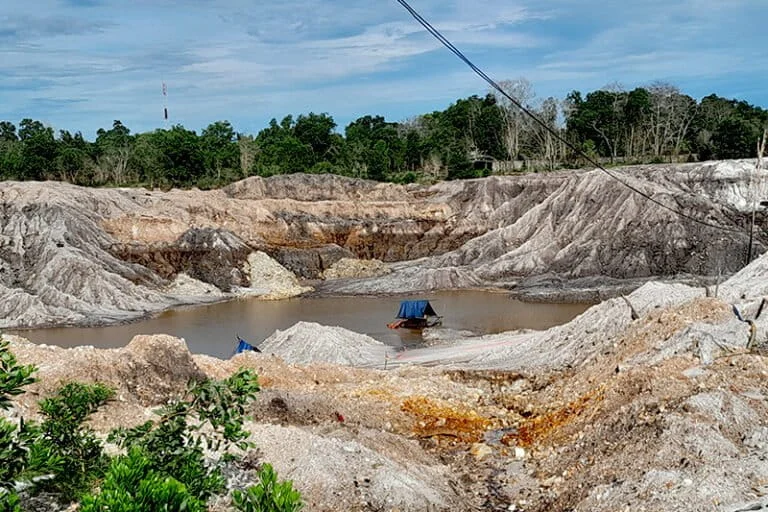
In underground mines, methane can be measured relatively easily through the ventilation systems required to keep the air safe for workers. However, the vast majority of Indonesia’s coal production comes from surface or "open-pit" mines. In these environments, methane is released directly into the atmosphere the moment the overburden is removed and the coal seam is exposed. Capturing and measuring this diffuse release of gas requires sophisticated sensing equipment and frequent, costly testing.
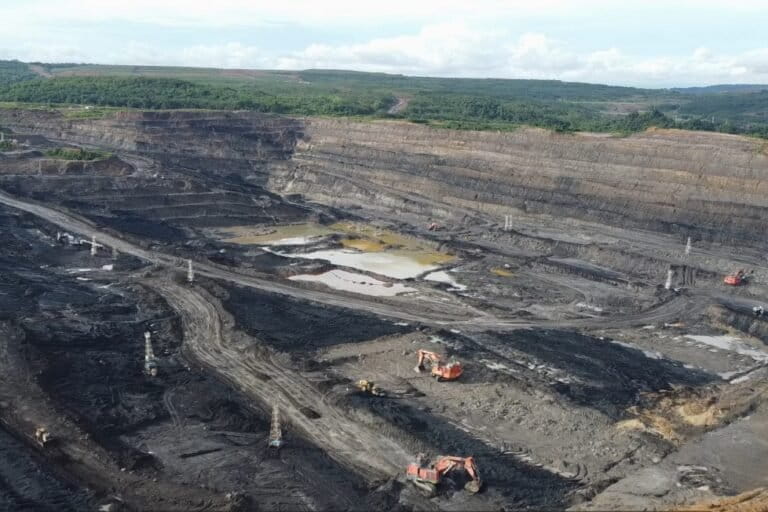
Geological factors also play a role. Methane content varies wildly depending on the depth of the coal seam, the pressure within the rock, and the specific biological characteristics of the coal deposit. Two mines producing the same tonnage of coal may have vastly different methane profiles. To get an accurate reading, companies would need to conduct additional exploratory drilling and primary data verification, which many operators view as a prohibitive financial burden.
The Production Paradox: Record Outputs vs. Climate Targets
Indonesia’s struggle to track emissions occurs against a backdrop of record-breaking coal production. In 2023, Indonesia solidified its position as the world’s third-largest coal producer, with production surging by over 110% compared to previous years. This expansion is fundamentally at odds with the nation’s decarbonization rhetoric.
The energy sector is the largest contributor to Indonesia’s emissions, accounting for approximately 43% of the national total. Coal is the primary driver of this figure. Muhammad Adzkia Farirahman, a researcher at PWYP, warns that if the current trajectory continues, CO2 emissions from power plants alone will peak in 2037 at approximately 599 million tons. This figure includes both "grid" emissions from public utilities and "captive" emissions from industrial power plants operated by mining and processing facilities.
The rapid expansion of coal-fired power plants to support the downstream processing of minerals (such as nickel smelting) has created a "locked-in" effect, where the country remains dependent on coal despite international pressure to transition to renewables. Experts argue that the government must move beyond technical targets and view energy transition as a mandate for the survival of future generations.
Seeking a Unified Standard for Decarbonization
The Ministry of Environment (now the Ministry of Environment and Forestry) has stated that it is working to bridge the data gap. Budiharto, a high-ranking official within the ministry, noted that the government is in the process of providing standardized measurement tools for businesses. The goal is to ensure that all operators use the same "yardstick" for their emissions, integrated through the ISO 14064-1 standard, which governs the quantification and reporting of GHG emissions and removals.
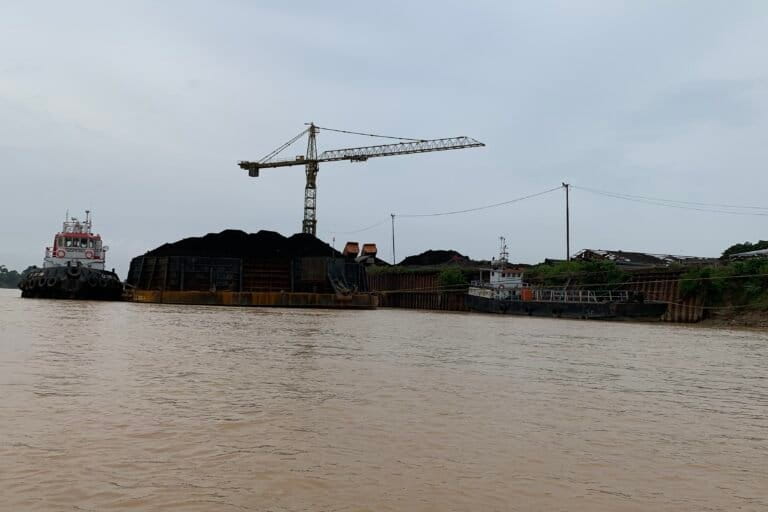
However, civil society groups like EITI and PWYP maintain that better measurement is only the first step. For Indonesia to be serious about its 2060 Net Zero target, it must address the root cause: the sheer volume of coal being extracted and burned. They advocate for a phased reduction in coal production and a genuine commitment to energy transition that avoids "false solutions"—such as coal gasification or carbon capture technologies that have yet to be proven viable at the necessary scale.
Implications for the Future
The underreporting of methane has significant economic implications, particularly as the global community moves toward carbon border taxes and green trade requirements. If Indonesian coal and its derivative products (like "green" steel or battery components) are found to have a much higher carbon intensity than officially claimed, they could face stiff penalties in international markets.
Furthermore, the environmental and social costs at home continue to mount. Beyond the global climate impact, coal mining is linked to local ecological destruction, water contamination, and respiratory health issues in mining hubs like East Kalimantan and South Sumatra.
The path forward for Indonesia requires a dual approach: a radical improvement in data transparency and technical measurement of methane, coupled with a policy shift that treats coal as a legacy fuel rather than the engine of future growth. As the 2037 emission peak approaches, the window for a managed and just transition is narrowing. Without accurate data, Indonesia is essentially "flying blind" into a climate crisis, making the task of de-risking its economy and protecting its environment increasingly difficult.
In conclusion, the findings from EITI, PWYP, and EMBER serve as a wake-up call for the Indonesian government. The "invisible" threat of methane can no longer be ignored. Achieving climate integrity will require more than just new regulations; it will require the political will to hold one of the nation’s most powerful industries accountable to the same standards as the rest of the world. The transition to a low-carbon economy depends on a foundation of honest, transparent, and comprehensive data—starting with the air that escapes from the mines.