Azin Asro
The Monster Energy Yamaha MotoGP team endured another weekend of profound struggle at the Mugello Circuit, highlighting a widening gap between the Japanese manufacturer and its European rivals. Despite a revamped rider lineup and ongoing development efforts under the championship’s concession rules, the Italian Grand Prix served as a stark reminder of the technical hurdles facing the YZR-M1. The weekend concluded with Yamaha failing to secure a single top-ten finish, leaving the team and its riders searching for answers in a season dominated by the sheer mechanical and aerodynamic prowess of Ducati, Aprilia, and KTM.
The competitive landscape at Mugello was particularly punishing for Yamaha. Known for its high-speed straights and demanding, flowing corners, the Tuscan circuit requires a delicate balance of engine power, stability under braking, and extreme agility. Historically, Yamaha thrived at Mugello due to the M1’s legendary corner speed. However, as the 2026 season progresses, the characteristics that once made the Yamaha a favorite at this venue appear to have vanished, replaced by a machine that riders describe as physically exhausting and technically uncompetitive.
A Weekend of Underperformance: The Results Breakdown
The struggles began early in the weekend and persisted through every session. In Saturday’s qualifying, Alex Rins emerged as the highest-placed Yamaha rider, managing to secure the 12th position on the grid. While Rins showed flashes of pace during the initial practice sessions, he was unable to translate that into a competitive Q2 performance. The rest of the Yamaha stable fared significantly worse. Jack Miller, a recent addition to the Yamaha ranks, could only manage 16th, while former world champion Fabio Quartararo found himself in a lowly 17th. Toprak Razgatlioglu, the highly anticipated crossover star from World Superbikes making his mark in the premier class, qualified in 20th position.
The Sprint Race and the Grand Prix itself offered no reprieve. In the Sprint, the lack of rear-end grip and the inability to maintain pace in traffic saw the Yamaha riders languish in the bottom half of the field. Sunday’s main race mirrored this disappointment. Jack Miller finished as the leading Yamaha representative in 15th place, barely scraping into the points. Toprak Razgatlioglu followed in 16th, showing steady progress but still far from the leading pack. Fabio Quartararo’s frustrations reached a boiling point as he crossed the line in 18th, nearly at the back of the field. Alex Rins, who had been the team’s best hope for a respectable result, was forced to retire, failing to finish the race.
The Technical Verdict: Alex Rins Identifies the Core Failings
Following the Sprint Race on Saturday, Alex Rins provided a candid and sobering assessment of the YZR-M1’s current state. Speaking to the media, the Spaniard did not mince words regarding the bike’s deficiencies. According to Rins, the issues are not localized to one area but are systemic, affecting the bike’s performance in almost every phase of a lap.
"The problem is everywhere," Rins stated. "We are struggling with rear grip, front grip, and the basic ability of the motor to turn. The bike feels incredibly heavy." This "heavy" sensation is a critical failure at a track like Mugello, where rapid changes of direction—such as the Casanova-Savelli and Arrabbiata sequences—are essential for a competitive lap time. If the bike resists the rider’s input, it not only results in slower sector times but also places an immense physical burden on the athlete.
Rins noted that the physical exertion required to manhandle the YZR-M1 around the circuit was becoming unsustainable over a full race distance. "I don’t know how I will manage the full race tomorrow," he admitted after the Sprint. "My hands are already destroyed from today’s effort. It is going to be a very tough race." This sentiment underscores a growing concern within the paddock: the Yamaha has become a "physical" bike, a departure from its traditional reputation as the most user-friendly and "sweet-handling" machine on the grid.
Chronology of Frustration: From Practice to the Checkered Flag
The timeline of Yamaha’s weekend at Mugello illustrates a trajectory of diminishing returns. On Friday, there were flickers of optimism. Alex Rins managed to break into the top ten during the afternoon practice session, which allowed him direct entry into Qualifying 2 (Q2). This was viewed as a potential turning point, suggesting that the team had found a baseline setup that could compete with the mid-field.
However, the progress stalled on Saturday morning. While Rins improved his absolute lap time to a 1:45, the pace of the field moved forward at an even greater rate. Rins expressed genuine shock at the qualifying results. "I entered the garage after my first run and saw 1:45 on the screen. I thought that was quite good, but then I looked at the positions and I was at the bottom of the Q2 list. It was a shock," Rins recounted.
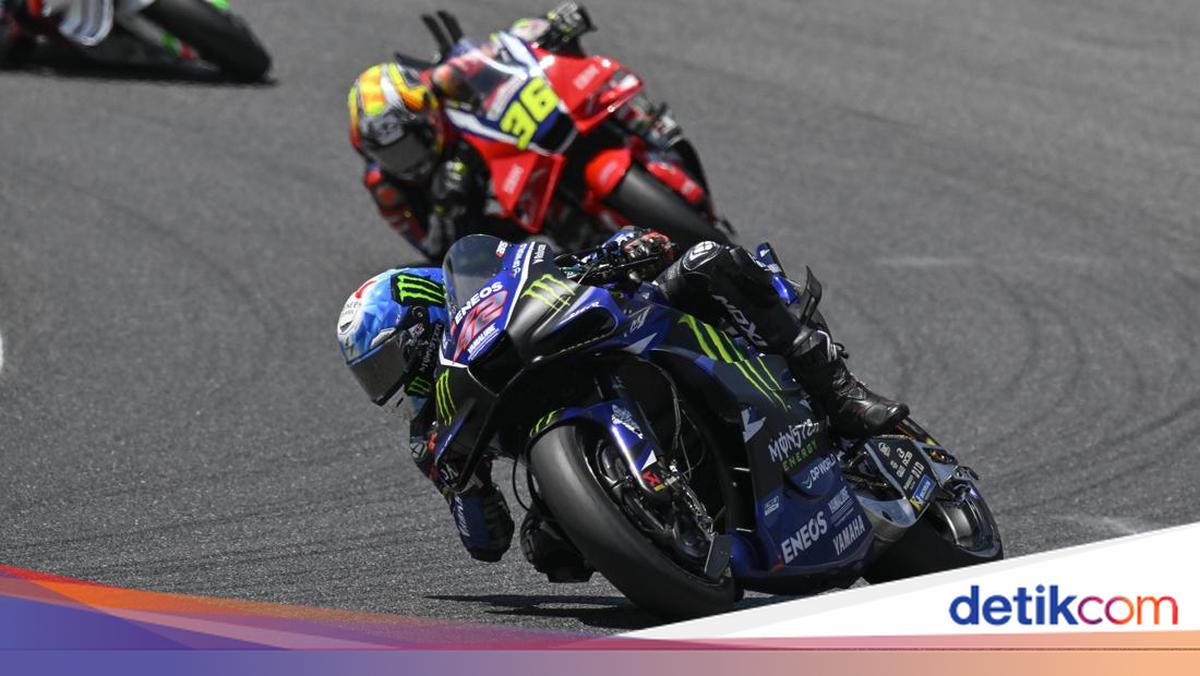
The frustration for the riders stems from the fact that they feel they are riding at their absolute limit without seeing the results reflected on the timing screens. Rins emphasized that he had given his maximum effort, yet he remained nearly a second off the pole position pace. In a sport where the top 15 are often separated by less than a second, Yamaha’s deficit is a chasm that cannot be bridged by rider talent alone.
The Competitive Gap: Yamaha vs. The European Manufacturers
The 2026 season has solidified the dominance of European manufacturers. Ducati remains the benchmark, with their Desmosedici exhibiting no clear weaknesses. Aprilia and KTM have also made significant strides, utilizing sophisticated aerodynamics and carbon fiber chassis components to maximize mechanical grip.
In contrast, Yamaha appears to be caught in a transitional phase. While they have introduced new aerodynamic wings and have worked on increasing engine power to match the V4 engines of their rivals, these additions seem to have upset the natural balance of the YZR-M1. The increased downforce, intended to help with acceleration and stability, has contributed to the "heavy" feeling Rins described, making the bike less agile in the very areas where Yamaha used to hold an advantage.
Furthermore, the data shows that Yamaha is struggling to utilize the Michelin rear tire effectively. At Mugello, where edge grip is paramount, the M1 was unable to generate the necessary traction to exit corners cleanly. This led to a "snowball effect": poor exit speed meant they were vulnerable on the long start-finish straight, forcing the riders to brake later and harder, which in turn increased the wear on the front tire and led to more handling issues.
Broader Implications and the Path Forward
The results at Mugello have broader implications for Yamaha’s long-term strategy in MotoGP. The team is currently benefiting from the "concession" system, which allows them more private testing days and more freedom in engine development than the top-ranked teams. However, the lack of progress at a "rider’s track" like Mugello suggests that the issues may be fundamental to the bike’s philosophy.
The addition of Jack Miller and Toprak Razgatlioglu was intended to provide fresh perspectives and diverse riding styles to help guide development. Miller brings years of experience from Ducati and KTM, while Razgatlioglu offers a unique, aggressive style developed in the production-based world championship. Yet, even with these varied inputs, the YZR-M1 remains rooted in the lower third of the standings.
For Fabio Quartararo, the situation is particularly dire. As the rider who carried the brand to a world title in 2021, his current inability to break into the top 15 is a testament to how far the bike has fallen relative to the competition. The psychological impact of "giving 100% and finishing last," as Rins put it, is a significant hurdle for the team to overcome.
As the championship moves toward the mid-season break, Yamaha management faces immense pressure to deliver a significant technical upgrade. The 2027 regulation changes, which will see engine displacements reduced to 850cc, are on the horizon, but Yamaha cannot afford to write off the current era. To attract sponsors, maintain rider morale, and uphold their prestige as a premier racing entity, they must find a way to restore the YZR-M1 to its former status as a podium contender.
The Italian Grand Prix was a weekend of harsh realities for Yamaha. While the riders continue to push the limits of their physical endurance and skill, the mechanical package remains the limiting factor. Without a breakthrough in grip and agility, the remainder of the 2026 season threatens to be a long and arduous journey for the Iwata-based manufacturer. The focus now shifts to the upcoming tests, where Yamaha must translate their concession advantages into tangible on-track performance, or risk being permanently left behind in the most technologically advanced era of motorcycle racing.