Azin Asro
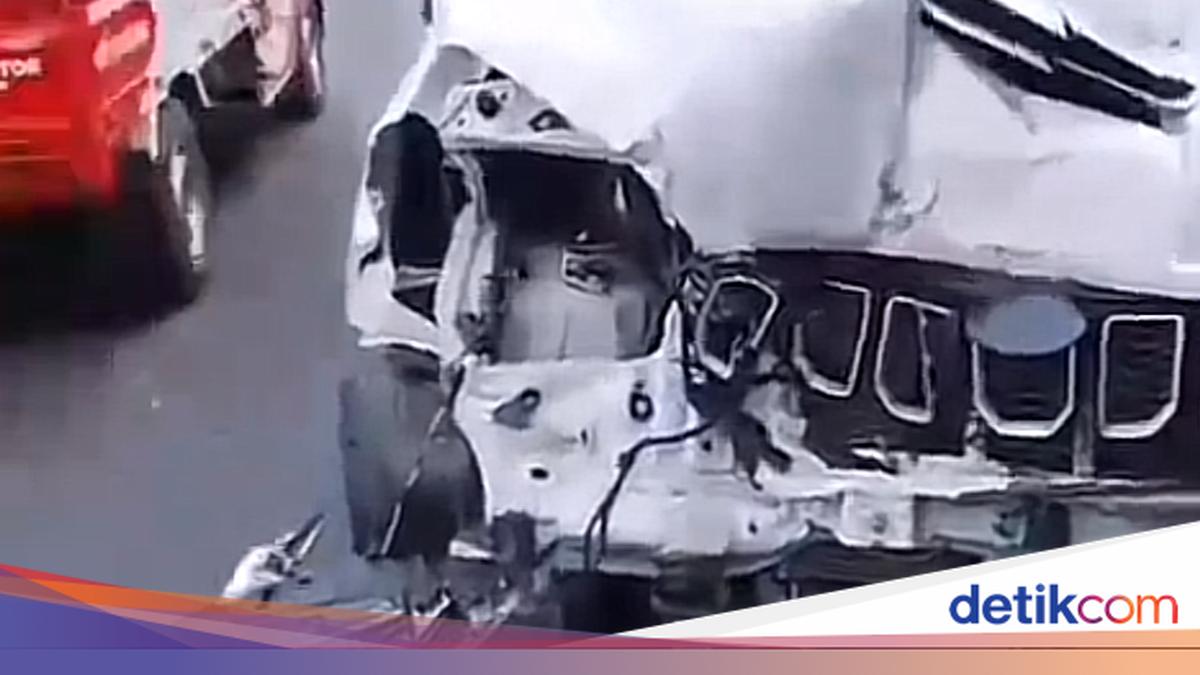
A high-impact traffic collision occurred on the roadway of Soso Village, located within the Gandusari District of Blitar Regency, East Java, involving a Toyota Fortuner SUV and a Mahindra pickup truck bearing the insignia of the Village Cooperative (Koperasi Desa Merah Putih). The incident, which resulted in significant structural damage to both vehicles, has reignited critical conversations surrounding driver accountability, situational awareness, and the complex safety protocols required during complex overtaking maneuvers on regional Indonesian thoroughfares.
According to preliminary local law enforcement reports, the collision was directly triggered by a miscalculated overtaking attempt executed by the driver of the Toyota Fortuner, a 20-year-old individual identified by the initials Y. While both vehicles were traveling in the same direction along the two-lane road, the SUV driver attempted to pass the Mahindra pickup—a specialized utility vehicle recently imported from India specifically allocated for the national Village Cooperative logistics enhancement initiative.
As the driver of the Toyota Fortuner accelerated to clear the slower-moving commercial vehicle, an unforeseen hazard emerged from the opposite direction in the form of an oncoming motorcycle. Caught off guard by the oncoming traffic and lacking sufficient clearance to complete the passing maneuver safely, the SUV operator panicked and abruptly jerked the steering wheel to the left. This sudden evasive action caused the heavy SUV to collide directly with the side and front sections of the Mahindra pickup truck, neutralizing forward momentum and causing extensive front-end wreckage for both automobiles.
Comprehensive Chronology and Immediate Aftermath
The sequence of events leading up to the collision unfolded rapidly along the semi-rural route in Blitar Regency. Investigators from the local traffic police unit reconstructed the timeline based on eyewitness accounts, physical skid marks at the scene, and preliminary interrogations of the involved motorists.
The incident commenced when the Mahindra pickup, utilized for rural cooperative distribution networks, maintained a steady speed heading down the Jalan Raya Desa Soso. Shortly behind it traveled the Toyota Fortuner, operated by the young driver. Finding the pace of the commercial vehicle restrictive, the SUV driver pulled out into the opposing lane to initiate a pass.
However, visual verification of the road ahead was evidently obstructed or misjudged. Just as the SUV pulled parallel to the Mahindra pickup, a motorcycle entered the line of sight from the opposite direction. Recognizing the immediate risk of a catastrophic head-on collision with the oncoming two-wheeler, the SUV driver abandoned the passing trajectory. Instead of decelerating smoothly and dropping back behind the commercial truck—the standard defensive driving protocol—the motorist yanked the steering wheel hard to the left in an effort to squeeze back into the original lane.
This violent corrective motion brought the massive frame of the Fortuner directly into the path of the Mahindra pickup. The resulting impact crumpled the front body panels of both vehicles, shattering headlights, bending chassis components, and deploying safety airbags within the SUV.
Despite the violence of the crash and the severity of the vehicular damage, local authorities confirmed a fortunate outcome regarding human casualties. Head of the Blitar Regency Traffic Police, AKP Galih Yasir Mubaroq, formally verified that no fatalities or severe injuries were sustained by any of the occupants involved in the accident. Both the driver of the SUV, the driver of the cooperative pickup, and the rider of the oncoming motorcycle escaped the incident without life-threatening trauma, though medical evaluations were administered at the scene as a precautionary measure.
Official Police Findings and Regulatory Perspectives
Law enforcement officials arrived at the scene shortly after emergency calls were logged, securing the perimeter to prevent secondary collisions and managing regional traffic congestion that quickly accumulated along the narrow corridor.
In his official statement to regional media, AKP Galih Yasir Mubaroq emphasized that human error and a temporary lapse in concentration served as the primary catalysts for the crash. "The driver of the Fortuner lacked the requisite focus while attempting to overtake the cooperative’s pickup truck, which was traveling ahead in the same direction," stated Galih. He further explained the mechanics of the accident, noting that the appearance of the oncoming motorcycle forced a panic reaction. "The Fortuner driver immediately swerved hard to the left, resulting in a direct collision with the Kopdes pickup."
Police investigators underscored that the driver’s inability to accurately assess the distance required to complete the pass, combined with a failure to monitor blind spots and oncoming traffic dynamics, constituted a clear violation of safe driving practices. While no criminal charges have been finalized pending ongoing administrative reviews and insurance settlements, the incident highlights the rigorous scrutiny traffic authorities apply to reckless passing maneuvers on provincial roads across East Java.
The Mahindra Pickup and the Village Cooperative Initiative
Beyond the immediate mechanics of the traffic accident, the vehicles involved carry broader contextual significance within Indonesia’s current logistical and economic landscape. The Mahindra pickup truck heavily damaged in the collision is not a standard consumer vehicle on Indonesian roads; rather, it represents a specialized import sourced directly from India as part of the strategic Village Cooperative (Koperasi Desa Merah Putih) infrastructure program.
The Kopdes initiative was established to bolster rural economies, streamline agricultural supply chains, and improve connectivity between remote agrarian villages and regional distribution hubs. To support this mandate, the government and affiliated cooperative bodies introduced rugged, utility-focused commercial vehicles capable of withstanding unpaved rural terrain while transporting local commodities. The Mahindra brand, known globally for robust utility manufacturing, was selected for deployment in select regions to serve as the backbone of these localized cooperative transport networks.
The destruction of one of these specialized vehicles in Blitar serves as a minor setback for the regional cooperative’s operational capacity, underscoring the vulnerabilities commercial fleets face when sharing roadways with larger, faster private passenger vehicles whose operators may exhibit unpredictable driving behaviors.
Expert Analysis: The Five Critical Stages of Safe Overtaking
To contextualize the mechanics of the Blitar crash within a broader safety framework, prominent Indonesian driving safety experts have weighed in on the cognitive and technical requirements of overtaking other vehicles. Sony Susmana, Director of Training at the Safety Defensive Consultant Indonesia (SDCI), provided an exhaustive breakdown of why passing maneuvers represent one of the most hazardous components of everyday motoring.
"Overtaking is a fundamental part of driving, but it is by no means as simple as the theory suggests," Susmana explained. "It is a level higher in danger and requires a comprehensive understanding of cognitive processes, the ability to anticipate potential hazards, and a realistic assessment of both personal driving capabilities and the vehicle’s performance limits."
According to Susmana, executing a pass safely requires emotional stability, positive cognitive readiness, and strict adherence to a systematic five-stage methodology. When any single stage within this framework is neglected or ignored, the probability of an accident increases exponentially—a scenario that likely transpired during the incident in Blitar.
The first stage requires the driver to evaluate the fundamental necessity of the maneuver. Before attempting to pass, a motorist must objectively question whether overtaking is genuinely required or if the time saved is negligible compared to the inherent risks.
The second stage mandates strict compliance with traffic regulations, road markings, and physical signage. Drivers must verify that the roadway permits passing, paying close attention to solid center lines, no-passing zones, and intersection proximities.
The third stage focuses on spatial awareness and clearance verification. The driver must ensure there is an adequately sized safety buffer in front of the vehicle being overtaken, alongside sufficient escape routes should an emergency arise. This stage requires meticulous observation of blind spots—areas around the target vehicle that remain hidden from direct mirror visibility.
The fourth stage involves velocity management. Susmana emphasizes that a successful pass must be executed with a controlled speed differential, typically operating 10 to 20 kilometers per hour faster than the vehicle being overtaken, allowing the driver to complete the movement swiftly without lingering in the dangerous opposing lane.
Finally, the fifth stage—and perhaps the most crucial in the context of the Blitar crash—dictates the proper reaction when a maneuver encounters an unexpected obstruction. Susmana explicitly criticized the common reflex of swerving violently back into the lane or into adjacent shoulders when a hazard appears.
"The correct reaction when a maneuver fails is to immediately reduce speed and merge safely back into the original trailing position behind the vehicle," Susmana noted. "Swerving hastily into adjacent spaces is strongly discouraged, as those spaces are rarely guaranteed to be safe, particularly within the unpredictable traffic conditions commonly found throughout Indonesia."
Broader Implications for Indonesian Road Safety
The collision between the Toyota Fortuner and the Mahindra cooperative pickup in Blitar serves as a microcosm of broader traffic safety challenges across the Indonesian archipelago. High-capacity sport utility vehicles, characterized by powerful engines and elevated seating positions, often instill a false sense of invulnerability and superior capability in younger or less-experienced drivers. This psychological dynamic frequently correlates with aggressive driving behaviors, including tailgating, high-speed weaving, and poorly calculated overtaking attempts on two-lane provincial roads.
Road safety advocates point out that infrastructure limitations—such as the prevalence of two-lane undivided highways shared by heavy commercial trucks, high-speed passenger vehicles, agricultural tractors, and vulnerable two-wheeled commuters—create an inherently volatile traffic ecosystem. In such environments, the margin for error during complex driving maneuvers is exceptionally narrow.
Furthermore, the integration of specialized commercial fleets, such as the imported Mahindra pickups supporting village cooperatives, into provincial transport arteries demands heightened defensive driving awareness from all motorists. As rural economic programs expand and commercial vehicle density increases across regional districts, public awareness campaigns emphasizing defensive driving, speed management, and patience behind the wheel become increasingly vital.
Ultimately, while the incident in Blitar resulted in property damage rather than human tragedy, it stands as a stark reminder of the physical and operational consequences of a momentary lapse in driving judgment. Transport authorities and safety experts alike hope that detailed post-accident analyses and rigorous adherence to foundational safety protocols will deter reckless driving behaviors, ensuring that Indonesia’s roadways remain safe for both private motorists and the commercial fleets driving rural economic development.