Nasution Nanang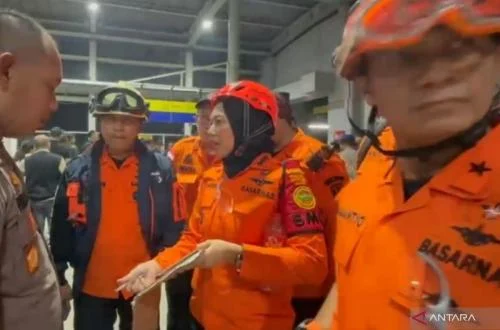
BEKASI, INDONESIA – In the wake of a devastating train collision at Stasiun Bekasi Timur, Chief of the National Search and Rescue Agency (Basarnas), Mohammad Syafii, issued a critical directive to rescue teams: prioritize the safety of trapped victims by strictly avoiding any movement of the involved train carriages. This stringent instruction, delivered on Monday night, April 27, was aimed at preventing further, potentially fatal, injuries during the complex extrication of passengers caught in the mangled wreckage of a commuter line train (KRL) following its impact with an intercity express, KA Argo Bromo Anggrek. The incident, which occurred in the heavily trafficked Bekasi area, has drawn national attention, highlighting the severe challenges inherent in railway accident response and underscoring the delicate balance between rapid rescue and meticulous operational safety.
Syafii, personally overseeing the intricate rescue operation, detailed the specialized techniques being employed by the SAR teams. "We are utilizing precise cutting and lifting methods to meticulously separate the victims’ bodies from the crushing metal entrapments," Syafii explained during a statement on Tuesday morning, emphasizing the agency’s commitment to a cautious approach. He further elaborated, "Our paramount concern is to avoid any movement of the train wagons that could inadvertently worsen the victims’ condition. Extrication is proceeding slowly and methodically, ensuring that each victim is safely freed from the materials pinning them down." This strategy underscores a crucial principle in emergency response, particularly in incidents involving heavy machinery and severe structural damage: the immediate impulse to move obstacles must be carefully weighed against the risk of inflicting secondary trauma on those already in peril. The use of hydraulic cutters, spreaders, and specialized lifting equipment is paramount in such scenarios, allowing responders to create necessary access points and relieve pressure without destabilizing the wreckage. The decision to forgo shifting the KRL carriage, despite the inherent difficulties it posed to rescuers, was a calculated move to mitigate the risk of aggravating internal injuries, spinal damage, or further crushing, which could turn a survivable injury into a fatal one.
The Collision Unfolds: A Timeline of Disaster
The tragic incident unfolded at approximately 20:55 Western Indonesia Time (WIB) on Monday, April 27, when KA Argo Bromo Anggrek, designated journey number 4, operating its regular route from Gambir Station in Jakarta to Surabaya Pasar Turi, collided with a KRL commuter train at Stasiun Bekasi Timur. The precise circumstances leading to the collision remain under investigation, but initial reports indicate a significant impact that left several carriages, particularly of the KRL, severely damaged and crumpled.
Immediate reports following the collision highlighted the gravity of the situation, with multiple casualties and passengers trapped within the twisted metal of the KRL’s carriages. Emergency services, including Basarnas, local police, fire departments, and medical personnel, were swiftly mobilized, converging on the scene within minutes of the alarm. The sheer scale of the incident, occurring at night in a busy urban railway hub, presented considerable logistical challenges. First responders had to navigate debris, ensure scene safety, and establish immediate medical triage points.
Throughout the night and into the early hours of Tuesday, the rescue operation intensified. By 05:11 WIB, SAR teams confirmed that three of the seven initial passengers believed to be severely trapped remained inside KRL carriage number 8, which was designated as a special women’s carriage. The confined spaces, coupled with the deformation of the train structure, made access and extrication exceedingly difficult and time-consuming. Rescuers worked tirelessly, often in cramped and dangerous conditions, using specialized tools and techniques to cut through steel and pry open crushed compartments. The focus remained steadfast on Syafii’s directive, with every cut and lift executed with utmost precision to avoid any jarring movements of the wreckage. As of the latest update at that time, the total number of confirmed fatalities had tragically risen to five, underscoring the severity of the impact and the challenges faced by rescue teams in reaching and stabilizing the victims.
Background and Context of Bekasi Timur Station
Stasiun Bekasi Timur is a vital artery in Indonesia’s extensive railway network, particularly for the Jakarta metropolitan area. Situated in Bekasi, a densely populated satellite city east of Jakarta, the station serves as a crucial transit point for hundreds of thousands of daily commuters utilizing the KRL Commuter Line. The KRL network is an indispensable mode of transport, connecting Jakarta with its surrounding cities and alleviating road traffic congestion. In addition to commuter services, Bekasi Timur also handles intercity routes, including premium executive services like KA Argo Bromo Anggrek, which connects the capital to major cities in East Java. This dual function means the station manages a high volume of traffic, with frequent arrivals and departures of both short-distance commuter trains and long-distance intercity expresses.
The complexity of managing such a high-density railway environment necessitates robust signaling systems, strict operational protocols, and continuous maintenance of tracks and rolling stock. Train control centers monitor train movements, manage schedules, and ensure safe distances between trains. Any failure in these intricate systems – be it human error, signal malfunction, track defect, or equipment failure – can have catastrophic consequences, as tragically demonstrated by the incident involving the KA Argo Bromo Anggrek and KRL. The location of the collision, within the station’s operational area, further complicates matters, as it typically involves slower speeds but still carries significant risks due to the proximity of multiple tracks and potential for human intervention errors during shunting or track switching.
Official Responses and Ongoing Investigations
The incident immediately triggered a multi-agency response and a chorus of official statements. Besides Basarnas Chief Mohammad Syafii’s detailed account of the rescue strategy, other key officials were present at the scene and engaged in addressing the media and overseeing the response. Minister of Transportation Dudhy Purwaghandy was observed accompanying Syafii and Direktur PT. KAI (Indonesian Railways) Bobby Rasydin during a press conference held at Stasiun Bekasi Timur. Their joint presence underscored the high-level attention and coordinated effort being directed towards both the immediate rescue operation and the subsequent investigation.
Bobby Rasydin, speaking on behalf of PT KAI, committed to providing regular updates on the evacuation process, stating that progress reports would be issued every two hours. This commitment to transparency is crucial in managing public information during a crisis of this magnitude, helping to dispel rumors and provide accurate, timely information to concerned families and the general public. PT KAI’s immediate priorities, beyond supporting the rescue, would typically include assessing infrastructure damage, coordinating with other railway operators, and developing contingency plans for service disruptions.
Beyond the immediate rescue and logistical challenges, a comprehensive investigation into the collision is now paramount. The National Transportation Safety Committee (KNKT) of Indonesia is expected to launch an independent and thorough inquiry. Their mandate is to determine the root cause of the accident, which could range from technical malfunctions in the signaling system, human error on the part of train operators or traffic controllers, track infrastructure issues, or a combination of these factors. The police are also actively involved, not only in managing the scene and collecting evidence but also in handling the identification of victims and coordinating the collection and return of passenger belongings. SAR teams confirmed that all discovered passenger items would be meticulously collected, cataloged, and handed over to law enforcement authorities for proper processing and eventual return to their rightful owners or next of kin, a critical aspect of victim support and post-incident management.
Victim Support, Identification, and the Human Cost
The human toll of the collision is profound. With five confirmed fatalities and an unknown number of injured passengers, the focus extends beyond extrication to comprehensive victim support. For those rescued, immediate medical attention is paramount, with local hospitals in Bekasi and Jakarta prepared to receive and treat the injured. Medical teams at the scene provided initial first aid and stabilization before transporting victims to more advanced care facilities. The nature of injuries from train collisions can be severe, ranging from fractures and lacerations to internal trauma and head injuries, requiring specialized medical interventions and often long recovery periods.
The process of victim identification is a sensitive and critical phase. Forensic teams, working in conjunction with the police and medical examiners, will be responsible for identifying the deceased. This often involves comparing dental records, fingerprints, and DNA samples with information provided by families. Simultaneously, Basarnas and other agencies will work to establish contact with the families of the victims, providing support, counseling, and information throughout the difficult process. The psychological impact on survivors, witnesses, and the families of those affected is immense, necessitating long-term mental health support services. The fact that several victims were trapped in the KRL’s designated women’s carriage (gerbong khusus wanita) adds a poignant detail to the tragedy, highlighting the vulnerability of everyday commuters.
Broader Impact and Implications for Rail Safety
The collision at Bekasi Timur has far-reaching implications, extending beyond the immediate tragedy. One of the most immediate impacts is the significant disruption to railway services. Both the KRL commuter line and intercity train schedules through Bekasi will be severely affected. Commuters who rely daily on the KRL for their journeys to work and school will face delays, rerouting, and potentially increased travel times, placing additional strain on an already congested public transport network. PT KAI will need to implement alternative transport arrangements, such as bus services or adjusted train schedules, to minimize inconvenience. The damage to the tracks and overhead electrical lines at the collision site will also require extensive repairs, further prolonging the disruption.
From a broader perspective, this incident will undoubtedly reignite public discourse on rail safety in Indonesia. While the country has made significant strides in modernizing its railway infrastructure and improving safety standards over the years, accidents, though less frequent than road incidents, still occur and carry a high impact. The KNKT’s findings will be crucial in informing future policy and operational changes. Potential recommendations could include:
- Enhanced Signaling Systems: Investing in more advanced, fail-safe signaling technologies to prevent train-on-train collisions.
- Stricter Operational Protocols: Reviewing and reinforcing existing operational procedures for train dispatch, track switching, and emergency responses.
- Increased Training: Providing refresher training for train operators, traffic controllers, and maintenance staff on emergency procedures and best practices.
- Infrastructure Upgrades: Assessing and upgrading critical sections of track and station infrastructure to handle increasing traffic volumes safely.
- Regular Safety Audits: Implementing more frequent and rigorous safety audits across the entire railway network.
The incident also serves as a stark reminder of the challenges faced by emergency responders in dealing with high-impact transportation accidents. The specialized skills and equipment required for complex extrication, as demonstrated by Basarnas’s meticulous approach, highlight the need for continuous investment in training and resources for search and rescue agencies. Ultimately, the collision at Stasiun Bekasi Timur is a tragic event that underscores the critical importance of maintaining the highest standards of safety in a nation heavily reliant on its railway system for both daily commutes and long-distance travel. The collective response from government agencies, transport operators, and rescue teams will be instrumental in learning from this disaster and striving to prevent similar tragedies in the future, ensuring public trust in the safety and reliability of Indonesia’s rail network.