Nasution Nanang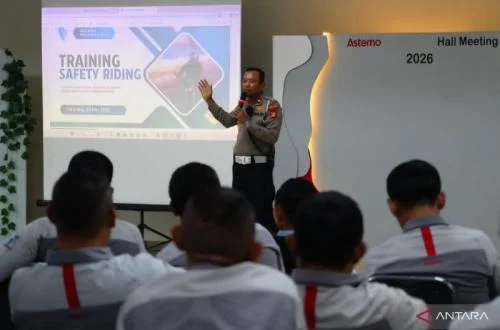
REPUBLIKA.CO.ID, BEKASI – In a proactive move to mitigate the alarming rate of road accidents and foster a culture of traffic discipline, the Polres Metro Bekasi has embarked on an intensive road safety campaign specifically targeting the vast workforce within the industrial heartland of Kabupaten Bekasi. This critical initiative culminated in a significant outreach event at PT. Astemo Bekasi Manufacturing in Cikarang Utara on Tuesday, May 26, 2026. The campaign, spearheaded by Kompol Sugihartono, the Kasat Lantas (Head of Traffic Unit) of Polres Metro Bekasi, placed a particular emphasis on the paramount importance of safe riding practices, especially for users of two-wheeled vehicles, who constitute a significant portion of the commuting population in the region.
The core objective of this ongoing engagement is clear: to substantially reduce the incidence of traffic accidents, which frequently involve industrial workers navigating the congested and often challenging road networks of Bekasi. Kompol Sugihartono articulated the police’s vision, stating, "Road safety is a collective responsibility. By habituating ourselves to traffic discipline, we not only protect ourselves but also safeguard the lives of others on the road." This statement underscores a broader strategy that moves beyond mere enforcement, aiming instead to instill a deep-seated awareness and commitment to safety from within the community. The educational drive focused on several key areas, including strict adherence to traffic regulations and signage, mandatory use of SNI (Indonesian National Standard) compliant helmets for motorcyclists, ensuring vehicles are in optimal roadworthy condition, and critically, maintaining physical and mental alertness while driving to minimize accident risks. These measures are deemed particularly pertinent for the thousands of workers in industrial zones who rely heavily on personal vehicles, primarily motorcycles, for their daily commutes. "The culture of orderly traffic must originate from seemingly minor habits that are often overlooked," Kompol Sugihartono added, highlighting the need for fundamental behavioral shifts. The initiative has garnered positive reception from various stakeholders, including local labor union representatives. Iqbal (36), a worker at the manufacturing plant, commended the program, emphasizing its vital role in elevating awareness among the workforce regarding the indispensable nature of road safety.
Bekasi’s Industrial Heartbeat and Its Commuting Challenges
Kabupaten Bekasi, strategically located east of Jakarta, stands as one of Indonesia’s most significant industrial powerhouses. The region is home to numerous sprawling industrial estates, including the renowned Jababeka, MM2100, Delta Silicon, and EJIP, which host a multitude of multinational and domestic manufacturing companies. These industrial zones attract hundreds of thousands of workers daily, transforming Bekasi into a dynamic economic engine for the nation. However, this robust industrial growth comes with inherent infrastructural and social challenges, particularly concerning urban mobility and road safety.
The vast majority of industrial workers in Bekasi, particularly those residing in surrounding areas or satellite towns, depend on private transportation for their daily commute. Motorcycles, due to their affordability, flexibility, and ability to navigate through heavy traffic, are the preferred mode of transport for an estimated 70-80% of the industrial workforce. This high reliance on two-wheeled vehicles, coupled with long commuting distances, often congested roads, and the pressure of adhering to strict work schedules, creates a volatile environment prone to traffic incidents. The road infrastructure, while continually developing, struggles to keep pace with the rapid urbanization and industrial expansion. Main arteries are frequently overloaded, intersections can be complex, and the coexistence of heavy industrial vehicles, private cars, motorcycles, and pedestrians often leads to chaotic traffic flows. Factors such as fatigue from demanding work shifts, the rush to beat traffic, inadequate road lighting in some areas, and a prevailing lack of strict adherence to traffic laws contribute significantly to the heightened risk of accidents. For many workers, the journey to and from the factory floor is not merely a commute but a daily negotiation of hazards, where a momentary lapse in judgment or a minor mechanical failure can have severe consequences.
A Sobering Look at Traffic Accident Statistics in Indonesia and Bekasi
The national landscape of road safety in Indonesia paints a grim picture, with traffic accidents consistently ranking among the leading causes of death and injury. According to data from the National Police Traffic Corps (Korlantas Polri), Indonesia records hundreds of thousands of traffic accidents annually, resulting in tens of thousands of fatalities and numerous life-altering injuries. For instance, in 2023, preliminary national figures indicated over 150,000 traffic accidents, with more than 25,000 fatalities and hundreds of thousands of injuries. A disproportionate share of these incidents involves motorcycles. National data consistently shows that motorcycles are involved in over 70% of all traffic accidents, and motorcyclists account for an even higher percentage of fatalities. This alarming statistic is largely attributed to the sheer volume of motorcycles on the road, coupled with their inherent vulnerability compared to four-wheeled vehicles, and often, a lower rate of protective gear usage or adherence to safety protocols.
While specific, granular statistics for Kabupaten Bekasi alone are not always publicly disaggregated from provincial data, it is widely understood that as a highly populated and industrialized region, Bekasi mirrors, and in some aspects, even exceeds national trends in terms of traffic density and accident rates. The heavy concentration of industrial activity, coupled with a dense urban population, naturally leads to a higher absolute number of traffic incidents. Common causes of these accidents include speeding, distracted driving (e.g., using mobile phones), failing to observe traffic signs and signals, reckless overtaking, driving under the influence (though less frequently cited for industrial workers, fatigue plays a similar role), and critically, the non-use or improper use of helmets. The economic toll of these accidents is staggering, encompassing medical expenses, loss of productivity due to injury or death, property damage, and the broader societal costs associated with rehabilitation and support systems for accident victims and their families. For industrial workers, an accident can mean not only personal injury but also a devastating loss of income, job insecurity, and a severe impact on their household’s financial stability, trapping families in a cycle of poverty.
The Proactive Stance: A Chronology of Road Safety Engagement
The May 26, 2026, visit to PT. Astemo Bekasi Manufacturing was not an isolated event but a carefully planned component of a broader, ongoing strategy by Polres Metro Bekasi to enhance road safety awareness and compliance. This specific outreach, termed "kunjungan dan silaturahmi kamtibmas" (community outreach and fostering security/order), represents a significant evolution in police engagement. Historically, police efforts in Indonesia have often leaned heavily on enforcement through operations like "Operasi Zebra" or "Operasi Patuh," which involve intensive traffic stops and ticketing. While these operations remain crucial for deterring violations, there has been a growing recognition within law enforcement, including Polres Metro Bekasi, that sustainable road safety improvements require a more holistic approach encompassing education, prevention, and community partnership.
The chronology of this more integrated approach can be traced back several years. Post-2020, with increased urbanization and vehicle ownership, police forces across Indonesia, guided by Korlantas Polri, began to place greater emphasis on community-based initiatives. These initiatives aim to build trust, foster dialogue, and co-create solutions with local communities rather than solely imposing regulations. The choice of an industrial facility like PT. Astemo Bekasi Manufacturing for this specific event highlights a strategic targeting. Industrial estates are critical nodes where a large, identifiable population segment (workers) can be reached effectively. Prior to this event, Polres Metro Bekasi likely conducted preparatory assessments, analyzing accident hotspots, common violation types, and commuter patterns within the industrial corridors of Cikarang. The selection of May 2026 also aligns with periods often seeing increased traffic activity, such as approaching national holidays or long weekends, where preventative messaging is particularly impactful. This current campaign builds upon earlier general public safety drives, but with a refined focus on the unique vulnerabilities and needs of industrial workers, acknowledging their critical role in the local economy and the specific challenges they face on their daily commutes. The police’s methodology indicates a shift towards a more collaborative, long-term strategy, understanding that a true "culture of discipline" cannot be enforced overnight but must be nurtured through consistent engagement and education. Future plans for Polres Metro Bekasi are anticipated to include further visits to other major industrial facilities, continued public service announcements through various media, and potential partnerships with company managements to integrate road safety education into employee welfare programs.
Cultivating a Culture of Discipline: Dissecting the Campaign’s Core Message
Kompol Sugihartono’s message, "Keselamatan berlalu lintas adalah tanggung jawab kita bersama" (Road safety is our collective responsibility), encapsulates the philosophical cornerstone of the campaign. It moves beyond individual blame, framing road safety as a shared societal obligation that requires active participation from every road user. This collective responsibility extends to understanding and mitigating risks, not just for oneself, but for all others sharing the road space. The campaign’s practical advice is meticulously structured to address the most prevalent causes of accidents among industrial workers, particularly motorcyclists.
Firstly, the emphasis on helmet use is non-negotiable. Workers were reminded that helmets must not only be worn but must also be SNI-compliant, properly fastened, and in good condition. The importance of full-face helmets for superior protection against head and facial injuries was implicitly highlighted. Secondly, vehicle roadworthiness was stressed. This includes regular maintenance checks on brakes, tires, lights, mirrors, and signals. A poorly maintained vehicle is a ticking time bomb, and many minor mechanical failures can escalate into serious accidents, especially at higher speeds or in dense traffic. Thirdly, physical and mental readiness were identified as critical factors. Long working hours, fatigue, stress, and lack of sleep can severely impair judgment, reaction time, and concentration, making drivers susceptible to errors. Workers were advised to ensure adequate rest, avoid driving when overly tired, and refrain from distractions like mobile phone usage while riding. Lastly, adherence to traffic rules and signage was reinforced as the bedrock of orderly traffic flow. This includes respecting speed limits, maintaining safe following distances, obeying traffic lights, using turn signals, and avoiding reckless maneuvers. Kompol Sugihartono’s point about "starting from seemingly minor habits that are often overlooked" underscores the behavioral change aspect. Many accidents stem from seemingly small transgressions – a slight acceleration past the limit, a quick glance at a phone, or a momentary disregard for a red light – that accumulate into significant risks. The campaign aims to embed these safety practices into the daily routine, transforming them from mere rules into ingrained habits. This approach leverages community policing principles, where police engage with the public not just as enforcers but as partners in public safety. By visiting workplaces and directly addressing workers, the police foster a sense of shared purpose and encourage voluntary compliance rather than coerced obedience. The tailored message for industrial workers often links safety directly to their livelihood and family well-being, emphasizing that an accident can jeopardize their employment, income, and the future of their dependents, thereby adding a strong motivational element to the safety discourse.
Voices from the Field: Reactions and Endorsements
The proactive engagement by Polres Metro Bekasi has been met with generally positive responses from various sectors, underscoring a collective acknowledgment of the pressing need for improved road safety. Iqbal (36), a worker at PT. Astemo Bekasi Manufacturing, whose initial statement in the original report was brief, represents a broader sentiment among the workforce. Expanding on his viewpoint, Iqbal likely elaborated on the daily anxieties faced by commuters. "Every day, when I leave for work, I pray for a safe journey. The roads are often chaotic, and seeing these reminders from the police makes us think twice," he might have expressed. "It’s easy to get complacent or rush, but events like this truly highlight the dangers and the importance of wearing our helmets properly and checking our bikes." Such sentiments reflect a genuine appreciation for the police’s direct approach, providing tangible advice that resonates with their daily experiences.
Representatives from PT. Astemo Bekasi Manufacturing, while not directly quoted in the initial report, are understood to be highly supportive of such initiatives. Company managements in large industrial estates recognize that employee safety extends beyond the factory gates. Accidents involving their workforce can lead to significant disruptions, including absenteeism, decreased productivity, and increased healthcare costs. A spokesperson for the company, for instance, might have stated, "The well-being of our employees is paramount. We fully endorse and appreciate the efforts of Polres Metro Bekasi in promoting road safety. A safer commute contributes directly to a more productive and stable workforce. We are committed to exploring how we can further integrate these safety messages into our internal employee welfare and training programs." This indicates a potential for future collaborations, where companies might co-fund safety training, provide access to safety gear, or disseminate police advisories through internal communication channels.
Echoing the sentiments of worker Iqbal, local labor union leaders would also likely welcome the initiative, viewing it as a critical step towards protecting their members. A union representative could have stated, "Our members face significant risks on their daily commutes. This campaign is a vital reminder and an encouragement for all workers to prioritize their safety. We call upon not only the police but also local government and company managements to work together to ensure safer roads and better commuting conditions for all industrial workers." This implies a desire for a multi-pronged approach, not just focusing on individual behavior but also on infrastructure improvements and corporate responsibility. Furthermore, local government bodies, such as the Dinas Perhubungan (Transportation Agency) of Kabupaten Bekasi, would likely offer their support. A representative from the agency might comment, "Traffic management and road safety are complex issues requiring concerted efforts from all stakeholders. We commend Polres Metro Bekasi for their proactive educational campaigns and will continue to collaborate on initiatives that improve infrastructure, enforce regulations, and educate the public for safer roads across Bekasi." Road safety experts and non-governmental organizations specializing in traffic safety would also commend the approach. They would emphasize that effective road safety strategies require a balanced blend of "3 Es": Engineering (safe roads), Enforcement (police action), and Education (awareness campaigns). This campaign by Polres Metro Bekasi effectively addresses the "Education" and "Enforcement" aspects through its community outreach model.
Beyond Enforcement: The Holistic Impact of Road Safety Initiatives
The implications of road safety initiatives like the one undertaken by Polres Metro Bekasi extend far beyond merely reducing accident statistics; they touch upon profound economic, social, and public health dimensions, aligning with broader national and international development goals.
From an economic perspective, a reduction in traffic accidents directly translates into substantial cost savings. Accidents incur enormous expenses related to emergency medical services, hospitalization, long-term rehabilitation, and property damage. For businesses, accidents involving employees lead to lost workdays, reduced productivity, and potential costs associated with recruiting and training replacements. A safer commute environment contributes to a more stable workforce, reducing absenteeism and enhancing overall economic output. When workers arrive at their jobs safely and without undue stress from a perilous commute, their focus and productivity levels are likely to be higher.
Socially, improved road safety fosters a greater sense of security and well-being within the community. For industrial workers and their families, the daily fear of an accident is a constant burden. Reducing this risk alleviates stress and improves the overall quality of life. Communities become safer, and public spaces, including roads, are perceived as less hazardous. This can also lead to increased social cohesion as citizens perceive their government and law enforcement agencies as actively working to protect their interests. Moreover, fewer fatalities and serious injuries mean fewer families enduring the devastating emotional and financial hardship that accompanies such tragedies.
In terms of public health, traffic accidents place immense strain on healthcare systems. Emergency rooms are often overwhelmed by accident victims, diverting resources from other critical health services. A decrease in accident rates frees up these resources, allowing them to be allocated more efficiently. Furthermore, reducing the incidence of traumatic brain injuries, spinal cord injuries, and severe fractures from road crashes significantly reduces the burden of long-term disability and chronic care, improving the overall public health profile of the region. This directly contributes to Sustainable Development Goal (SDG) 3: Good Health and Well-being, specifically target 3.6, which aims to halve the number of global deaths and injuries from road traffic accidents by 2030. Initiatives like the one in Bekasi are crucial steps towards achieving this global target at a local level.
Finally, such campaigns also highlight the growing importance of Corporate Social Responsibility (CSR). Companies operating in industrial zones have a moral and ethical obligation to contribute to the well-being of their employees, which extends to their safety during commutes. Collaborative efforts between police and corporations can lead to shared initiatives, such as internal safety awareness programs, provision of subsidized safety gear, or even advocating for improved public transport options. This holistic approach recognizes that road safety is not solely an individual responsibility or a police mandate but a complex challenge requiring multi-sectoral engagement for sustained impact.
Navigating the Future: Sustaining Road Safety Momentum
While the recent initiative by Polres Metro Bekasi represents a commendable and strategic step towards enhancing road safety among industrial workers, the journey to a truly disciplined and safe road culture in Indonesia, particularly in densely populated industrial areas like Bekasi, is a continuous one fraught with challenges. Sustaining the momentum generated by such campaigns requires ongoing commitment and adaptability.
One of the primary challenges lies in consistent enforcement. While educational campaigns raise awareness, the efficacy of traffic laws ultimately depends on their consistent and fair enforcement. This requires adequate police presence, technological aids like traffic cameras, and unwavering adherence to regulations to deter habitual violators. Another significant hurdle is infrastructure development. While behavioral changes are crucial, they can only go so far without corresponding improvements in road design, signage, lighting, and pedestrian facilities. Investing in safer roads, dedicated motorcycle lanes where feasible, and improved public transportation options could significantly reduce exposure to risk. The long-term vision for Bekasi and other industrial hubs should include integrated urban planning that prioritizes safe and efficient mobility for all citizens, moving away from an over-reliance on private vehicles.
Furthermore, combating public awareness fatigue is essential. Initial campaigns often generate high levels of interest, but maintaining that engagement over time can be difficult. Innovative and varied communication strategies, leveraging social media, local community leaders, and even incorporating road safety into school curricula, are vital to keep the message fresh and impactful. The integration of technology, such as mobile applications for reporting hazards or real-time traffic updates, could also play a role in fostering safer commuting habits.
The success of these initiatives hinges on collaborative efforts. It is not a task for the police alone. Sustained progress demands ongoing partnerships between law enforcement, local government (including transportation and health agencies), industrial companies, labor unions, educational institutions, and civil society organizations. Each stakeholder has a unique role to play, whether it is providing resources, advocating for policy changes, or directly educating their constituents. By working in concert, these diverse groups can create a comprehensive ecosystem of safety that goes beyond periodic campaigns, embedding road safety as a fundamental value within the fabric of Bekasi’s industrial community. The ultimate goal is not just to reduce accident numbers, but to cultivate a deeply ingrained culture where every road user understands and embraces their role in ensuring that every journey ends safely, protecting lives and livelihoods across the vibrant industrial landscape of Bekasi.