Nila Kartika Wati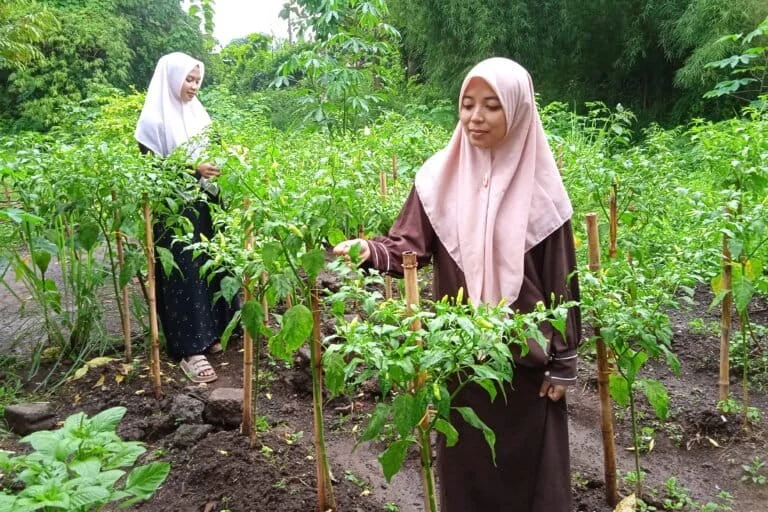
The integration of agricultural practice into the primary and secondary education systems of Indonesia has evolved from a simple extracurricular activity into a strategic response to national challenges involving food security, malnutrition, and environmental degradation. Across the archipelago, from the arid landscapes of East Nusa Tenggara to the urban centers of South Sumatra, educational institutions are transforming underutilized school grounds into "Living Laboratories." These initiatives, driven by a combination of pedagogical necessity and socio-economic urgency, are redefining the role of schools in fostering a generation that is not only academically proficient but also food-sovereign and environmentally conscious.
The Vanguard of Change: SD Inpres Nunumeu and the Battle Against Stunting
In the South Central Timor (TTS) Regency of East Nusa Tenggara (NTT), the staff and students of SD Inpres Nunumeu have embarked on a rigorous journey to combat one of the region’s most pressing issues: stunting. Since January 2024, the school has dedicated approximately 1,410 square meters of its land to a "Living Lab" project. This space serves as a hands-on classroom where students from grades one through six engage in the full cycle of food production, from preparing garden beds to the final harvest of local staples such as cassava, kale, papaya, and corn.
The initiative is born out of a stark reality. East Nusa Tenggara has historically reported some of the highest stunting rates in Indonesia, with the 2023 Indonesian Health Survey (SSGI) indicating that the prevalence remains significantly above the national average. Yakoba Saekoko, the Principal of SD Inpres Nunumeu, highlighted the desperation and determination behind the project during a recent discussion on school gardens. She noted that the school’s efforts were a response to the economic hardships faced by many families in the region, which often prevent them from providing adequate nutrition to their children.
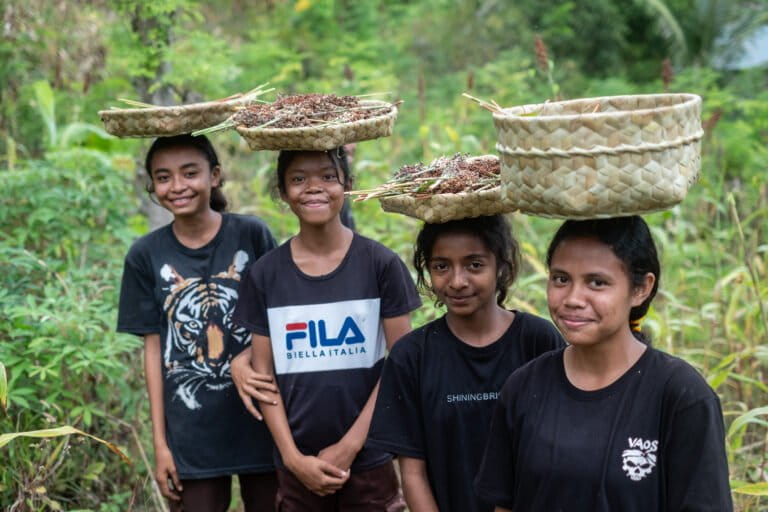
The challenges are not merely economic but also environmental. The soil in TTS is notoriously difficult to cultivate, characterized by its lack of fertility and the region’s vulnerability to prolonged dry seasons. Saekoko described the school’s efforts as "struggling with all their might" to make the land productive. However, the labor has yielded significant results. Beyond providing fresh produce for communal school meals—which directly improves the nutritional intake of the students—the garden has become a source of local pride. It encourages students to appreciate indigenous crops like sorghum and cassava, which are often more resilient to the local climate than imported rice or wheat.
Economic Pragmatism and Urban Aquaculture in Palembang
While the focus in NTT is on basic survival and nutrition, SMAN 8 Palembang in South Sumatra has adopted a model that emphasizes economic resilience and entrepreneurship. Recognizing that food security is also a matter of managing market volatility, the school has implemented a program focused on high-demand commodities, specifically chilies and aquaculture.
Fatimah Nabila, a teacher at SMAN 8 Palembang, explained that the choice of crops was strategically aligned with market trends. In Indonesia, the price of chili is a frequent driver of inflation, often fluctuating wildly due to seasonal shifts and supply chain disruptions. By growing their own chilies in polybags and small plots, the school buffers itself against these price spikes.
The school’s aquaculture program is equally strategic. They have focused on the cultivation of catfish (lele) and gourami. Catfish were selected for their hardiness, rapid growth cycle, and stable market demand. Gourami, while slower-growing, are cost-effective to maintain because they can be fed with supplementary greens like kale and cassava leaves harvested directly from the school garden.
Perhaps the most innovative aspect of the Palembang model is the focus on "downstream" processing. Rather than selling raw fish, the students are taught to process the harvest into value-added products such as shredded catfish (abon lele) and lele-based pempek, a traditional savory fish cake from Palembang. This approach teaches students the fundamentals of the supply chain, from production to processing and marketing, providing them with tangible vocational skills that can be applied in the real world.
Bridging the Knowledge Gap: Government Support in Bone Regency
The success of school gardens is often limited by two factors: the availability of land and the technical expertise required to manage it. In the Bone Regency of South Sulawesi, the local government is taking proactive steps to address these barriers. Edy Saputra Syam of the Bone Regency Education Office identified that while many schools, such as SMP Negeri 1 Awangpone, possess significant land assets—sometimes exceeding one hectare—this land often remains idle because neither the students nor the teachers have the requisite agricultural knowledge.
To bridge this gap, the local government has begun designing programs to increase the technical literacy of the school community. This includes training in soil management, organic fertilization, and sustainable harvesting techniques. The objective is to transform "passive" land into "productive" assets that contribute to the school’s self-sufficiency.
This governmental support is crucial for the long-term sustainability of these projects. By integrating agricultural education into the official curriculum, the government ensures that these gardens are not just the passion projects of individual principals or teachers but are institutionalized components of the educational experience. The vision in Bone is to eventually scale these school gardens into small-scale enterprises that can support school funding while providing students with a deep understanding of food sovereignty.
Environmental Stewardship and the Role of Eco-Enzymes
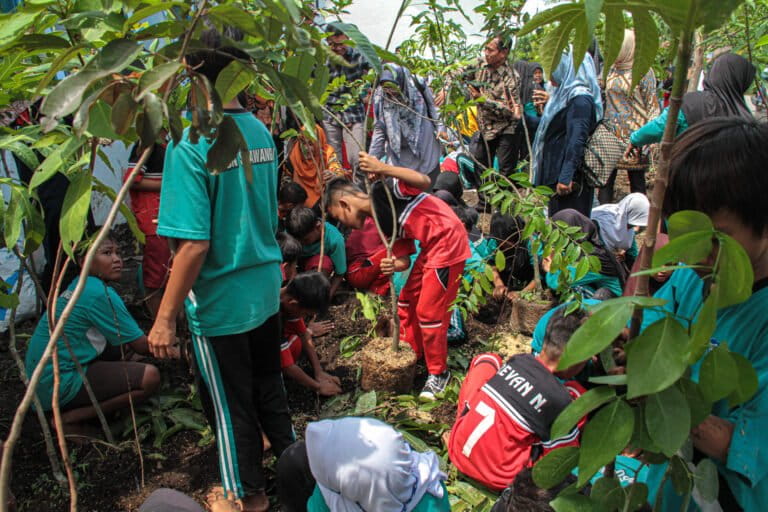
A common thread across all these initiatives is the emphasis on sustainable and organic farming practices. In many schools, including SMAN 8 Palembang and various institutions in West Java, students are being taught the science of "eco-enzymes." This involves the fermentation of organic waste—such as fruit peels and vegetable scraps—into a multipurpose liquid that can be used as a natural fertilizer or pesticide.
The use of eco-enzymes serves a dual purpose. First, it reduces the school’s reliance on chemical fertilizers, which are expensive and can degrade soil health over time. Second, it provides a practical solution for waste management, teaching students how to close the loop in a circular economy. At SDN Surawangi 1 in Majalengka, for instance, gardening is framed as a critical component of climate mitigation. By maintaining green spaces and utilizing organic waste, schools are teaching students that food security and environmental health are inextricably linked.
Chronology and Evolution of the Movement
The movement toward school-based food security in Indonesia has gained significant momentum over the last five years, largely influenced by the national government’s "Merdeka Belajar" (Freedom to Learn) curriculum. This curriculum encourages schools to develop projects that strengthen the "Profile of Pancasila Students," which includes themes like "Living Sustainably" and "Entrepreneurship."
- 2020-2021: During the COVID-19 pandemic, interest in home and community gardening spiked as supply chains were disrupted. This period saw the initial seeds of "school gardens" being planted as a way to engage students remotely or in limited on-site capacities.
- 2022-2023: The Ministry of Education and the Ministry of Agriculture began more formal collaborations to promote "Urban Farming" and "School Entry Agriculture" (Tani Mas) programs.
- January 2024: Schools like SD Inpres Nunumeu officially launched their "Living Labs," shifting the focus from decorative gardens to functional, high-yield food plots.
- April 2024: Regional discussions and symposiums, such as the one attended by Yakoba Saekoko and Edy Saputra Syam, began to consolidate best practices and identify the need for better technical training and government intervention.
Analysis of Implications: A Future of Food Sovereignty
The implications of these school garden programs extend far beyond the immediate harvest. In a country like Indonesia, which is highly vulnerable to the impacts of climate change—including unpredictable rainfall and rising temperatures—the ability to produce food locally is a critical adaptation strategy.
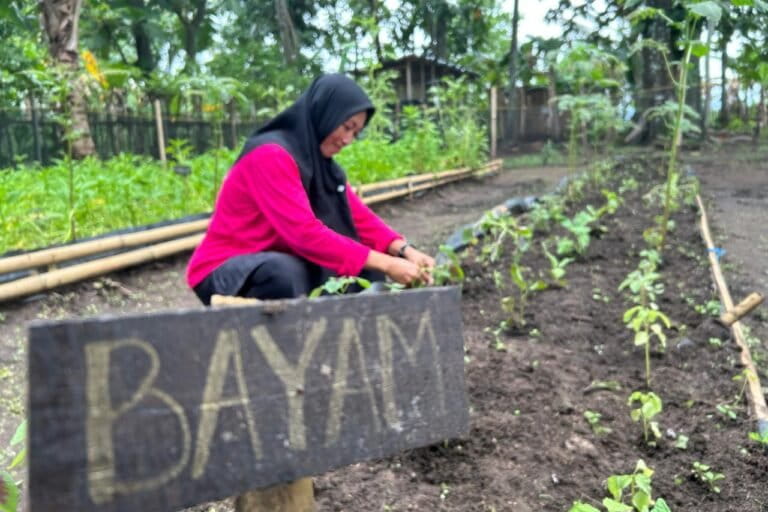
From a pedagogical perspective, these gardens offer a "contextual learning" environment. Biology is learned through the growth of a chili plant; chemistry is understood through the fermentation of eco-enzymes; and economics is practiced through the sale of processed fish products. This hands-on approach has been shown to improve student engagement and retention of knowledge compared to traditional classroom settings.
Socially, these initiatives are rebuilding the prestige of the agricultural sector. For decades, the youth in Indonesia have been moving away from farming, viewing it as a path of poverty. By introducing modern, scientific, and entrepreneurial farming techniques in schools, the education system is rebranding agriculture as a sophisticated and vital career path.
Furthermore, the focus on "character building" cannot be overstated. Managing a garden requires discipline, patience, and the ability to handle failure—such as when a crop is lost to pests or weather. These are the "soft skills" that the Indonesian government aims to instill in its future workforce.
Conclusion
The transformation of school yards into productive food hubs across Indonesia represents a grassroots revolution in how the nation views education and food security. From the "bleeding" efforts to cultivate the dry soil of Timor to the entrepreneurial aquaculture of Palembang, these schools are proving that food sovereignty can be built from the ground up. With continued support from local governments and a commitment to integrating these practices into the national curriculum, Indonesia’s school gardens may well become the foundation of a more resilient, nourished, and self-reliant nation. The "Living Lab" is no longer just a patch of dirt; it is a blueprint for the future of Indonesian society.