Nila Kartika Wati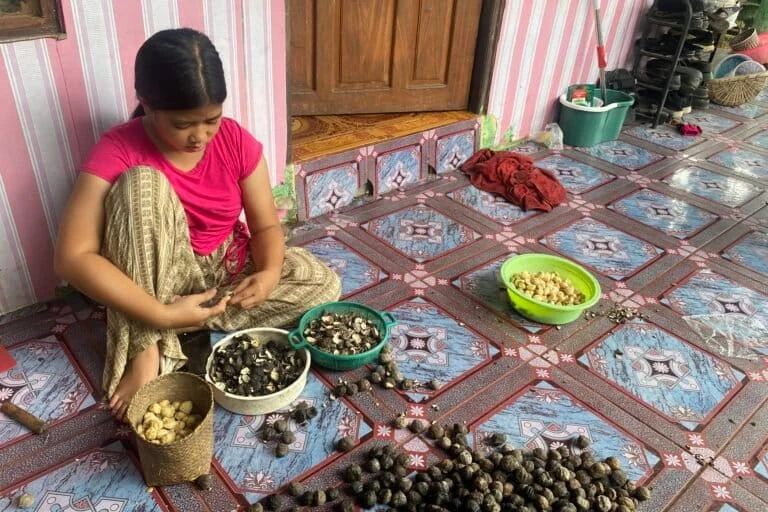
In the mist-shrouded slopes of the Meratus Mountains, Amat unsheathes a parang from his waist with practiced ease, deftly clearing the creeping weeds that threaten the saplings in his garden. A 41-year-old farmer from Lok Lahung Village in the Loksado District of Hulu Sungai Selatan, Amat represents a generational line of stewards who have managed these highlands long before modern administrative borders were drawn. His three-hectare plot is not a monoculture plantation but a vibrant, multi-layered ecosystem where cinnamon trees stand as the dominant sentinels. In this corner of South Kalimantan, the traditional practices of the Meratus Dayak people are emerging as a critical bulwark against the dual threats of climate change and the encroaching extractive industries that have already claimed vast swaths of the province’s primary forests.
The agricultural philosophy in Lok Lahung is rooted in a deep-seated distrust of chemical interventions. Amat explains that the community largely eschews chemical fertilizers and pesticides, opting instead for manual labor and natural cycles to maintain soil health. This organic approach, while labor-intensive, ensures that the land remains fertile for the long term, a necessity for a community that practices the "gilir-balik" or rotational fallow system. Under this traditional land management model, the community first clears small plots to plant upland rice. After several successful harvests, the land is transitioned into a multi-crop garden, or "tumpang sari," where cinnamon, candlenut, rubber, and fruit trees are planted together. This method mimics the natural structure of the forest, preventing erosion on the steep mountain slopes and maintaining the biodiversity of the Meratus "roof."
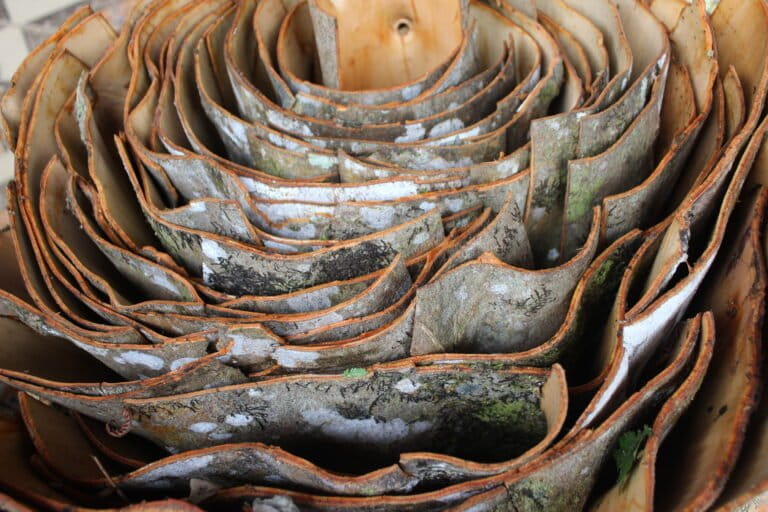
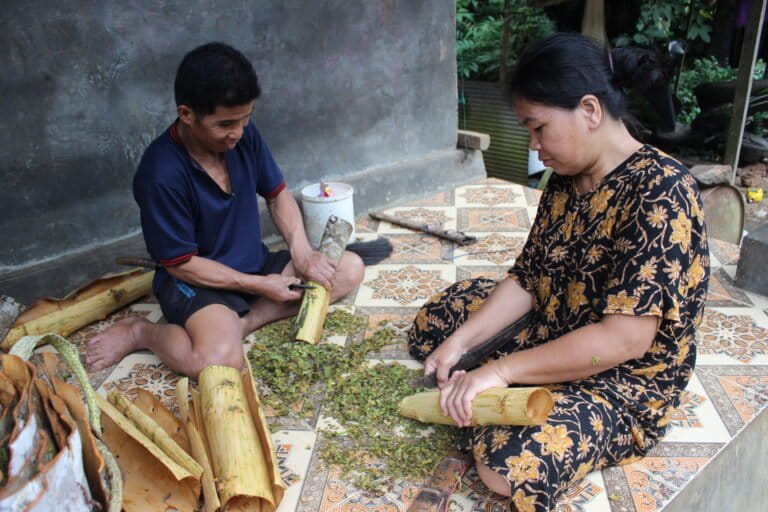
Cinnamon, known scientifically as Cinnamomum, has been a cornerstone of the Loksado economy for decades. Originally growing wild within the dense interior of the Meratus forests, the community began domesticating the species as its market value became apparent. Today, Amat’s garden alone hosts approximately 1,500 cinnamon trees. The cultivation process is a lesson in patience and sustainability; a tree typically requires seven years of growth before it is ready for harvest. When the time comes, the tree is felled, its bark is meticulously peeled and scraped, and the resulting quills are dried under the tropical sun. In optimal conditions, the bark can be ready for sale within a single day, fetching a price of approximately Rp50,000 per kilogram. With a single mature tree yielding up to 10 kilograms of bark, the harvest provides a vital financial cushion, covering everything from daily necessities to the education of the village’s children.
However, the history of cinnamon in Loksado has not always been one of steady prosperity. In 2010, faced with plummeting prices for raw cinnamon bark, Amat and his fellow farmers realized that they were vulnerable to the whims of global commodity markets. Seeking a way to stabilize their livelihoods, Amat participated in a comparative study in Jambi, a province renowned for its cinnamon production. Two years later, in 2012, he pioneered the production of cinnamon syrup in Lok Lahung, transforming a raw forest product into a value-added commodity. Under the brand "Malaris Cinnamon Syrup," the Lok Lahung Organic Cinnamon Farmers Group began producing a shelf-stable beverage that captures the essence of the Meratus highlands.
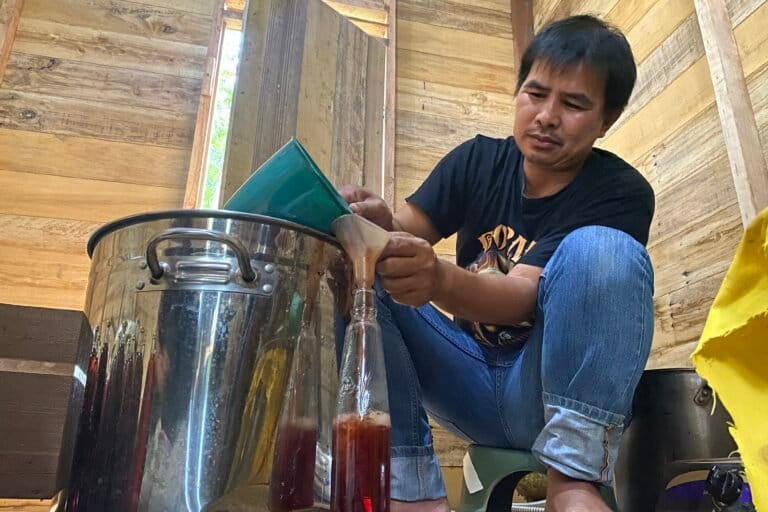
The production process is a blend of traditional knowledge and basic modern hygiene. To ensure the highest quality, dried cinnamon sticks are soaked overnight to remove any potential fungal growth. Glass bottles are sterilized in boiling water before being filled with a concentrated decoction of cinnamon and sugar. A single kilogram of cinnamon can produce up to 60 bottles of syrup, which are sold for Rp25,000 each. This processing significantly multiplies the value of the harvest, providing the farmers with a much higher profit margin than selling raw bark alone. While the syrup has found a market among tourists visiting the scenic Loksado district and at exhibitions organized by the Indonesian Forum for the Environment (WALHI), logistical hurdles remain. The rugged, steep terrain of Loksado makes transporting fragile glass bottles a perilous task, and limited capital has prevented the group from expanding into other products like cinnamon powder, candies, or ginger-cinnamon infusions.
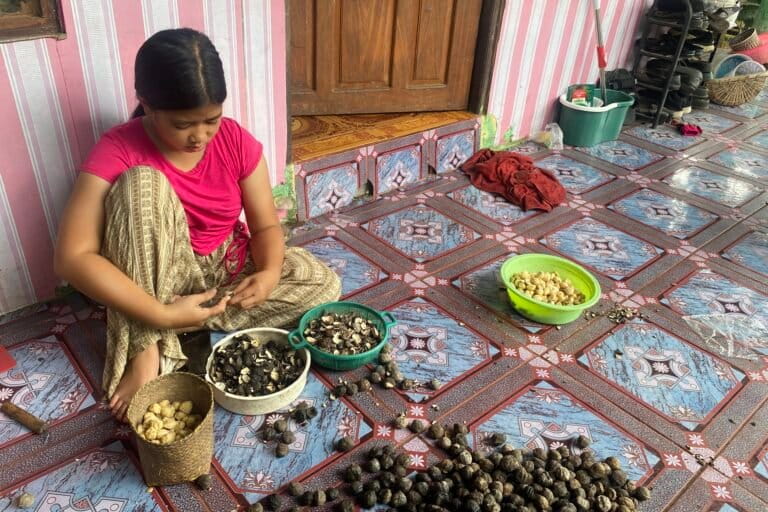
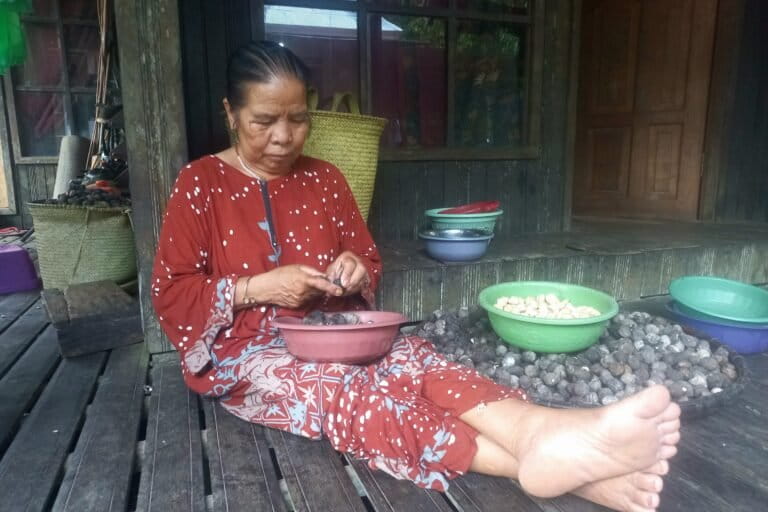
Parallel to the cinnamon trade is the cultivation of candlenut (Aleurites moluccana), another indigenous commodity that thrives in the Meratus ecosystem. The sound of hammers cracking open the hard shells of candlenuts is a rhythmic constant in the villages of Loksado. For residents like 80-year-old Nidil, candlenuts are a gift from nature that requires little more than gathering and processing. The trees grow easily alongside other crops, and like the cinnamon, they are rarely treated with chemical fertilizers. The economic impact is substantial: while unshelled candlenuts sell for around Rp8,000 to Rp10,000 per kilogram, the dried, shelled kernels can fetch up to Rp45,000. During peak seasons, even those who do not own their own trees can earn an income as laborers, earning Rp3,000 for every kilogram they peel.
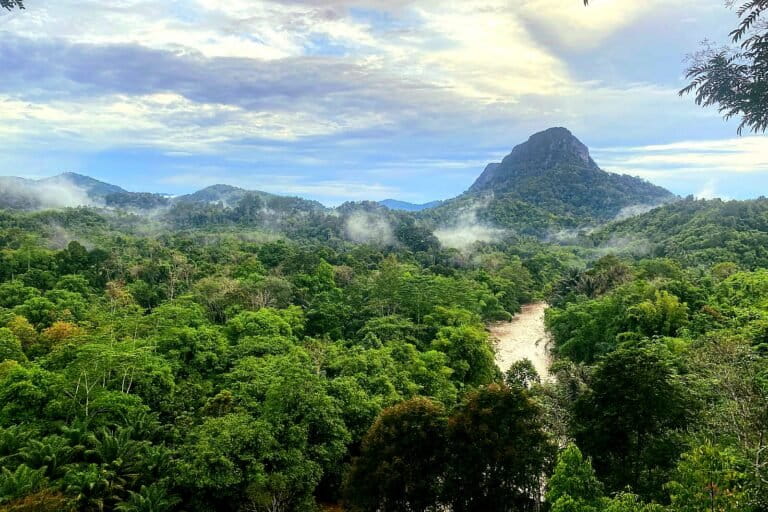
The significance of these traditional practices extends far beyond the local economy. Raden Rafiq, the Executive Director of WALHI South Kalimantan, argues that the agroforestry models practiced in Lok Lahung are the gold standard for sustainable forest management. Unlike industrial-scale plantations that require the total clearing of land and the heavy use of chemicals, the Meratus system maintains the forest canopy and protects the watershed. This is particularly vital given that the Meratus Mountains are the source of over 5,600 kilometers of river systems that sustain the entire province. As the "roof" of South Kalimantan, the ecological health of Meratus directly impacts the water security of millions of people downstream.
However, this ecological bastion is under severe pressure. Data from WALHI South Kalimantan paints a grim picture of the province’s environmental state. Currently, approximately 51.57% of South Kalimantan’s total land area is burdened by industrial licenses, including mining, oil palm plantations, and industrial forest concessions (PBPH). Specifically, mining permits cover 399,000 hectares, while karst landscapes—crucial for water filtration—are threatened by activities across 356,000 hectares. Perhaps most alarming is the fact that South Kalimantan’s remaining primary forest cover has dwindled to just 49,958 hectares. In this context, the indigenous-managed forests of Loksado are not just gardens; they are some of the last remaining fragments of a functional ecosystem in a province dominated by extractive interests.
The tension between conservation and development is currently centered on the proposed establishment of the Meratus National Park, which would cover approximately 119,779 hectares. While the label of a "National Park" suggests protection, WALHI and local communities remain wary. History has shown that when the state imposes conservation boundaries without recognizing the prior rights of indigenous inhabitants, those communities are often criminalized for practicing the very traditions that preserved the forest in the first place. Raden Rafiq emphasizes that the community should be the primary subjects of conservation policy, not objects to be managed or displaced. The fear is that a National Park designation could be used to restrict indigenous access while potentially leaving the door open for "strategic" industrial projects in the future.
Rahmad Riansyah, the Head of the Hulu Sungai Forest Management Unit (KPH), acknowledges that the traditional practices in Loksado are fundamentally aligned with modern agroforestry principles. He notes that the government has begun to accommodate these practices through Social Forestry schemes, such as Village Forest Management Units (LPHD) and Community Forests (HKm) in neighboring areas like Ulang and Haratai. Although Lok Lahung has yet to formalize such a scheme, Riansyah insists that the government is committed to accelerating the recognition of indigenous communities (Masyarakat Hukum Adat). According to the mandate from the Governor of South Kalimantan, the process of establishing the National Park will not proceed until the legal recognition of indigenous rights is finalized. This legal "shield" is intended to ensure that the status of the land as a protected area cannot be easily overturned for mining or plantation interests, as National Park status offers a higher level of legal protection than a standard "protected forest" designation.
The future of the Meratus Mountains depends on the delicate balance between economic necessity and ecological preservation. For farmers like Amat and Budi, the ability to process their own forest products is the key to their independence. When a community can derive a dignified living from a standing forest, the temptation to sell their ancestral lands to mining or logging companies vanishes. The success of the "Malaris" cinnamon syrup is a small but significant proof of concept: that indigenous sovereignty and sustainable development are not only compatible but are, in fact, two sides of the same coin.
As the global community grapples with the climate crisis, the "gilir-balik" system and the organic cinnamon groves of Loksado offer a blueprint for resilience. These practices prove that humans can act as a keystone species, enhancing biodiversity rather than depleting it. However, for this model to survive the next generation, it requires more than just local effort; it requires a state policy that values the "roof of South Kalimantan" for its water and its wisdom, rather than the minerals buried beneath its roots. The struggle of the people of Lok Lahung is a reminder that the most effective guardians of the forest are those whose lives, cultures, and futures are inextricably woven into its canopy.