Nila Kartika Wati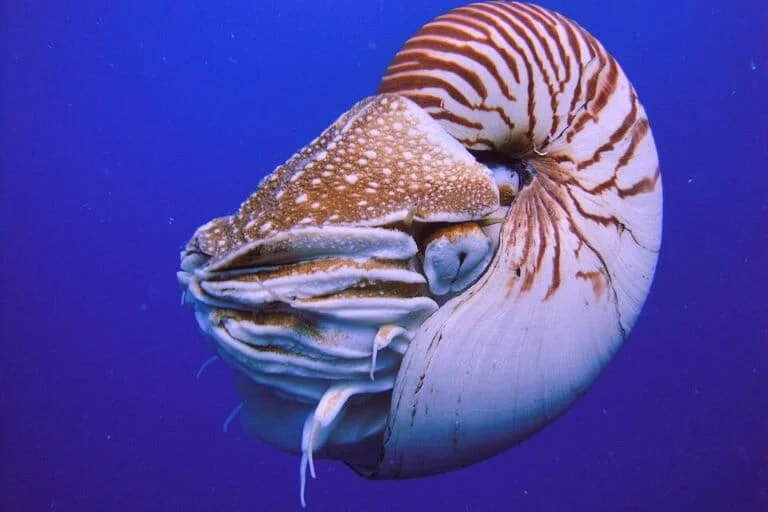
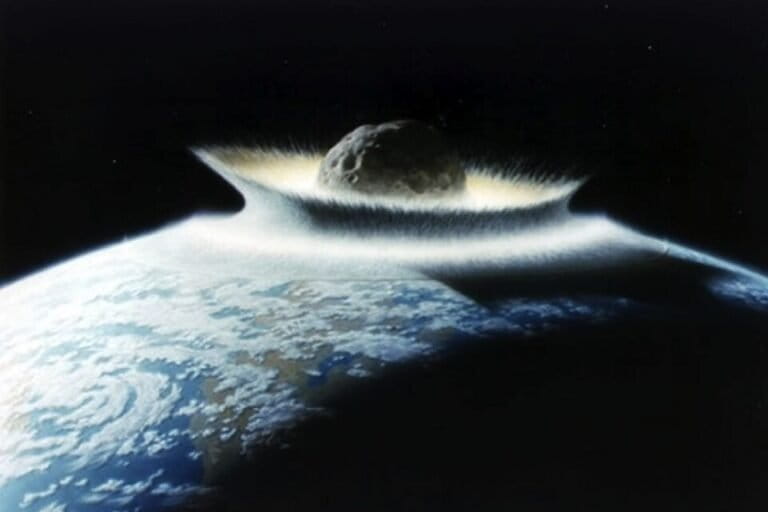
Approximately 66 million years ago, a mountain-sized asteroid, roughly 10 kilometers in diameter, hurtled through the Earth’s atmosphere at speeds exceeding 64,000 kilometers per hour. When it struck the Yucatán Peninsula in modern-day Mexico, it released energy equivalent to 100 trillion tons of TNT—billions of times more powerful than the atomic bombs dropped on Hiroshima and Nagasaki. This event, known as the Chicxulub impact, did not merely kill what was in its immediate vicinity; it fundamentally reconfigured the biological trajectory of the planet. The resulting Cretaceous-Paleogene (K-Pg) extinction event wiped out approximately 75 percent of all species on Earth, most notably the non-avian dinosaurs that had dominated terrestrial ecosystems for over 150 million years. Yet, in the shadow of this global apocalypse, certain lineages—primitive mammals, avian ancestors, and resilient reptiles like turtles and crocodiles—managed to endure. Their survival was not a matter of luck, but the result of a complex interplay of physiological traits, ecological niches, and behavioral adaptations that turned the "strengths" of the dinosaurs into fatal liabilities.
The Immediate Cataclysm: A Timeline of Destruction
The destruction following the impact occurred in distinct, overlapping phases. Within seconds of the collision, a massive thermal pulse of infrared radiation expanded outward. In many parts of the world, the atmosphere briefly heated to temperatures as high as 226 degrees Celsius (440 degrees Fahrenheit). This "broiler effect" ignited global wildfires, turning forests into ash and incinerating any creature unable to find immediate shelter. Simultaneously, the impact triggered a mega-tsunami, with waves reaching heights of over 1.5 kilometers, which scoured the coastlines of North and South America.
The second phase was atmospheric. The impact vaporized carbonate and sulfate-rich rocks, ejecting billions of tons of sulfur aerosols and soot into the stratosphere. This created a global shroud that blocked 90 percent of incoming sunlight for nearly a decade. This "impact winter" halted photosynthesis, causing the collapse of primary production in both the oceans and on land. Temperatures plummeted, and the resulting "nuclear winter" was accompanied by caustic acid rain, which devastated the remaining vegetation and acidified the surface layers of the oceans.
The Size Paradox: Why Giants Fell While Scavengers Thrived
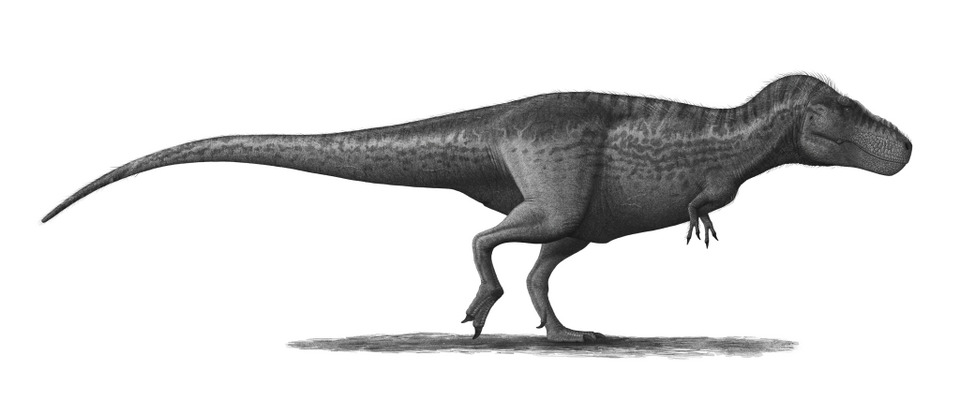
In the field of paleontology, the K-Pg extinction serves as the ultimate case study for how evolutionary advantages can transform into "evolutionary traps." For millions of years, the massive size of dinosaurs like the Tyrannosaurus rex or the herbivorous Triceratops was a supreme advantage. Large bodies allowed for better defense, more efficient long-distance travel, and the ability to dominate food resources. However, when the asteroid struck, these advantages became death sentences.
The primary factor was metabolic demand. A fully grown T. rex is estimated to have required hundreds of kilograms of meat per week to sustain its massive frame. In an ecosystem where the herbivore population had been decimated by the death of plants, such a high-energy requirement was impossible to meet. Large animals are also typically "specialists" with slower reproductive cycles and smaller population densities. When the environment shifts violently, these populations cannot adapt or recover quickly enough to avoid the "extinction vortex."
In contrast, the ancestors of modern mammals were largely nocturnal, shrew-like creatures. Their small size—often no larger than a modern rat—meant they required very little food to survive. Furthermore, their physiology allowed them to exploit a "bunker strategy." While the surface of the Earth was a furnace of fire and later a frozen wasteland, these small mammals lived in burrows or deep crevices. The soil acted as a natural insulator, protecting them from the initial thermal pulse and the subsequent extreme temperature fluctuations.
The Scavenger Economy: Breaking the Dependence on Sunlight
The collapse of the photosynthetic food chain was the primary driver of the mass extinction. As green plants died off, the "grazing food web" (plants → herbivores → carnivores) disintegrated. However, the "detritus food web"—which relies on decaying organic matter—remained functional. This distinction was the line between life and death for many species.
Mammals like Purgatorius janisae, a tiny proto-primate, were generalist feeders. They were not dependent on fresh leaves or specific prey; instead, they could subsist on seeds, roots, insects, and rotting carcasses. Seeds, in particular, acted as a "biological time capsule." Many plant species survived the decade of darkness as dormant seeds in the soil, providing a high-protein food source for small mammals and birds even when the parent plants were long gone.
This reliance on detritus also explains the survival of certain aquatic lineages. In deep-sea environments and freshwater river systems, many organisms feed on "marine snow" or organic debris washed down from the land. The Nautilus, a cephalopod that has remained largely unchanged for millions of years, survived by scavenging on the ocean floor, far removed from the chaos of the surface. Similarly, ancestors of modern sharks and crocodiles were able to survive by feeding on the abundance of carrion that filled the waterways in the wake of the mass die-off.
Avian Resilience and the Power of Flight
While the non-avian dinosaurs perished, one specific branch of the theropod family tree—the birds—managed to cross the K-Pg boundary. Their survival is attributed to several key factors, including their ability to fly and their unique reproductive strategies. Flight allowed avian ancestors to escape localized disasters and migrate to "refugia"—geographical areas that were less severely impacted by the fires and tsunamis.
Recent research also highlights the importance of the avian beak. Ancestral birds with beaks were better equipped to crack open hard seeds, a resource that remained abundant when soft fruits and foliage disappeared. Furthermore, birds tend to have much faster growth rates than their dinosaur relatives. A young bird can reach maturity in weeks or months, whereas a large dinosaur might take years or decades. This rapid "turnover" allowed bird populations to rebound quickly once the atmosphere began to clear.
The Southern Hemisphere Anomaly: Challenging the Narrative
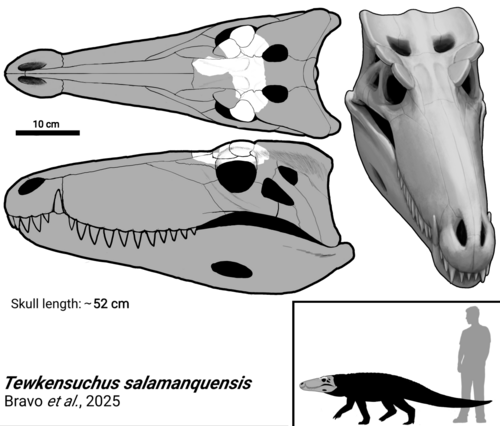
While the global patterns of the K-Pg extinction are well-documented, recent fossil discoveries in the Southern Hemisphere have introduced significant nuance to the story. In Argentina, paleontologists discovered the remains of Tewkensuchus salamanquensis, a massive land-dwelling crocodile relative weighing nearly 300 kilograms. By all traditional logic, an animal of this size should have gone extinct alongside the dinosaurs.
The survival of Tewkensuchus suggests that the impact’s effects were not uniform across the globe. Some scientists hypothesize that the Southern Hemisphere may have acted as a partial sanctuary. Because the asteroid struck the Northern Hemisphere, the initial heat pulse and the distribution of soot may have been less intense in regions like South America, Antarctica, and Australia. This geographical variation allowed for "islands of survival" where larger cold-blooded animals could endure the crisis. These anomalies remind researchers that extinction is a mosaic process, influenced by local ecology and geography as much as global atmospheric changes.
Broader Implications and Modern Parallels
The story of the K-Pg extinction is more than a historical curiosity; it provides a vital framework for understanding the "Sixth Mass Extinction" currently being driven by human activity. The traits that saved the survivors 66 million years ago—ecological flexibility, small body size, and the ability to utilize varied food sources—are the same traits that define the "winners" in today’s rapidly changing climate.
Conversely, the "losers" of the K-Pg event—the specialized, large-bodied apex predators—mirror the species currently most at risk today, such as elephants, rhinos, and large sharks. The collapse of the Cretaceous world demonstrates that when an ecosystem is pushed past a certain threshold, the very traits that once made a species successful can become its greatest weakness.
As scientists continue to analyze the fossil record and the chemical signatures left in the Earth’s crust, the lesson of the asteroid remains clear: resilience is found in adaptability. The mammals that scurried in the dirt and the birds that hid in the brush were not the masters of their world 66 million years ago, but they were the only ones equipped to inherit it. Their survival ensured that life would not only continue but eventually flourish into the diverse array of species that inhabit the Earth today, including the humans who now seek to understand this ancient catastrophe.