Nasution Nanang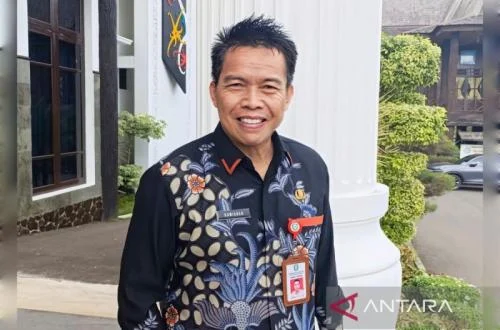
SAMPIT, Central Kalimantan – The Social Affairs Office (Dinsos) of Kotawaringin Timur Regency, Central Kalimantan, has officially commenced the rigorous selection process for prospective students to join the Integrated People’s School 55 (Sekolah Rakyat Terintegrasi 55, SRT 55) for the 2026/2027 academic year. This crucial initiative aims to provide quality education to 270 students hailing from the most economically vulnerable households, specifically targeting those categorized within the first and second deciles of poverty. This proactive approach underscores the local government’s commitment to addressing educational disparities and breaking the cycle of poverty through focused intervention.
The recruitment drive, announced on a Friday in Sampit by Hawianan, the Head of Dinsos Kotawaringin Timur, specifies a balanced intake across educational levels: 90 students for the elementary school (SD) equivalent, 90 for junior high school (SMP) equivalent, and another 90 for senior high school (SMA) equivalent, totaling 270 beneficiaries. This structured allocation reflects a comprehensive strategy to support students throughout their educational journey, from foundational learning to preparing for higher education or vocational training. Hawianan emphasized that the admission quota is strictly aligned with the Ministry of Social Affairs’ directives, as stipulated in Secretarial General Letter Number 1745/1/DL.00.02/05/2026, highlighting the program’s national significance and robust regulatory framework.
Understanding the Integrated People’s School (SRT) Model
The Integrated People’s School concept represents a critical component of Indonesia’s social welfare and educational strategy, particularly in regions grappling with significant socio-economic challenges. Unlike conventional schools where enrollment typically relies on direct applications from students or their guardians, SRT 55 employs a unique "direct outreach" (penjangkauan langsung) system. This method is specifically designed to identify and engage children from the most marginalized families who might otherwise fall through the cracks of the mainstream education system due to a myriad of barriers, including lack of information, financial constraints, or geographical isolation.
The "Integrated" aspect of SRT 55 is multifaceted. It implies a holistic approach to student development, encompassing not only academic instruction but also character building, life skills, and comprehensive welfare support. Crucially, the program mandates a boarding school system, meaning all enrolled students are required to live in dormitories throughout their period of education. This residential model is instrumental in providing a stable and conducive learning environment, shielding students from the adverse conditions often prevalent in their home environments and ensuring consistent access to resources, nutrition, and mentorship. The "55" designation, while not explicitly detailed in the initial announcement, typically signifies a specific program iteration, a unique operational code, or a particular focus group within the broader "Sekolah Rakyat" framework, indicating a tailored approach to its beneficiaries.
A Targeted Recruitment Mechanism: Leveraging Social Welfare Data
The selection process for SRT 55 is meticulously designed to ensure that the program reaches its intended beneficiaries: children from the poorest households. This is achieved by leveraging existing national social welfare databases, namely the Integrated National Socio-Economic Data (Data Terpadu Sosial Ekonomi Nasional, DTSEN) and data from the Family Hope Program (Program Keluarga Harapan, PKH).
DTSEN is a comprehensive repository of socio-economic information on millions of Indonesian households, meticulously collected and updated by the Central Statistics Agency (Badan Pusat Statistik, BPS) and local government units. It serves as the backbone for various government social assistance programs, including PKH. PKH, on the other hand, is a conditional cash transfer program aimed at alleviating poverty and improving human capital development among very poor families. It provides financial aid conditional on families meeting certain health and education requirements, such as ensuring children attend school and receive health check-ups.
The Dinsos Kotawaringin Timur utilizes its team of PKH social assistants, who are frontline workers deeply embedded within communities, to conduct the direct outreach. These assistants, armed with DTSEN and PKH data, actively go into villages and remote areas to identify potential candidates. This proactive methodology stands in stark contrast to the self-registration model prevalent in general education, where economically disadvantaged families might lack the resources, awareness, or even the confidence to navigate complex application procedures.
Hawianan underscored the significance of this methodology: "We operate through the PKH team who go directly to the field, armed with DTSEN. This ensures that we identify children who genuinely meet the criteria for extreme poverty." The PKH social assistants are tasked with ongoing data collection and verification, ensuring that all identified prospective students truly qualify for the program. Furthermore, the Dinsos encourages community participation; members of the public who are aware of children from impoverished families desiring education are urged to report them for verification by PKH and BPS. This multi-layered verification process is critical to maintaining the integrity and effectiveness of the program, ensuring that resources are allocated precisely where they are most needed.
Addressing Educational Disparities in Kotawaringin Timur
Kotawaringin Timur, like many other regencies in Central Kalimantan, faces significant challenges in ensuring equitable access to quality education. The vast geographical expanse, coupled with a scattering of remote villages, often means that children in these areas have limited access to well-equipped schools, qualified teachers, and necessary learning resources. Poverty exacerbates these issues, as families often prioritize immediate survival over long-term educational investments, leading to high dropout rates, particularly at higher education levels.
According to data from the Central Statistics Agency (BPS), Central Kalimantan has made progress in poverty reduction, yet pockets of extreme poverty persist, especially in rural and remote areas. The latest available statistics (though general and not specific to 2026/2027) indicate that while the overall poverty rate might be decreasing, the depth and severity of poverty remain a concern for specific demographics. Children from families in the "desil satu" (poorest 10%) and "desil dua" (next poorest 10%) are most vulnerable to educational exclusion. These families often struggle with basic needs such as food, shelter, and healthcare, making the costs associated with schooling—even if tuition-free—a significant burden (e.g., uniforms, books, transportation, pocket money).
The SRT 55 program directly confronts these disparities. By offering a fully funded, integrated boarding school experience, it removes virtually all financial barriers to education. Moreover, by providing a structured living and learning environment, it addresses non-financial obstacles such as lack of parental support, exposure to child labor, or unsafe home environments that often hinder a child’s educational progress. This initiative aligns strongly with the United Nations Sustainable Development Goal 4 (Quality Education) and Goal 1 (No Poverty), demonstrating a localized commitment to global development agendas.
The Boarding School Model: Benefits and Challenges
The decision to implement SRT 55 as a boarding school carries significant implications for its effectiveness and sustainability. The benefits of a residential education model for highly disadvantaged students are profound:
- Consistent Learning Environment: Boarding schools provide a stable, dedicated environment for learning, free from the distractions and potential negative influences of challenging home environments. This consistency is crucial for academic progress.
- Holistic Development: Beyond academics, boarding schools foster character development, discipline, social skills, and self-reliance. Students receive structured guidance, mentorship, and opportunities for extracurricular activities that might otherwise be unavailable.
- Nutrition and Health: Students receive regular, nutritious meals and often have access to basic healthcare services, addressing fundamental needs that are often unmet in impoverished households. This directly impacts their ability to learn and thrive.
- Reduced Financial Burden on Families: By covering all aspects of living and education, the program completely alleviates the financial strain on families, allowing them to focus on other pressing needs.
- Safety and Security: For children from vulnerable backgrounds, a boarding school provides a safe and secure environment, protecting them from potential exploitation, neglect, or exposure to violence.
- Peer Support and Community: Living together fosters a strong sense of community and mutual support among students, which can be invaluable for their emotional and psychological well-being.
However, implementing and sustaining a boarding school model also presents considerable challenges:
- High Operational Costs: Boarding schools require significant financial investment for facilities maintenance, utilities, food, healthcare, educational materials, and staffing (teachers, dorm supervisors, counselors).
- Qualified Staffing: Recruiting and retaining highly qualified teachers and dedicated boarding staff who are equipped to handle the unique needs of disadvantaged children is critical. This includes cultural sensitivity and pedagogical expertise.
- Student Well-being: Being away from family, even in a supportive environment, can be emotionally challenging for young children. Robust psychosocial support systems, counseling services, and regular family contact mechanisms are essential.
- Quality of Facilities: Ensuring that dormitories, classrooms, recreational areas, and sanitation facilities meet appropriate standards for health, safety, and comfort is paramount.
- Monitoring and Evaluation: Continuous monitoring of student progress, well-being, and the overall effectiveness of the program is necessary to ensure accountability and facilitate improvements.
Statements from Key Officials and Stakeholders
Hawianan, the Head of Dinsos Kotawaringin Timur, reiterated the office’s unwavering commitment to the program. "The mechanism for student admission is carried out strictly to ensure that the education program is precisely targeted and reaches the impoverished community," he stated. His emphasis on strict adherence to criteria underscores the desire to maximize the program’s impact and prevent any misuse of resources.
While specific statements from central government officials were not included in the initial report, it can be logically inferred that the Ministry of Social Affairs, which issued the quota decree, views SRT 55 as an integral part of its national strategy for poverty alleviation and human resource development. Such programs are often championed as models for local government innovation in addressing social welfare challenges. A representative from the Ministry might emphasize the importance of inter-agency collaboration between social affairs, education, and local government in successfully implementing integrated programs like SRT 55.
Local government leaders, such as the Regent of Kotawaringin Timur, would likely express strong support for this initiative, highlighting it as a cornerstone of their regional development agenda. They might emphasize the long-term benefits for the regency, predicting a future where more educated citizens contribute to local economic growth and social progress. Educational experts, if consulted, would likely commend the targeted approach and the boarding school model for its potential to provide comprehensive support, but also caution about the need for robust psycho-social support and highly trained staff to ensure student success.
Broader Implications and Future Outlook
The launch of SRT 55 has significant broader implications for Kotawaringin Timur and potentially for other regions facing similar challenges.
- Human Capital Development: By investing in the education of its most vulnerable children, Kotawaringin Timur is making a direct investment in its future human capital. These 270 students, upon graduation, will be better equipped to pursue higher education, vocational training, or enter the workforce, breaking intergenerational cycles of poverty.
- Educational Equity: The program is a powerful statement about educational equity, ensuring that a child’s socio-economic background does not dictate their access to quality learning opportunities. It serves as a beacon of hope for families who might have otherwise lost hope in their children’s educational prospects.
- Poverty Alleviation: Education is a proven pathway out of poverty. By providing comprehensive education and support, SRT 55 directly contributes to sustainable poverty alleviation efforts in the region, both for the individual students and their families.
- Replication Potential: If successful, SRT 55 could serve as a model for other regencies in Central Kalimantan and beyond, demonstrating the effectiveness of targeted, integrated, and residential education programs for the most disadvantaged populations.
- Sustainability: The long-term sustainability of such programs hinges on consistent funding, strong political will, and robust partnerships between government agencies, communities, and potentially non-governmental organizations. Continuous evaluation and adaptation will be key to its enduring success.
Looking ahead, the success of SRT 55 will be measured not only by the number of students enrolled but, more importantly, by their academic achievement, personal growth, and successful transition into productive adulthood. The Dinsos Kotawaringin Timur and its partners will need to establish comprehensive monitoring and evaluation frameworks to track student progress, assess program outcomes, and identify areas for continuous improvement. This includes tracking graduation rates, progression to higher education or employment, and the overall well-being of the students.
In conclusion, the Dinsos Kotawaringin Timur’s initiative to recruit 270 students for the Integrated People’s School 55 for the 2026/2027 academic year represents a proactive and vital step towards fostering educational equity and sustainable human development. By meticulously targeting the most impoverished segments of the population and employing an integrated, boarding school model, the program offers a tangible pathway out of poverty for hundreds of children. This effort is a testament to the power of focused social welfare programs in transforming lives and building a more inclusive and prosperous future for the region.