Tyo Susilo
Intel has officially confirmed that it has commenced development on its next-generation semiconductor fabrication processes, specifically the 10-angstrom (10A) and 7-angstrom (7A) nodes. This strategic announcement, made by Intel CEO Lip-Bu Tan, signals the company’s ambitious long-term vision for its foundry business, aiming to regain a competitive edge against industry leaders like TSMC. The move underscores Intel’s commitment to a robust technological roadmap, recognizing that in the high-stakes semiconductor industry, future-proofing is as crucial as current product performance.
The semiconductor foundry market is characterized by long-term partnerships, with chip designers often committing to foundries for several years due to the significant investment and R&D involved in adapting to new manufacturing processes. Intel’s proactive disclosure of its post-14A roadmap is a clear strategy to reassure potential and existing clients of its sustained innovation and commitment to pushing the boundaries of chip manufacturing technology. This forward-looking approach is vital for Intel as it continues its efforts to rebuild and expand its foundry services, an area where it has faced considerable challenges in recent years, trailing behind the established dominance of Taiwan Semiconductor Manufacturing Company (TSMC).
Building a Future Beyond 14A
While the 18A node is still gearing up for full-scale implementation and the 14A node is several years away from mass production, Intel’s leadership has clearly articulated its intent to chart a course for technological advancement through the remainder of the current decade and beyond. This announcement is not merely about future nodes; it is a strategic communication aimed at solidifying Intel’s position in the foundry landscape.
Progress on the 14A Node
Intel provided an update on the 14A node, confirming that its development is proceeding according to schedule. The company has already released a version 0.5 of its Process Design Kit (PDK), enabling customers to begin initial chip design testing and assess early yield potential. A more mature version, 0.9, is slated for release in October of this year, which will be made available to external customers. This phased approach allows for iterative feedback and refinement, a common practice in semiconductor manufacturing to ensure robust performance and yield by the time of mass production.
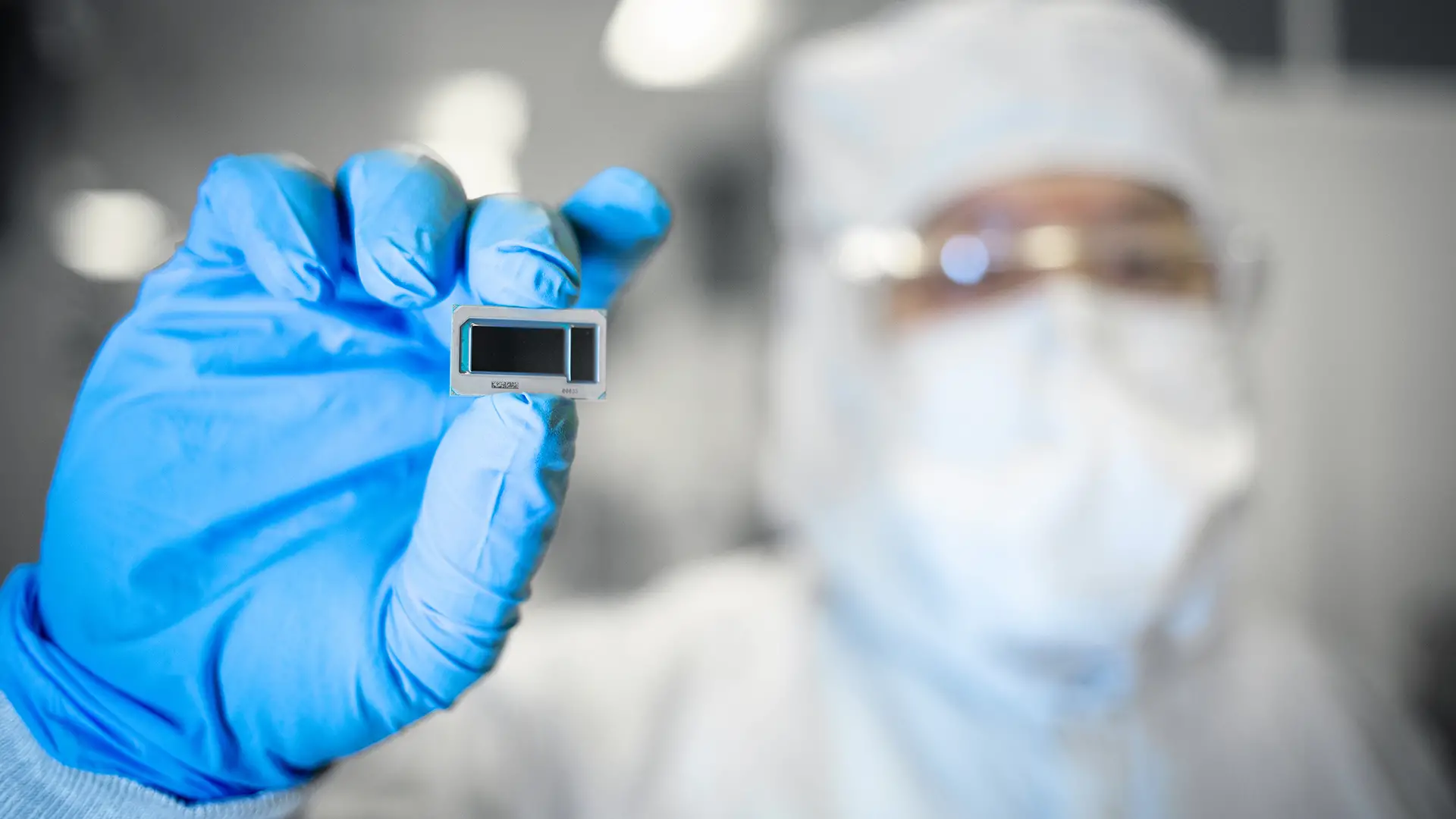
CEO Lip-Bu Tan also indicated that several companies have already expressed interest in utilizing the 14A node, although their identities remain confidential. The 14A node is considered a critical milestone for Intel, as it is anticipated to be one of the first processes to fully leverage ASML’s High-NA Extreme Ultraviolet (EUV) lithography technology for high-volume manufacturing.
The Significance of High-NA EUV
High-NA EUV lithography represents a significant leap forward in semiconductor manufacturing precision. This advanced technology allows for the printing of transistors with even finer details and higher density, crucial for enabling smaller and more powerful chips in future generations. However, the implementation of High-NA EUV is considerably more complex than standard EUV. It necessitates the adoption of new materials, specialized photomasks, and significant adjustments to chip design rules, presenting a substantial engineering challenge.
Intel’s commitment to integrating High-NA EUV into its 14A node signifies its dedication to embracing cutting-edge manufacturing capabilities. This technology is instrumental in achieving the sub-2nm process nodes that are the focus of the industry’s next wave of innovation. The successful deployment of High-NA EUV will be a key differentiator for Intel in its pursuit of leadership in advanced chip manufacturing.
Timeline and Competitive Landscape
Intel has set a target for risk production of the 14A node to commence in 2028, with mass production expected to follow in 2029. This timeline is closely aligned with TSMC’s A14 roadmap, though the two companies employ distinct strategies. TSMC typically delays mass production until its yield rates are exceptionally mature and stable. In contrast, Intel has historically adopted a strategy of initiating production earlier, with a focus on refining and improving yields iteratively behind the scenes.
This divergence in approach highlights the different risk appetites and operational philosophies of the two industry giants. Intel’s accelerated production schedule for 14A, if successful, could allow it to capture market share sooner and demonstrate its manufacturing prowess. However, it also carries the inherent risk of encountering unforeseen production challenges that could impact yield and cost.

Intel’s Strategic Imperative: Rebuilding the Foundry Business
Intel’s renewed focus on its foundry business, often referred to as Intel Foundry Services (IFS), is a cornerstone of its "IDM 2.0" strategy, announced by CEO Pat Gelsinger in 2021. This strategy represents a fundamental shift for Intel, which has historically been a vertically integrated device manufacturer (IDM), designing and manufacturing its own chips. IDM 2.0 aims to leverage Intel’s manufacturing capabilities to serve external customers, transforming it into a major foundry player alongside TSMC and Samsung.
The challenges Intel has faced in its foundry endeavors are well-documented. Delays in process technology transitions, particularly the struggles with its 10nm node, allowed TSMC to solidify its lead in advanced manufacturing. This has resulted in many fabless semiconductor companies, such as AMD and Nvidia, opting to use TSMC’s foundries for their high-performance processors. Intel’s current roadmap, with the ambitious development of 10A and 7A nodes, is a direct response to this competitive pressure.
Supporting Data and Industry Trends
The semiconductor industry is characterized by relentless miniaturization and increasing complexity. Each new "node" represents a significant advancement in transistor density and performance. While the naming conventions (e.g., 10A, 7A) are not always directly tied to a specific nanometer measurement, they denote generational improvements in process technology.
- Node Advancement: The transition from 14nm to 10nm (Intel’s definition) and now to angstrom-level nodes (10A, 7A) represents a leap in transistor scaling. For context, TSMC’s current leading-edge processes are often referred to as "4nm" and "3nm," with their "2nm" process expected in the coming years. Intel’s angstrom-level nodes are conceptually aiming to compete at or beyond these advanced scales.
- EUV Lithography: The widespread adoption of EUV lithography has been a key enabler of recent node advancements. High-NA EUV, which Intel is integrating into its 14A process, offers even greater resolution and efficiency, allowing for the creation of smaller and more densely packed transistors. The capital investment for High-NA EUV machines from ASML is substantial, running into hundreds of millions of dollars per unit, underscoring the significant commitment required for these advanced manufacturing capabilities.
- Market Share: TSMC currently holds a dominant share of the global foundry market, particularly in advanced nodes. Intel’s aggressive roadmap and investment in IFS are aimed at capturing a significant portion of this market. According to industry analysts, TSMC’s market share in the advanced foundry segment (below 10nm) is estimated to be over 60%, with Samsung a distant second. Intel’s goal is to challenge this duopoly.
Broader Impact and Implications
The successful execution of Intel’s roadmap for the 10A and 7A nodes, along with the timely delivery of the 14A process, has profound implications for the global semiconductor industry and beyond.
- Increased Competition: A resurgent Intel Foundry Services could introduce a much-needed competitive dynamic into the advanced foundry market. This could lead to more choices for chip designers, potentially driving down costs and accelerating innovation across the industry.
- Geopolitical Considerations: The concentration of advanced chip manufacturing in a few key regions, primarily Taiwan, has raised geopolitical concerns. The expansion of Intel’s foundry capabilities in the United States and Europe could contribute to greater supply chain resilience and diversification, reducing reliance on single regions for critical semiconductor production. Intel’s significant investments in new fabrication facilities in Arizona and Ohio, as well as in Germany, are part of this broader strategy to bolster global manufacturing capacity.
- Technological Advancement: The race for smaller and more efficient nodes is what fuels progress in everything from artificial intelligence and high-performance computing to consumer electronics and automotive systems. Intel’s continued innovation in process technology is crucial for enabling the next generation of these transformative technologies.
Intel’s strategic gamble on developing 10A and 7A nodes, while still in the early stages, demonstrates a clear commitment to its long-term foundry ambitions. The success of this ambitious roadmap will be closely watched by the industry, as it could reshape the competitive landscape and influence the trajectory of technological innovation for years to come. The company’s ability to execute on these advanced processes will be the ultimate determinant of its success in reclaiming its position as a leader in semiconductor manufacturing.